
Quick summary: Comparing the two biggest cross-browser testing platforms in 2026: BrowserStack has the larger real device farm (2,000+ iOS, 2,500+ Android), published pricing tiers, and stronger mobile testing coverage. Sauce Labs counters with deeper analytics (Sauce Insights), enterprise compliance features at lower tiers, and better native mobile SDK support (Espresso, XCUI). BrowserStack wins on raw scale and pricing transparency. Sauce Labs wins when analytics and compliance drive the decision. Both are cloud testing infrastructure, and neither generates the tests that run on them. That is a separate layer entirely.
At 100 parallel sessions, BrowserStack runs roughly $50,000-$75,000 per year. Sauce Labs starts at $80,000-$120,000 for comparable capacity. Neither platform advertises the number that actually matters to engineering leads: what you pay per session once you have real CI/CD volume pushing through, and where the cost curve bends at 500 and 1,000 sessions.
We pulled current pricing from both platforms, cross-referenced against how teams we work with actually consume those sessions, and built out the cost curve at enterprise scale. The gap widens in one direction, and it is not the direction most people assume.
We build Autonoma, which sits upstream of execution: our agents generate and maintain the tests, your chosen platform runs them. No commission on which grid you pick. The analysis below is as close to neutral as you will find.
Both Platforms in 2026
BrowserStack
BrowserStack launched in 2011 with a single idea: make cross-browser testing accessible without maintaining your own device lab. Thirteen years later it is the default answer when engineering teams ask "where do we run our Selenium grid" and increasingly "where do we run our Playwright suite."
The platform's real advantage is scale. BrowserStack operates one of the largest real device farms in the industry, with over 2,000 iOS devices and 2,500+ Android devices available for automated testing. Its browser matrix covers 3,500+ browser and OS combinations. For teams where mobile coverage breadth is the primary constraint, nothing in the market matches it on raw numbers.
BrowserStack also made an early bet on pricing transparency. You can self-serve, pick a plan, and have tests running in an hour without a procurement conversation. That matters more than it sounds for teams that operate without a dedicated QA vendor management function.
Sauce Labs
Sauce Labs was founded in 2008 and built its reputation as the enterprise default for Selenium grids. Where BrowserStack competed on breadth and self-serve access, Sauce Labs competed on depth: deeper analytics, more mature enterprise compliance tooling, and first-party SDK support for every serious test framework.
The Sauce Insights analytics layer is the clearest differentiator. Where BrowserStack shows pass/fail and video, Sauce Insights surfaces flakiness scores at the test-case level, visual diffs between runs, and failure clustering that separates infrastructure failures from genuine regressions. For QA leads who run weekly retrospectives on test suite health, this changes the quality of those conversations.
Sauce Labs' price floor is higher, and its pricing is less transparent. You will talk to sales before you have a contract that covers serious parallel capacity. That adds friction during evaluation, but teams that clear procurement often find the analytics and compliance features justify the delta.
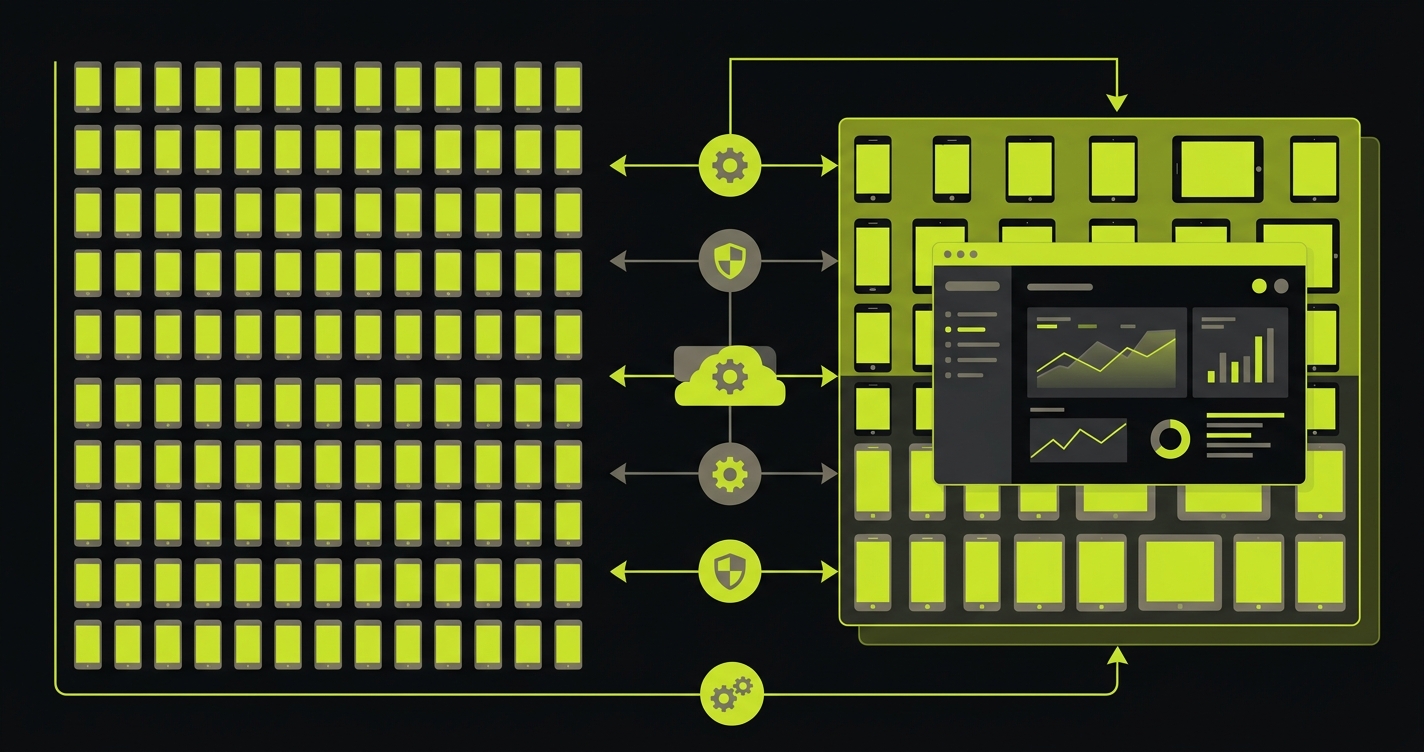
BrowserStack vs Sauce Labs: 15-Dimension Comparison
| Dimension | BrowserStack | Sauce Labs |
|---|---|---|
| Real device farm (iOS) | 2,000+ iOS devices | 800+ iOS devices |
| Real device farm (Android) | 2,500+ Android devices | 1,000+ Android devices |
| Browser / OS combinations | 3,500+ combos | 2,000+ combos |
| Max parallel sessions | Enterprise-dependent, typically 50-500+ | Enterprise-dependent, typically 50-500+ |
| Enterprise SSO | Yes (Enterprise tier) | Yes (available at lower tiers) |
| SAML support | Yes | Yes |
| Audit logging | Enterprise tier only | All enterprise plans |
| SOC 2 compliance | Type II certified | Type II certified |
| Test artifact retention | 60-90 days | 90+ days |
| Video recording quality | 1080p | 720p (configurable) |
| CI integrations | 50+ native integrations | 40+ native integrations |
| Appium support | Full support | Full support |
| Playwright support | Full (since 2022) | Full (added 2024) |
| Real-time debugging | Strong (DevTools integration) | Strong (Extended Debugging) |
| Pricing transparency | Published tiers, self-serve | Custom / contact sales |
The most differentiating dimensions are device farm scale, analytics, and pricing structure. Everything else (SSO, SAML, Appium, Playwright, CI integrations) is table stakes in 2026. Both platforms have ticked those boxes.
Device farm scale is where BrowserStack leads decisively. Roughly 3x more iOS devices and 2.5x more Android devices means BrowserStack can cover device/OS combinations that Sauce Labs simply does not have in fleet. For teams where mobile regression coverage is the primary constraint, this matters in practice, not just in spec sheets.
Analytics is where Sauce Labs pulls ahead. Sauce Insights is genuinely better than anything BrowserStack offers on the reporting side. If your QA team needs to identify which tests are flaky, which failures cluster around infrastructure versus code changes, and which test cases have been unreliable across the last 30 runs, BrowserStack cannot match that depth. Sauce Labs built the analytics layer because enterprise QA teams demanded it.
Pricing transparency shapes the evaluation process more than it shapes the final cost. BrowserStack lets you run the numbers yourself, model the cost against your parallel session needs, and sign up without a sales conversation. Sauce Labs' opacity means you need to invest time in a vendor evaluation before you know what you will pay. At small to mid-size scale, that friction often tips teams toward BrowserStack. At enterprise scale, Sauce Labs' account team often produces competitive pricing that closes the gap.
The blind spot both platforms share: neither one generates the tests that run on them. You bring your Playwright suite or your Selenium grid, plug in your credentials, and the platform executes. The hard part (deciding which user flows to test, writing those tests, keeping them passing as the codebase changes) stays entirely with your team. We built Autonoma to close exactly that gap. Autonoma reads your codebase and a Planner agent generates test cases from routes, components, and user flows, so the question of "which platform should run these tests" only comes after you have tests worth running.
BrowserStack vs Sauce Labs Pricing at Scale
BrowserStack publishes tiers. Sauce Labs negotiates. That asymmetry means every estimate for Sauce Labs carries wider error bars.
| Scale | BrowserStack (est. annual) | Sauce Labs (est. annual) |
|---|---|---|
| 100 parallel sessions | $50,000-$75,000/yr | $80,000-$120,000/yr |
| 500 parallel sessions | $150,000-$250,000/yr | $250,000-$400,000/yr |
| 1,000 parallel sessions | $300,000-$500,000/yr | $500,000-$800,000/yr |
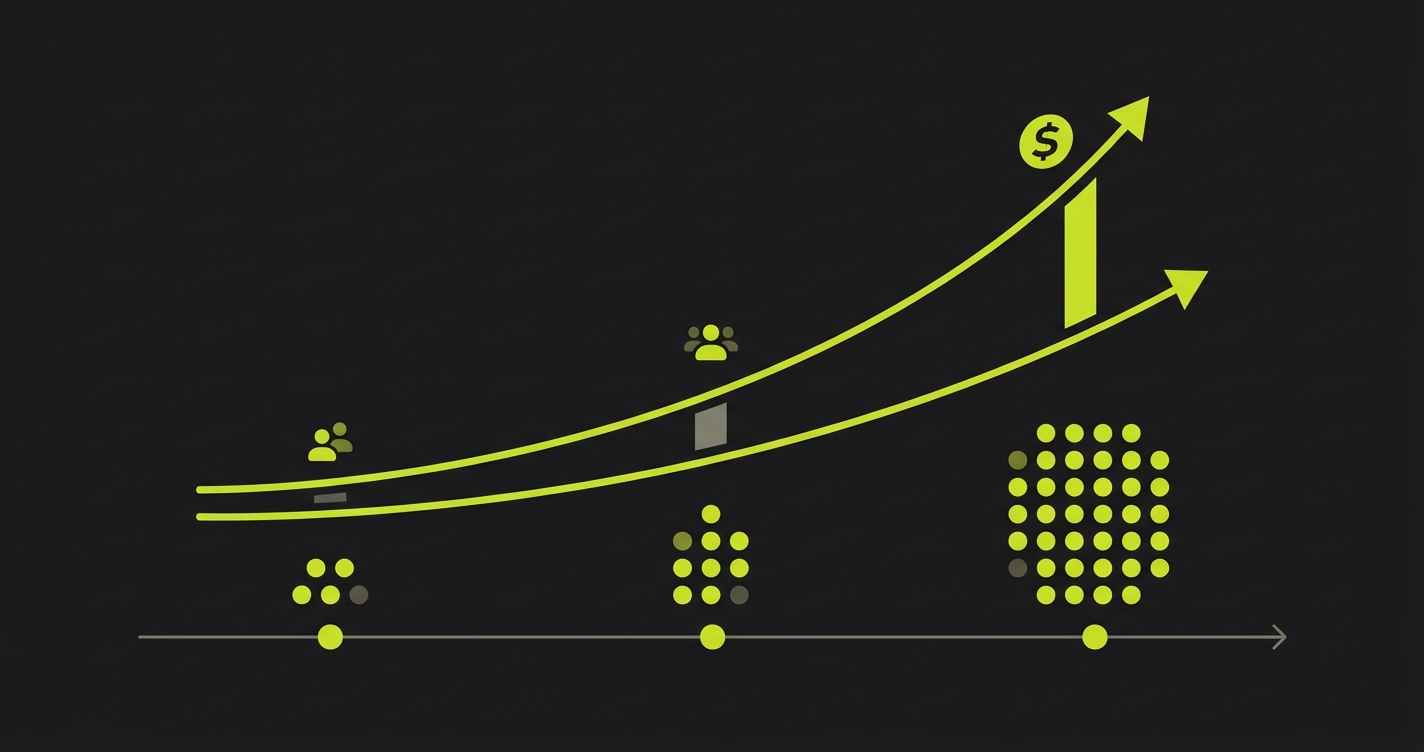
The gap is real at every tier, though it narrows at enterprise scale when Sauce Labs bundles Sauce Insights, Sauce Orchestrate, and dedicated support into contracts that BrowserStack charges separately for. Still, BrowserStack consistently comes in lower on the headline number.
Compliance features and tier thresholds also differ materially. BrowserStack gates SSO and advanced SAML at its Enterprise tier, which starts at roughly $50,000 per year minimum. Sauce Labs makes SSO and SAML available at lower price points, which matters for mid-market companies with SSO requirements that do not yet clear BrowserStack's enterprise floor.
At these price points, something worth modeling: infrastructure cost is only part of the real number. Teams in the $50,000-$150,000 per year range for execution infrastructure typically still spend 40% or more of QA engineering time writing and maintaining tests manually. That human cost frequently exceeds the platform cost. Autonoma generates tests from your codebase and a Maintainer agent keeps them passing as code changes, so your QA budget concentrates on execution infrastructure rather than human test-writing hours.
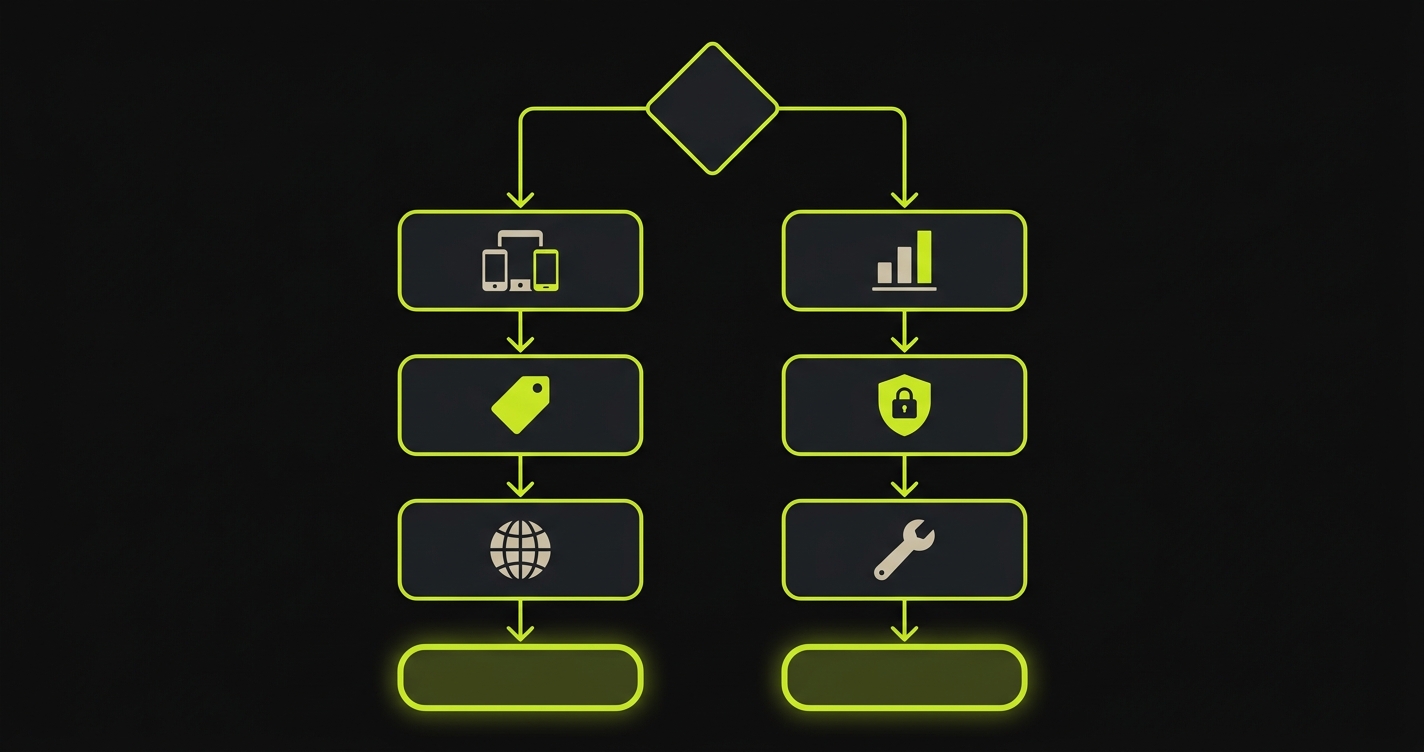
When Each Platform Wins
Choose BrowserStack when:
You need the broadest device and browser matrix available. If your product supports a long tail of mobile device and OS combinations, BrowserStack's farm is the deepest in the industry. No other platform at comparable price points covers as many iOS and Android devices.
Your team values self-serve pricing and predictable cost modeling. BrowserStack publishes tiers. You can forecast annual cost against your parallel session requirements without a procurement conversation.
Mobile testing is your primary use case. BrowserStack's DevTools integration, video recording quality at 1080p, and device fleet breadth make it the default recommendation when mobile coverage drives the evaluation.
Documentation and community size matter to your team. BrowserStack has been the market leader long enough to accumulate the largest corpus of community guides, Stack Overflow answers, and third-party tutorials.
If you are evaluating Sauce Labs alternatives specifically, BrowserStack is the first name on most lists. For a broader look at alternatives in this space, see our BrowserStack alternatives breakdown.
Choose Sauce Labs when:
Enterprise compliance features are non-negotiable and your contract does not clear BrowserStack's Enterprise tier floor. Sauce Labs provides audit logging and advanced SSO at lower price points, which matters for mid-market companies with InfoSec requirements.
You need deep analytics. Sauce Insights' flakiness scoring, visual diffing, and failure clustering give QA leads data that BrowserStack's reporting layer does not provide. If your team runs structured retrospectives on test suite health, that analytics layer changes the conversation.
Native mobile SDK support matters. If your test suite includes Espresso tests for Android or XCUI tests for iOS, Sauce Labs' first-party SDK maintenance surfaces framework-specific failure context that generic Appium wrappers do not.
Your organization has an existing relationship with Sauce Labs' parent company toolchain. Sauce Labs integrates tightly with other enterprise testing tools, and procurement teams with existing vendor relationships often prefer to consolidate.
If you are evaluating BrowserStack alternatives, Sauce Labs is the enterprise-grade option. For a direct comparison with LambdaTest, another strong alternative to both platforms, see our Sauce Labs vs LambdaTest breakdown. And if you are evaluating the full three-way picture, our BrowserStack vs LambdaTest comparison closes the triangle.
The Gap Both Platforms Leave Open
Whichever platform you choose for execution, the bottleneck for most teams is not cloud infrastructure. It is generating and maintaining the tests that run on it. Teams with 20 tests covering 10% of their critical flows do not have an execution problem. They have a coverage problem.
Autonoma handles that layer. A Planner agent reads your codebase (routes, components, API endpoints, user flows) and generates test cases from code analysis. A Maintainer agent keeps those tests passing as your code changes. The result is a growing, self-healing test suite that runs on whichever cloud platform you choose. BrowserStack, Sauce Labs, or anything else.
FAQ
BrowserStack has the larger real device farm by a significant margin (2,000+ iOS devices, 2,500+ Android devices versus Sauce Labs' 800+ iOS and 1,000+ Android). For most mobile testing use cases, BrowserStack is the stronger choice on raw device availability. Sauce Labs narrows the gap at enterprise scale and offers deeper Espresso and XCUI SDK support for native mobile framework users.
BrowserStack publishes tiered pricing and is generally cheaper at mid-market scale. Sauce Labs relies more heavily on custom enterprise contracts and tends to price higher, particularly for teams needing 100+ parallel sessions. At the 100-session scale, expect BrowserStack to run $50,000-$75,000 per year versus Sauce Labs at $80,000-$120,000 per year. Both platforms negotiate significantly at enterprise scale.
Yes. Both platforms support Playwright fully. BrowserStack has offered Playwright support since 2022. Sauce Labs added full Playwright support in 2024. For most Playwright-based CI pipelines, both platforms deliver comparable results. Sauce Labs' first-party SDK maintenance gives it a slight edge for teams using multiple frameworks simultaneously.
Both are SOC 2 Type II certified and support SAML-based SSO. Sauce Labs includes audit logging on all enterprise plans and makes SSO available at lower tiers. BrowserStack restricts its most advanced compliance features (audit logging, advanced SSO) to its Enterprise tier, which starts at approximately $50,000 per year. For organizations with strict audit requirements, Sauce Labs provides those controls at a lower entry point.
Yes, though it is uncommon and adds overhead. Some larger organizations run BrowserStack for mobile device testing (where its farm is larger) and Sauce Labs for analytics-heavy web testing. Most teams standardize on one platform. Running both means maintaining two sets of credentials, two billing relationships, and two configurations in your CI pipeline.
No. That framing misunderstands what each does. BrowserStack and Sauce Labs are cloud execution infrastructure: they run your tests across real devices and browsers in parallel. Autonoma generates and maintains tests from your codebase. If you have no tests, a cloud grid gives you nothing to run. If you have tests but no execution infrastructure, those tests still need somewhere to run at scale. Most production setups benefit from both: Autonoma for coverage generation and self-healing, a cloud platform for cross-browser parallel execution.
Device farm scale and pricing transparency. BrowserStack has a materially larger real device farm (roughly 3x more iOS and Android devices) and publishes pricing tiers that let you self-serve without a sales call. Sauce Labs counters with stronger analytics (Sauce Insights includes flakiness scoring, visual diffing, and failure clustering), deeper native mobile SDK support, and enterprise compliance features available at lower tiers. If mobile coverage and pricing predictability drive your decision, BrowserStack wins. If analytics and enterprise compliance features are the priority, Sauce Labs wins.