
Looking for BrowserStack alternatives? You're not alone. Engineering teams are leaving BrowserStack due to expensive pricing ($13,500/year for just 5 devices), strict parallel device limits, and 12+ hour regression suites. In this guide, I'll show you 5 better alternatives, including Autonoma (99% cheaper), AWS Device Farm (unlimited testing), and BrowserBase, with real pricing comparisons, feature breakdowns, and migration guides to help you switch.
Quick summary: BrowserStack costs $1,125/month ($13,500/year) for 5 devices. Better alternatives: Autonoma (start free on Vercel, then $20/mo Pro or $1,500/mo Enterprise with AI self-healing and unlimited parallels, 99% cost savings), AWS Device Farm ($250/mo unlimited testing, AWS native), BrowserBase ($20/mo for 100 hours, browser automation), Sauce Labs (custom enterprise pricing, better device availability), GitHub Actions (free for public repos, 2,000 min/mo for private repos, CI/CD native). Start with Autonoma's free tier.
Why Teams Are Leaving BrowserStack
If you're paying $2,100+ per year for BrowserStack and still hitting parallel device limits, you're not alone. Over the past year, I've watched engineering teams struggle with the same frustrations.
The pricing is particularly brutal. For enterprise customers, live testing starts at $150 per month, plus $30 per user. With companies that have thousands of employees across QA, Product, and stakeholder teams, costs spiral quickly. For automated testing, the 5-device plan costs $1,125 per month (around $15,000 per year). Need more than 5 devices? You have to contact their sales team.
A VP of Engineering at a fintech company told me: "We're capped at 5 parallel tests on BrowserStack. Our regression suite takes 12 hours to run. We can't scale."
Another team shared: "BrowserStack quoted us $15,000 annually for 5 parallels. Our AWS bill for the entire infrastructure is less than that."
The problems are consistent:
- Parallel device limits: You're paying per month yet capped by device count
- Pricing escalation: Enterprise plans with per-user fees that become absurdly expensive
- Complex setup: Steep learning curve for new team members
- Over-reliance on physical devices: Most tests don't need real devices
- Long test runs: Some clients experienced 12+ hour regressions
If you're searching for "BrowserStack alternatives," you're likely experiencing at least one of these problems. The good news? There are better options, some cheaper, some faster, some with zero maintenance.
Let me show you what's actually available for 2026.
What BrowserStack Does Well (Being Honest)
Before exploring alternatives, let's be fair about where BrowserStack excels. Understanding its strengths helps you know what features matter when evaluating replacements.
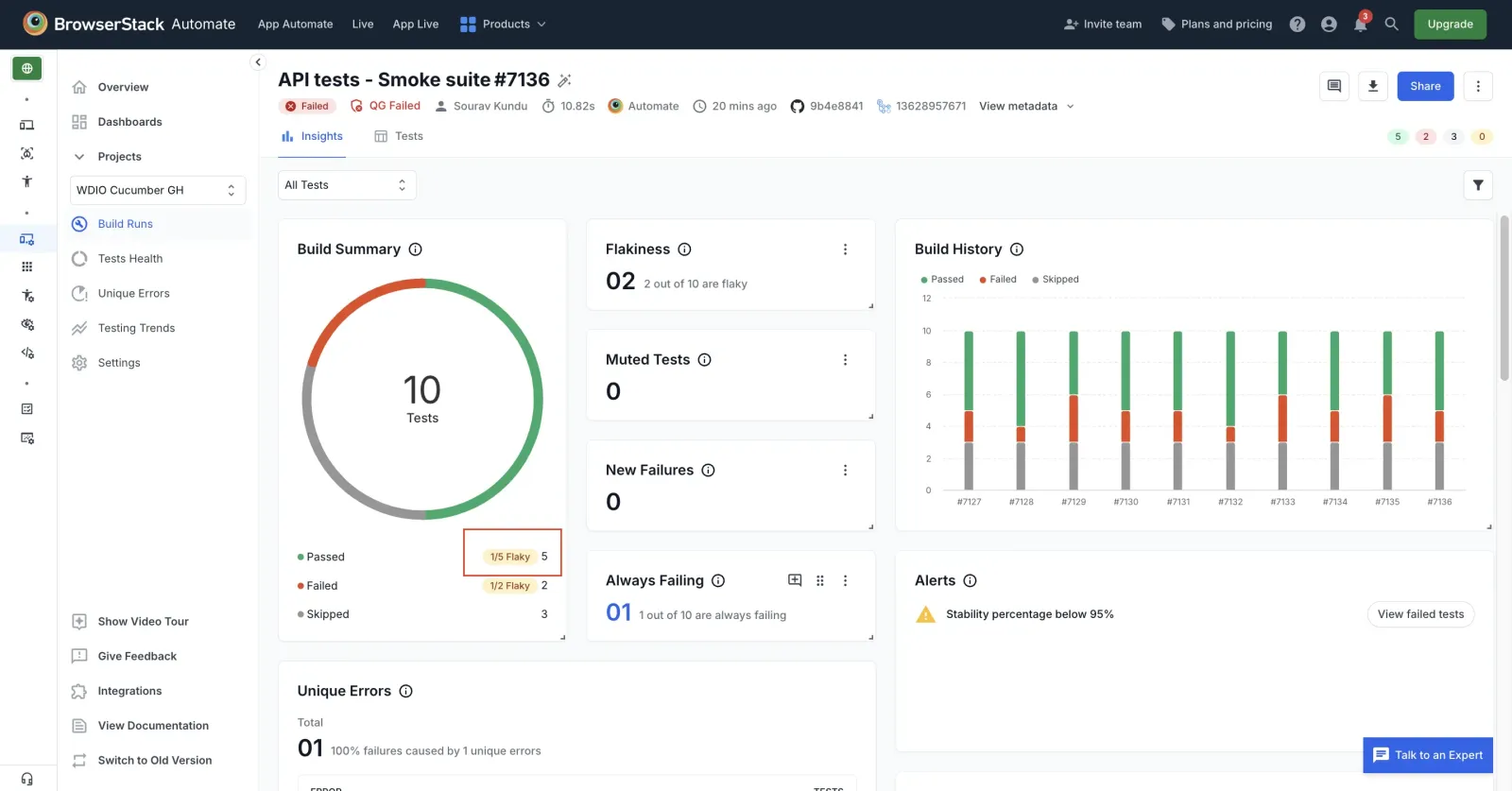
BrowserStack's real strengths:
- Massive browser/device matrix: 3,500+ browser/device combinations
- Real device testing: Actual iOS and Android devices, not just emulators
- Strong integrations: Works with Jenkins, CircleCI, GitHub Actions, and 50+ CI/CD tools
- Debugging tools: Screenshots, video recordings, network logs, console logs
- Established ecosystem: Large community, extensive documentation
- Local testing: Test sites behind firewalls with BrowserStack Local
BrowserStack became popular for good reasons. It solved real problems in 2011 when cross-browser testing was genuinely difficult.
The issue isn't that BrowserStack is bad. It's that you're paying around $15,000 per year for a mediocre service that takes hours to complete even basic test suites. Better alternatives now exist, alternatives that cost less, scale better, and in some cases, eliminate maintenance entirely.
Now let's examine where BrowserStack falls short and why teams are actively searching for replacements.
Where BrowserStack Falls Short
1. Parallel Device Limits Create Bottlenecks
BrowserStack's pricing tiers cap your parallel test execution:
- Desktop plan ($99/month): 1-5 parallels
- Desktop & Mobile ($175/month): 1-5 parallels
- Desktop & Mobile Pro ($225/month): 1-5 parallels
Notice the pattern? You're paying more for features, not capacity.
To get 10 parallels, you need Enterprise pricing (custom quotes starting at $10,000+ annually). To get 20 parallels, you're looking at $15,000-$25,000 per year.
Real impact: One client had 500 E2E tests. At 5 parallels, their suite took 12 hours. At 20 parallels, it would take 3 hours, but that meant quintupling their BrowserStack spend.
They couldn't afford to scale. Their testing became a release bottleneck.
2. Prohibitively Expensive at Scale
How Much Does BrowserStack Cost vs Alternatives?
Let's do the math on what BrowserStack actually costs:
| Team Size | Parallel Tests Needed | BrowserStack Annual Cost | Cost Per Parallel |
|---|---|---|---|
| Small (5 devs) | 5 parallels | $2,100 | $420/parallel |
| Medium (15 devs) | 15 parallels | $12,000+ | $800/parallel |
| Large (30 devs) | 30 parallels | $25,000+ | $833/parallel |
| Enterprise (100 devs) | 50+ parallels | $50,000+ | $1,000/parallel |
Key Takeaway: As you scale, the cost per parallel increases. That's the opposite of how cloud pricing should work. BrowserStack charges 2.4x more per parallel for large teams than small ones.
3. Complexity and Learning Curve
Setting up BrowserStack requires:
- Account configuration: Set up projects, users, permissions
- Local testing setup: Install BrowserStack Local binary
- CI/CD integration: Configure environment variables, manage credentials
- Test framework configuration: Add BrowserStack capabilities to every test
- Debugging infrastructure: Learn their debugging tools, log analysis
One QA lead told me: "It took our team 2 weeks to fully onboard BrowserStack. We're still discovering features we didn't know existed."
For teams wanting quick setup, this is friction.
4. Physical Device Dependency
BrowserStack's core value proposition is real devices. That's also its weakness.
When you actually need real devices:
- Testing device-specific features (camera, GPS, biometrics), though Autonoma allows configuring geolocation, camera, and biometrics on emulators (something most platforms don't offer), with physical device support coming soon
- Final validation before production release
- Debugging device-specific issues
When emulators are sufficient:
- Functional E2E tests (login, checkout, forms)
- Regression testing
- CI/CD automated tests
By forcing you to use real devices for everything, BrowserStack makes you overpay for unnecessary infrastructure.
Modern alternatives let you choose: use emulators for 90% of tests (fast, cheap) and real devices for the final 10% (validation, device features).
5. Test Maintenance Burden
BrowserStack executes your tests, it doesn't maintain them.
When your UI changes, your selectors break. When your button text changes, your tests fail. When your designer updates Tailwind classes, everything breaks.
You still spend hours maintaining tests every sprint. For teams running comprehensive test suites, this maintenance burden is particularly heavy during regression testing cycles when the entire application needs to be validated.
Some alternatives solve this with AI-powered self-healing. BrowserStack doesn't.
Now let's explore the alternatives that address these problems.
The 5 Better BrowserStack Alternatives
1. Autonoma (Best Overall: AI-Powered, Zero Maintenance)
What it is: AI-powered test automation platform with vertical integration across web, iOS, and Android.
Of course, I'm starting with our own tool, but I need to address something we hear constantly from teams migrating from BrowserStack and AWS Device Farm. They're often skeptical when we explain what Autonoma can do. After being burned by expensive platforms that promised much and delivered little, they find it hard to believe we can provide unlimited parallels, self-healing tests, and cross-platform coverage at a fraction of the cost. But here's the difference: we built Autonoma from the ground up to solve the exact problems those platforms create.
Key advantages over BrowserStack:
Agent-driven, not recorded: A Planner agent reads your codebase, routes, components, and user flows, and plans test cases from that analysis. A Diffs Agent watches every PR and updates the test plan when the code changes, so tests never need to be re-recorded.
No parallel device limits: Spawn unlimited test instances. Your regression suite scales with your team.
Faster device spawning: Web tests spawn in <10 seconds. Mobile devices in <1 minute. BrowserStack can take 3-5 minutes per device.
100% vertical integration: We control the entire stack, devices, browsers, orchestration, reporting. This means better performance and significantly lower costs.
Zero-maintenance test execution: The Executor agent runs the planned tests on a live preview environment, and the Reviewer agent classifies each result as a real bug, an agent error, or a test-plan mismatch, so nobody manually updates selectors every sprint.
Smart device usage: Run functional tests on emulators (fast, cheap). Only use physical devices for final validation. This is how testing should work.
Visual validation included: Automatically catches broken images, cut-off text, overlapping elements, issues BrowserStack-executed tests miss.
Platform coverage: Web (Chrome, Firefox, Safari), iOS (simulator + real devices), Android (emulator + real devices). All in one platform.
Pricing:
- Free tier: Start free on Vercel (always start here)
- Pro plan: $20/month for your entire company (not per user, no priority queue)
- Enterprise plan: $1,500/month (prioritized execution, unlimited tests)
Significantly lower than BrowserStack for equivalent capacity due to vertical integration eliminating markup on device infrastructure.
Best for:
- Teams that don't want to waste time and money on test maintenance
- Organizations wanting to increase time to value and ship faster with autonomous testing
- QA teams needing to enable non-technical stakeholders to create tests
- Engineering leaders wanting predictable, affordable costs
Why it's better than BrowserStack:
- No device limits = no scaling bottleneck
- Self-healing = zero maintenance hours
- Vertical integration = 40-60% cost savings
- Visual validation = catches bugs BrowserStack misses
- Faster spawning = shorter CI/CD pipelines
Migration from BrowserStack:
- Start with the free tier at getautonoma.com (always start here if you're on Vercel)
- Connect your repo so the Planner agent can read your codebase and plan test cases
- Run tests in parallel (unlimited capacity)
- Let the Diffs Agent handle UI and code changes automatically on every PR
- Upgrade to Pro ($20/month) or Enterprise ($1,500/month) as needed
The biggest difference? BrowserStack executes tests you maintain forever. Autonoma executes tests that maintain themselves.
2. AWS Device Farm (Best for AWS Users)
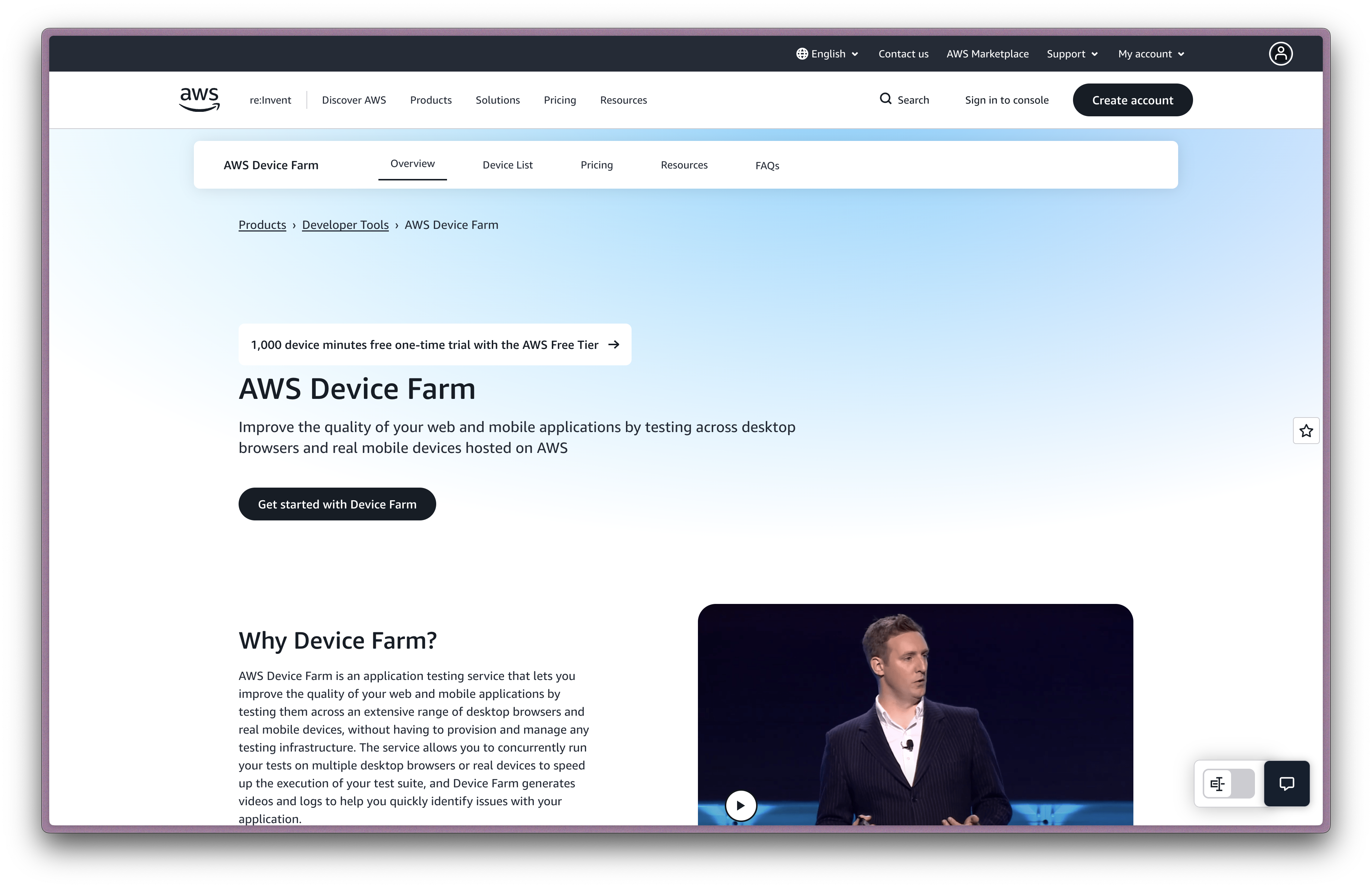
What it is: Amazon's cloud-based device testing service integrated with AWS infrastructure.
If you're already using AWS and want an alternative to BrowserStack, Device Farm is the obvious choice. One of our clients called it "the best alternative to BrowserStack if you're not using Autonoma."
Key features:
- Real devices: Access to iOS and Android physical devices
- Elastic scaling: No hard parallel limits, pay for what you use
- AWS integration: Native integration with CodePipeline, S3, CloudWatch
- Better availability: More consistent device availability than BrowserStack
- Flexible pricing: Pay-as-you-go or unlimited plans
Pricing:
- Pay-as-you-go: $0.17 per device minute (first 1,000 minutes free)
- Unlimited testing: Starting at $250/month for unlimited automated tests
- Private devices: Starting at $200/month for dedicated devices
- Browser testing: $0.005 per instance minute
Comparison to BrowserStack:
- BrowserStack Desktop & Mobile: $2,100/year (5 parallels max)
- AWS Device Farm Unlimited: $3,000/year (unlimited parallels)
You get unlimited capacity for 43% more cost. Or use pay-as-you-go and potentially spend less.
Best for:
- Teams already on AWS infrastructure
- Organizations wanting elastic scaling
- Teams needing predictable unlimited usage
- Engineers comfortable with AWS services
Limitations:
- Less polished UI than BrowserStack
- Steeper learning curve for non-AWS users
- Requires AWS account management
- Documentation less comprehensive than BrowserStack
Why choose AWS Device Farm over BrowserStack:
- No parallel limits: Scale as needed
- Better pricing: Unlimited for $3k/year vs BrowserStack's $10k+ for 10 parallels
- AWS-native: If you're already on AWS, integration is seamless
- Elastic availability: Better device availability during peak times
3. Sauce Labs (Device Testing Only)
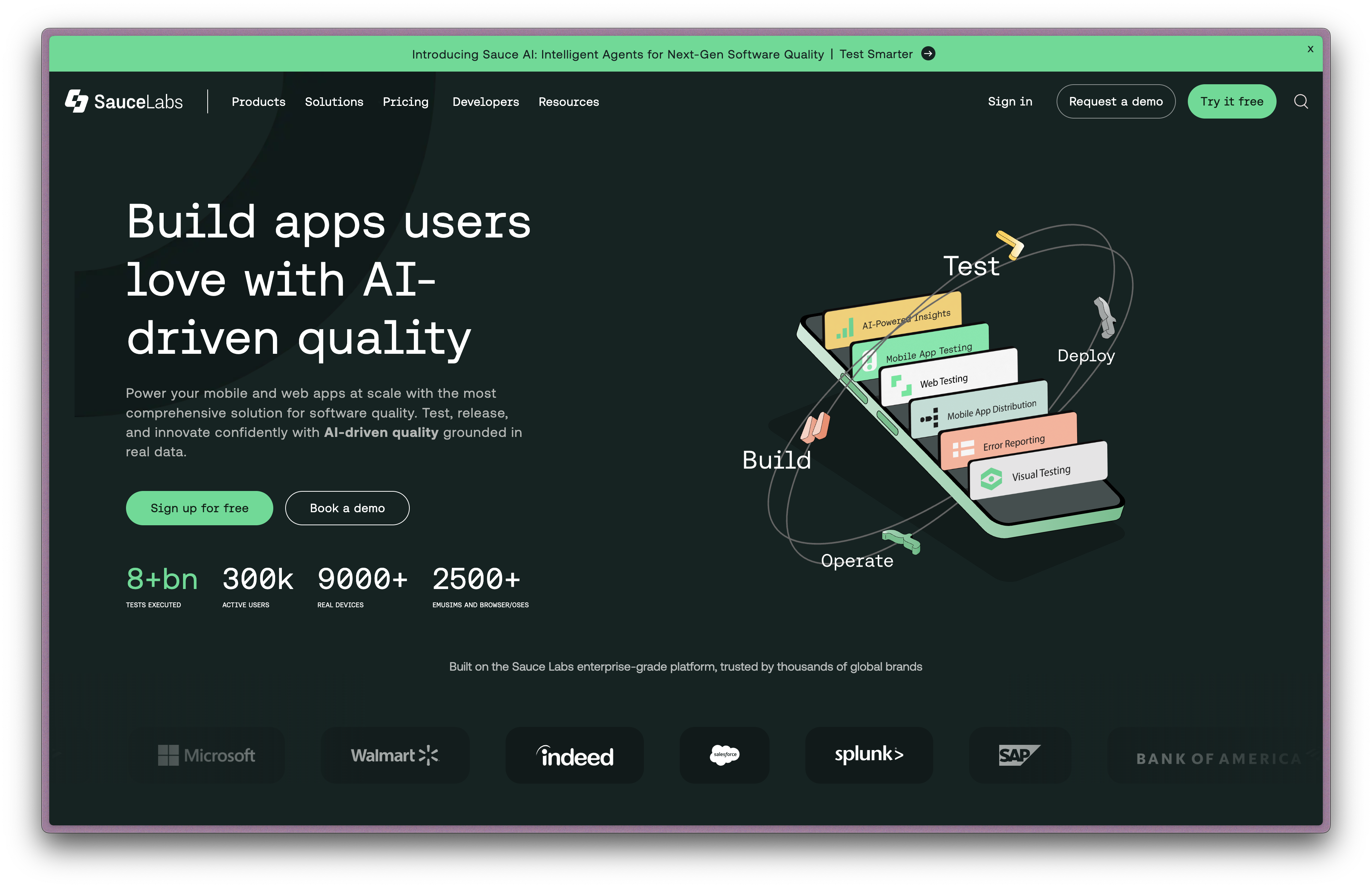
What it is: Enterprise-grade device cloud for real device testing.
Sauce Labs offers real device testing similar to BrowserStack, with a focus on physical mobile devices. Unlike BrowserStack, they're known for better device availability during peak times.
Key features:
- Real device cloud: 2,000+ device/browser combinations
- Better device availability: More consistent than BrowserStack during high-demand periods
- CI/CD integrations: Works with major enterprise pipelines
Pricing:
- Custom enterprise pricing (not publicly listed)
- Generally comparable to BrowserStack at scale
- Still expensive with parallel limits
Limitations:
- Still has parallel limits like BrowserStack
- Expensive (comparable to BrowserStack pricing)
- Requires coding and deployment (not low-code)
- No self-healing - you maintain tests manually
- Complex setup - takes time to configure properly
Sauce Labs solves device availability better than BrowserStack, but you're still paying enterprise prices for parallel limits and manual test maintenance.
4. BrowserBase (Best for RPA + Browser Automation)
What it is: Cloud browser automation infrastructure designed for RPA, web scraping, and testing.
BrowserBase provides managed browser infrastructure that's optimized for automation at scale. Unlike traditional device clouds focused on testing, BrowserBase excels at browser automation tasks including E2E testing.
Key features:
- Managed browser infrastructure: Serverless browsers with zero maintenance
- Anti-detection capabilities: Built for automation that needs to bypass bot detection
- Session persistence: Long-running browser sessions for complex workflows
- Stealth mode: Browsers configured to avoid detection by anti-bot systems
- API-first approach: Integrate via simple API calls
Pricing:
- Hobby plan: $20/month (100 hours)
- Startup plan: $300/month (2,000 hours)
- Growth plan: $1,500/month (15,000 hours)
- Enterprise: Custom pricing
Best for:
- Teams needing browser automation beyond just testing
- Organizations running web scraping or RPA workflows
- Teams wanting serverless browser infrastructure
- Companies needing anti-detection capabilities
Limitations:
- Not a traditional testing platform - focused on browser automation
- No device farm - web browsers only (no mobile devices)
- No built-in test framework - bring your own tools
- Pricing based on hours - can get expensive for extensive testing
BrowserBase is excellent if you need general browser automation, but it's not a direct BrowserStack replacement for mobile device testing.
5. GitHub Actions (Best for CI/CD Native Testing)
What it is: GitHub's CI/CD platform that can run automated tests directly in your workflow.
GitHub Actions isn't a device cloud, but it's worth mentioning because you can run iOS simulator tests, Android emulator tests, and browser tests directly in your CI/CD pipeline without third-party services.
Key features:
- Native CI/CD integration: Tests run in your GitHub workflow
- macOS runners: Can run iOS simulator tests
- Linux/Windows runners: Browser and Android emulator testing
- Free tier for public repos: 2,000 minutes/month for private repos
- Self-hosted runners: Use your own infrastructure
Pricing:
- Free tier: 2,000 CI/CD minutes/month (private repos)
- Team plan: $4/user/month (3,000 minutes/month)
- Enterprise: Custom pricing
- Per-minute pricing: $0.008/minute (Linux), $0.08/minute (macOS)
Best for:
- Teams already using GitHub
- Organizations wanting CI/CD native testing
- Teams comfortable setting up test environments
- Projects with open-source code (unlimited free minutes)
Limitations:
- No real devices - emulators and simulators only
- Setup complexity - requires configuring test environments
- No device cloud UI - everything is code-based
- Minutes add up - macOS runners are 10x more expensive than Linux
GitHub Actions works well for teams comfortable with infrastructure-as-code who want to avoid third-party device clouds entirely. For iOS simulator testing, it's one of the few alternatives that doesn't require external services.
Complete BrowserStack Alternatives Comparison
Which BrowserStack Alternative Has the Best Features?
Here's how all 5 alternatives stack up against BrowserStack across key dimensions:
| Alternative | Starting Price | Parallel Limits | Self-Healing | Setup Time | Best For |
|---|---|---|---|---|---|
| Autonoma | Free (Vercel), $20/mo Pro, $1,500/mo Enterprise | Unlimited | ✅ Full AI self-healing | 2-5 minutes | Zero maintenance, all platforms |
| AWS Device Farm | $250/month unlimited | Unlimited (pay-per-use or flat) | ❌ No | ~1 week (setup + deployment) | AWS users, elastic scaling |
| Sauce Labs | Custom ($$$$) | Capped by plan | ❌ No | ~1 week (coding + deployment) | Device availability, enterprises |
| BrowserBase | $20/month (100 hours) | Hour-based limits | ❌ No | 1-2 hours (API integration) | RPA, browser automation, web scraping |
| GitHub Actions | Free (2,000 min/mo), $0.008-0.08/min | Based on CI/CD minutes | ❌ No | Days (environment configuration) | CI/CD native, GitHub users |
| BrowserStack | $1,125/month (5 devices, automated) | Capped (5-50 typical) | ❌ No | ~1 week (coding + deployment) | Established platform (expensive) |
Key Takeaway: Only Autonoma offers AI self-healing with unlimited parallels. All other alternatives (including BrowserStack) require manual test maintenance, costing teams $24,000+ per year in developer time.
BrowserStack Alternatives Cost Comparison: Real Pricing Analysis
Let's calculate real annual costs for a mid-sized team (15 developers, 30 parallel tests needed):
| Tool | Annual Cost | Parallel Tests | Maintenance Hours/Year | Total Cost (inc. maintenance)* |
|---|---|---|---|---|
| BrowserStack | $13,500 (5 devices) | 5 devices | 240 hours | $37,500 |
| AWS Device Farm | $3,000 | Unlimited | 240 hours | $27,000 |
| Sauce Labs | $22,000 (estimated) | 30 | 240 hours | $46,000 |
| Autonoma Pro | $240 ($20/mo) | Unlimited | 0 hours (self-healing) | $240 |
| Autonoma Enterprise | $18,000 ($1,500/mo) | Unlimited (prioritized) | 0 hours (self-healing) | $18,000 |
*Assumes $100/hour fully-loaded developer cost for maintenance
Key insight: The tool subscription is only 30-50% of total cost. Maintenance is where real costs hide.
If you pay a developer $100k/year (roughly $50/hour), 240 hours of maintenance costs $24,000 annually. That's why self-healing matters.
Annual savings by switching to Autonoma:
From BrowserStack ($37,500 total) to:
- Autonoma Pro: $37,260 saved annually (99% cost reduction)
- Autonoma Enterprise: $19,500 saved annually (52% cost reduction with prioritized execution)
From AWS Device Farm ($27,000 total) to:
- Autonoma Pro: $26,760 saved annually
- Autonoma Enterprise: $9,000 saved annually (plus prioritized execution)
Over 3 years, switching from BrowserStack to Autonoma Pro saves $111,780.
How to Migrate from BrowserStack to Better Alternatives
If you've decided to switch, here's how to migrate smoothly:
Phase 1: Evaluation (Week 1)
Choose your alternative based on your priorities:
- Want zero maintenance and best value? → Autonoma (start with free tier)
- Already on AWS? → AWS Device Farm
- Need browser automation beyond testing? → BrowserBase
- Want CI/CD native testing? → GitHub Actions
Set up trial account:
- Sign up for trial/free tier
- Connect to your test environment
- Run 5-10 existing tests to validate
Measure baseline metrics:
- Current BrowserStack parallel capacity
- Average test execution time
- Monthly device minutes used
- Current maintenance hours/month
Phase 2: Pilot (Weeks 2-3)
Migrate 20% of test suite:
- Start with most stable tests (least maintenance)
- Focus on critical user flows
- Run in parallel with BrowserStack (don't cut over yet)
For code-based alternatives (AWS, LambdaTest, Sauce Labs):
- Update test capabilities/configuration
- Change device cloud endpoint URLs
- Update CI/CD environment variables
- Verify test results match BrowserStack
For AI-agent alternatives (Autonoma, Momentic):
- Connect your repo so the platform can plan tests from your codebase
- Run tests in parallel with existing suite
- Compare results for accuracy
Track pilot metrics:
- Test success rate vs BrowserStack
- Execution time differences
- Device availability/reliability
- Cost for pilot period
Phase 3: Cutover (Week 4)
If pilot succeeds:
- Migrate remaining 80% of test suite
- Update all CI/CD pipelines to new platform
- Train team on new tool
- Cancel BrowserStack subscription
If using Autonoma (codeless alternative):
- Plan 2-5 minutes per test to re-record
- 100 tests = 200-500 minutes (3-8 hours total migration)
- Can parallelize across team members
- No code changes needed (clean migration)
If using code-based alternative (AWS, LambdaTest):
- Update configuration files
- Change endpoint URLs
- Update environment variables
- Usually <1 day for complete migration
If using integrated platform (Katalon, Testim):
- May need to recreate tests in new format
- Longer migration (days to weeks)
- More upfront investment, less ongoing maintenance
Phase 4: Optimization (Month 2)
Optimize for new platform:
- Increase parallel execution (if no limits)
- Adjust device/browser matrix based on actual usage
- Set up advanced features (visual testing, analytics)
- Implement self-healing (if applicable)
Measure ROI:
- Compare actual costs to BrowserStack
- Track maintenance hours saved
- Monitor test reliability improvements
- Calculate total cost of ownership
Common Migration Gotchas
API compatibility issues:
- Different capability names/formats
- Different authentication methods
- Different result reporting formats
Solution: Most alternatives offer BrowserStack-compatible APIs for easier migration.
Device availability differences:
- Different devices available
- Different browser versions
- Different OS versions
Solution: Audit your actual device usage in BrowserStack. Most teams test 10-15 configurations but pay for 3,500+.
CI/CD integration friction:
- Different environment variables
- Different credential management
- Different status reporting
Solution: Most alternatives offer plugins for popular CI/CD tools (Jenkins, CircleCI, GitHub Actions).
Team training and adoption:
- New UI to learn
- Different workflows
- Resistance to change
Solution: Start with enthusiastic early adopters, create internal documentation, run lunch-and-learns.
Decision Framework: Which Alternative Is Right for You?
Use this decision tree to choose your best BrowserStack alternative:
Question 1: What's your top priority?
A) Eliminate test maintenance and get best value → Choose Autonoma (AI self-healing, start free, scale to $20-$1,500/mo)
B) Stay within AWS ecosystem → Choose AWS Device Farm (native AWS integration, $250/mo unlimited)
C) Need browser automation beyond testing (RPA, scraping) → Choose BrowserBase (serverless browsers, API-first)
D) Want CI/CD native testing without third-party services → Choose GitHub Actions (test in CI/CD pipeline directly)
Question 2: What's your budget constraint?
A) Very tight (<$1,000/year) → Autonoma Free (Vercel) or GitHub Actions Free (public repos)
B) Small budget ($240-$3,000/year) → Autonoma Pro ($20/mo for whole company) or AWS Device Farm ($250/mo)
C) Medium budget ($3,000-$20,000/year) → Autonoma Enterprise ($1,500/mo) or AWS Device Farm ($3k/year)
D) Flexible (>$20,000/year) → Autonoma Enterprise best ROI (eliminates maintenance costs)
Question 3: What's your technical profile?
A) Strong development team, want infrastructure control → AWS Device Farm or GitHub Actions (code-based, infrastructure-as-code)
B) Mixed technical team (devs + non-technical QA) → Autonoma (AI agents generate tests from your codebase, QA reviews the plans)
C) Need browser automation for multiple use cases → BrowserBase (RPA, testing, scraping in one platform)
Question 4: What platforms do you test?
A) Web only → BrowserBase (web browsers), GitHub Actions (browser tests), or Autonoma (best maintenance)
B) Web + Mobile → Autonoma (all platforms) or AWS Device Farm (mobile focus)
C) iOS simulators specifically → GitHub Actions (macOS runners) or Autonoma (simulators + real devices)
Question 5: What's your team size?
A) Small (1-5 people) → Autonoma Pro ($20/mo for whole team) or GitHub Actions Free
B) Medium (5-20 people) → Autonoma Pro/Enterprise (scales without per-user fees)
C) Large (20+ people) → Autonoma Enterprise ($1,500/mo unlimited, no per-user fees)
Quick Recommendations by Persona:
VP of Engineering (budget owner): Choose Autonoma. Start free, scale to $20 or $1,500/mo. Eliminate $24k/year maintenance costs, get unlimited scaling, protect developer time for features.
QA Manager (execution owner): Start with Autonoma Free, upgrade to Pro ($20/mo) as needed. If already on AWS: AWS Device Farm.
Staff Engineer (technical owner): If you want infrastructure control: AWS Device Farm or GitHub Actions If you want speed and zero maintenance: Autonoma
Startup Founder (doing everything): Autonoma Free (if on Vercel) or Autonoma Pro ($20/mo). Fastest setup, zero maintenance, scales as you grow.
Autonoma Free (on Vercel) is the cheapest option to start. For paid plans, Autonoma Pro at $20/month for your entire company is dramatically cheaper than BrowserStack's $1,125/month. When you factor in maintenance costs, Autonoma saves $37,000+/year compared to BrowserStack since self-healing eliminates the $24,000/year in maintenance time.
Most cloud device platforms, including Autonoma, AWS Device Farm, and Sauce Labs, offer a free trial or limited free tier that includes access to their device clouds. However, 'free forever' access to a large fleet of real physical devices is rare due to the high maintenance costs. Autonoma offers the best value with a generous free tier on Vercel that includes emulator and simulator access, which is sufficient for 90% of functional testing needs.
Autonoma is the best overall alternative to BrowserStack for most teams. Start with the free tier on Vercel, then scale to Pro ($20/month for your whole company) or Enterprise ($1,500/month). It offers unlimited parallel testing, AI-powered self-healing that eliminates maintenance, and cross-platform support (web, iOS, Android) at dramatically lower total cost of ownership. For teams already on AWS infrastructure, AWS Device Farm ($250/month unlimited) is also excellent.
Yes. Autonoma and AWS Device Farm both offer unlimited parallel testing. AWS Device Farm charges $250/month for unlimited automated testing, just $3,000/year. Autonoma offers unlimited parallels starting free (Vercel), then $20/month Pro or $1,500/month Enterprise for prioritized execution. Both are vastly cheaper than BrowserStack's $13,500/year for just 5 devices.
Yes. Autonoma offers full AI-powered self-healing that automatically adapts to UI changes, eliminating test maintenance entirely. Traditional device clouds like AWS Device Farm, Sauce Labs, and BrowserStack do not offer self-healing, you must manually maintain all tests.
Most teams save 90%+ on total costs by switching from BrowserStack to Autonoma. For a typical team: BrowserStack costs $37,500/year total ($13,500 tool + $24,000 maintenance), while Autonoma Pro costs $240/year total with zero maintenance (99% savings). Autonoma Enterprise costs $18,000/year with zero maintenance (52% savings with prioritized execution).
Yes. AWS Device Farm offers unlimited automated testing for $250/month ($3,000/year). BrowserStack charges $13,500/year for just 5 devices in automated testing. For teams needing significant parallel capacity, AWS Device Farm is 78% cheaper than BrowserStack. The trade-off is a less polished UI, week-long setup time, and no self-healing.
Yes, with Autonoma. A Planner agent reads your codebase and generates the test cases automatically, so product managers, designers, and QA team members review and approve test plans instead of writing test scripts. Traditional device clouds like AWS Device Farm, Sauce Labs, and BrowserStack require coding knowledge and technical setup.
Most alternatives support similar coverage. Autonoma covers essential browsers (Chrome, Firefox, Safari) + iOS/Android emulators and real devices. AWS Device Farm focuses on real mobile devices (iOS, Android). Sauce Labs offers 2,000+ combinations. Unless you're testing extremely rare combinations, alternatives provide sufficient coverage for 99% of teams.
Autonoma's Planner agent generates test cases directly from your codebase once you connect your repo, so most teams validate coverage for 100 tests within a few hours. AWS Device Farm takes about 1 week to set up infrastructure, configure environment, and deploy tests. GitHub Actions takes several days to configure test environments and workflows.
The Bottom Line
BrowserStack pioneered cloud-based cross-browser testing in 2011. For over a decade, it was the best option available.
For 2026, better alternatives exist.
The problems are consistent:
- Parallel device limits bottleneck growing teams
- Pricing escalates as you scale: $1,125/month for just 5 devices, plus $30/user for enterprise
- You pay for 3,500 devices yet use 10-15 configurations
- Setup complexity takes weeks
- You still spend 240+ hours per year maintaining tests ($24,000 in labor costs)
The best alternatives solve these problems:
For most teams: Choose Autonoma. Start free on Vercel, scale to $20/month Pro or $1,500/month Enterprise. Unlimited parallels, AI self-healing eliminates maintenance entirely, cross-platform support, and visual validation catches bugs others miss. Total cost of ownership is 99% lower than BrowserStack.
For AWS users: Choose AWS Device Farm. Unlimited testing for $250/month ($3,000/year), native AWS integration, elastic scaling. 78% cheaper than BrowserStack on tool cost alone, but you still maintain tests manually.
For browser automation needs: Choose BrowserBase. Serverless browsers for testing, RPA, and web scraping. Starting at $20/month for 100 hours.
For CI/CD native testing: Choose GitHub Actions. Run tests directly in your pipeline. Free for public repos, pay-per-minute for private repos.
The biggest lesson from helping teams migrate away from BrowserStack: tool cost is only 30-40% of total testing cost. Maintenance is where real costs hide.
BrowserStack charges $13,500/year for 5 devices. Your team spends another $24,000/year maintaining tests (240 hours at $100/hour). Total cost: $37,500/year.
Autonoma Pro costs $240/year and eliminates the $24,000 maintenance through AI self-healing. Total savings: $37,260/year (99% cost reduction). AWS Device Farm cuts tool cost to $3,000/year, but maintenance remains ($27,000 total).
Choose based on total cost of ownership, not just monthly subscription.
Ready to leave BrowserStack behind?
Try Autonoma Free - Unlimited parallels, zero maintenance, 2-minute setup
Compare Your Costs - See exactly how much you'll save
Read Migration Guide - Step-by-step BrowserStack to Autonoma migration
Related Reading:


