

Quick summary: Autonoma is the open-source alternative to Applitools. Unlike Applitools' proprietary Visual AI (checkpoint-based pricing, no self-hosting, visual-only scope), Autonoma is a full lifecycle testing platform that generates, executes, visually validates, and maintains tests automatically from your codebase. Full source code on GitHub (BSL 1.1), self-hosting, AI vision-based testing with built-in visual validation, unlimited parallel execution, no vendor lock-in. Free tier: 100K credits. Cloud: $499/month. Self-hosted: no ongoing costs.
Applitools built its reputation on Visual AI, and for good reason. Their Eyes SDK captures screenshots during test execution and uses machine learning to detect visual differences between baseline and current renders. It is genuinely impressive technology for catching visual regressions that pixel-diff tools miss.
But here is the problem most teams discover after adopting Applitools: visual testing is one layer of a much larger testing problem. Applitools does not write your tests. It does not execute them. It does not maintain them when your UI changes. It is an add-on, a visual comparison engine that bolts onto your existing test framework. You still need Selenium, Cypress, or Playwright to drive the browser. You still write and maintain every test script. You still fix broken selectors every sprint. Applitools just adds a visual checkpoint on top of all that manual work.
For teams looking for a fundamentally different approach, one that handles the entire testing lifecycle instead of just the visual comparison layer, there is now an open-source option.
Where Applitools Falls Short
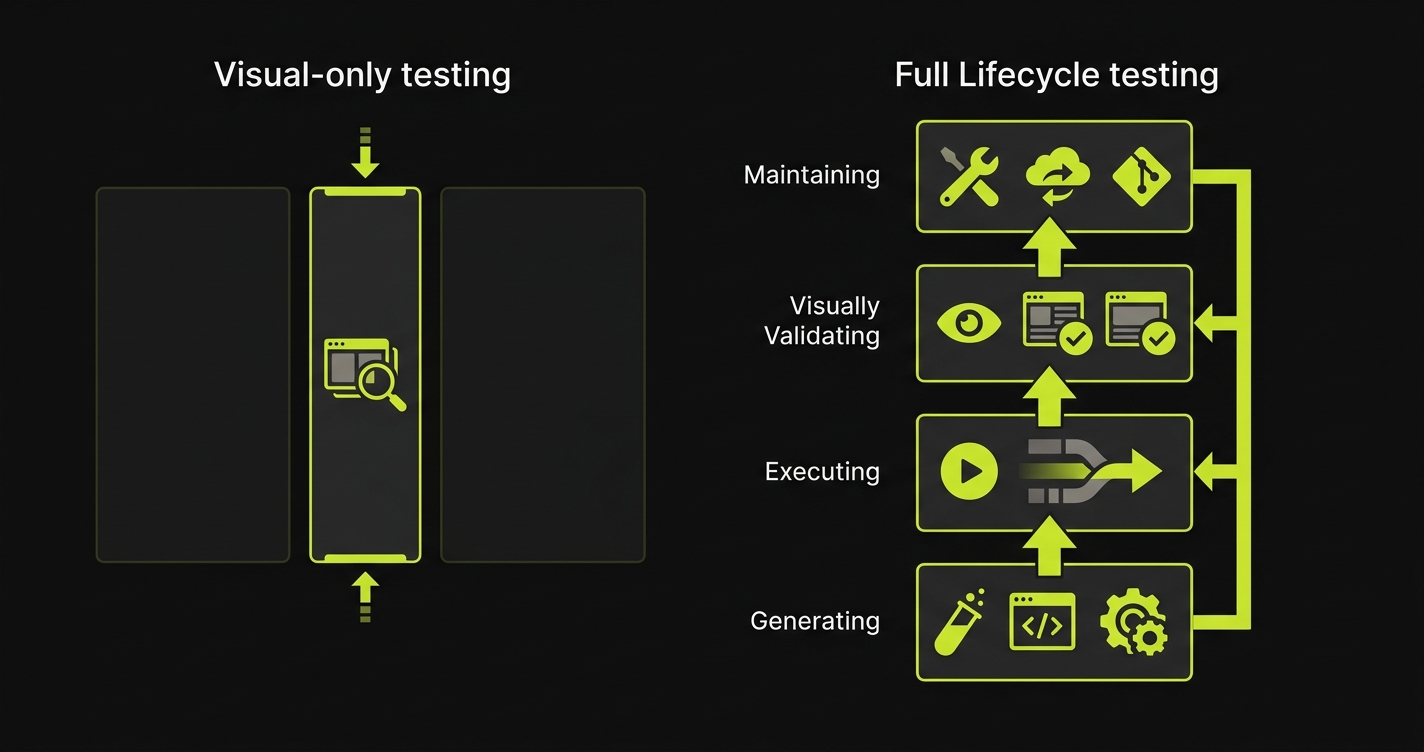
Three structural limitations drive teams toward alternatives.
Visual Testing Is an Add-On, Not a Platform
Applitools does not run tests. It watches tests run. You integrate the Eyes SDK into your existing Selenium, Cypress, Playwright, or WebDriverIO framework. When a test step executes, the SDK captures a screenshot, sends it to Applitools' cloud, and the Visual AI compares it against a stored baseline. That is the entire product scope.
This means your testing stack looks like this: a functional testing framework (Selenium/Cypress/Playwright) to write and run tests, a test runner (Jest, Mocha, pytest) to orchestrate execution, a CI/CD integration to trigger runs, infrastructure to host browsers, and then Applitools on top to add visual comparisons. Five layers, four of which Applitools does not touch.
When a test breaks because a CSS selector changed, Applitools cannot fix it. When you need a new test for a feature you just shipped, Applitools cannot generate it. When your test suite grows and maintenance becomes a bottleneck, Applitools cannot help. It is a visual validation layer, not a testing platform.
One engineering lead described it this way: "We were paying Applitools $15,000/year for visual testing, then spending $80,000/year on engineering hours to write and maintain the functional tests that Applitools sits on top of. The add-on cost more to feed than it cost to buy."
Checkpoint-Based Pricing Gets Expensive Fast
Applitools charges per checkpoint: each visual comparison counts against your allocation. Pricing is not publicly listed (you have to "contact sales"), but typical rates fall between $0.05 and $0.15 per checkpoint depending on volume and contract terms.
This sounds cheap until you do the math. A single E2E test with 10 visual checkpoints running across 3 browsers generates 30 checkpoints per run. Run that test suite of 200 tests in CI on every commit (say 20 commits/day), and you are burning through 120,000 checkpoints per day, or roughly 2.6 million per month.
At $0.05/checkpoint, that is $130,000 per month. Even with volume discounts negotiated down to $0.02/checkpoint, it is $52,000 per month. Teams quickly learn to limit checkpoints, skip browsers, or reduce test frequency, all of which defeat the purpose of comprehensive visual testing.
The pricing model creates a perverse incentive: the more thoroughly you test, the more you pay. Teams end up rationing visual comparisons instead of using them freely, which means visual regressions slip through because the budget ran out before the test suite did.
Closed Source with No Self-Hosting
Applitools' Visual AI algorithms are entirely proprietary. You cannot inspect how comparisons work, audit the machine learning models, or verify how your screenshots are processed and stored. Every screenshot from every test run is sent to Applitools' cloud infrastructure for comparison.
For teams with compliance requirements (HIPAA, PCI DSS, SOC 2, FedRAMP), this is a significant concern. Your application screenshots may contain sensitive data: user information visible in the UI, internal dashboards with business metrics, admin interfaces with system configuration. All of that gets transmitted to and stored on Applitools' servers.
There is no self-hosting option. You cannot run the Visual AI engine on your infrastructure. You cannot keep screenshots within your VPC. The entire comparison pipeline is a black box running on their cloud, and you have to trust that their security practices meet your requirements without being able to verify them.
Autonoma: The Open Source Alternative to Applitools
Autonoma is an open-source, AI-native testing platform that replaces the entire testing stack, not just the visual comparison layer.
Full Lifecycle Testing, Not Just Visual Comparisons
This is the fundamental difference. Applitools adds visual validation on top of tests you write and maintain. Autonoma generates, executes, visually validates, and maintains tests automatically from your codebase. The entire lifecycle is covered by a single platform.
How it works: Connect your GitHub repo and Autonoma's test-planner-plugin analyzes your routes, components, and user flows. AI agents generate comprehensive E2E test cases from your actual code structure. Tests execute using AI vision models that see your application like a human would: no CSS selectors, no XPaths, no brittle locators. Each test step includes visual validation automatically because the AI is already looking at your application to interact with it.
You do not write tests. You do not integrate an SDK. You do not manage baselines. You do not maintain selectors. You do not pay per checkpoint. The AI handles test generation, execution, visual validation, and maintenance as one unified process.
Where Applitools requires you to build and maintain a functional testing framework and then bolt on visual comparisons, Autonoma provides the complete stack. The visual validation is not a separate product or an add-on. It is inherent to how the AI tests your application.
Open Source and Self-Hosting
Full source code on GitHub. Licensed under BSL 1.1 (converts to Apache 2.0 in 2028). Inspect every line, audit security, and self-host with no feature restrictions.
Run Autonoma on your infrastructure. AWS (ECS, EKS, or EC2), GCP (GKE or Compute Engine), Azure (AKS or VMs), or your own data center. When you self-host, screenshots, test data, and application credentials never leave your network. No third-party cloud processes your visual data. This directly solves the compliance problem that blocks Applitools adoption for regulated industries.
The technology stack uses standard open source components: TypeScript and Node.js 24 for the runtime, Playwright for web automation, Appium for mobile testing, PostgreSQL for data storage, and Kubernetes for orchestration. No proprietary visual AI black boxes, no vendor-specific dependencies.
Vision-Based Testing with Built-In Visual Validation
Autonoma's AI uses vision models to interact with your application during test execution. The AI sees buttons, forms, navigation menus, and content areas the way a human does. It does not rely on CSS selectors or DOM structure.
This vision-based approach inherently performs visual validation at every step. The AI detects:
- Layout shifts: Elements that moved from their expected positions
- Missing components: Buttons, forms, or sections that disappeared
- Style regressions: Colors, fonts, spacing, or sizing that changed unexpectedly
- Broken responsive behavior: Layouts that collapse or overflow at different viewports
- Content changes: Text or images that differ from expected state
Unlike Applitools' checkpoint model where you explicitly insert comparison points, Autonoma validates visually on every interaction. There is no "I forgot to add a checkpoint here" gap in coverage. Every click, every navigation, every form submission includes visual awareness because the AI is already looking at the screen.
The vision-based approach also means tests are inherently more stable. A button that changes from btn-primary to cta-main breaks a selector-based test. It does not break a vision-based test that understands "click the primary action button." This resilience compounds over time: fewer false positives, less noise, more trust in results.
Unlimited Execution, No Checkpoint Fees
Every Autonoma plan supports unlimited parallel execution. There are no per-checkpoint charges, no per-screenshot fees, no visual comparison quotas. You test as thoroughly as you want without rationing.
On the free tier (100K credits), you get full feature access including visual validation with every test run. On cloud ($499/month with 1M credits) and self-hosted plans, you scale with your infrastructure. Add tests, add browsers, add viewports. The cost stays predictable.
This removes the perverse incentive that Applitools creates. You never have to choose between comprehensive visual coverage and budget constraints. You never skip browsers to save checkpoints. You never reduce test frequency because you are running low on visual comparisons.
Pricing
Free tier: 100K credits, no credit card required, unlimited parallels, all features including visual validation. Good for evaluation and small teams.
Cloud ($499/month): 1M credits per month, unlimited parallels, managed infrastructure. No screenshots sent to third parties; Autonoma manages the infrastructure.
Self-hosted (free platform): No ongoing platform fees. Pay only for your cloud infrastructure (AWS/GCP/Azure). Complete data sovereignty. Full visual validation on your own servers.
Applitools vs Autonoma: Feature Comparison
| Feature | Applitools | Autonoma |
|---|---|---|
| Open Source | Proprietary closed source | BSL 1.1 on GitHub (Apache 2.0 in 2028) |
| Self-Hosting | Cloud only, no self-hosting | Self-host anywhere (AWS, GCP, Azure, on-prem) |
| Testing Scope | Visual comparisons only (add-on) | Full lifecycle: generation, execution, visual validation, maintenance |
| Test Generation | Does not generate tests | AI generates tests from your codebase automatically |
| Test Execution | Does not execute tests (requires Selenium/Cypress/Playwright) | Executes tests natively with AI vision models |
| Visual Validation | Visual AI with baseline comparisons | Vision-based validation on every test step automatically |
| Test Maintenance | Does not maintain tests (manual selector upkeep) | AI self-healing adapts to UI changes automatically |
| Pricing Model | Per checkpoint (~$0.05-0.15 each) | Credit-based, no per-checkpoint fees |
| Requires Separate Framework | Yes (Selenium, Cypress, Playwright, etc.) | No, standalone platform |
| Vendor Lock-In | High (Eyes SDK integration, proprietary baselines) | None (tests generated from code, fork codebase) |
| Data Sovereignty | Screenshots processed on Applitools cloud | All data stays on your infrastructure (self-hosted) |
| Source Code Access | Proprietary, no access | Full source code on GitHub |
| Starting Price | Contact sales (no public pricing) | Free (100K credits) |
| Self-Hosted Cost | Not available | Infrastructure only (no platform fees) |
Cost: Full Lifecycle vs Visual Add-On
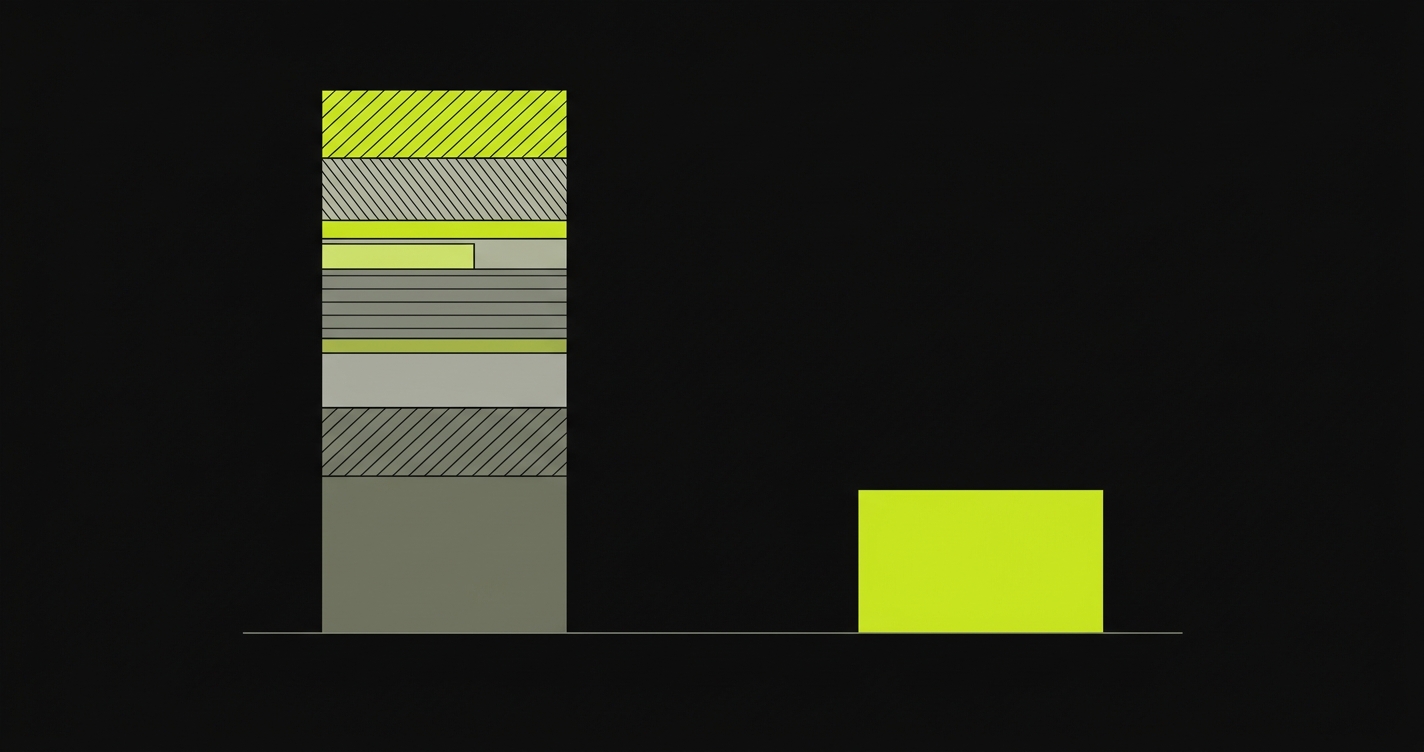
The real cost comparison is not Applitools vs Autonoma's visual features. It is the total cost of your testing stack with Applitools vs the total cost with Autonoma.
With Applitools, your total testing cost includes: a functional testing framework (free, but requires engineering to set up and maintain), engineering hours to write tests (10-20 hours/month at $100-150/hour = $12,000-36,000/year), engineering hours to maintain tests (10-15 hours/month = $12,000-27,000/year), Applitools subscription for visual testing ($5,000-30,000/year depending on checkpoint volume), and CI/CD infrastructure to run tests. Over three years, a mid-sized team easily spends $100K-250K on the total testing stack. Applitools is only 10-20% of that total, but it does not reduce any of the other costs.
With Autonoma cloud ($499/month, $18K over three years), you eliminate test writing hours (AI generates tests), eliminate test maintenance hours (AI self-healing), get visual validation included (no separate fee), and get unlimited parallels (no checkpoint rationing). The three-year total is $18K versus $100K-250K. That is an 82-93% reduction in total testing cost.
With Autonoma self-hosted, the three-year infrastructure cost is roughly $7K-14K depending on scale. Total testing cost drops by 86-94% compared to the Applitools stack.
The savings come not from replacing Applitools' visual testing fee (which is a fraction of total spend), but from eliminating the engineering hours that Applitools does nothing to reduce. That is the structural advantage of a full lifecycle platform over a visual testing add-on.
Migrating from Applitools to Autonoma
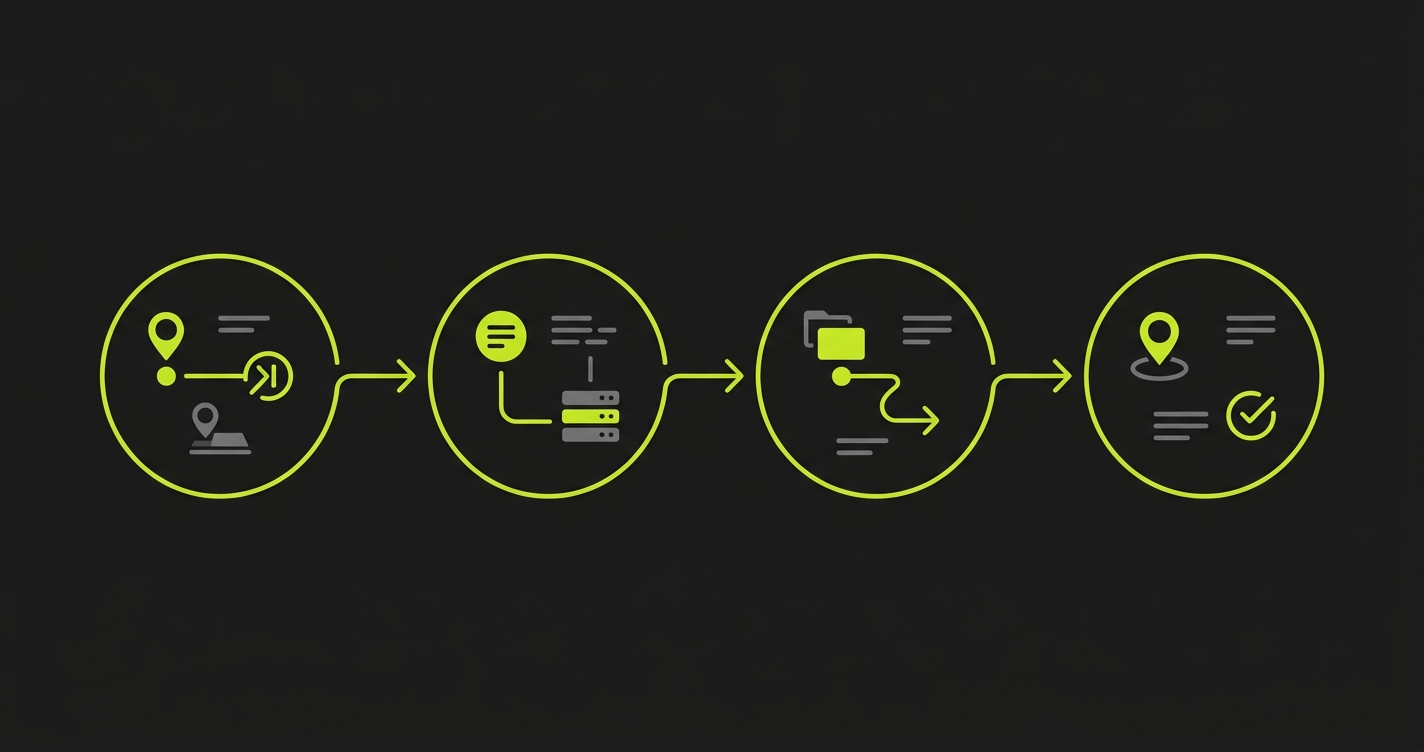
Migration from Applitools is simpler than migrating from most testing tools, because Applitools is an add-on layer. You are not rewriting a test framework; you are replacing your entire testing stack with something that handles everything.
1. Connect your repo. Sign up for the free tier at getautonoma.com or self-host by cloning the GitHub repo. Connect your GitHub repository and let Autonoma's AI analyze your codebase. This takes minutes.
2. AI generates tests with visual validation. The test-planner-plugin builds a knowledge base of your application and generates comprehensive E2E tests automatically. Every test includes visual validation by default because the AI uses vision models. No SDK integration, no baseline management, no checkpoint configuration. Start with your critical flows and run them alongside your existing Applitools-instrumented suite.
3. Validate coverage. Compare Autonoma's AI-generated tests against your existing functional test suite and Applitools visual coverage. Check that the AI catches the same visual regressions Applitools would, plus the functional issues Applitools never covered. Most teams find that Autonoma's vision-based approach catches issues Applitools misses (interaction-level visual bugs, not just static screenshot differences).
4. Remove the old stack. Once validated, remove the Eyes SDK from your codebase, decommission your Selenium/Cypress/Playwright test suite, cancel Applitools, and point CI/CD at Autonoma. You are replacing multiple tools with one platform.
The key insight: you are not migrating tests; you are replacing a multi-tool stack with a single platform. The AI generates new tests from your codebase, so there is nothing to port.
Frequently Asked Questions
Yes. Autonoma is an open-source testing platform available on GitHub. Unlike Applitools' proprietary Visual AI, Autonoma provides full lifecycle testing with built-in visual validation, a free tier with 100K credits, and complete self-hosting capabilities. You get test generation, execution, visual checks, and maintenance in one platform.
Yes. Autonoma is fully self-hostable with complete source code on GitHub. You can run it on your infrastructure (AWS, GCP, Azure, on-premise) with zero feature restrictions. Applitools offers no self-hosting option; all visual comparisons run on their cloud infrastructure.
Applitools charges per checkpoint (visual comparison), typically $0.05-0.15 each. Teams running 50K-200K checkpoints monthly pay $2,500-30,000/year for visual testing alone, plus they still need a separate functional testing tool. Autonoma includes visual validation as part of full lifecycle testing: free tier (100K credits), cloud ($499/month), or self-hosted (infrastructure cost only).
No. Applitools is a visual testing add-on. You still need Selenium, Cypress, Playwright, or another framework to write and run functional tests. Applitools hooks into those frameworks to capture screenshots and compare them. Autonoma replaces the entire stack: it generates, executes, visually validates, and maintains tests from your codebase automatically.
Yes. You don't rewrite tests. Connect your repo and Autonoma's AI generates tests from your codebase automatically, with visual validation built in. Since Applitools is an add-on layer, migrating means switching to a platform that handles the full lifecycle. Most teams achieve full coverage within days.
Autonoma uses AI vision models that see your application like a human would. Every test step includes visual validation as part of execution. The AI detects layout shifts, missing elements, broken styles, and visual regressions automatically during test runs. No separate SDK, no checkpoint fees, no screenshot management.
The Bottom Line
Applitools is a visual testing add-on: proprietary, cloud-only, checkpoint-priced, and limited to screenshot comparisons on top of tests you still have to write and maintain yourself. The total cost of an Applitools-powered testing stack (framework + engineering hours + Applitools subscription) runs $100K-250K over three years for a mid-sized team.
Autonoma replaces the entire stack. Full source code on GitHub (BSL 1.1, Apache 2.0 in 2028). Self-host on your infrastructure or use our cloud. AI generates, executes, visually validates, and maintains tests from your codebase: zero manual writing, zero checkpoint fees, zero maintenance. Unlimited parallels on every plan. No vendor lock-in. Free tier starts at 100K credits, cloud at $499/month, self-hosted at infrastructure cost only. Three-year savings: 82-94% compared to the full Applitools testing stack.
Ready to try open source testing?
Start Free - 100K credits, no credit card, 5-minute setup
View on GitHub - Inspect source code, self-host documentation
Book Demo - See AI visual validation in action
Related Reading: