

Quick summary: Autonoma is the open-source alternative to Mabl. Unlike Mabl's proprietary, cloud-only ML platform (~$100-200/user/month), Autonoma generates tests automatically from your codebase using AI agents: no manual test creation at all. Full source code on GitHub (BSL 1.1), self-hosting on your infrastructure, vision-based testing with zero selectors, unlimited parallel execution, no vendor lock-in. Free tier: 100K credits. Cloud: $499/month. Self-hosted: no ongoing platform costs.
Mabl sells a compelling pitch: ML-powered testing that auto-heals when your UI changes. Record your tests with a visual recorder, and their machine learning handles the maintenance. For teams exhausted by flaky selectors, that sounds like the answer.
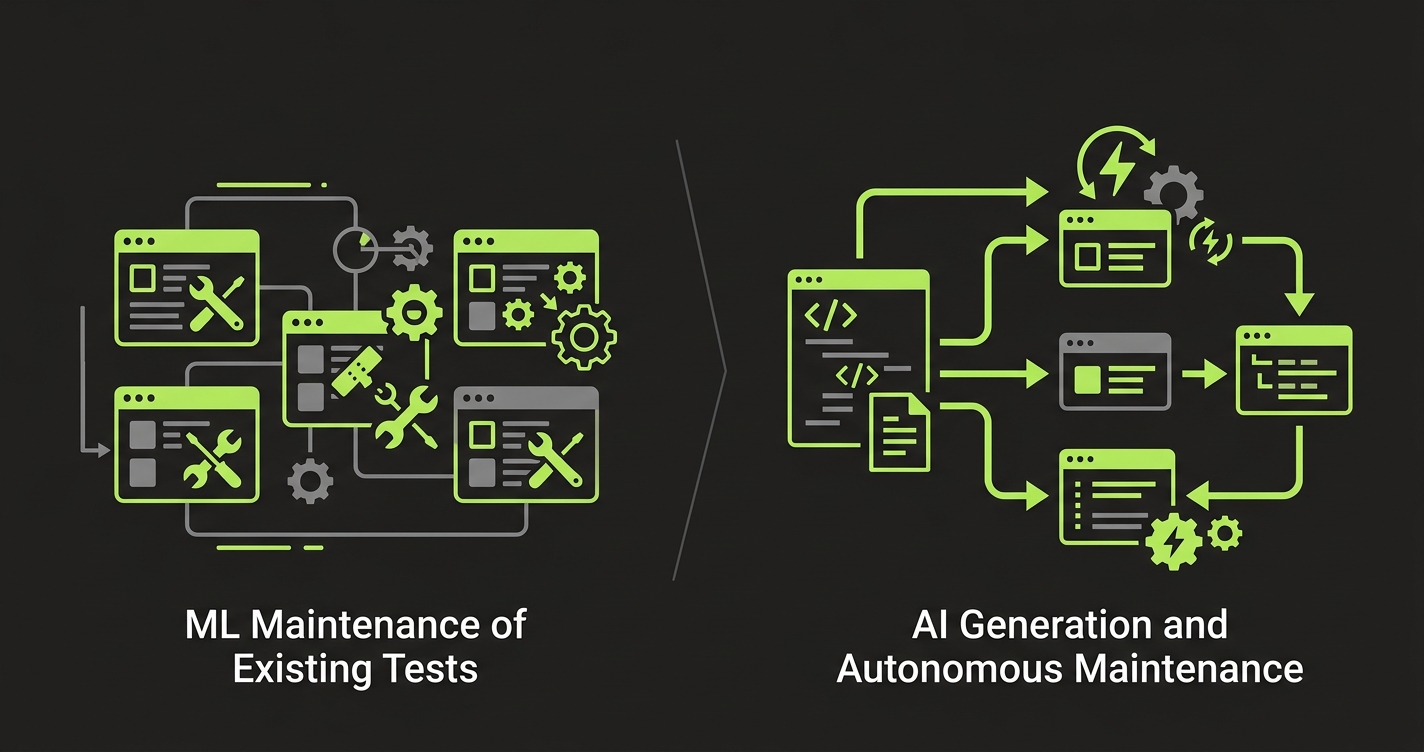
But there is a fundamental gap in Mabl's model. Their ML maintains tests you still have to create manually. You record each flow step by step, click by click, using their proprietary visual editor. The "intelligence" kicks in only after the test exists: patching broken locators, detecting visual regressions, flagging anomalies. The creation burden stays on your team. And the entire system runs exclusively on Mabl's cloud with no self-hosting, no source code access, and no way to audit their ML algorithms.
Autonoma takes a fundamentally different approach. It is open source, self-hostable, and its AI does not just maintain tests: it generates them from your codebase automatically. Zero manual creation. Zero selector maintenance. This guide covers where Mabl falls short, how Autonoma solves those problems, and how to switch.
Where Mabl Falls Short
Three core problems drive engineering teams toward open source alternatives to Mabl.
ML Maintains but Does Not Create
Mabl's biggest selling point is auto-healing: when a CSS selector breaks after a UI change, their ML model identifies the new element and updates the locator. This is genuinely useful for maintenance. But it masks a deeper problem: you still have to create every test manually.
Mabl's test creation workflow works like this: open their visual recorder, navigate your application step by step, click each element, define assertions, configure waits, and save the test. For a typical checkout flow (navigate to product, add to cart, enter shipping, enter payment, confirm order), that is 15-25 manual steps per test. For a comprehensive E2E suite covering 50-100 user flows, that is weeks of manual recording work.
Their "low-code" promise reduces the coding barrier, but it does not reduce the effort. Someone on your team still needs to understand every flow, record every step, and define every assertion. When you ship a new feature, someone still records a new test. When you redesign a flow, someone still re-records it. The ML only patches locators: it does not understand your application well enough to generate test scenarios from scratch.
One QA lead told us: "Mabl's auto-healing saves us time on maintenance, but we're still spending 30 hours a month creating new tests as features ship. The creation bottleneck is worse than the maintenance problem."
The result is that teams using Mabl still carry a significant manual testing burden. The ML handles the easy part (fixing broken selectors). The hard part (understanding your application and designing test coverage) remains entirely manual.
Cloud-Only with No Self-Hosting or Source Access
Mabl is entirely cloud-native. All test execution, data storage, and ML processing runs on Mabl's servers. There is no self-hosting option. There is no on-premise deployment. There is no source code to inspect.
This means your application URLs, test credentials, user data, and execution logs all pass through Mabl's infrastructure. For teams in regulated industries: healthcare (HIPAA), finance (PCI DSS, SOC 2), or government (FedRAMP): this is often a non-starter. Compliance auditors want to know exactly where test data lives, how credentials are handled, and what ML models process your application data. Mabl cannot answer these questions transparently because their codebase is proprietary.
Beyond compliance, the lack of source access means Mabl's ML algorithms are black boxes. When auto-healing makes a wrong decision: and it does, because ML models are probabilistic: you cannot debug why. When the model patches a locator to the wrong element, you see the failure but cannot inspect the reasoning. You file a support ticket and wait.
Self-hosting is not a luxury feature. It is an operational requirement for teams that need to control their data, audit their tooling, and meet compliance frameworks. Mabl's architecture makes this impossible.
Pricing Opacity and Per-User Scaling
Mabl's pricing is opaque by design. Their website shows no public pricing page: you request a quote. Industry estimates place individual plans around $100-200/user/month, with enterprise pricing requiring custom negotiation.
This per-user model creates problems as teams grow. A team of 5 paying $150/user/month spends $9,000/year. Scale to 15 users and that becomes $27,000/year. Scale to 30 and you are looking at $54,000/year: before factoring in the engineering hours spent creating tests manually. The per-user pricing means every new team member who needs testing access adds to the bill, even if they only run existing tests.
Mabl also limits test execution based on plan tiers. More test runs, more parallel execution, and access to advanced ML features all require higher tiers. As your test suite grows and you need faster execution, costs scale with it. There is no way to self-host to cap costs, no way to bring your own infrastructure, and no open source alternative within Mabl's ecosystem.
For budget-conscious teams, this model is difficult to predict and harder to control. You are paying for ML algorithms you cannot inspect, running on infrastructure you cannot control, at prices you cannot publicly verify.
Autonoma: The Open Source Alternative to Mabl
Autonoma is an open-source, AI-native testing platform that solves the problems above by shifting from ML-assisted maintenance to AI-driven generation.
AI Generates Tests: Not Just Maintains Them
This is the fundamental difference. Mabl's approach: you create tests manually, ML maintains them. Autonoma's approach: AI creates AND maintains tests automatically.
How it works: You connect your GitHub repo, and Autonoma's test-planner-plugin reads your routes, components, and user flows to build a knowledge base of your application. AI agents then generate comprehensive E2E test cases based on your actual code structure: no manual recording, no visual editor, no step-by-step clicking. Tests execute using AI vision models that see your application like a human would, which means no CSS selectors or XPaths to break. When your UI changes, tests adapt automatically because the AI understands intent, not DOM structure.
Where Mabl's auto-healing patches a broken #checkout-btn selector to match a renamed #purchase-btn, Autonoma's vision model simply sees "the primary action button on the checkout page" and clicks it. There is no selector to break in the first place. This is not incremental improvement over Mabl: it is a fundamentally different architecture.
The practical impact is dramatic. Teams using Mabl spend 20-40 hours per month creating and recording new tests as features ship. Teams using Autonoma spend zero hours on test creation. The AI analyzes code changes, understands new features, and generates test coverage automatically. Your QA team shifts from building tests to reviewing test plans: higher-leverage work that actually improves product quality.
Open Source and Self-Hosting
Full source code on GitHub. Licensed under BSL 1.1 (converts to Apache 2.0 in 2028). You can use it in production, inspect every line, audit security, and self-host with no feature restrictions. The only limitation: you cannot resell Autonoma's functionality as a commercial service.
Unlike Mabl's black-box ML, every part of Autonoma's AI pipeline is transparent. Need to understand how test generation works? Read the source. Need to audit how credentials are handled during execution? Inspect the runtime. Need to customize AI behavior for your specific application patterns? Fork and modify. This is impossible with Mabl.
Run Autonoma on your infrastructure: AWS (ECS, EKS, or EC2), GCP (GKE or Compute Engine), Azure (AKS or VMs), or your own data center. When you self-host, your data never leaves your infrastructure. Tests run in your VPC. Credentials stay on your servers. Application URLs are never exposed to external systems.
The technology stack uses standard open source components: TypeScript and Node.js 24 for the runtime, Playwright for web testing, Appium for mobile testing, PostgreSQL for data storage, and Kubernetes for orchestration. No proprietary runtimes, no black-box ML models, no vendor-specific dependencies.
Self-hosting is free: no platform fees, no per-user charges, no per-parallel markup. You pay only for the cloud infrastructure you provision.
Unlimited Parallel Execution
Every plan (free tier, cloud, and self-hosted) supports unlimited parallel execution. On the free tier that is subject to credit limits, but on cloud and self-hosted plans your test suite scales with your infrastructure. Add more tests, spawn more instances. No negotiations, no pricing tiers, no artificial limits.
When you self-host, parallel capacity is limited only by the compute resources you allocate: and you can auto-scale those based on demand. This removes the execution bottleneck that Mabl's tiered plans create.
No Vendor Lock-In
Mabl stores tests in their proprietary format within their cloud. CI/CD integrations are built around their runner and API. If you decide to leave, you are rebuilding everything from scratch: re-recording tests, re-configuring pipelines, retraining your team.
With Autonoma, tests are generated from your codebase, not stored in a proprietary format. There are no Mabl-specific APIs woven into your CI/CD pipeline. Fork the project if needed. Switch cloud providers or self-host anytime. Your testing capability is never held hostage by a vendor relationship.
Mabl vs Autonoma: Feature Comparison
| Feature | Mabl | Autonoma |
|---|---|---|
| Open Source | Proprietary closed source | BSL 1.1 on GitHub (Apache 2.0 in 2028) |
| Self-Hosting | Cloud only, no self-hosting | Self-host anywhere (AWS, GCP, Azure, on-prem) |
| Test Creation | Manual via visual recorder (low-code) | AI generates tests from codebase (zero manual) |
| Test Maintenance | ML auto-heals broken locators | Vision-based AI: no locators to break |
| AI Approach | ML patches selectors after failure | AI understands intent, no selectors used |
| Source Code Access | No access: ML is a black box | Full source code on GitHub |
| Parallel Execution | Limited by plan tier | Unlimited on all plans |
| Vendor Lock-In | High: tests in proprietary format | None: tests generated from code, fork anytime |
| Visual Regression | ML-powered visual change detection | Vision-based AI detects visual changes natively |
| Browser Support | Chrome, Firefox, Safari, Edge | Chrome, Firefox, Safari, iOS, Android |
| Mobile Testing | Mobile web via cloud browsers | Native mobile via Appium (iOS/Android) |
| Data Sovereignty | Data on Mabl's servers | Data stays on your infrastructure |
| Pricing Model | ~$100-200/user/month (quote-based) | Free tier, then $499/month flat (unlimited users) |
| Self-Hosted Cost | Not available | Infrastructure only (no platform fees) |
| Compliance | SOC 2 certified (cloud only) | Self-host for full compliance control |
Cost: Open Source vs Proprietary ML
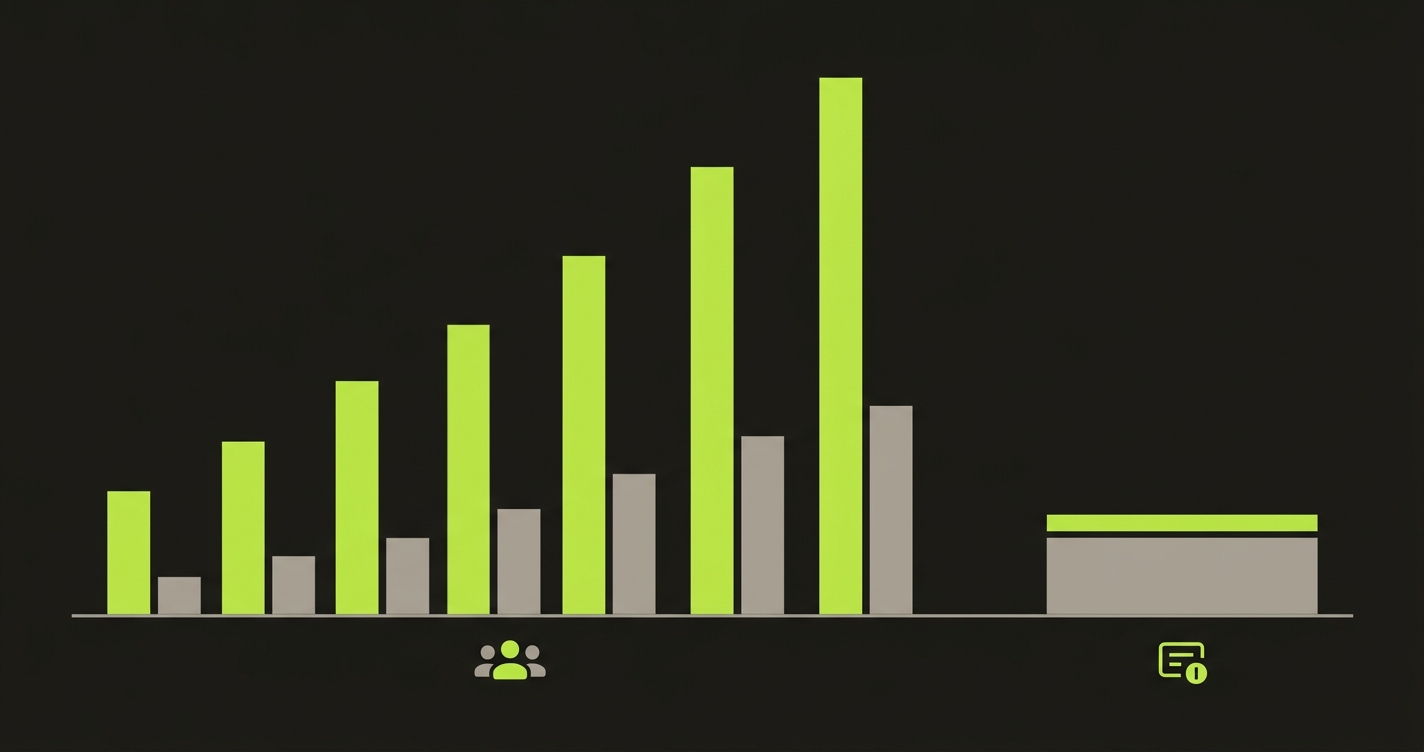
The real cost of Mabl goes beyond the per-user subscription. It includes the engineering hours your team spends manually creating tests: time that Mabl's ML does not eliminate.
For a mid-sized team (10 users, continuous testing), Mabl costs approximately $150/user/month, or $18,000/year in subscription fees. Add the 20-40 hours/month your QA team spends creating and recording new tests as features ship (at $100-150/hour for QA engineering), and the manual creation burden alone costs $24,000-72,000 per year. Over three years, the total comes to $126K-270K when you combine subscription and manual test creation effort.
Autonoma cloud is $499/month ($18K over three years) with zero creation hours and zero maintenance hours. AI generates and maintains all tests. That represents a 86-93% cost reduction compared to Mabl's total cost of ownership.
Autonoma self-hosted eliminates the platform fee entirely. You pay only for infrastructure you provision on AWS, GCP, or Azure: typically $200-400/month depending on your parallel needs. Over three years, that totals roughly $11K: a 92-96% reduction compared to Mabl's total cost.
The biggest savings is not the subscription difference. It is the elimination of manual test creation through AI generation. That is where Mabl's hidden cost lives: their ML heals tests, but someone still has to build every single one.
Migrating from Mabl to Autonoma
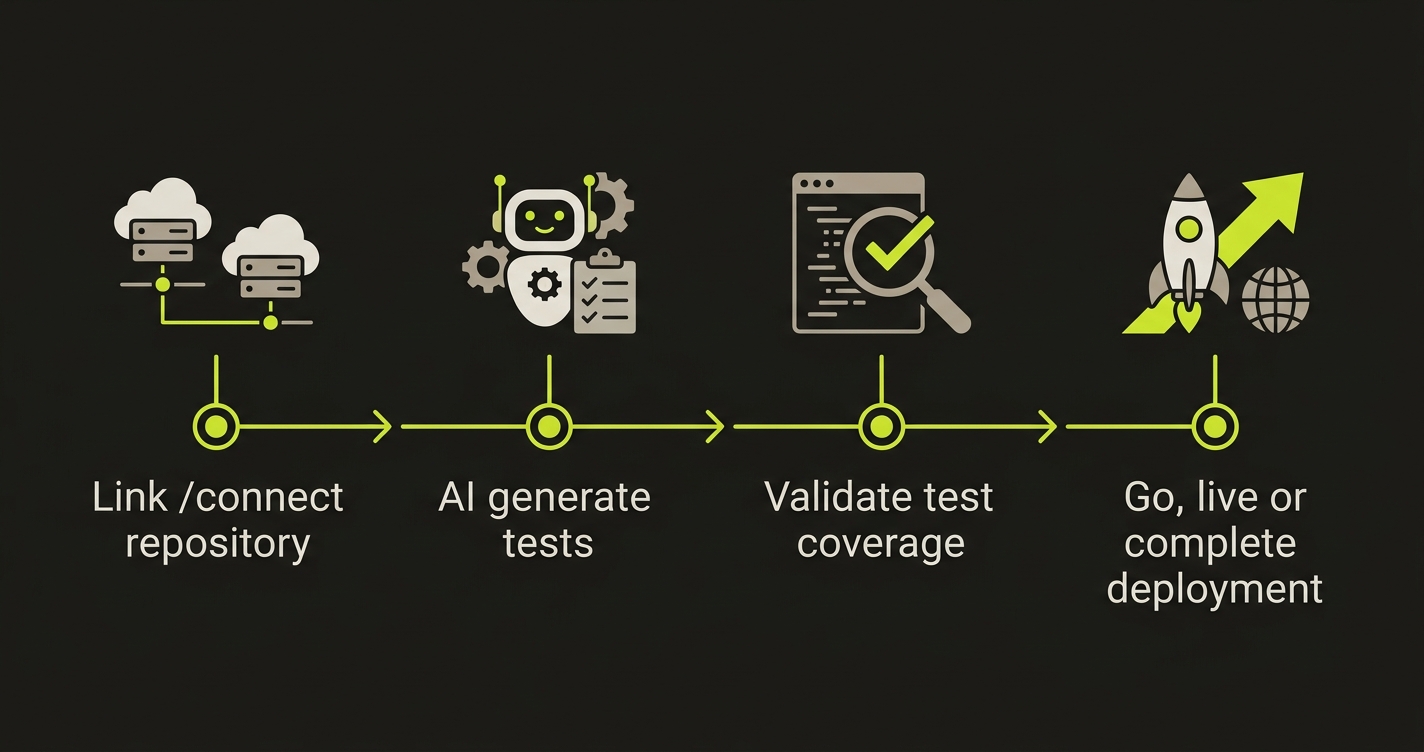
Migration is simpler than you would expect because you are not re-recording tests. Autonoma generates them from your codebase. Most teams complete the process in 1-2 weeks.
1. Connect your repo. Sign up for the free tier at getautonoma.com or self-host by cloning the GitHub repo and following the deployment docs. Connect your GitHub repository and let Autonoma's AI analyze your codebase (routes, components, and user flows). This takes minutes, not days.
2. AI generates tests. The test-planner-plugin builds a knowledge base of your application and generates comprehensive E2E test cases automatically. Start with 5-10 critical flows (checkout, authentication, core features) and run them in parallel with your existing Mabl suite to compare results side by side. This gives you a direct comparison of reliability, coverage, and execution speed without risk.
3. Validate coverage. Compare AI-generated test coverage against your existing Mabl suite. Autonoma's vision-based tests are often more resilient than Mabl's auto-healed selector tests because they never relied on selectors in the first place. Check for gaps, review the AI-generated test plans, and iterate. Most teams find Autonoma discovers flows Mabl tests missed because the AI analyzes your entire codebase, not just the flows someone manually recorded.
4. Update CI/CD and cut over. Point your CI/CD pipelines at Autonoma, train your team on reviewing AI-generated test plans instead of recording tests manually, and cancel your Mabl subscription. If you are self-hosting, provision your infrastructure (ECS cluster, database, orchestration) during the validation phase so it is ready for the cutover.
The key difference from a traditional migration: you are not re-recording 200 test flows in a new visual editor. You connect your repo, the AI generates coverage, and you validate. The migration effort is about reviewing and verifying, not rebuilding.
Frequently Asked Questions
Yes. Autonoma is an open-source testing platform available on GitHub. Unlike Mabl's proprietary cloud-only model, Autonoma offers a free tier with 100K credits and full self-hosting capabilities. You can run Autonoma on your own infrastructure with no feature limitations, or use the cloud version starting free.
Yes. Autonoma is fully self-hostable with complete source code on GitHub. You can run it on your infrastructure (AWS, GCP, Azure, on-premise) with zero feature restrictions. Mabl offers no self-hosting option: all tests and data run exclusively on Mabl's cloud servers.
Mabl costs approximately $100-200/user/month with enterprise pricing requiring custom quotes. Autonoma offers a free tier with 100K credits, then $499/month for 1M credits with unlimited parallels. Self-hosting Autonoma eliminates ongoing platform costs entirely: you pay only for infrastructure.
Mabl's auto-healing patches broken locators after tests fail: it fixes selectors retroactively using ML. Autonoma's AI generates entire tests from your codebase and uses vision models to interact with your app like a human. There are no selectors to break in the first place. Mabl maintains tests you create; Autonoma creates and maintains tests for you.
Yes. You don't rewrite tests: you connect your repo and Autonoma's AI generates tests from your codebase automatically. Migration involves validating AI-generated coverage against your existing Mabl test suite. Most teams achieve full coverage within days because Autonoma generates tests from your actual code rather than requiring manual recreation.
Autonoma goes beyond low-code: it's no-code. Nobody writes tests at all. Unlike Mabl where you use a visual recorder to create tests step by step, Autonoma's AI analyzes your codebase and generates comprehensive E2E tests automatically. Your team reviews test plans and results instead of building tests manually.
The Bottom Line
Mabl's ML is good at one thing: patching broken locators after your UI changes. But it does not create tests, it does not understand your codebase, and it runs exclusively on their cloud with no source code access. You still manually record every test, pay per-user pricing that scales with your team, and lock your test suite into a proprietary format. The total cost of ownership: subscription plus manual creation effort: runs $126K-270K over three years for a mid-sized team.
Autonoma solves every one of those problems. Full source code on GitHub (BSL 1.1, Apache 2.0 in 2028). Self-host on your infrastructure or use our cloud. AI generates and maintains tests from your codebase: zero manual creation, zero maintenance. Unlimited parallels on every plan. No vendor lock-in. Free tier starts at 100K credits, cloud at $499/month, self-hosted at infrastructure cost only. Three-year savings: 86-96% depending on deployment model.
Ready to try open source testing?
Start Free - 100K credits, no credit card, 5-minute setup
View on GitHub - Inspect source code, self-host documentation
Book Demo - See AI test generation in action
Related Reading: