
Why Teams Are Looking for Postman Alternatives in 2026
Postman did not die. It got complicated.
Through 2020-2022, Postman was the default API client for most engineering teams: free, offline-capable, and powerful enough for everything from quick requests to complex test suites. Then came the changes that started the migration wave.
In September 2023, Postman officially removed Scratch Pad (the offline mode that didn't require a cloud account) from the desktop app. Opening your collections now requires a cloud account login. For teams in air-gapped environments, compliance-heavy industries, or simply those who prefer not to have their API collections stored on a third-party server, this was a dealbreaker. After backlash, Postman later reintroduced a lightweight API client for single-user scratch work, but the default workspace experience still requires sign-in. SSO became a paid-plan feature. Team workspace pricing climbed. The free tier shrank.
The underlying frustration is not that Postman is a bad product. It's that teams that built workflows around a free, local, offline-capable tool found themselves locked into a cloud product they hadn't signed up for. Teams started asking a specific question: which tool does what Postman used to do, before it decided to be something else?
That question has several good answers now. Some teams want a Postman replacement for manual exploration and team collections. Others want to go further, moving tests out of GUI clients entirely and into code-based suites that run in CI as part of automated regression testing.
A note on where our own product sits before the list starts. We build Autonoma for web E2E testing, not API testing — Autonoma is not a Postman alternative and we won't pretend it is. But if your API serves a web UI, the layer that regresses and loses test coverage first is usually the UI, not the API contract. Pick one of the six tools below for your API workflow; if you also want the UI on top of it covered without hand-authoring browser tests, that's where Autonoma fits alongside.
This guide covers all six categories honestly, including migration effort and the scenarios where Postman itself is still the right answer.
The 6 Best Postman Alternatives
1. Playwright APIRequest: Unified E2E and API Testing
Playwright's APIRequestContext turns the framework you already use for browser testing into a full API client. Instead of maintaining a separate Postman collection for your API tests, you write them in the same codebase as your E2E tests, using the same expect assertions and the same CI pipeline.
The key advantage is not convenience. It's shared state. A Playwright test can hit your login endpoint to authenticate, then drive the browser as an authenticated user, then call your API again to verify backend state, all in a single test. No context-switching between tools, no duplicated setup.
For a deeper look at what this unlocks in practice, see our guide on API testing strategy.
Best for: Teams already using Playwright for E2E testing who want API coverage without adding another tool.
Pros:
- Unified codebase for browser and API tests: one CI job covers both layers
- Share authentication state between API and browser steps in a single test
- Full access to Playwright's expect matchers, retries, and trace viewer for debugging API failures
- Actively maintained with a large community and excellent docs
Cons:
- Requires writing code, no GUI request builder for exploratory API calls
- Overkill if you only need a simple request client for ad-hoc testing
- JavaScript/TypeScript, Python, Java, or .NET only. No support for Ruby or PHP teams.
Pricing: Free, open-source (Apache 2.0).
Migration effort from Postman: High. There is no collection importer. You rewrite requests as code. Worth it if your team is already on Playwright; harder to justify otherwise.
2. Hoppscotch: Open-Source, Self-Hostable Postman Clone
Hoppscotch is the closest thing to a drop-in open-source Postman alternative. It runs in the browser, supports REST, GraphQL, WebSocket, and SSE, and can be self-hosted on your own infrastructure so your API collections never leave your network.
The UX is deliberately Postman-adjacent. Workspaces, environments, collections, and pre-request scripts are all present. Teams migrating from Postman find the mental model familiar enough to be productive on day one. The self-hosting option is what makes Hoppscotch particularly attractive for security teams: you control the data, you control the access.
Best for: Teams that want Postman's collaborative workspace features but need self-hosted infrastructure for compliance or air-gapped environments.
Pros:
- Self-hostable with Docker: API collections stay on your infrastructure
- Supports REST, GraphQL, WebSocket, and SSE in one client
- Clean, fast UI that feels familiar to Postman users
- Completely free to self-host; cloud version has a generous free tier
Cons:
- Browser-based primary workflow: the desktop app is less mature than Postman's
- Self-hosting adds operational overhead (Docker, updates, backups)
- Team sync and real-time collaboration features are cloud-tier only
Pricing: Free and open-source (MIT). Cloud Organization plan is $6/user/month (annual). Self-hosting is free.
Migration effort from Postman: Low. Hoppscotch imports Postman collection JSON directly. Environments and most request types migrate cleanly.
3. Bruno: Git-Native, No Cloud Mandate
Bruno is the tool that 2024's Postman pricing changes effectively created demand for. It stores every collection as plain text files on your local disk, structured for git version control. No account required. No cloud sync. Collections live where your code lives.
The philosophy is intentional. Bruno's creators explicitly built against the "everything in the cloud" model. Collections are files you can open in any text editor, diff in pull requests, and review in code review tools. If your team already reviews infrastructure changes in git, reviewing API test changes in the same workflow is a natural fit.
This is also Bruno's main limitation. If you want real-time collaborative workspaces where teammates see each other's changes live, Bruno's git-first model requires actual git workflows (branches, PRs, merges). That's a feature for some teams and friction for others.
Even after switching to Bruno, many teams discover that hand-maintaining collections still means owning every test case, every edge case, and every schema update manually. The tool changes; the authoring burden does not.
Best for: Developer teams who want collections in git, offline-first workflows, and zero cloud dependency.
Pros:
- Collections stored as local files: git-diffable, reviewable, no lock-in
- Works fully offline with no account required
- Active open-source community with rapid development pace
- Scripting support for pre-request and post-request logic
Cons:
- No real-time collaborative workspaces: git is your collaboration layer
- Smaller plugin/integration ecosystem compared to Postman or Insomnia
- Import from Postman works for most cases but scripting requires manual rewrites
Pricing: Free and open-source (MIT). Bruno previously sold a "Golden Edition" one-time license ($19) for individuals; the project has since shifted to a subscription model for commercial use while keeping the core app free. Existing Golden Edition license holders retain their perpetual license.
Migration effort from Postman: Low to Medium. Basic request collections migrate via the built-in Postman importer. Test scripts written in Postman's sandbox need manual rewriting in Bruno's scripting API.
4. Insomnia: Familiar UX for Postman Refugees
Insomnia was already a respected Postman alternative before Kong acquired it. After a brief period of controversy when Kong added mandatory cloud sync (creating a smaller Postman-to-Insomnia-to-Bruno migration wave), the project re-opened its repository under Apache 2.0 in 2023. The current version supports local storage as the default, with opt-in cloud sync.
The appeal for Postman refugees is the UX. Insomnia looks and works similarly enough to Postman that the learning curve is minimal. Workspaces, environments, plugins, and pre-request scripts all translate. The plugin ecosystem is mature, covering OAuth flows, HMAC signing, custom auth schemes, and more.
Best for: Individual developers and small teams who want a polished desktop client with Postman-style UX but prefer open-source licensing and local-first storage.
Pros:
- Polished desktop app with familiar Postman-adjacent UX
- Local storage by default since the 2023 re-open; cloud sync is opt-in
- Strong plugin ecosystem for custom auth, data generation, and integrations
- GraphQL, gRPC, and WebSocket support alongside REST
Cons:
- Had a rocky period with mandatory cloud sync. Some teams still distrust the cloud trajectory.
- Team collaboration features require the paid Insomnia Cloud plan
- Slower development pace compared to Bruno's community momentum
Pricing: Free Essentials tier (open-source desktop app under Apache 2.0). Pro is $12/user/month; Enterprise (SSO, SCIM, vault integrations) is $45/user/month.
Migration effort from Postman: Low. Insomnia has a mature Postman collection importer. Environments and scripts generally migrate well.
5. Thunder Client: VS Code-Native, Zero Context Switch
Thunder Client is a VS Code extension that turns your editor into a full API client. No separate application. No alt-tab. Requests, environments, collections, and test assertions live inside the same VS Code window as the code you're testing.
For developers who spend the entire workday in VS Code, the appeal is obvious. Pull up an endpoint, send a request, inspect the response, write a fix. All without leaving the editor. Collections can be saved to the project directory, making them version-controllable without any special setup.
The limitation is audience. If your QA team or API designers don't live in VS Code, Thunder Client creates a different kind of tool fragmentation. It's optimized for solo developers or developer-first teams, not cross-functional API workflows.
Best for: Solo developers and developer-first teams who live in VS Code and want API testing without leaving the editor.
Pros:
- Zero context switching: runs inside VS Code as a first-class extension
- Collections saved to the project folder are automatically version-controlled
- Clean, fast UI with test assertions, environments, and collection organization
- Free tier is generous for individual developers
Cons:
- VS Code-only: non-VS Code users (QA teams, API designers) need a different tool
- Team collaboration features require a paid plan
- Less mature than Postman or Insomnia for complex multi-step workflow scripting
Pricing: Free tier for individual use. Paid tiers (annual billing): Starter $3/user/month, Business $7/user/month, Enterprise $16/user/month.
Migration effort from Postman: Low. Thunder Client imports Postman collections via JSON export.
6. REST Assured: Java-Based, Enterprise JVM Shops
REST Assured is a Java domain-specific language for writing API tests. It integrates with JUnit and TestNG, fits inside Maven or Gradle builds, and runs in the same CI pipeline as your unit tests. There is no GUI client. You write Java code; REST Assured handles the HTTP mechanics and assertions.
For JVM teams (Spring Boot backends, Kotlin services, Java-based enterprise stacks), REST Assured is the natural fit for API testing. Tests live in the same repository as the service, reviewed in the same PRs, and run in the same build. The learning curve for Java developers is nearly zero; the syntax is readable even to non-testers.
The trade-off is the ceiling: REST Assured is a test-authoring library, not a test-generation tool. Every endpoint, every edge case, and every schema variation requires a developer to write and maintain it. For large APIs, that authoring burden grows proportionally, which is where AI-driven API testing automation starts to change the economics.
Best for: Java and Kotlin backend teams that want API tests integrated directly into their JUnit or TestNG build pipelines.
Pros:
- Integrates natively with JUnit, TestNG, Maven, and Gradle, with no new infrastructure required
- Readable DSL syntax that non-testers can review in PRs
- Mature library (10+ years) with extensive documentation and community
- Strong JSON and XML path assertion support via GPath and JsonPath
Cons:
- Java/Kotlin only: not applicable to non-JVM teams
- No GUI: all work done in code, which can be slower for exploratory testing
- High authoring burden at scale: every test case must be hand-written
Pricing: Free and open-source (Apache 2.0).
Migration effort from Postman: High. Postman collections do not import into REST Assured. Every test must be rewritten in Java. Worth it for JVM teams that want CI-integrated API coverage; wrong choice otherwise.
Comparison Table
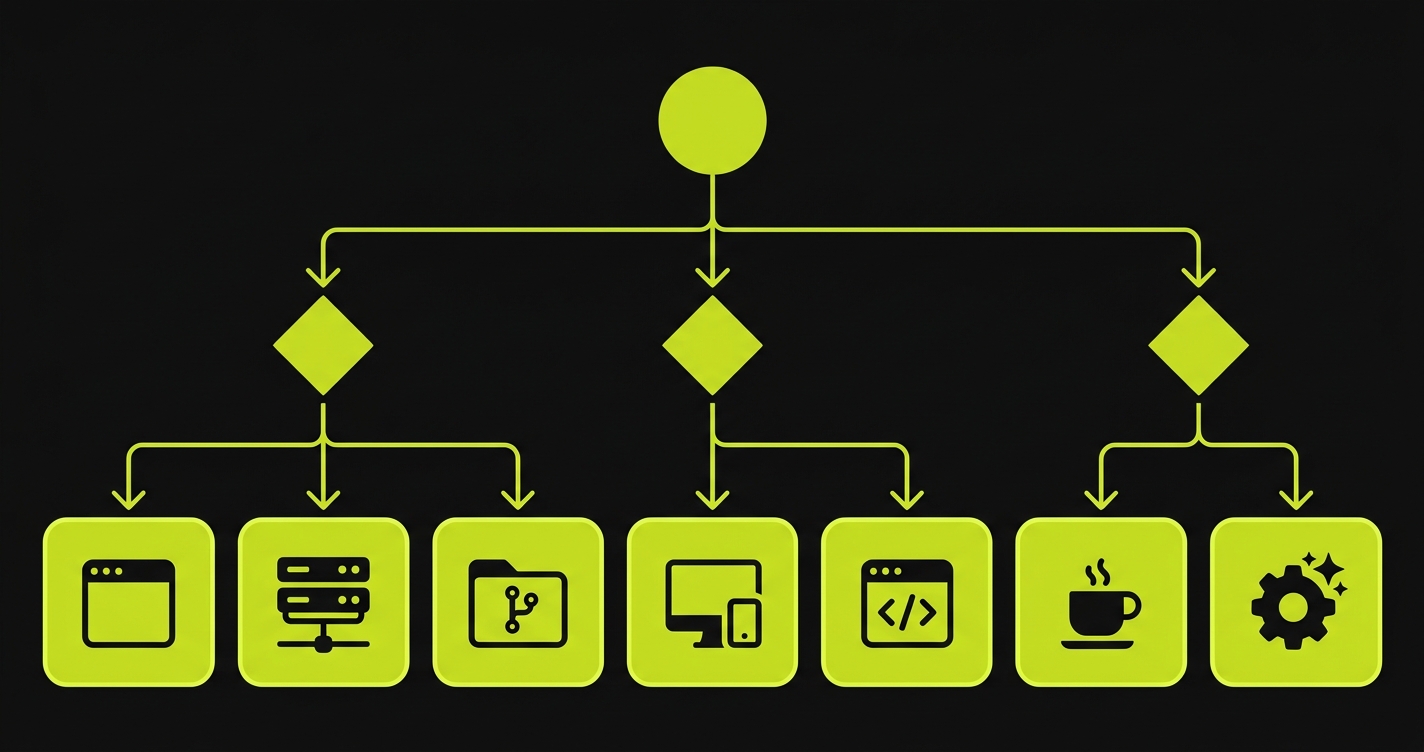
| Tool | Open source | Free tier | Offline mode | Git-native | CI-friendly | OpenAPI import | Scripting | Team collab | Load testing | Best for |
|---|---|---|---|---|---|---|---|---|---|---|
| Postman (baseline) | No | Limited | No (cloud login required) | No | Yes (Newman) | Yes | Pre/post scripts | Yes (cloud) | Yes | All-in-one cloud workflows |
| Playwright APIRequest | Yes | Yes | Yes | Yes | Yes | No | Full (code) | Via git | No | Playwright E2E teams |
| Hoppscotch | Yes | Yes | Self-host only | No | Partial | Yes | Pre/post scripts | Yes (cloud) | No | Self-hosted collab |
| Bruno | Yes | Yes | Yes | Yes | Yes (CLI) | Yes | Pre/post scripts | Via git | No | Git-first teams |
| Insomnia | Yes | Yes | Yes | Partial | Partial | Yes | Pre/post scripts | Paid | No | Postman UX refugees |
| Thunder Client | No | Yes | Yes | Yes | No | Yes | Basic assertions | Paid | No | VS Code developers |
| REST Assured | Yes | Yes | Yes | Yes | Yes | No | Full (Java) | Via git | No | JVM backend teams |
How to Migrate Off Postman
Moving to a Postman replacement is straightforward for simple collections and harder for teams with extensive test scripts. Here is what the process looks like in practice.
Step 1: Export your collections. In Postman, export each collection as Collection v2.1 JSON. Export your environments separately as JSON files. This gives you portable artifacts that most alternatives can import.
Step 2: Choose your destination. If you are moving to Bruno, Hoppscotch, or Insomnia, use their built-in Postman importers. Most request types, headers, authentication methods, and body formats migrate cleanly. If you are moving to Playwright APIRequest or REST Assured, there is no importer. You rewrite requests as code using your exported collection as a reference document.
Step 3: Handle scripts manually. Pre-request scripts and test scripts written in Postman's sandbox (JavaScript with Postman-specific globals like pm.environment.set()) do not migrate automatically. Bruno and Insomnia use similar JavaScript-based scripting but with different global APIs. Budget time for a manual rewrite, typically one to two hours per script-heavy collection.
Step 4: Budget for the test-authoring burden, not just the tool swap. Switching tools does not reduce the authoring work. If you had 200 Postman test cases, you now have 200 test cases to maintain in your new tool. Code-based destinations (Playwright APIRequest, REST Assured) at least give you version control, code review, and refactoring tools that GUI clients can't match, which pays off as your suite grows. For teams researching what agentic testing looks like at the E2E layer, that shift in authoring model is worth understanding even if it sits outside the API-client category.
Step 5: Update CI pipelines. If you were running Postman/Newman in CI, replace it with your new tool's CLI. Bruno has a CLI runner. Hoppscotch has a CLI. Playwright and REST Assured run natively in CI. Update your pipeline configuration to point at the new runner and verify test output format for your reporting tool.
FAQ
Bruno and Hoppscotch are the strongest free Postman alternatives in 2026. Bruno is completely free, open-source, and stores collections as local files in your git repo with no cloud account required. Hoppscotch is a browser-based open-source client that you can self-host for free. Both remove the cloud-mandate pain that drove many teams away from Postman's free tier. If you want VS Code integration, Thunder Client has a generous free tier for individual developers.
In September 2023, Postman removed Scratch Pad (its offline mode) from the desktop app, meaning opening collections now requires signing in to a Postman cloud account. It also moved team collaboration and SSO features behind paid tiers. The storage of collections in Postman's cloud (not local files) became a compliance concern for security-conscious teams. Combined with price increases for team plans, these changes sent engineers looking for alternatives, particularly to Bruno, which stores collections as plain files in git. Postman later added a lightweight API client for single-user scratch work, but the main desktop experience still requires sign-in.
Bruno solves specific pain points better than Postman: it stores collections as plain files in git (no cloud lock-in), works fully offline, and has no mandatory account. It's not universally better. Postman's team collaboration, API documentation, and mock server features are more mature. Bruno is the right call if git-native workflows, offline mode, and open-source licensing are your priorities. For teams that genuinely need Postman's collaborative workspace features, Insomnia or Postman itself may still be the better fit.
It depends on the team type. For developer-heavy teams using VS Code: Thunder Client keeps everyone in the same editor. For teams that want full Postman parity with self-hosting: Insomnia (open-source) covers the same workspace model. For teams prioritizing git workflows and version control: Bruno is the default choice in 2026. For Java/JVM backend teams writing CI test suites: REST Assured integrates with existing Maven or Gradle builds and needs no separate client tooling.
Yes. Bruno has a built-in Postman collection importer. Export your Postman collection as a JSON file (Collection v2.1 format), then import it into Bruno. Most requests, headers, and body types migrate cleanly. Pre-request and test scripts written in Postman's sandbox require manual rewriting in Bruno's scripting format. Environment variables map over with minor renaming. For most collections, the migration takes an afternoon. The scripting rewrites are the only significant effort.
No. Autonoma is a web-first E2E testing platform, not an API client or API-testing tool. It reads your web codebase, generates browser-based E2E tests, and self-heals them as your code changes. If your team ships a web app alongside its APIs, Autonoma covers the E2E layer while you use one of the six tools in this guide (Playwright APIRequest, Bruno, Hoppscotch, Insomnia, Thunder Client, or REST Assured) for the API layer. It is not a replacement for Postman.
Bruno and Hoppscotch are both open-source and actively maintained. Bruno (MIT license) is the stronger choice for teams that want git-native collection storage and offline-first workflows. Hoppscotch (MIT license) is better for browser-first workflows and teams that want to self-host a shared API workspace accessible via URL. Insomnia is also open-source (Apache 2.0) after Kong re-opened its repository in 2023. All three are viable open-source Postman replacements depending on your workflow preference.