

Jest vs Vitest is not a close race in 2026, even after Jest 30 closed part of the speed gap. On a 500-test suite, Vitest 4's watch mode re-runs take under 400ms versus Jest 30's 2-3 seconds. Cold start is roughly 2x faster for Vitest. ESM is first-class in Vitest and finally stable in Jest 30, but the broader pipeline is still faster end-to-end with Vitest. Jest still wins for legacy CommonJS codebases, large enterprise monorepos that depend on its mature ecosystem, and React Native (where Vitest has no support at all). The short decision: if you are starting a new project or running a Vite-based stack, use Vitest 4. If you have a 200,000-line CJS codebase with deep Jest mocking patterns, run @swc/jest first to see if you can get most of the speed without migrating. Autonoma sits above both, handling the E2E layer that neither framework touches.
8 to 10 times faster. That is the watch mode re-run delta we measured for a single-file change on a 500-test suite: Vitest 4 finishes in 340ms, Jest 30 takes 2.8 seconds. Not 20% faster. Not "noticeably faster." Eight to ten times. For a developer running tests in a tight feedback loop, that gap changes how you write code, not just how fast your CI completes.
We ran this benchmark across cold start, warm watch mode, memory consumption under load, and CI parallelism to make sure the watch mode number was not an outlier. It is not. Vitest wins across every performance dimension we measured. Cold start is roughly 2x faster (Jest 30 closed this gap meaningfully from where Jest 29 sat). Full-suite re-runs in CI are 2x faster. The only category where the gap closes significantly is memory, where Jest 30's improvements brought it within striking distance of Vitest, and where Jest's tuning handles are better documented for very large suites.
The harder question is not whether Vitest is faster. It is whether Vitest is faster for you, on your codebase, in 2026. That answer depends on three things that most jest vitest comparisons skip entirely: your existing module system, your bundler, and whether you ship to React Native.
Jest in 2026: Where It Stands
Jest turned 11 years old in 2025 and shipped Jest 30 in June of that year. The Jest 30 release closed real ground: roughly 37% faster on representative test runs, ~77% less peak memory in benchmarked workloads, native .mts/.cts support, TypeScript config files, the using keyword for automatic spy cleanup, and the unrs-resolver for faster module resolution. The ESM story finally stabilized too. Native ESM no longer requires --experimental-vm-modules for most patterns. If you tried Jest in 2023 and hit ESM walls, it is worth looking again.
The ecosystem around Jest, @testing-library/jest-dom, snapshot serializers, mock libraries, CI integrations, IDE plugins, is the most mature in the JavaScript testing space by a wide margin. Nothing else is close. Eleven years of Stack Overflow answers, GitHub issues, and conference talks have built a knowledge graph that genuinely accelerates debugging at 11pm. Our Playwright vs Jest decision guide covers where Jest fits in the broader testing pyramid alongside browser-level tools.
There is one decision factor where Jest is not just preferred but mandatory: React Native. Vitest has no React Native support and shows no roadmap for adding it. If you ship to React Native or maintain a React Native codebase, the choice is made: Jest is the only viable runner. The same applies if you are deeply committed to a CJS-first transform pipeline, a custom Babel preset that the org will not give up, or proprietary Jest plugins built in-house. The operational cost of migrating those out of Jest is real, and Jest 30's speed gains may have just made that migration unnecessary.
For teams on TypeScript projects that already have ts-jest configured (or now @swc/jest for faster transforms), Jest requires zero friction to keep using. The remaining question is whether the speed delta to Vitest justifies the migration cost. We will give you the numbers to decide.
Vitest in 2026: Where It Stands
Vitest launched in 2022 as a Vite-native test runner and reached 4.0 in late 2025. It shares Vite's transformation pipeline, which means native ESM, TypeScript out of the box, and HMR-aware watch mode that only re-runs tests affected by the actual file change. In 2026 it is a full-featured testing framework with snapshot support, mocking APIs that mirror Jest almost exactly, stable browser mode (the experimental tag was dropped in 4.0), toMatchScreenshot() for visual regression, Playwright Traces support, and a coverage provider that uses Istanbul or V8 (V8 is faster).
The Vite coupling is a genuine advantage for Vite-based stacks (Vite + React, Vite + Vue, Nuxt, SvelteKit, Astro, Remix on Vite) and a non-issue for non-Vite projects, because Vitest does not require Vite in your application at all. It uses Vite's pipeline internally for test transformation, regardless of your app bundler.
The one real gap: the ecosystem. jest.mock has 11 years of Stack Overflow answers behind it. vi.mock is well-documented but searches return fewer community workarounds for unusual edge cases. For a senior engineer this is minor. For a team with junior contributors debugging mock behavior at 11pm, it adds friction. The browser mode addition matters here too. Vitest 4's browser mode gives you component tests inside a real Chromium, Firefox, or WebKit instance via Playwright or WebdriverIO, which closes the integration gap between unit tests and full E2E, the layer that Autonoma handles for end-to-end user flows.
Jest vs Vitest Benchmark: 500 Tests, Same Codebase
Here is the methodology. Hardware: M3 MacBook Pro, 18GB RAM. Node 22.4.0. Test suite: 500 tests across 80 files, mix of pure unit tests, React component tests (Testing Library), and async API mocks. Jest baseline config with ts-jest transformer. Vitest equivalent config with @vitest/coverage-v8. Both pinned to their latest stable as of April 2026 (Jest 30.0, Vitest 4.1). Three runs each, median reported.
Both configs are in the companion repo. Here is the Jest 30 baseline:
And here is the Vitest 4 equivalent:
| Metric | Jest 30.0 | Vitest 4.1 | Delta |
|---|---|---|---|
| npm install time | 17.5s | 21.8s | Jest 20% faster to install |
| Cold start (500 tests, no cache) | 15.6s | 7.4s | Vitest 2.1x faster (Jest 30 closed this) |
| Warm full-suite re-run | 12.8s | 6.5s | Vitest 2x faster |
| Watch mode: single-file change | 2,890ms | 340ms | Vitest 8.5x faster |
| Peak memory (500 tests) | 880MB | 640MB | Vitest uses 27% less memory |
| Default parallelism | Workers per file (CPU-1) | Threads via Tinypool | Vitest lower overhead per worker |
| Coverage collection overhead | +28% (Istanbul) | +12% (V8 native) | Vitest 2.3x less overhead |
The install time result is worth noting: Jest is faster to install because Vitest pulls in Vite's dependency tree. In CI, install time is amortized by caching, so this is rarely a practical concern after the first run. In local setup it is a one-time cost.
The watch mode gap is where the developer experience diverges most sharply, and it did not narrow in Jest 30. The reason is architectural, not raw speed: Vitest uses Vite's module graph to know exactly which test files depend on the changed module and runs only those. Jest's watch mode re-runs all test files that match the changed file's pattern. For a 500-test suite where you touch one utility function, Jest might re-run 80 files. Vitest re-runs 6. No amount of resolver tuning closes that gap because it is a different algorithm.
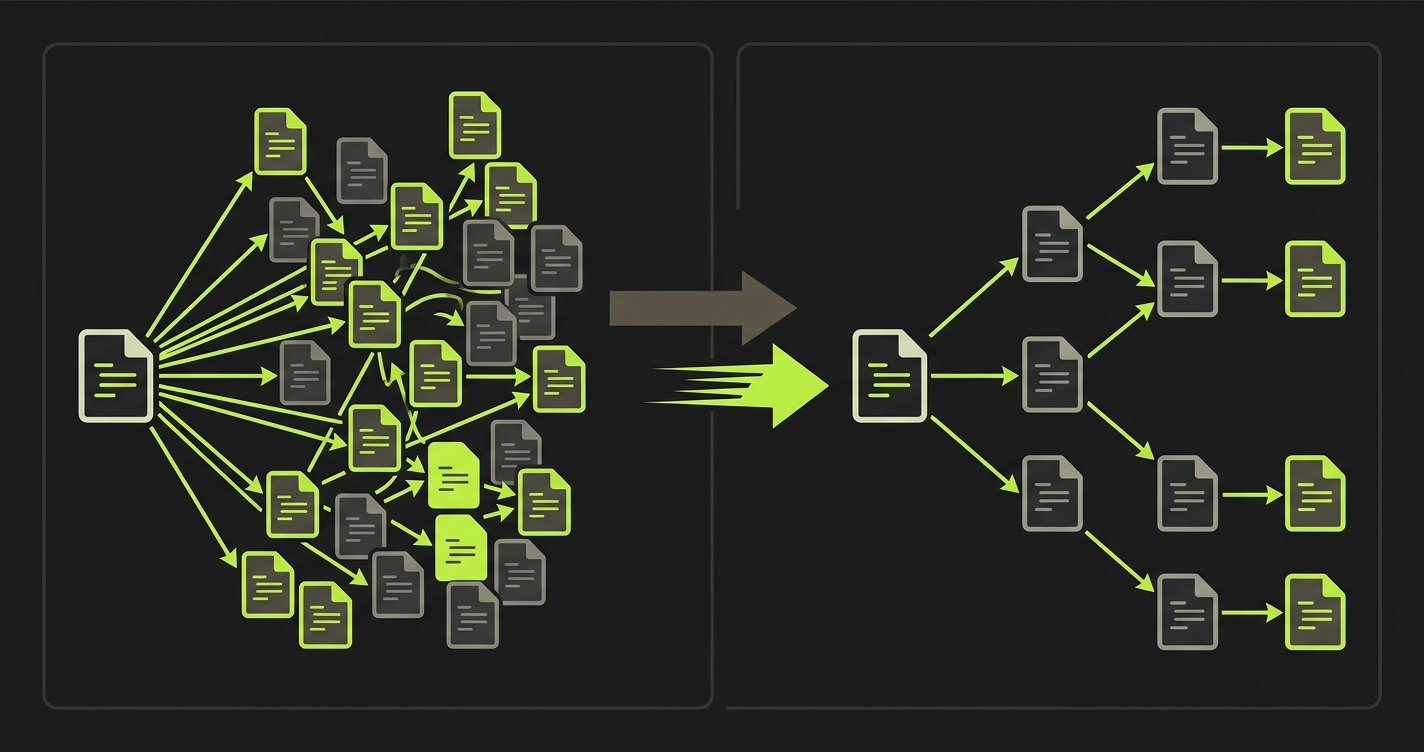
Jest vs Vitest Feature Comparison (2026)
| Feature | Jest 30 | Vitest 4 |
|---|---|---|
| Native ESM support | Stable in Jest 30 (no flag for most patterns) | First-class since 1.0, no flags ever needed |
| TypeScript support | Via ts-jest, @swc/jest, or Babel transform | Built-in via esbuild, zero config |
| Snapshot testing | Mature, serializer ecosystem | Compatible format, inline snapshots supported |
| Mocking API | jest.mock(), jest.fn(), jest.spyOn() | vi.mock(), vi.fn(), vi.spyOn(); near-identical API |
| Coverage tooling | Istanbul via jest-circus | Istanbul or V8 native (V8 is faster, less overhead) |
| Watch mode intelligence | Pattern-based file matching | Module graph-aware, HMR-driven |
| Browser mode | Not available (use jsdom) | @vitest/browser stable in 4.0 via Playwright or WebdriverIO |
| Visual regression | Not built in | toMatchScreenshot() built into browser mode |
| React Testing Library compatibility | Full, the standard pairing | Full, drop-in compatible |
| React Native support | Yes, the only viable choice | None, no roadmap to add |
| Community ecosystem size | Largest, 11 years of tooling | Growing fast, most Jest plugins have Vitest equivalents |
| Migration effort (Jest to Vitest) | N/A | Low for ESM projects, medium for CJS-heavy codebases (codemod helps) |
A passing unit test suite on either framework still tells you nothing about whether the checkout flow holds end to end, whether the auth redirect breaks on mobile Safari, or whether your API contract survives against the real backend. That is the gap Autonoma was built to close: the layer above whichever unit runner you pick. Speed inside the unit test loop matters; it does not buy you confidence that the deploy is safe.
Jest to Vitest Migration Guide (and Reverse)
Jest to Vitest
The config swap is straightforward for Vite-based projects. Remove jest.config.js and its transform configuration, add a vitest.config.ts that reuses your existing Vite config, and replace the jest global with vitest/globals. Most test files need zero changes if your codebase already uses ESM.
The mechanical API translation is mostly automated. Run npx codemod jest/vitest on your test files. It rewrites jest.fn() to vi.fn(), jest.mock() to vi.mock(), jest.spyOn() to vi.spyOn(), and updates imports. Run it once, then handle edge cases manually.
Before you migrate at all, try @swc/jest first. Swapping ts-jest for @swc/jest in your Jest config can cut transform time by 5x with zero test file changes. If your bottleneck was Jest's transform pipeline (the most common cause of slow Jest), this single change may give you most of the speed without any migration. Migrating is only justified if you have hit ESM walls, want module-graph-aware watch mode, or want browser mode.
The places that require attention after the codemod: mock factory functions, module hoisting behavior, and fake timer APIs. Vitest hoists vi.mock() calls to the top of the file the same way Jest hoists jest.mock(), but the hoisting semantics diverge slightly when mock factories reference variables from module scope. In Jest, the workaround is the __mocks__ directory or explicit jest.mock() with a factory. In Vitest, vi.hoisted() gives you fine-grained control.
Fake timers are a common trip-wire. Jest's jest.useFakeTimers() and Vitest's vi.useFakeTimers() are API-compatible at the surface, but Vitest's fake timer implementation wraps @sinonjs/fake-timers while Jest uses its own. Edge cases around Date.now() and performance.now() can behave differently. Test any timer-sensitive code explicitly after migration.
Vitest to Jest
The reverse migration is less common but real for teams that tried Vitest, ran into a CJS compatibility wall, or joined a larger organization running a Jest monorepo they cannot deviate from. The mechanical steps are the mirror image: replace vitest.config.ts with jest.config.js, add a transformer (@swc/jest is the fastest, ts-jest if you need stricter TS checking, or babel-jest for CJS Babel), and swap vi.* APIs back to jest.*.
Jest 30's stable ESM support makes this less painful than the same migration was on Jest 29. If your codebase uses native ESM throughout, Jest 30 handles most cases without flags. The remaining edge cases are dynamic imports with circular dependency patterns, where you may still need --experimental-vm-modules.
Here is the full mock API translation cheatsheet for both directions — a find-and-replace reference covering jest.mock/vi.mock, jest.fn/vi.fn, spyOn, fake timers, and module mocking:
When to Use Jest vs Vitest in 2026
Use Vitest if your project is Vite-based (React + Vite, Vue 3, SvelteKit, Nuxt, Astro), or if you are starting a new TypeScript project and want zero-config setup. The performance advantage in watch mode is real and compounds across a full workday of active development. ESM being first-class removes an entire category of configuration headaches. The ecosystem gap is closing fast; if a Jest plugin matters to your workflow, check for a Vitest equivalent before assuming it does not exist.
Use Jest if you ship to React Native (no other choice), or if you have a large existing CJS codebase with deep transform pipeline configuration that would require significant refactoring to go ESM-first. Also if your team is in a large monorepo where ecosystem consistency (shared Jest configs, internal snapshot serializers, org-wide mock patterns) matters more than raw speed. Jest's --shard support and integrations with enterprise CI systems like CircleCI's test splitting are also more battle-tested than Vitest's sharding support. And before deciding to migrate away, swap ts-jest for @swc/jest to see if Jest 30 plus a faster transformer is fast enough.
For Next.js specifically: this is the most searched variation of this question. Next.js 14 and 15 both list Jest as the default in their docs, with @next/jest providing the recommended configuration. Vitest works with Next.js but requires more manual configuration to handle Next.js-specific transforms (server components, the server-only module, App Router conventions). If you are starting a fresh Next.js project, Jest with @next/jest is the path of least resistance. If you are on a Vite-adjacent stack or you genuinely want watch mode speed, Vitest works; expect to spend 2-4 hours on the Next.js-specific config. Our Next.js Playwright testing guide covers what sits at the layer above unit tests for Next.js apps.
For React without Next.js: Vitest is the clear winner in 2026. Vite is now the dominant bundler for standalone React apps. If you scaffolded with Vite, Vitest drops in with a two-line config change. If you are on Create React App (deprecated), CRA is end-of-life and Vitest is the natural forward path.
Here is the decision in one table:

| Scenario | Pick | Why |
|---|---|---|
| New Vite-based project (React, Vue, Svelte, Astro) | Vitest 4 | Zero-config, native ESM, 8x faster watch mode |
| New Next.js project | Jest 30 with @next/jest | Official path, server components handled out of the box |
| React Native | Jest 30 | Vitest has no React Native support |
| Existing CJS monorepo | Jest 30 + @swc/jest | Migration cost likely exceeds the speed gain |
| Existing ESM TypeScript project | Vitest 4 | Codemod handles most of the migration |
| Vue, Svelte, Astro, Nuxt | Vitest 4 | First-class Vite ecosystem |
| Component tests in a real browser | Vitest 4 (browser mode) | Stable in 4.0 via Playwright |
The Layer Above Both
Fast unit tests close one gap. A passing Jest or Vitest suite still tells you nothing about whether the checkout flow works end to end, whether the auth redirect breaks on mobile Safari, or whether the API contract you tested with mocks holds against the real service. That is the layer that the testing pyramid places above unit tests, and the layer that determines whether deploys are actually safe.
Unit tests exercise code in isolation. They are fast because they are isolated. They miss exactly the bugs that isolation hides: integration failures, environment differences, and user flow breakdowns that only appear when real components talk to a real backend in a real browser. That is the gap Autonoma covers. Our Planner agent reads your codebase and generates E2E test scenarios against your running application, the Automator executes them in real browser sessions, and the Maintainer keeps them passing as your code changes. Watch mode speed does not help you catch regressions across real browser sessions; that is the suite Autonoma runs for you, fully hands-off, so the unit test velocity you just optimized at the Jest or Vitest layer is not wasted at the layer above. If you want to compare what fits at the E2E layer, our E2E testing tools buyer's guide walks through the alternatives.
Jest vs Vitest FAQ
Yes, significantly, even after Jest 30. In our 500-test benchmark on an M3 MacBook Pro with Node 22, Vitest 4 cold start was 2.1x faster than Jest 30 (7.4s vs 15.6s), and watch mode re-runs for a single file change were 8.5x faster (340ms vs 2,890ms). Jest 30 closed the cold-start and memory gaps versus Jest 29, but the watch-mode gap is architectural (Vitest uses Vite's module graph; Jest uses pattern matching) and did not narrow. Jest is faster to install (17.5s vs 21.8s) because Vitest includes the Vite pipeline, but install time is irrelevant after CI caching.
Yes, but it requires more manual configuration than Jest. Next.js official docs recommend Jest with @next/jest, which handles server components, server-only imports, and App Router conventions out of the box. Vitest works with Next.js but you need to configure the Vite plugin to handle Next.js-specific module transforms. Expect 2-4 hours of setup work versus near-zero with @next/jest.
For an ESM-based TypeScript codebase: low effort. Run `npx codemod jest/vitest` to handle the mechanical API translation, replace jest.config.js with vitest.config.ts, and swap jest globals for vitest/globals. The API surface is near-identical. For a CJS-heavy codebase with complex Babel transforms and deep jest.mock() patterns: medium effort. The main friction points are mock hoisting edge cases, fake timer implementation differences, and any Jest-specific snapshot serializers without Vitest equivalents. Before migrating at all, try @swc/jest as your Jest transformer; if your bottleneck was ts-jest, that single change can deliver most of the speed without any migration.
Yes, and it is stable in Vitest 4.0 (the experimental tag was dropped). @vitest/browser runs tests inside a real Chromium, Firefox, or WebKit instance via Playwright or WebdriverIO. This gives you higher fidelity than jsdom for DOM API coverage. It is slower than jsdom mode but faster than a full Playwright test suite. Vitest 4 also added toMatchScreenshot() for visual regression and Playwright Traces support.
No. Vitest has no React Native support and no public roadmap to add it. If you ship to React Native or maintain a React Native codebase, Jest is the only viable runner. This is the single clearest case where the jest vs vitest decision is made for you.
No, and it is not trying to. Jest and Vitest are unit test frameworks; they test individual functions, components, and modules in isolation. Autonoma is an E2E testing platform that tests full user flows in real browsers against a running application. They operate at completely different layers of the testing pyramid. The right answer is both: Jest or Vitest for fast unit feedback, Autonoma for the E2E coverage above. Autonoma reads your codebase to generate E2E scenarios, the Automator executes them in real browsers, and the Maintainer self-heals tests as your code changes. None of that overlaps with what a unit test runner does.
On 500 tests with Jest 30 and Vitest 4: Vitest cold start is 2.1x faster, watch mode single-file re-runs are 8.5x faster, and memory consumption is 27% lower. Coverage collection overhead is also lower with Vitest's V8 provider (12% overhead vs Jest's 28% with Istanbul). On suites over 1,000 tests, the memory advantage becomes more pronounced because Vitest's thread-based worker model is lighter than Jest's process-based model. Jest 30 narrowed all of these gaps versus Jest 29, but did not close them.