

Quick summary: Autonoma is the open-source alternative to AWS Device Farm. Unlike Device Farm's barebones device infrastructure ($0.17/device-minute or $250/month per slot, no AI, no test generation), Autonoma generates tests automatically from your codebase using AI agents. Full source code on GitHub (BSL 1.1), self-host on your own AWS account (ECS/EKS/EC2), vision-based self-healing, unlimited parallel execution, no vendor lock-in. Free tier: 100K credits. Cloud: $499/month. Self-hosted on AWS: no platform fees.
AWS Device Farm is Amazon's real-device testing service. It gives teams in the AWS ecosystem access to physical phones, tablets, and browsers for running automated and manual tests. For teams already deep in AWS, it feels like the obvious choice: same console, same billing, same IAM roles. But Device Farm has a fundamental limitation that no amount of AWS integration can fix -- it is just infrastructure. It provides devices. That is it. No intelligence. No test generation. No self-healing. No AI of any kind.
For teams that need more than bare metal devices -- teams that want testing that actually thinks -- the AWS ecosystem loyalty becomes an expensive constraint. And here is the thing: you do not have to leave AWS to get smarter testing.
Autonoma is the open-source alternative that self-hosts natively on AWS while delivering AI test generation, vision-based execution, and self-healing tests. This guide covers where Device Farm falls short, how Autonoma solves those problems on your own AWS infrastructure, and how to migrate.
Where AWS Device Farm Falls Short
Three core problems push teams to look beyond Device Farm, even teams that are deeply committed to the AWS ecosystem.
Barebones Infrastructure, Zero Intelligence
AWS Device Farm is fundamentally a device rental service. It gives you access to real Android and iOS devices, plus a limited desktop browser testing environment. You upload your test package (Appium, Espresso, XCTest, Calabash), point it at devices, and Device Farm runs those tests. That is the entire product.
There is no test generation. No AI assistance. No self-healing when selectors break. No intelligent test planning. No vision-based execution. No automatic coverage analysis. If a button changes from submit-btn to cta-primary, your test breaks and an engineer has to fix it manually. If you need new tests for a feature you just shipped, an engineer writes them by hand. Device Farm does not even offer basic test recording or low-code test creation.
This matters because the bottleneck for most teams is not access to devices. It is the engineering time spent writing, debugging, and maintaining tests. Device Farm solves the easy problem (device access) while ignoring the expensive one (test intelligence). Teams end up paying AWS for device minutes while spending 10x more on engineering hours to keep tests running.
One mobile team lead told us: "We picked Device Farm because it was already in our AWS console. Six months later we realized we were spending $3,000/month on device minutes and $25,000/month on engineering time maintaining Appium tests. The device access was never the bottleneck."
Pay-Per-Minute Pricing That Punishes Thoroughness
Device Farm offers two pricing models, and both create perverse incentives.
On-demand pricing charges $0.17 per device-minute. That sounds cheap until you do the math. A 30-minute test suite running on 10 devices costs $51 per run. Run that twice daily across staging and production, and you are looking at $204/day or roughly $6,120/month. Scale to 20 devices for broader coverage and costs double. The per-minute model actively discourages thorough testing because every additional device and every longer test run directly increases your bill.
Unlimited testing costs $250/month per device slot. Need 10 device slots for parallel testing? That is $2,500/month. Need 20 slots for faster feedback? $5,000/month. The "unlimited" label is misleading -- you are still paying per device, just with a different billing model. And each slot is reserved whether you use it or not, so you are paying for idle capacity during off-hours and weekends.
Neither model includes any testing intelligence. You are paying purely for device access. Compare this to a platform that generates and maintains tests automatically: the cost equation completely changes when engineering hours drop to near zero.
AWS Lock-In Beyond the Ecosystem
Device Farm integrates tightly with AWS services: CodePipeline for CI/CD, CodeBuild for test execution, IAM for access control, S3 for artifact storage, CloudWatch for monitoring. This integration is smooth if you are all-in on AWS. It becomes a liability the moment you need flexibility.
Teams using GitHub Actions, GitLab CI, Jenkins, or CircleCI for their primary CI/CD pipeline have to build and maintain bridge integrations to trigger Device Farm runs. The CLI and API exist, but they are AWS-flavored: you need AWS credentials, AWS SDK calls, and AWS-specific configuration. Cross-cloud or hybrid teams spend disproportionate time on integration plumbing.
More critically, Device Farm's test artifacts (device logs, screenshots, video recordings) live in S3 within the AWS Device Farm service. Your test execution history, performance baselines, and device-specific results are locked inside AWS. Moving to a different testing service means losing all historical data and rebuilding your analysis pipeline from scratch.
The irony: teams chose Device Farm because they were already on AWS. But Device Farm's tight coupling makes it harder to adopt better testing tools later, even if those tools also run on AWS.
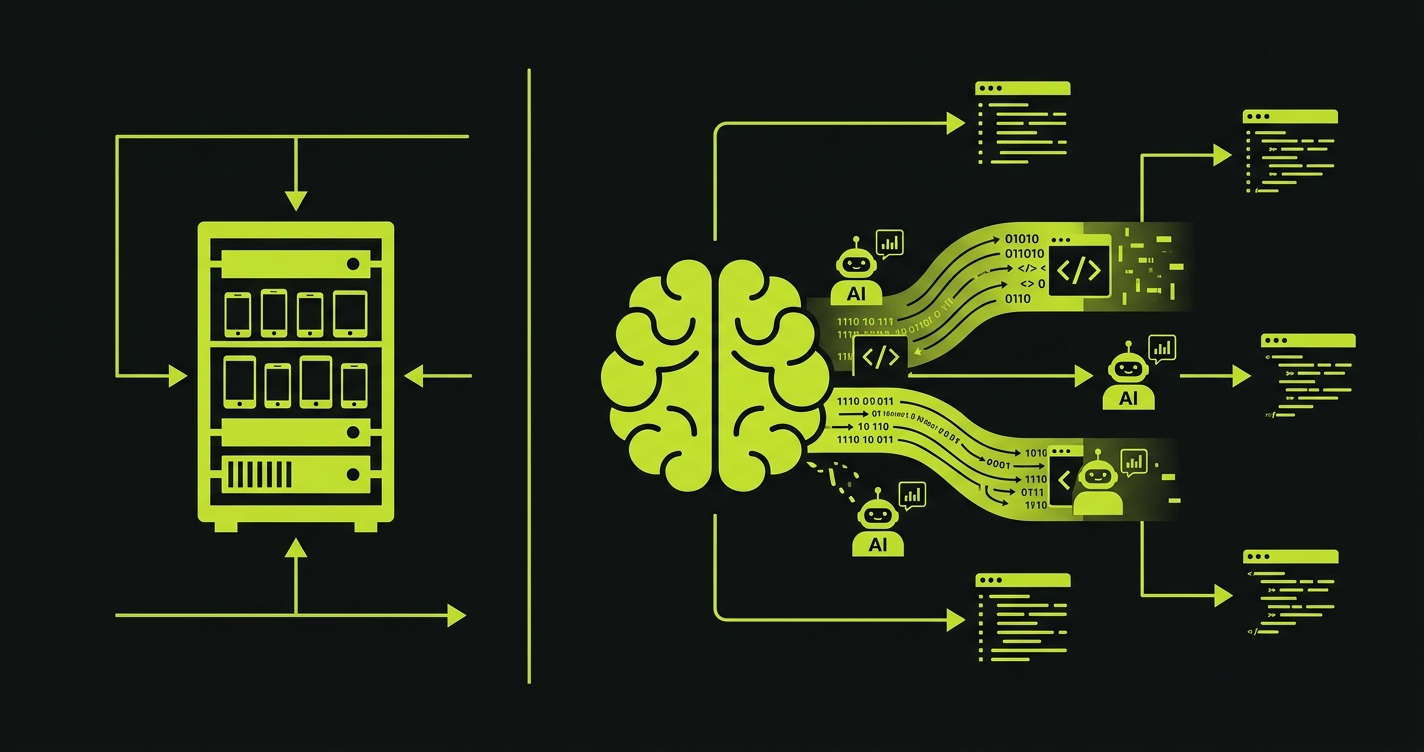
Autonoma: The Open Source Alternative to AWS Device Farm
Autonoma is an open-source, AI-native testing platform that runs on your own AWS infrastructure while delivering capabilities Device Farm cannot match.
Self-Host on Your Existing AWS Infrastructure
Here is what makes Autonoma uniquely compelling for AWS teams: you do not have to leave AWS. Autonoma self-hosts natively on the AWS services you already use. Deploy on ECS (Elastic Container Service) for container-based orchestration, EKS (Elastic Kubernetes Service) for Kubernetes-native teams, or EC2 for direct VM control. Use your existing VPC, security groups, IAM roles, and networking configuration.
Full source code lives on GitHub, licensed under BSL 1.1 (converts to Apache 2.0 in 2028). You can inspect every line, audit security, customize behavior, and deploy with no feature restrictions. The only limitation: you cannot resell Autonoma's functionality as a commercial service.
Your test data, application credentials, and execution artifacts stay in your AWS account. Tests run in your VPC. Nothing leaves your infrastructure. For teams with HIPAA, PCI DSS, SOC 2, or FedRAMP requirements, this is the critical difference: you get full compliance control because you own the entire stack, not just the devices.
Self-hosting is free. No platform fees, no per-device charges, no per-minute billing. You pay only for the AWS compute and storage you provision. For teams already paying for AWS infrastructure, the marginal cost of running Autonoma is minimal.
AI-Powered Autonomous Testing
This is the fundamental gap between Device Farm and Autonoma. Device Farm provides devices. Autonoma provides intelligence.
How it works: Connect your GitHub repo, and Autonoma's test-planner-plugin analyzes your routes, components, and user flows to build a knowledge base of your application. AI agents then generate comprehensive E2E test cases based on your actual code structure. No manual test writing required.
Tests execute using AI vision models that see your application like a human would. No CSS selectors. No XPaths. No Appium element IDs that break every time a developer changes a class name. When your UI changes, tests adapt automatically because the AI understands intent, not DOM structure. A button that changes from login-btn to auth-cta does not break a vision-based test that understands "click the login button."
You do not write tests. You do not maintain selectors. You do not update Appium scripts when the app changes. The AI handles the full testing lifecycle: understanding your codebase, generating tests, executing them, and self-healing when things change.
For AWS teams currently spending thousands on Device Farm minutes plus tens of thousands on engineering hours maintaining Appium and XCTest suites, this shift is transformative. The device access cost was never the real expense. The engineering time was. Autonoma eliminates it.
Unlimited Parallel Execution
Every plan (free tier, cloud, and self-hosted) supports unlimited parallel execution. On the free tier, this is subject to credit limits, but on cloud and self-hosted plans your test suite scales with your infrastructure.
No per-device-slot pricing. No reserved capacity you pay for whether you use it or not. When you self-host on AWS, parallel capacity is limited only by the ECS tasks or EKS pods you provision, and you can auto-scale those based on demand using the AWS auto-scaling you already know.
Compare this to Device Farm's model where 10 parallel device slots cost $2,500/month (unlimited plan) or where on-demand pricing makes parallelism expensive by design. With Autonoma on your own AWS, spinning up 30 parallel test workers costs whatever 30 additional containers cost on ECS -- a fraction of Device Farm's per-slot pricing.
Cross-Platform Coverage
Autonoma uses Playwright for web testing (Chrome, Firefox, Safari across desktop and mobile viewports) and Appium for native mobile testing (iOS simulators, Android emulators, and physical devices). The AI generates tests for both web and mobile from the same codebase analysis.
Device Farm's strength is its physical device lab: hundreds of real Android and iOS devices. If your testing absolutely requires running on a specific Samsung Galaxy S24 or iPhone 15 Pro Max physical device, Device Farm has a legitimate advantage. But most teams find that the combination of emulators, simulators, and a handful of physical devices covers their actual testing needs. The extensive device lab sounds impressive in sales calls but gets used for maybe 10-15 device configurations in practice.
Autonoma is framework agnostic. React Native, Flutter, Swift, Kotlin, or hybrid apps: the AI reads your codebase and generates appropriate tests regardless of your tech stack.
No Vendor Lock-In
Tests are generated from your codebase, not stored in a proprietary AWS format. There are no Device Farm-specific APIs woven into your CI/CD pipeline. Your testing capability exists independently of any vendor. Fork the project if needed. Switch from ECS to GKE. Move from AWS to Azure. Your tests and testing infrastructure are portable because they are built on open standards.
Pricing
Free tier: 100K credits, no credit card required, unlimited parallels, all features included. Good for small teams, startups, and evaluation.
Cloud ($499/month): 1M credits per month, unlimited parallels, managed infrastructure, support included. No infrastructure to manage.
Self-hosted (free platform): No platform fees. Deploy on your existing AWS account (or any cloud). Pay only for infrastructure. No feature restrictions. Full control over data, environment, and scaling.
AWS Device Farm vs Autonoma: Feature Comparison
| Feature | AWS Device Farm | Autonoma |
|---|---|---|
| Open Source | Proprietary closed source | BSL 1.1 on GitHub (Apache 2.0 in 2028) |
| Self-Hosting | AWS-managed only | Self-host on AWS (ECS/EKS/EC2) or any cloud |
| Test Generation | None (you write all tests manually) | AI generates tests from your codebase automatically |
| Test Maintenance | Manual (you fix broken selectors) | AI self-healing (zero maintenance) |
| AI Capabilities | None | Vision-based execution, self-healing, auto-generation |
| Parallel Execution | $250/month per device slot | Unlimited on all plans |
| On-Demand Pricing | $0.17/device-minute | Free tier (100K credits), then $499/month |
| Physical Device Lab | Hundreds of real devices | Physical device support via Appium |
| Web Testing | Limited (Selenium-based desktop browser) | Full (Playwright: Chrome, Firefox, Safari) |
| Mobile Testing | Real devices (Appium, Espresso, XCTest) | Simulators, emulators, physical devices (Appium) |
| Vendor Lock-In | High (AWS-coupled, proprietary artifacts) | None (open source, portable tests) |
| Data Sovereignty | Data in AWS Device Farm service | Data stays in your own VPC |
| Source Code Access | No access | Full source code on GitHub |
| CI/CD Integration | Best with CodePipeline/CodeBuild | Any CI/CD (GitHub Actions, GitLab, Jenkins, etc.) |
| Framework Support | Appium, Espresso, XCTest, Calabash | Framework agnostic (AI reads any codebase) |
Cost: Open Source vs AWS Device Farm
The cost comparison between Device Farm and Autonoma is stark because the two products solve different problems at different price points.
AWS Device Farm costs for a mid-sized team (15 engineers, continuous mobile testing):
On-demand model: A 30-minute test suite running on 10 devices, triggered 4 times daily (PR merges + scheduled runs), costs roughly $0.17 x 30 x 10 x 4 = $204/day or $6,120/month ($73,440/year). Most teams hit this range faster than expected because per-minute billing punishes thoroughness.
Unlimited model: 10 device slots at $250/month each = $2,500/month ($30,000/year). Better predictability, but you are paying for reserved capacity whether you use it or not, and 10 slots may not be enough for fast feedback.
In both models, add 15-20 hours/month of engineering time maintaining Appium, Espresso, or XCTest suites (updating selectors, debugging device-specific failures, rewriting tests after UI changes) at $100-150/hour. That is $18,000-36,000 per year in maintenance alone. Over three years, total cost of ownership ranges from $144K (unlimited model + maintenance) to $328K (on-demand + heavy maintenance).
Autonoma self-hosted on AWS: No platform fees. Infrastructure cost for ECS containers, RDS database, and S3 storage runs $200-500/month depending on parallel capacity. Zero engineering hours for test maintenance (AI self-healing). Three-year cost: roughly $12K-18K. That is an 87-95% reduction.
Autonoma cloud: $499/month ($18K over three years) with zero maintenance hours. A 75-87% reduction versus Device Farm.
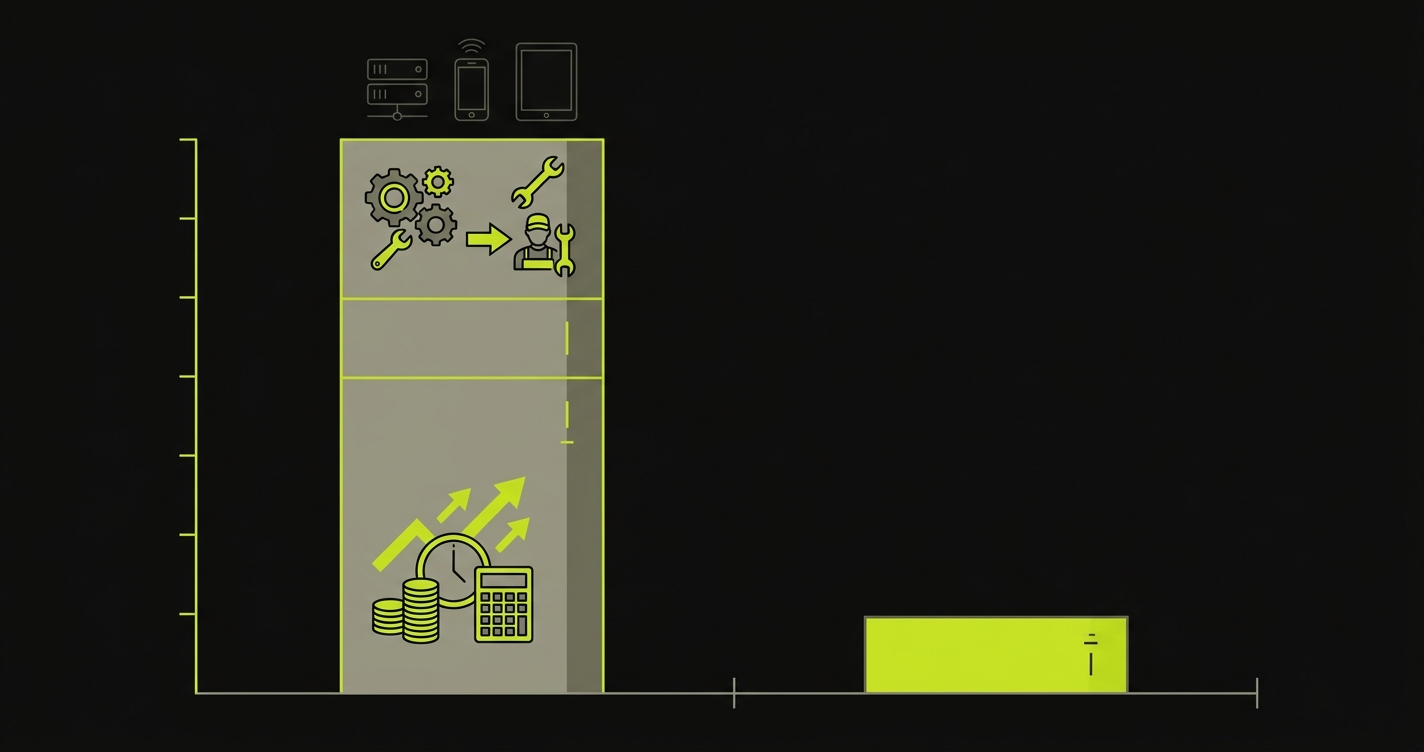
The biggest savings is not the platform fee difference. It is the elimination of test maintenance engineering. Device Farm charges for device access but does nothing about the $18K-36K/year teams spend keeping tests alive. Autonoma eliminates that entire cost category.
Migrating from AWS Device Farm to Autonoma
Migration is straightforward, especially for teams already on AWS. You are not rewriting Appium tests line by line. Autonoma generates new tests from your codebase. Most teams complete the process in 1-2 weeks.
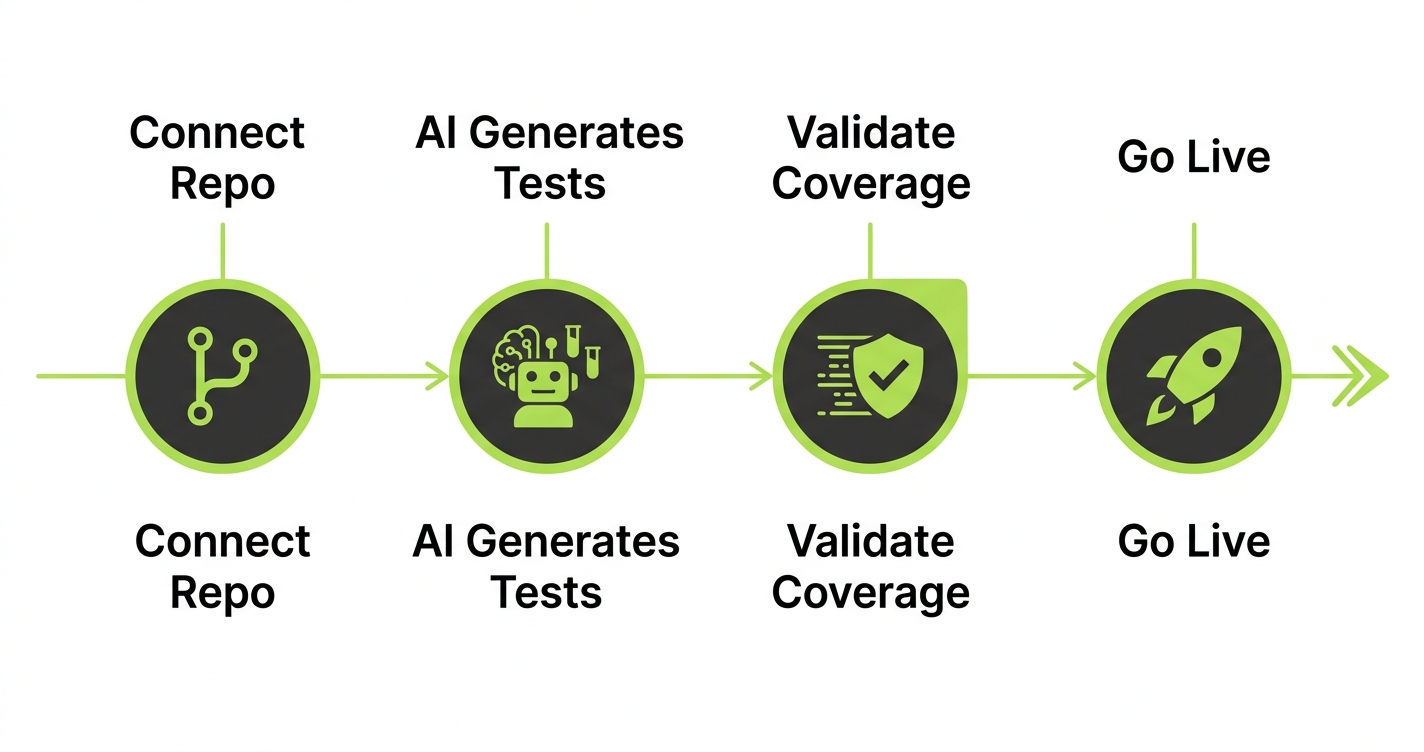
1. Deploy Autonoma on your AWS account. Sign up for the free tier at getautonoma.com to start with cloud, or self-host by cloning the GitHub repo and deploying to your existing ECS cluster or EKS environment. Use your existing VPC, security groups, and IAM roles. The deployment uses standard AWS services you already manage.
2. Connect your repo and let AI generate tests. Connect your GitHub repository and Autonoma's test-planner-plugin analyzes your codebase (routes, components, user flows) to generate comprehensive E2E test cases automatically. Start with your 5-10 most critical flows (authentication, checkout, core features) and run them in parallel with your existing Device Farm suite for a side-by-side comparison.
3. Validate coverage and compare results. Compare AI-generated test coverage against your existing Appium/Espresso/XCTest suite. Autonoma's vision-based tests are typically more resilient than selector-based Device Farm tests because they understand user intent rather than DOM structure. Check for coverage gaps, review AI-generated test plans, and iterate. Most teams achieve equivalent or better coverage within days.
4. Update CI/CD and decommission Device Farm. If you are using CodePipeline/CodeBuild, swap the Device Farm step for Autonoma. If you are using GitHub Actions or another CI/CD tool, the integration is cleaner since you no longer need AWS-specific bridging. Cancel your Device Farm device slots, remove the per-minute billing, and redirect those savings. Your tests now run on your own AWS infrastructure with AI intelligence Device Farm never offered.
The key insight: you are not migrating tests. You are replacing a device rental service with an intelligent testing platform. The AI generates better tests from your codebase than the Appium scripts you were maintaining by hand.
Frequently Asked Questions
Yes. Autonoma is an open-source testing platform available on GitHub. Unlike AWS Device Farm's proprietary model, Autonoma offers a free tier with 100K credits and full self-hosting capabilities. You can run Autonoma on your own AWS infrastructure (ECS, EKS, or EC2) with no feature limitations, or use the cloud version starting free.
Yes. Autonoma self-hosts natively on AWS. Deploy on ECS, EKS, or EC2 using your existing VPC, security groups, and IAM roles. Your data stays in your AWS account. No per-device-minute charges, no per-slot fees. You pay only for the AWS compute and storage you provision.
AWS Device Farm charges $0.17/device-minute (on-demand) or $250/month per device slot (unlimited). A mid-sized team typically spends $2,500-6,000/month on Device Farm plus $1,500-3,000/month on test maintenance engineering. Autonoma self-hosted on AWS costs $200-500/month (infrastructure only) with zero maintenance. Autonoma cloud is $499/month with unlimited parallels.
No. AWS Device Farm is purely a device infrastructure service. It provides real devices to run tests on, but you must write and maintain all tests manually using Appium, Espresso, XCTest, or Calabash. Autonoma generates tests automatically from your codebase using AI agents, eliminating manual test writing entirely.
Yes. Autonoma self-hosts on your existing AWS infrastructure. You keep your VPC, security groups, IAM roles, and AWS billing. The migration replaces Device Farm's device rental with Autonoma's AI-native testing on the same AWS account. You do not need to leave the AWS ecosystem.
AWS Device Farm is a device infrastructure service: it provides real devices to run your manually written tests. Autonoma is an AI-native testing platform: it generates tests from your codebase, executes them with vision-based AI, and self-heals when UI changes. Device Farm is plumbing; Autonoma is an autonomous testing system. Autonoma can run on your own AWS infrastructure while providing intelligence Device Farm lacks.
The Bottom Line
AWS Device Farm is bare-bones device infrastructure with per-minute billing, no AI capabilities, and tight AWS coupling. It solves the device access problem but ignores the expensive problem: writing and maintaining tests. The total cost of ownership (device fees plus engineering maintenance) runs $144K-328K over three years for a mid-sized team.
Autonoma is the open-source alternative that runs on your own AWS infrastructure while delivering what Device Farm cannot. Full source code on GitHub (BSL 1.1, Apache 2.0 in 2028). Self-host on ECS, EKS, or EC2. AI generates and maintains tests from your codebase: zero manual writing, zero maintenance. Unlimited parallels on every plan. No vendor lock-in. Free tier starts at 100K credits, cloud at $499/month, self-hosted at infrastructure cost only. Three-year savings: 75-95% depending on deployment model.
You do not have to leave AWS to get smarter testing. You just have to stop settling for infrastructure without intelligence.
Ready to try open source testing on AWS?
Start Free - 100K credits, no credit card, 5-minute setup
View on GitHub - Inspect source code, self-host on AWS documentation
Book Demo - See AI test generation and self-healing in action
Related Reading: