

Quick summary: Autonoma is the open-source alternative to BlinqIO. While BlinqIO uses AI "virtual testers" that output Cucumber/Gherkin scenarios (still requiring step definition maintenance), Autonoma generates executable tests directly from your codebase using AI agents. Full source code on GitHub (BSL 1.1), self-hosting, vision-based self-healing, unlimited parallel execution, no vendor lock-in. Free tier: 100K credits. Cloud: $499/month. Self-hosted: no ongoing costs.
BlinqIO introduced an interesting concept to AI testing: virtual testers that observe your application and generate BDD-formatted Cucumber scenarios. The idea is compelling on paper. AI watches how your app works, then produces structured Gherkin output your team can review. But there is a critical gap between generating Cucumber scenarios and having tests that actually run.
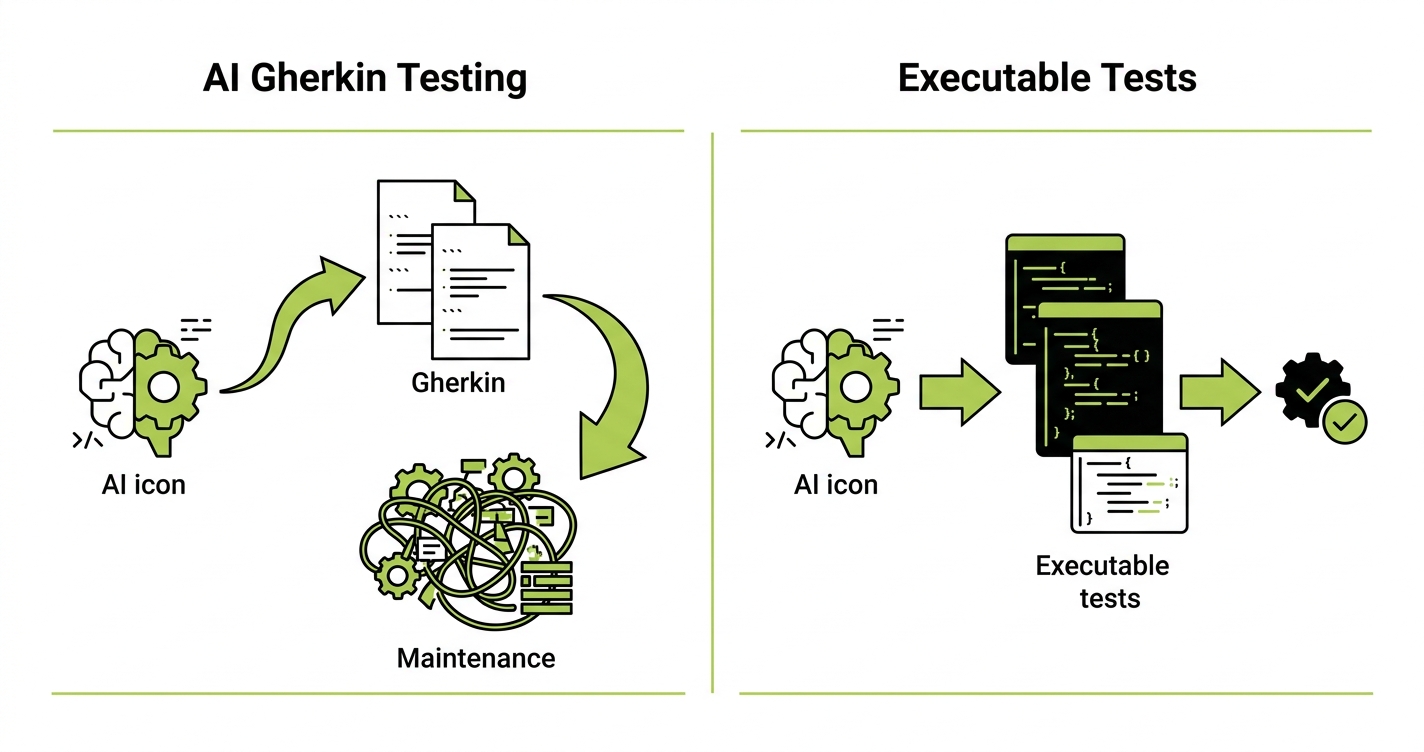
That gap is the step definition layer. Every Given, When, and Then statement in a Cucumber scenario needs a corresponding code implementation. Someone still has to write and maintain those step definitions. When your UI changes, the Gherkin might still read correctly, but the underlying step code breaks. BlinqIO solves the test design problem but leaves the test execution problem largely untouched.
Autonoma takes a fundamentally different approach. Instead of generating intermediate BDD artifacts that require human translation into executable code, Autonoma generates tests that run directly against your application. No Cucumber layer. No step definitions. No Gherkin maintenance. AI agents read your codebase, understand your user flows, and produce tests that execute immediately using vision models. This guide covers where BlinqIO falls short, how Autonoma solves those problems, and how to get started.
Where BlinqIO Falls Short
Three structural limitations drive teams toward alternatives.
The Cucumber Overhead Problem
BlinqIO's core output is Cucumber/Gherkin test scenarios. This is both its differentiator and its limitation.
Cucumber was designed as a communication tool: a way for product managers, developers, and QA to describe behavior in a shared language. It was never designed as an efficient test automation format. When you use Cucumber for test automation, you maintain two parallel codebases: the Gherkin feature files (the human-readable scenarios) and the step definition code (the actual test implementation). Every scenario line maps to a step definition that interacts with your application.
BlinqIO generates the Gherkin half. That is genuinely useful for teams already committed to BDD workflows. But it does not eliminate the engineering burden. Someone still writes the step definitions. Someone still updates them when the UI changes. Someone still debugs failures that originate in the step definition layer rather than in the application itself.
For teams that do not already use Cucumber, BlinqIO introduces BDD overhead they never asked for. They wanted AI to generate tests. Instead, they got AI that generates test descriptions in a specific framework format, plus the obligation to build and maintain a step definition layer around them.
One engineering lead we spoke with summarized it bluntly: "We tried BlinqIO because we wanted AI testing. What we got was AI-generated Gherkin files and a new maintenance burden we did not have before."
Early-Stage Product with Limited Ecosystem
BlinqIO is an early-stage startup with a small team and limited market presence. That matters for several practical reasons.
Documentation and community support are thin. When you hit an edge case or integration issue, there is no large community to search for solutions. Stack Overflow has minimal BlinqIO content. GitHub issues, if available, have limited activity. You are largely dependent on the BlinqIO team's direct support, which scales poorly as their customer base grows.
Integration depth is limited. Mature testing platforms have deep integrations with CI/CD systems (GitHub Actions, GitLab CI, Jenkins, CircleCI), project management tools (Jira, Linear, Asana), and communication platforms (Slack, Teams). BlinqIO's integration surface is narrower, which means more custom glue code for your team.
Long-term viability carries risk. Early-stage startups fail at high rates. Building your testing strategy around a tool that may not exist in two years is a real concern for teams making infrastructure decisions. Vendor dependency on a small, young company carries more risk than dependency on established players or, better yet, open source solutions you can self-host and maintain independently.
Proprietary and Cloud-Only
BlinqIO is proprietary software with no self-hosting option. You cannot inspect the source code, audit how your data is handled, or customize the platform for your environment. Your test data and application interactions flow through their infrastructure.
For teams with compliance requirements (HIPAA, PCI DSS, SOC 2, FedRAMP), the inability to self-host or audit the testing platform is often a dealbreaker. Even teams without strict compliance mandates increasingly prefer control over where their testing data lives.
There is no way to fork BlinqIO if the product direction diverges from your needs. No way to contribute fixes. No way to extend functionality. You are fully dependent on the vendor's roadmap, priorities, and continued existence.
Autonoma: The Open Source Alternative to BlinqIO
Autonoma is an open-source, AI-native testing platform that generates executable tests directly from your codebase, with no intermediate Cucumber layer.
Executable Tests, Not Cucumber Scenarios
This is the fundamental difference. BlinqIO generates Gherkin that someone has to wire up to step definitions. Autonoma generates tests that run.
How it works: Connect your GitHub repo and Autonoma's test-planner-plugin reads your routes, components, and user flows to build a knowledge base of your application. AI agents then generate comprehensive E2E test cases based on your actual code structure. Tests execute using AI vision models that see your app like a human would: no CSS selectors, no XPaths, no step definitions. Each step includes verification layers to ensure consistent, reliable behavior.
The output is not a .feature file that needs translation. It is a test that runs against your application immediately. When your UI changes, the AI adapts because it understands intent, not DOM structure or Gherkin step mappings. There is no step definition layer to break, no regex matching to debug, no Cucumber glue code to maintain.
For teams that genuinely need BDD-formatted reporting (regulatory environments, specific stakeholder communication needs), Autonoma's test results can be exported in structured formats. But the tests themselves are not constrained by BDD frameworks. They run directly, which means faster feedback loops, less maintenance, and fewer points of failure.
Open Source and Self-Hosting
Full source code on GitHub. Licensed under BSL 1.1 (converts to Apache 2.0 in 2028). Inspect every line, audit security practices, self-host with no feature restrictions. The only limitation: you cannot resell Autonoma's functionality as a commercial service.
Run Autonoma on your infrastructure: AWS (ECS, EKS, EC2), GCP (GKE, Compute Engine), Azure (AKS, VMs), or your own data center. When you self-host, your data never leaves your infrastructure. Tests run in your VPC. Credentials stay on your servers. Application URLs are never exposed to external systems.
The technology stack uses standard open source components: TypeScript and Node.js 24 for the runtime, Playwright for web testing, Appium for mobile testing, PostgreSQL for data storage, and Kubernetes for orchestration. No proprietary runtimes, no black-box components, no vendor-specific dependencies.
This solves the vendor risk problem directly. If Autonoma the company disappeared tomorrow, you still have the source code, your deployment, and the ability to maintain it. That is not possible with BlinqIO or any proprietary testing tool.
AI-Powered Full Lifecycle Testing
BlinqIO handles one phase of testing: generating test scenarios. Autonoma handles the entire lifecycle.
Test generation: AI agents analyze your codebase (routes, components, user flows) and generate comprehensive E2E test cases automatically. No manual writing required.
Test execution: Tests run using AI vision models that understand your application visually. No selectors to break, no DOM dependencies, no step definitions.
Test maintenance: When your UI changes, tests adapt automatically. Vision-based understanding means a button that changes from btn-primary to cta-button does not break anything. The AI still sees "click the primary call-to-action button."
Test reporting: Detailed execution reports with screenshots, video recordings, and failure analysis. AI explains why a test failed, not just that it failed.
This full lifecycle approach eliminates the engineering hours spent on test writing, step definition maintenance, and failure debugging. Your QA team shifts from maintaining test scripts to reviewing test plans and analyzing results: higher-leverage work that actually improves product quality.
Unlimited Parallel Execution
Every plan (free tier, cloud, self-hosted) supports unlimited parallel execution. On the free tier, that is subject to credit limits, but on cloud and self-hosted plans your test suite scales with your infrastructure. Add more tests, spawn more instances. No negotiations, no pricing tiers, no artificial limits.
When you self-host, parallel capacity is limited only by the compute resources you allocate, and you can auto-scale based on demand. This is not a feature BlinqIO currently matches.
Proven Architecture and Active Community
Autonoma's codebase is actively maintained with regular releases, documented APIs, and a growing community. The technology stack (Playwright, Appium, PostgreSQL, Kubernetes) is battle-tested across millions of production deployments. When you hit an issue, you are searching a massive ecosystem of Playwright and Kubernetes knowledge, not a thin layer of vendor-specific documentation.
GitHub issues get responses. Pull requests get reviewed. The roadmap is public. This is the structural advantage of open source over early-stage proprietary tools: the community provides resilience that no single startup team can match.
BlinqIO vs Autonoma: Feature Comparison
| Feature | BlinqIO | Autonoma |
|---|---|---|
| Open Source | Proprietary closed source | BSL 1.1 on GitHub (Apache 2.0 in 2028) |
| Self-Hosting | Cloud only | Self-host anywhere (AWS, GCP, Azure, on-prem) |
| Test Output | Cucumber/Gherkin scenarios (need step definitions) | Executable tests (run immediately) |
| Step Definition Maintenance | Required (you write and maintain step definitions) | Not needed (no Cucumber layer) |
| Test Generation | AI generates BDD scenarios | AI generates full executable tests from codebase |
| Test Execution | Requires Cucumber runner + step definitions | Built-in execution with AI vision models |
| Test Maintenance | Manual step definition updates | AI self-healing (zero maintenance) |
| AI Approach | Virtual testers observing app behavior | AI agents reading codebase + vision models |
| Vendor Lock-In | High (proprietary platform) | None (open source, fork anytime) |
| Parallel Execution | Limited | Unlimited on all plans |
| Mobile Testing | Limited | iOS and Android via Appium |
| Browser Coverage | Chrome-focused | Chrome, Firefox, Safari via Playwright |
| Community/Ecosystem | Small, early-stage | Active GitHub community, Playwright/Appium ecosystem |
| CI/CD Integration | Basic integrations | GitHub Actions, GitLab CI, Jenkins, CircleCI |
| Data Sovereignty | Data on BlinqIO servers | Data stays on your infrastructure |
| Source Code Access | No access | Full source code on GitHub |
| Free Tier | Limited trial | 100K credits, no credit card |
| Self-Hosted Cost | Not available | Infrastructure only (no platform fees) |
Cost: Open Source vs Proprietary Virtual Testers
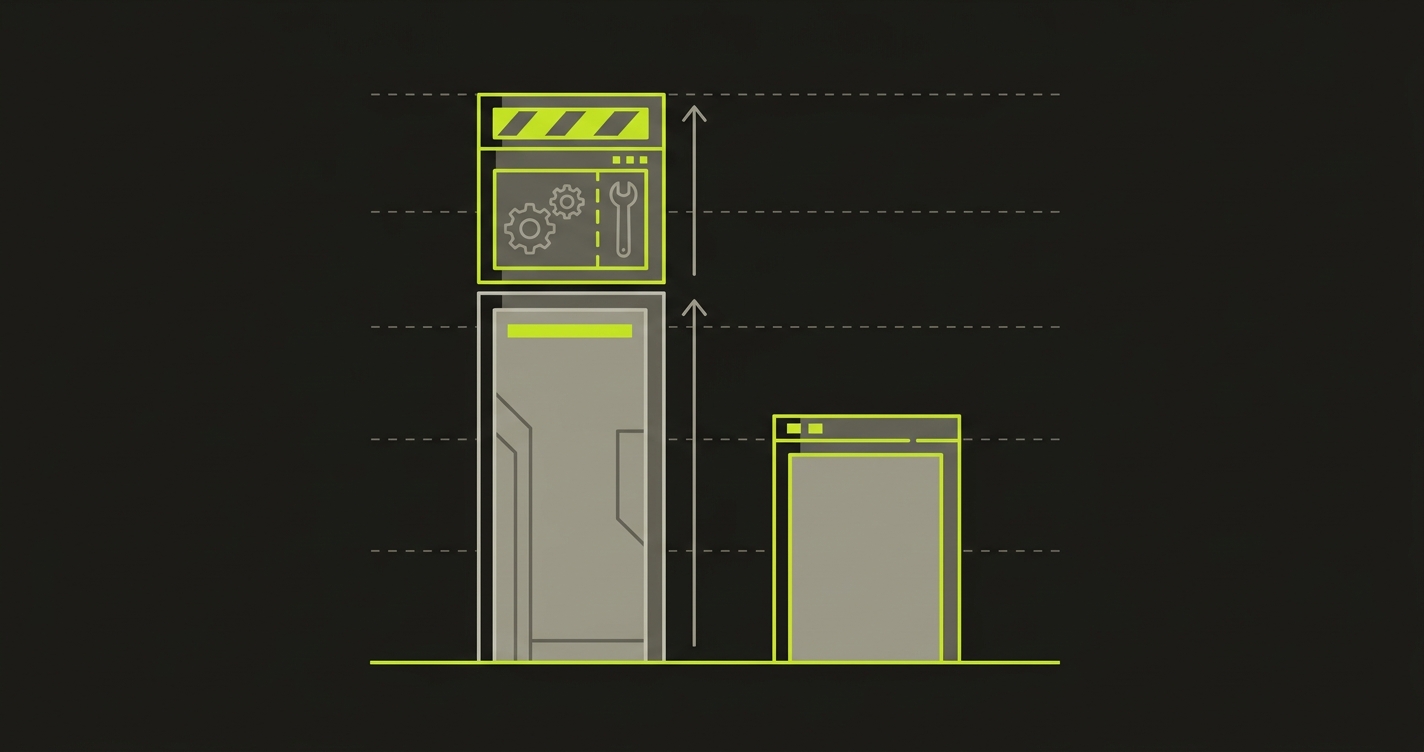
The cost comparison between BlinqIO and Autonoma goes beyond subscription pricing. The hidden cost with BlinqIO is the step definition layer.
BlinqIO generates Cucumber scenarios, but someone on your team still writes and maintains the step definition code that makes those scenarios executable. For a team with 200+ scenarios, that step definition codebase is substantial. Estimate 5-10 hours per week maintaining step definitions, debugging regex mismatches, and updating implementations when the UI changes. At typical engineering rates ($100-150/hour), that is $26,000-78,000 per year in maintenance costs, on top of BlinqIO's subscription.
Autonoma cloud at $499/month ($6K/year) eliminates the step definition layer entirely. Tests generate and execute without intermediate BDD artifacts. No step definitions to write. No Gherkin to maintain. No Cucumber runner configuration to debug. That is where the real savings live.
Autonoma self-hosted eliminates the platform fee on top of that. You pay only for infrastructure (typically $200-400/month on AWS/GCP/Azure). Over three years, that totals roughly $11K compared to potentially $80K+ when you factor in BlinqIO's subscription plus step definition maintenance.
The biggest cost difference is not the subscription. It is the elimination of the entire Cucumber translation layer. Every hour your engineers spend writing step definitions is an hour they could spend shipping features.
Migrating from BlinqIO to Autonoma
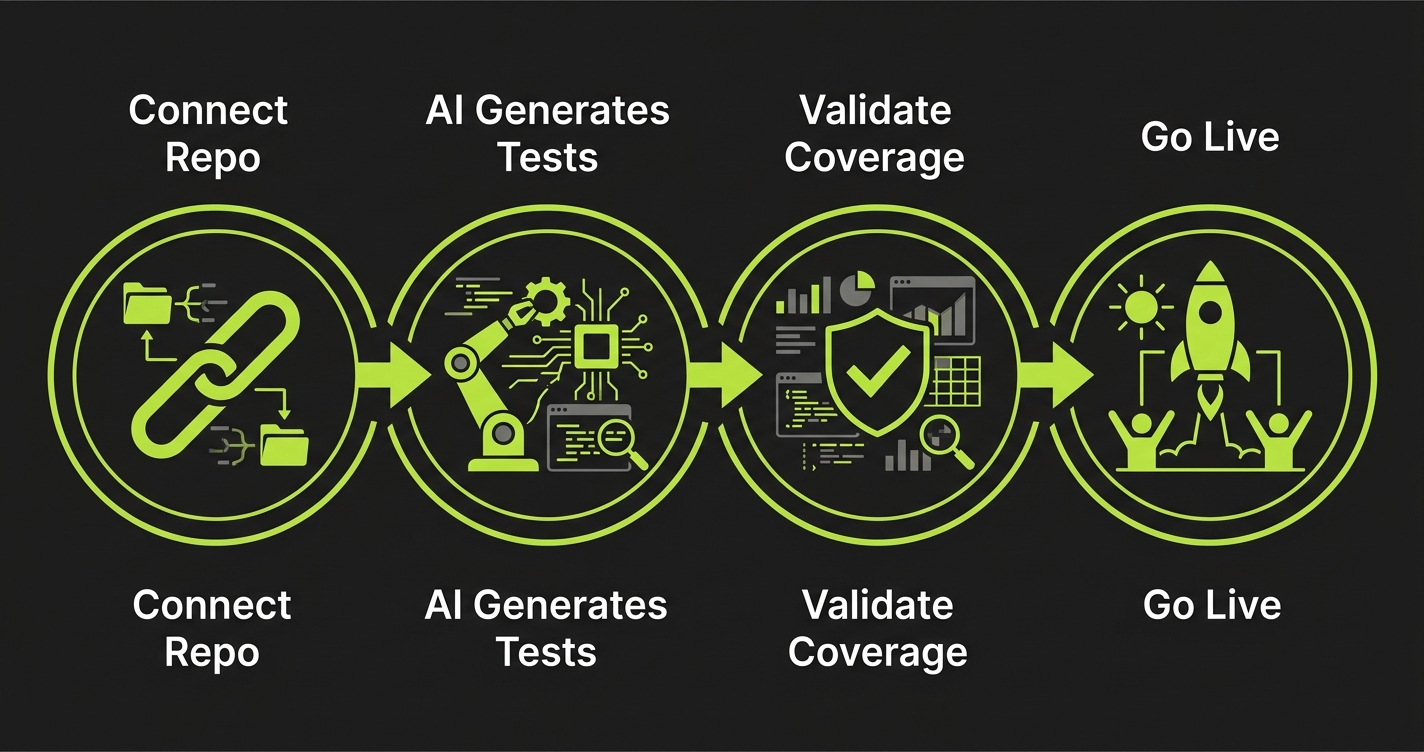
Migration from BlinqIO is straightforward because you are not porting Cucumber scenarios. You are replacing the entire approach.
1. Connect your repo. Sign up for the free tier at getautonoma.com or self-host by cloning the GitHub repo. Connect your GitHub repository and let Autonoma's AI analyze your codebase. This takes minutes.
2. AI generates executable tests. The test-planner-plugin builds a knowledge base of your application and generates comprehensive E2E tests automatically. Start with your critical flows (authentication, checkout, core features) and compare results against your existing BlinqIO/Cucumber coverage.
3. Validate and compare. Run Autonoma tests in parallel with your existing suite. Compare coverage, reliability, and execution speed. Autonoma's vision-based tests are typically more resilient than Cucumber step definitions because they understand intent rather than matching DOM elements through coded steps.
4. Cut over. Point CI/CD at Autonoma, train your team on reviewing AI-generated test plans, and decommission your BlinqIO subscription and Cucumber step definition codebase. Yes, you can delete the step definitions entirely. That alone simplifies your repository and removes a maintenance burden.
The key insight: you are not migrating tests line by line. You are replacing a two-layer system (Gherkin + step definitions) with a single-layer system (AI-generated executable tests). The migration is about validating coverage, not translating code.
Frequently Asked Questions
Yes. Autonoma is an open-source testing platform on GitHub (BSL 1.1). Unlike BlinqIO's proprietary platform, Autonoma offers a free tier with 100K credits, full self-hosting, and AI-generated executable tests: no Cucumber/Gherkin layer required.
BlinqIO uses AI virtual testers that output Cucumber/Gherkin scenarios requiring step definition maintenance. Autonoma generates executable tests directly from your codebase using AI vision models: no intermediate BDD layer, no step definitions, no Gherkin maintenance. Tests run immediately without human translation.
Yes. Autonoma is fully self-hostable with complete source code on GitHub. Run it on AWS, GCP, Azure, or on-premise with zero feature restrictions. BlinqIO offers no self-hosting option.
Cucumber-based testing (BlinqIO's approach) generates Gherkin scenarios that still need step definitions written and maintained by engineers. Executable AI testing (Autonoma's approach) generates tests that run directly against your application using vision models: no intermediate translation layer, no step definition code, no BDD framework overhead.
Yes. Connect your repo and Autonoma's AI generates tests from your codebase automatically. You don't need to migrate Cucumber scenarios or step definitions: Autonoma replaces the entire BDD pipeline with direct executable coverage. Most teams complete the transition in under a week.
No. Autonoma does not use Cucumber, Gherkin, or any BDD framework. AI generates executable tests directly from your codebase. No BDD knowledge required. No step definitions to write. No feature files to maintain. If your team uses BDD for stakeholder communication, you can still export test results in structured formats.
The Bottom Line
BlinqIO introduced an interesting concept with AI virtual testers, but the Cucumber/Gherkin output creates a translation layer that still requires significant engineering effort. Step definitions need writing and maintenance. The platform is proprietary with no self-hosting. The company is early-stage with limited community support. You are betting your testing strategy on a small vendor with a niche approach.
Autonoma eliminates the translation layer entirely. Full source code on GitHub (BSL 1.1, Apache 2.0 in 2028). Self-host on your infrastructure or use our cloud. AI generates executable tests directly from your codebase: no Cucumber, no step definitions, no Gherkin maintenance. Vision-based self-healing means tests adapt when your UI changes. Unlimited parallels on every plan. No vendor lock-in. Free tier starts at 100K credits, cloud at $499/month, self-hosted at infrastructure cost only.
Ready to try open source testing without the Cucumber overhead?
Start Free - 100K credits, no credit card, 5-minute setup
View on GitHub - Inspect source code, self-host documentation
Book Demo - See AI-generated executable tests in action
Related Reading: