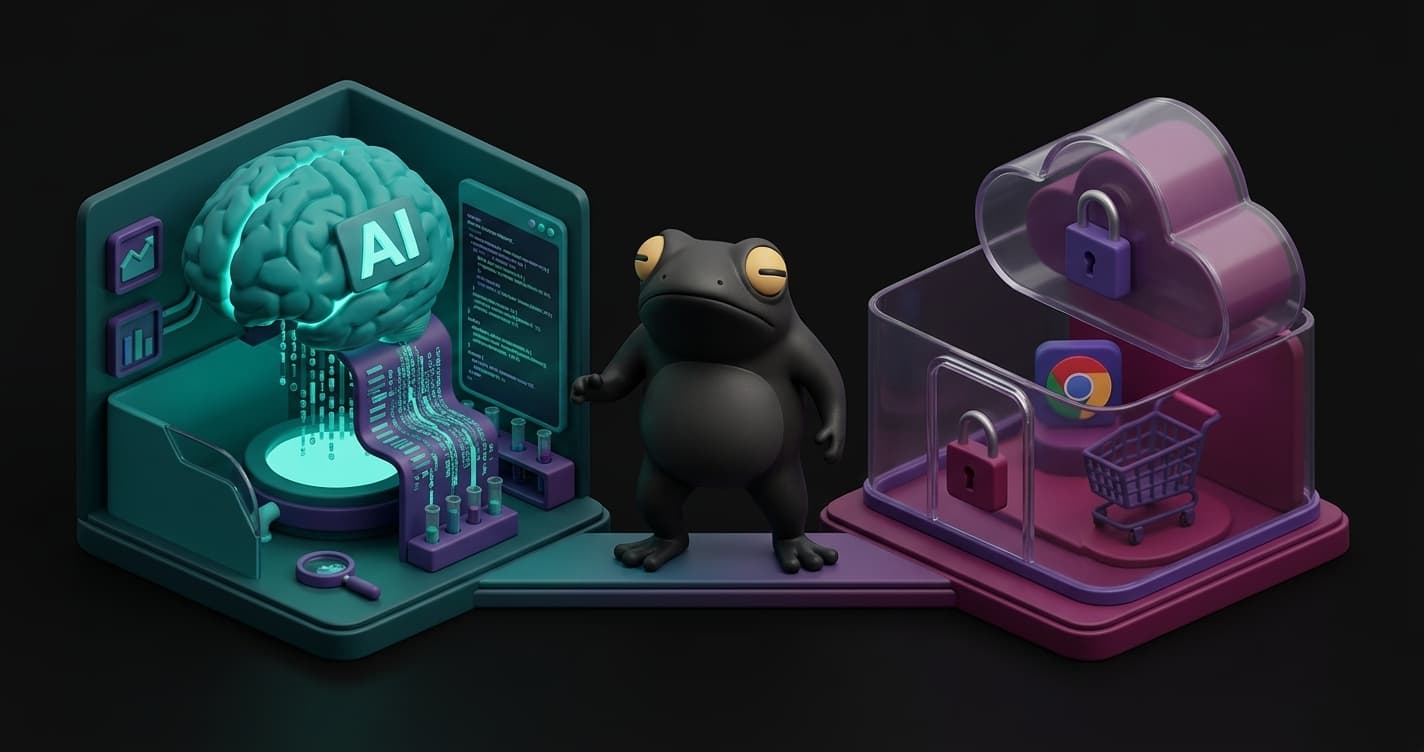

Quick summary: Autonoma is the open-source alternative to CloudQA. Unlike CloudQA's proprietary codeless record-and-replay platform (~$30-80/month, Chrome-only, no mobile testing), Autonoma generates tests automatically from your codebase using AI agents. Full source code on GitHub (BSL 1.1), self-hosting, vision-based self-healing, unlimited parallel execution, cross-platform web and mobile testing, no vendor lock-in. Free tier: 100K credits. Cloud: $499/month. Self-hosted: no ongoing costs.
CloudQA carved out a niche as an affordable, codeless testing tool for SaaS and eCommerce teams. Record your browser actions through a Chrome extension, replay them on demand. No code required. For small teams testing straightforward checkout flows, it works well enough at first.
But "codeless" is not the same as "maintenance-free." Record-and-replay tests are fundamentally brittle. Every UI change, every CSS class rename, every form restructure breaks your recordings. And CloudQA's narrow focus on Chrome-based web testing means teams that need cross-browser coverage, mobile testing, or enterprise-grade infrastructure control hit a wall fast. There is no self-hosting, no source code access, no AI test generation, and no way to escape the record-replay paradigm.
Autonoma is the open-source alternative that goes beyond codeless. Full source code on GitHub, self-hosting on your infrastructure or our cloud, AI that generates and maintains tests from your codebase automatically, cross-platform web and mobile coverage, and zero vendor lock-in. This guide covers where CloudQA falls short, how Autonoma solves those problems, and how to switch.
Where CloudQA Falls Short
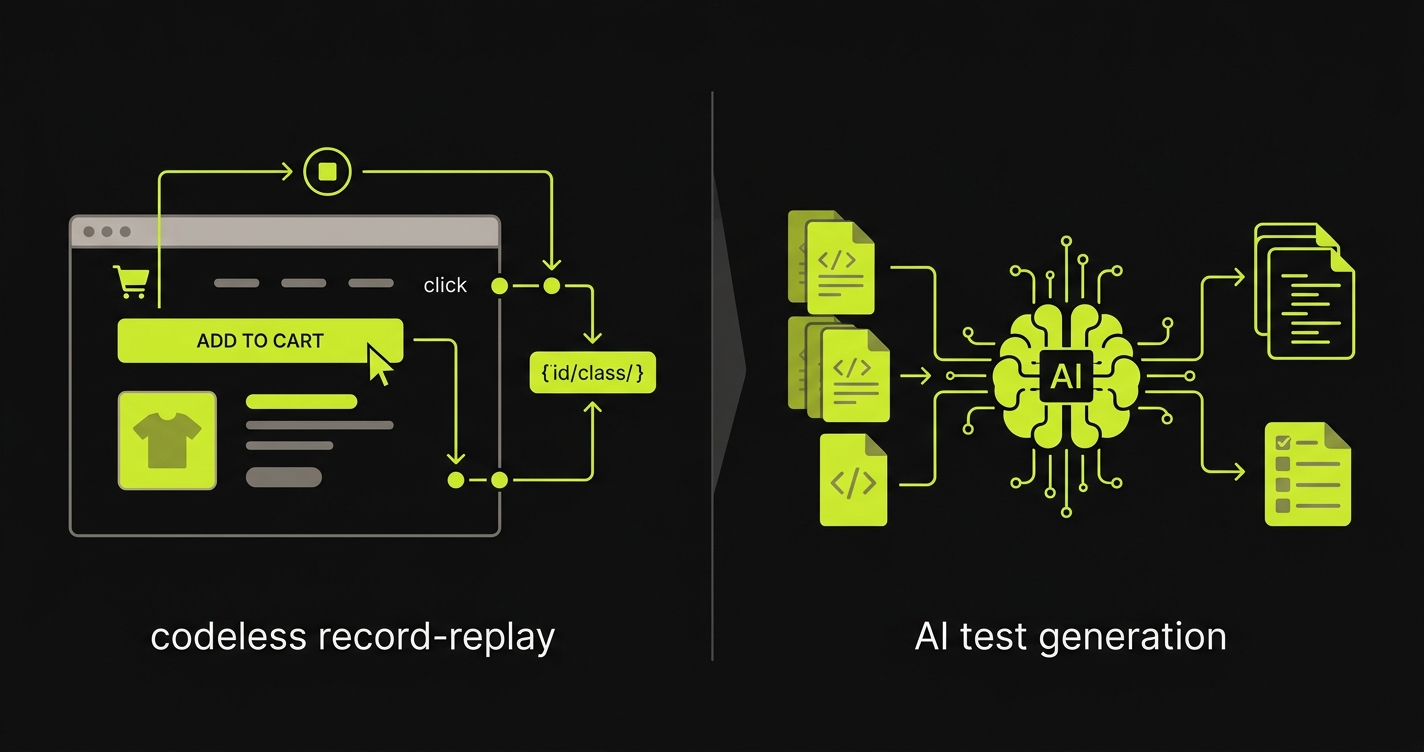
Three structural limitations push teams beyond CloudQA as their testing needs mature.
Record-and-Replay Is Inherently Brittle
CloudQA's core model is a Chrome extension recorder. You click through your application, the recorder captures your actions as a sequence of DOM interactions, and you replay those sequences as tests. This is what "codeless" means in practice: instead of writing test code, you record browser sessions.
The problem is that record-and-replay tests depend entirely on DOM selectors. When a developer changes a button's CSS class from btn-checkout to checkout-cta, the recorded test breaks. When a designer restructures the checkout form layout, the entire recording becomes invalid. When a new feature adds a step to the user flow, someone has to re-record the whole test from scratch.
This is not a CloudQA-specific flaw. It is a fundamental limitation of the record-and-replay paradigm. Every codeless tool that records DOM interactions shares this problem. The "no code required" pitch obscures the reality: you still need someone to maintain these recordings constantly, and that person is doing the same work as a test engineer, just with a different interface.
One QA lead told us: "We chose CloudQA because we did not have test engineers. Within six months, we had someone spending 15 hours a week re-recording broken tests. We effectively hired a test engineer anyway, just one using a less efficient tool."
For simple, stable pages that rarely change, recorded tests hold up reasonably well. But SaaS and eCommerce applications change constantly. New features, redesigns, A/B tests, promotional layouts, seasonal updates. The more your application evolves, the more time you spend re-recording.
Narrow Platform and Browser Coverage
CloudQA is built around Chrome. Its recorder is a Chrome extension. Tests execute in Chrome-based environments. If your users primarily use Chrome, this covers the majority case. But if you need to verify behavior in Firefox, Safari, or Edge, CloudQA's coverage is limited.
More critically, CloudQA offers no native mobile app testing. There is no support for iOS or Android app automation. For SaaS products with mobile apps, or eCommerce platforms where a significant portion of transactions happen on mobile devices, this is a gap that cannot be worked around. You need a separate tool for mobile testing, which means maintaining two testing platforms, two sets of tests, two workflows, and two vendor relationships.
CloudQA also lacks API testing capabilities. Modern eCommerce flows often involve API calls (payment processing, inventory checks, shipping calculations) that need validation alongside UI interactions. Without API testing, you are only testing the surface layer and missing the integration points where many bugs actually live.
No Self-Hosting, Closed Source, Limited Control
CloudQA is a closed-source SaaS product. There is no way to inspect how tests execute under the hood, no option to self-host on your infrastructure, and no source code to audit for security or compliance.
For teams with data sovereignty requirements (HIPAA, PCI DSS, SOC 2), this is often a non-starter. Every test run sends your application URLs, potentially login credentials, and user flow data to CloudQA's servers. You have no control over where that data is stored, how it is processed, or who has access to it.
Even for teams without strict compliance requirements, the lack of self-hosting means you are dependent on CloudQA's infrastructure availability. If their service goes down during a critical deployment, your testing pipeline stalls. You cannot run tests locally, you cannot fail over to your own infrastructure, and you cannot control execution priority during peak demand.
Autonoma: The Open Source Alternative to CloudQA
Autonoma is an open-source, AI-native testing platform that replaces the record-and-replay paradigm entirely.
AI-Generated Tests Instead of Recorded Tests
The fundamental difference: CloudQA records what you do in a browser. Autonoma's AI generates tests from your codebase without any recording.
How it works: You connect your GitHub repo, and Autonoma's test-planner-plugin reads your routes, components, and user flows to build a knowledge base of your application. AI agents then generate comprehensive E2E test cases based on your actual code structure. No clicking through your app. No Chrome extension. No recording sessions. Tests are generated from code understanding, not from captured DOM interactions.
Tests execute using AI vision models that see your application like a human would. This means no CSS selectors, no XPaths, no DOM dependency. When a developer renames a button class or restructures a form, the AI still understands "click the checkout button" or "fill in the shipping address." Tests self-heal automatically because they are based on visual understanding and intent, not on brittle element locators.
This is the core advantage over CloudQA's codeless approach. CloudQA eliminates writing test code but still requires you to manually create and maintain tests through recording. Autonoma eliminates the entire manual process. Nobody writes tests. Nobody records tests. Nobody maintains tests. The AI handles the full lifecycle: generation, execution, and maintenance.
For eCommerce teams specifically, this means checkout flows, product search, cart management, account creation, and payment processing are all tested automatically based on your actual codebase. When you add a new payment method or redesign the product page, the AI detects the change and updates test coverage accordingly. No re-recording required.
Open Source and Self-Hosting
Full source code on GitHub. Licensed under BSL 1.1 (converts to Apache 2.0 in 2028). You can use it in production, inspect every line, audit security, and self-host with no feature restrictions. The only limitation: you cannot resell Autonoma's functionality as a commercial service.
Self-hosting solves the data sovereignty problem that CloudQA cannot address. Run Autonoma on your infrastructure: AWS (ECS, EKS, or EC2), GCP (GKE or Compute Engine), Azure (AKS or VMs), or your own data center. Your test data, application credentials, and execution logs never leave your network. For eCommerce teams handling payment data or healthcare platforms managing patient information, this is not optional; it is a requirement.
The technology stack uses standard open source components: TypeScript and Node.js 24 for the runtime, Playwright for web testing, Appium for mobile testing, PostgreSQL for data storage, and Kubernetes for orchestration. No proprietary runtimes, no black-box dependencies.
Cross-Platform Web and Mobile Testing
Unlike CloudQA's Chrome-centric model, Autonoma supports full cross-browser and mobile testing. Web testing runs through Playwright, covering Chrome, Firefox, and Safari across desktop and mobile viewports. Mobile testing runs through Appium, supporting iOS simulators, Android emulators, and physical devices.
This means a single platform covers your entire testing surface. No separate tool for mobile. No separate workflow for cross-browser validation. One AI generates tests for all platforms from the same codebase, ensuring consistent coverage across web and mobile.
For eCommerce teams, this is particularly valuable. Mobile commerce accounts for over 60% of online transactions. Testing only in Chrome desktop, as CloudQA does, leaves the majority of your user experience unvalidated. Autonoma tests your checkout flow on iPhone Safari, Android Chrome, desktop Firefox, and every other configuration your customers actually use.
Unlimited Parallel Execution
Every plan (free tier, cloud, and self-hosted) supports unlimited parallel execution. CloudQA's parallel capabilities are limited by plan tier. With Autonoma, you scale test execution by adding infrastructure, not by upgrading pricing tiers.
When self-hosting, parallel capacity is limited only by the compute resources you allocate. Auto-scale based on demand. Run 5 parallels during off-peak hours and 50 during pre-deployment validation. No negotiations, no tier upgrades, no artificial caps.
No Vendor Lock-In
CloudQA's recorded tests live in their proprietary format on their platform. If you decide to leave, those recordings cannot be exported or reused. You start over.
Autonoma's tests are generated from your codebase. The source of truth is your code, not a proprietary recording format. Fork the project, switch cloud providers, move between self-hosted and cloud deployments. Your testing capability is never held hostage by a vendor relationship.
CloudQA vs Autonoma: Feature Comparison
| Feature | CloudQA | Autonoma |
|---|---|---|
| Open Source | Proprietary closed source | BSL 1.1 on GitHub (Apache 2.0 in 2028) |
| Self-Hosting | Cloud only, no self-hosting | Self-host anywhere (AWS, GCP, Azure, on-premise) |
| Test Creation | Record-and-replay via Chrome extension | AI generates tests from codebase automatically |
| Test Maintenance | Manual re-recording when UI changes | AI self-healing (zero maintenance) |
| Browser Coverage | Chrome-focused | Chrome, Firefox, Safari |
| Mobile Testing | No native mobile app testing | iOS and Android (Appium) |
| API Testing | Limited | Integrated API validation |
| Parallel Execution | Limited by plan tier | Unlimited on all plans |
| Vendor Lock-In | High (proprietary recording format) | None (tests generated from code, fork codebase) |
| Data Sovereignty | Data on CloudQA servers | Data stays on your infrastructure |
| Source Code Access | No access | Full source code on GitHub |
| Starting Price | ~$30/month (small teams) | Free (100K credits) |
| Cloud Price | ~$30-80+/month | $499/month (unlimited parallels) |
| Self-Hosted Cost | Not available | Infrastructure only (no platform fees) |
| Target Use Case | SaaS/eCommerce web testing | Full-stack testing across web, mobile, and API |
Cost: The Hidden Expense of "Affordable" Codeless Testing

CloudQA's pricing is genuinely affordable on the surface. At $30-80 per month for small teams, it is one of the cheapest testing tools on the market. But sticker price is not total cost of ownership.
The hidden cost is test maintenance. Record-and-replay tests break frequently in actively developed applications. Every time your team ships a UI update, someone has to identify which recordings broke, re-record them, and verify the new recordings work correctly. For a team with 100 recorded tests in an application that ships weekly updates, expect 5-10 hours per week of re-recording effort.
At typical engineering rates ($100-150/hour), that maintenance costs $2,000-6,000 per month. The $30-80 tool fee becomes $2,030-6,080 per month when you account for the human time required to keep recordings functional. Over a year, total cost of ownership reaches $24,000-73,000 for what started as a "$30/month tool."
Autonoma cloud is $499/month with zero maintenance hours. AI self-healing handles UI changes automatically. Nobody re-records anything. Over a year, that is $5,988 total. Even compared to CloudQA's low sticker price, the elimination of maintenance labor makes Autonoma significantly cheaper in total cost of ownership.
Autonoma self-hosted eliminates the platform fee entirely. You pay only for infrastructure you provision on AWS, GCP, or Azure, typically $200-400/month depending on your parallel needs. Annual cost: $2,400-4,800 with zero maintenance overhead.
The math is clear: the cheapest testing tool is not the one with the lowest subscription. It is the one that eliminates the most human maintenance time.
Migrating from CloudQA to Autonoma
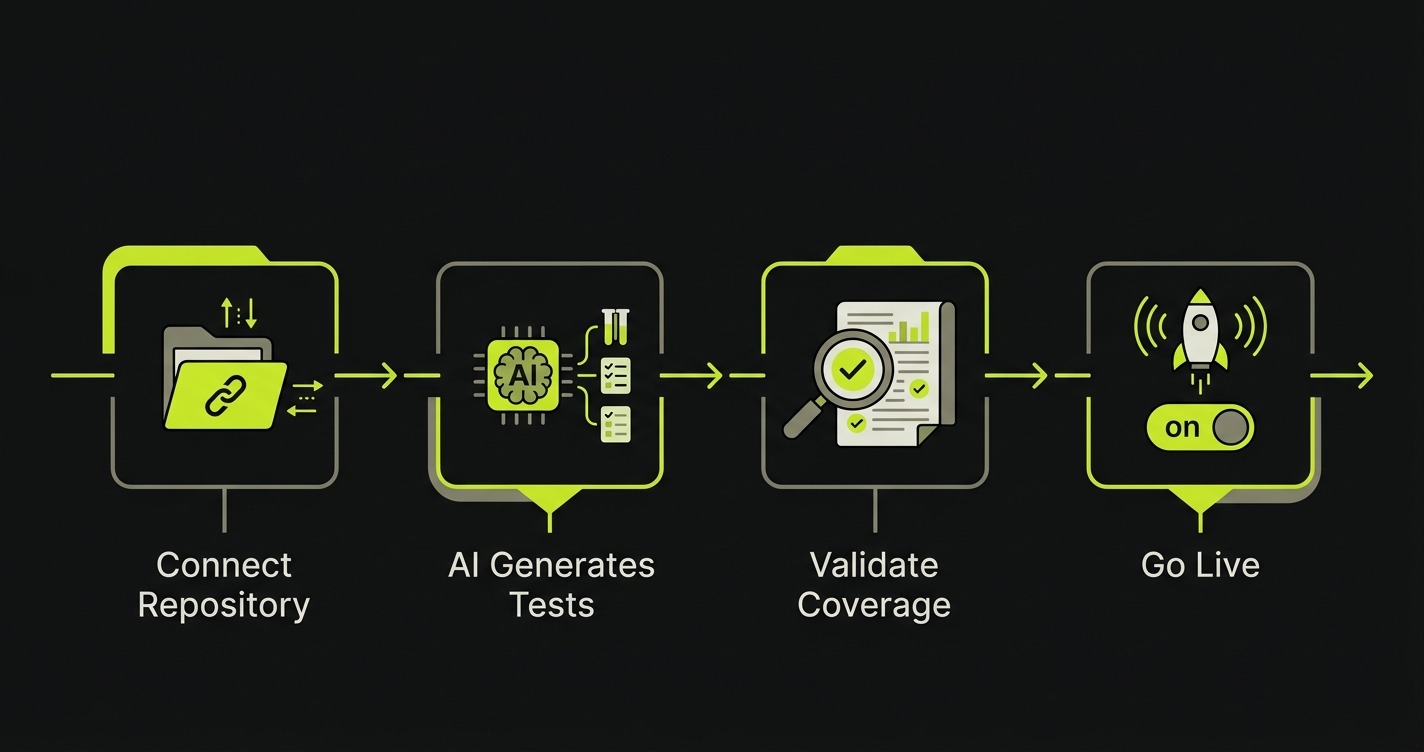
Migration from CloudQA is straightforward because you are not porting recorded tests. CloudQA recordings are proprietary and cannot be exported. Instead, Autonoma generates fresh coverage from your codebase, which is faster and produces more resilient tests.
1. Connect your repo. Sign up for the free tier at getautonoma.com or self-host by cloning the GitHub repo. Connect your GitHub repository and let Autonoma's AI analyze your codebase. This takes minutes.
2. AI generates tests. The test-planner-plugin builds a knowledge base of your application and generates E2E test cases automatically. Start with your most critical eCommerce flows: checkout, product search, account management, payment processing. Run these in parallel with your existing CloudQA recordings to compare coverage and reliability.
3. Validate and expand coverage. Compare Autonoma's AI-generated tests against your CloudQA recordings. You will likely find that Autonoma covers flows your recordings missed, because AI generates tests from your entire codebase rather than only from manually recorded sessions. Review the test plans, identify any gaps, and iterate. Most teams achieve full coverage within days.
4. Update CI/CD and cut over. Point your CI/CD pipeline at Autonoma, train your team on reviewing AI-generated test plans instead of managing recordings, and cancel your CloudQA subscription. The transition is low-risk because you validated coverage in the previous step.
The key advantage: CloudQA recordings cannot be exported or reused, so a traditional "migration" would mean re-recording everything in a new tool. With Autonoma, there is nothing to re-record. The AI generates coverage from your code. Migration is about validating new coverage, not rebuilding old tests.
Frequently Asked Questions
Yes. Autonoma is an open-source testing platform available on GitHub. Unlike CloudQA's proprietary codeless platform, Autonoma offers a free tier with 100K credits, AI-generated tests from your codebase, and full self-hosting capabilities. You can run Autonoma on your own infrastructure with no feature limitations, or use the cloud version starting free.
Yes. Autonoma is fully self-hostable with complete source code on GitHub. You can run it on your infrastructure (AWS, GCP, Azure, on-premise) with zero feature restrictions. CloudQA offers no self-hosting option; all tests run exclusively on their cloud infrastructure.
CloudQA uses a codeless record-and-replay approach where you record browser actions via a Chrome extension. Tests break when selectors change. Autonoma uses AI agents that generate tests from your codebase automatically and execute them using vision models that understand your UI like a human would. No recording, no selectors, no manual maintenance.
CloudQA starts at approximately $30-80/month for small teams, scaling higher for enterprise. Autonoma offers a free tier with 100K credits, then $499/month for 1M credits with unlimited parallels. Self-hosting Autonoma eliminates ongoing cloud costs entirely. While CloudQA's sticker price is lower, the hidden cost of maintaining brittle record-and-replay tests typically exceeds the tool cost itself.
Yes. You don't re-record or rewrite tests. Connect your repo and Autonoma's AI generates tests from your codebase automatically. CloudQA's recorded tests are proprietary and cannot be exported, but since Autonoma generates coverage from your source code rather than replaying recordings, migration is about validating new AI-generated coverage rather than porting old tests.
CloudQA is primarily focused on web and eCommerce testing through Chrome. It does not offer native mobile app testing. Autonoma supports both web (Chrome, Firefox, Safari) and mobile (iOS and Android) through Playwright and Appium, with AI-generated tests for both platforms.
Codeless testing (CloudQA's approach) means you record browser actions through a visual recorder instead of writing code. Tests still depend on DOM selectors and break when UI changes. AI-generated testing (Autonoma's approach) means AI agents analyze your codebase and generate comprehensive tests automatically. No recording needed. Tests use vision models that understand intent, not selectors, so they self-heal when UI changes.
The Bottom Line
CloudQA is an affordable codeless testing tool for simple SaaS and eCommerce web flows. But its record-and-replay model is inherently brittle, its Chrome-focused coverage leaves gaps on other browsers and mobile, it offers no self-hosting or source code access, and the hidden maintenance cost of re-recording broken tests erodes its price advantage quickly.
Autonoma solves every one of those problems. Full source code on GitHub (BSL 1.1, Apache 2.0 in 2028). Self-host on your infrastructure or use our cloud. AI generates and maintains tests from your codebase: zero recording, zero re-recording, zero manual maintenance. Cross-browser and mobile testing out of the box. Unlimited parallels on every plan. No vendor lock-in. Free tier starts at 100K credits, cloud at $499/month, self-hosted at infrastructure cost only.
Ready to move beyond record-and-replay?
Start Free - 100K credits, no credit card, 5-minute setup
View on GitHub - Inspect source code, self-host documentation
Book Demo - See AI test generation in action
Related Reading: