
Quick summary: Autonoma is the open-source alternative to Drizz. Drizz reduces mobile test maintenance but still requires manual test creation and offers no self-hosting, no source code access, and no community ecosystem. Autonoma eliminates both test creation and maintenance via AI agents that generate tests from your codebase. Full source code on GitHub (BSL 1.1), self-hosting, vision-based self-healing, unlimited parallel execution, web + mobile coverage, no vendor lock-in. Free tier: 100K credits. Cloud: $499/month. Self-hosted: no ongoing costs.
Drizz is a newer startup that promises to reduce mobile test maintenance. If you are running iOS and Android tests and spending hours fixing broken selectors after every app update, the pitch is appealing. But reducing maintenance is only half the problem. You still write every test manually. The platform is proprietary with no source code access. There is no self-hosting option. And as a small, early-stage startup, Drizz carries real platform risk that established teams cannot afford to ignore.
Autonoma is the open-source alternative that solves the full problem. AI generates tests from your codebase automatically. Vision-based self-healing handles UI changes without manual intervention. Full source code on GitHub, self-hosting on your infrastructure, web and mobile coverage from a single platform, and zero vendor lock-in. This guide covers where Drizz falls short, how Autonoma solves those gaps, and how to migrate.
Where Drizz Falls Short
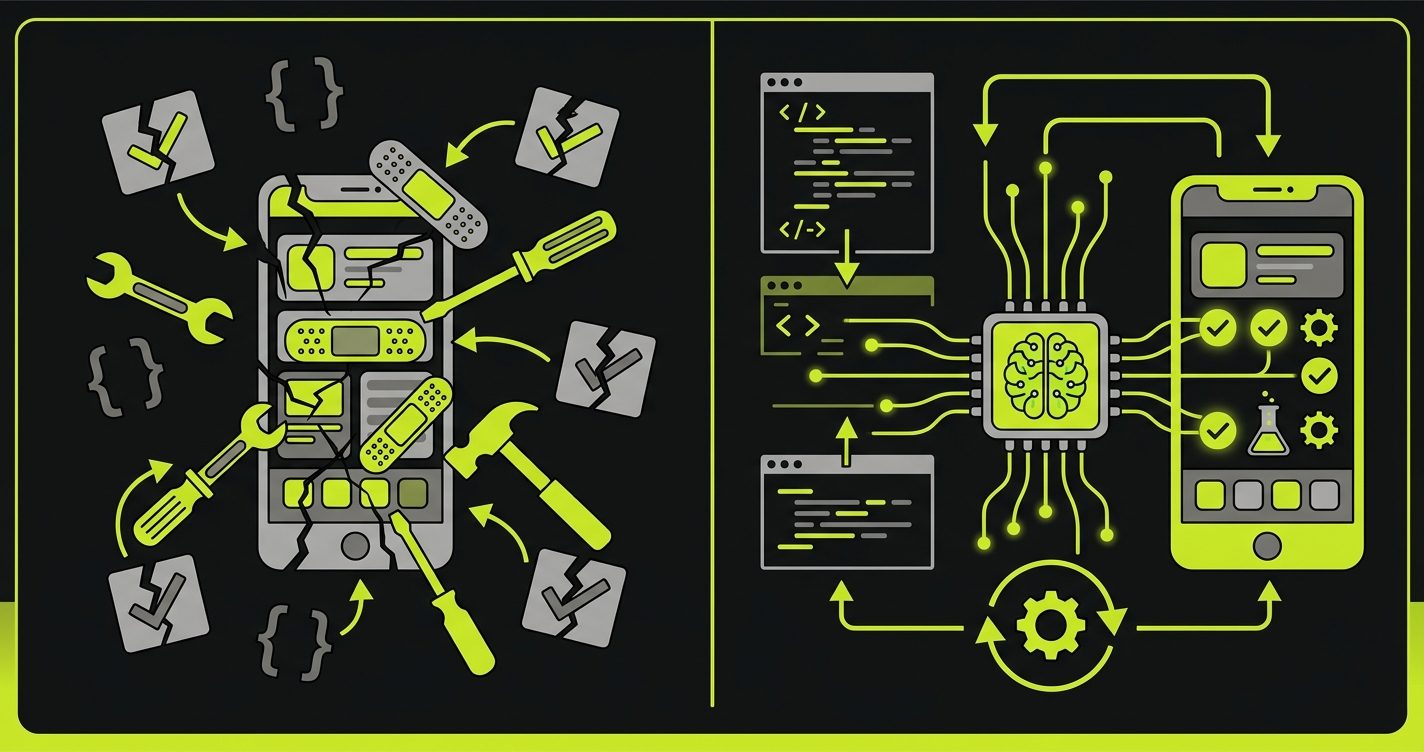
Three core problems push teams toward open source alternatives to Drizz.
Maintenance Reduction Without Test Generation
Drizz focuses on reducing the cost of maintaining existing mobile tests. When your app's UI changes, Drizz attempts to adapt tests so they do not break. That is genuinely useful. But it solves only the back half of the testing problem.
You still write every test manually. Someone on your team still sits down, defines test steps, maps out user flows, and creates the initial test scripts. For a growing mobile application with dozens of screens and hundreds of user paths, that initial creation effort is enormous. A mid-sized mobile app can require 200-400 E2E test cases to achieve reasonable coverage. At 30-60 minutes per test case (including setup, flow mapping, and validation), that is 100-400 hours of manual work before Drizz's maintenance reduction even kicks in.
The fundamental limitation: Drizz makes maintaining tests cheaper, but it does nothing to make creating them cheaper. Teams still spend weeks or months building out their initial test suite. And every time you ship a new feature, someone has to manually write new tests for it. The maintenance problem is only one piece of the puzzle.
Proprietary Platform, No Self-Hosting
Drizz is closed source. You cannot inspect how it works, audit its security, or customize its behavior. Your test data, mobile app builds, and execution logs all pass through Drizz's cloud infrastructure with no alternative.
For teams building healthcare apps, fintech products, or enterprise mobile applications, this is frequently a non-starter. HIPAA, PCI DSS, SOC 2, and other compliance frameworks often require that testing infrastructure runs on controlled, auditable environments. When your compliance team asks "can we audit the source code of the testing platform?" and the answer is "no, it is proprietary," the conversation ends.
Even without compliance requirements, the lack of self-hosting means you are dependent on Drizz's infrastructure availability, their security practices, and their data handling policies. You have no visibility into how your app builds and test data are stored, processed, or retained.
One engineering lead told us: "We evaluated Drizz for our banking app. The security team rejected it in the first review because there was no self-hosting option and no source code to audit."
Startup Risk and Limited Ecosystem
Drizz is an early-stage startup with a small team and limited track record. That matters when you are choosing infrastructure your QA process depends on.
Startups pivot, run out of funding, get acquired and sunset, or dramatically change pricing. If Drizz shuts down or changes direction, your entire mobile testing workflow breaks. You cannot self-host it. You cannot fork it. You cannot maintain it yourself. Your tests and workflows are locked inside a proprietary system with no escape path.
The ecosystem is equally narrow. Drizz has a small user community, limited third-party integrations, no open-source contributions, and sparse documentation compared to established platforms. When you hit an edge case or need a custom integration, you are dependent on a small team's bandwidth and priorities. There is no community building extensions, no public issue tracker driving transparency, and no ecosystem of plugins and tools built by other users.
Compare this to open-source platforms where hundreds of contributors improve the codebase, community members answer questions, and the source code is available regardless of what happens to the company.
Autonoma: The Open Source Alternative to Drizz
Autonoma is an open-source, AI-native testing platform that eliminates both test creation and maintenance.
AI Generates Tests, Not Just Maintains Them
This is the fundamental difference. Drizz helps maintain tests you write. Autonoma writes them for you.
You connect your GitHub repo, and Autonoma's test-planner-plugin reads your routes, components, and user flows to build a knowledge base of your application. AI agents then generate comprehensive E2E test cases based on your actual code structure. No manual test writing required.
For mobile apps, this means the AI understands your screen hierarchy, navigation flows, form inputs, and interaction patterns. It generates tests covering happy paths, edge cases, error states, and cross-screen flows automatically. The 200-400 test cases that would take your team weeks to write manually? Autonoma generates them in hours.
Tests execute using AI vision models that see your app like a human would. No CSS selectors, no XPaths, no element IDs to break. When your designer moves a button, changes a color scheme, or restructures a screen layout, the AI adapts because it understands intent, not DOM structure. This is true self-healing: not patching broken selectors, but understanding what the test is trying to accomplish and finding the right way to do it on the current UI.
Open Source and Self-Hosting
Full source code on GitHub. Licensed under BSL 1.1 (converts to Apache 2.0 in 2028). Inspect every line, audit security, customize behavior, self-host with no feature restrictions. The only limitation: you cannot resell Autonoma's functionality as a commercial service.
Run Autonoma on your infrastructure. AWS (ECS, EKS, EC2), GCP (GKE, Compute Engine), Azure (AKS, VMs), or your own data center. Your data never leaves your infrastructure. App builds stay on your servers. Test execution happens in your VPC. Credentials are never exposed to external systems.
The technology stack is built on standard open source components: TypeScript and Node.js 24 for the runtime, Playwright for web testing, Appium for mobile testing, PostgreSQL for storage, and Kubernetes for orchestration. No proprietary runtimes, no black-box components.
This directly addresses the startup risk problem. Even if Autonoma the company disappeared tomorrow, the source code exists on GitHub. You can self-host it, maintain it, and keep running it indefinitely. That is the insurance policy proprietary platforms like Drizz cannot offer.
Full Testing Lifecycle, Not Just Mobile Maintenance
Drizz focuses narrowly on mobile test maintenance. Autonoma covers the full testing lifecycle across web and mobile from a single platform.
Web testing: Chrome, Firefox, Safari across desktop and mobile viewports via Playwright.
Mobile testing: iOS simulators, Android emulators, and physical devices via Appium with instant environment spawning.
Test generation: AI creates tests from your codebase automatically for both web and mobile.
Self-healing: Vision-based AI adapts tests when UI changes, across all platforms.
Unlimited parallels: Run as many tests concurrently as your infrastructure supports. No artificial caps.
Instead of using Drizz for mobile maintenance, a separate tool for web testing, and manual effort for test creation, Autonoma consolidates the entire workflow. One platform, one AI, full coverage.
Drizz vs Autonoma: Feature Comparison
| Feature | Drizz | Autonoma |
|---|---|---|
| Open Source | Proprietary closed source | BSL 1.1 on GitHub (Apache 2.0 in 2028) |
| Self-Hosting | Cloud only, no self-hosting | Self-host anywhere (AWS, GCP, Azure, on-prem) |
| Test Generation | Manual (you write all tests) | AI generates tests from your codebase automatically |
| Test Maintenance | Reduces maintenance burden | Eliminates maintenance via AI vision self-healing |
| Platform Coverage | Mobile focused (iOS/Android) | Web + Mobile (Chrome, Firefox, Safari, iOS, Android) |
| Parallel Execution | Limited by plan | Unlimited on all plans |
| Vendor Lock-In | High (proprietary, no export) | None (open source, fork anytime) |
| Community | Small, early-stage | Growing open-source community on GitHub |
| Platform Risk | Early-stage startup | Source code on GitHub, self-host forever |
| Data Sovereignty | Data on Drizz servers | Data stays on your infrastructure |
| Source Code Access | No access | Full source code on GitHub |
| Free Tier | Not publicly available | 100K credits, no credit card |
| Cloud Price | Contact sales | $499/month (unlimited parallels) |
| Self-Hosted Cost | Not available | Infrastructure only (no platform fees) |
Cost: Open Source vs Proprietary
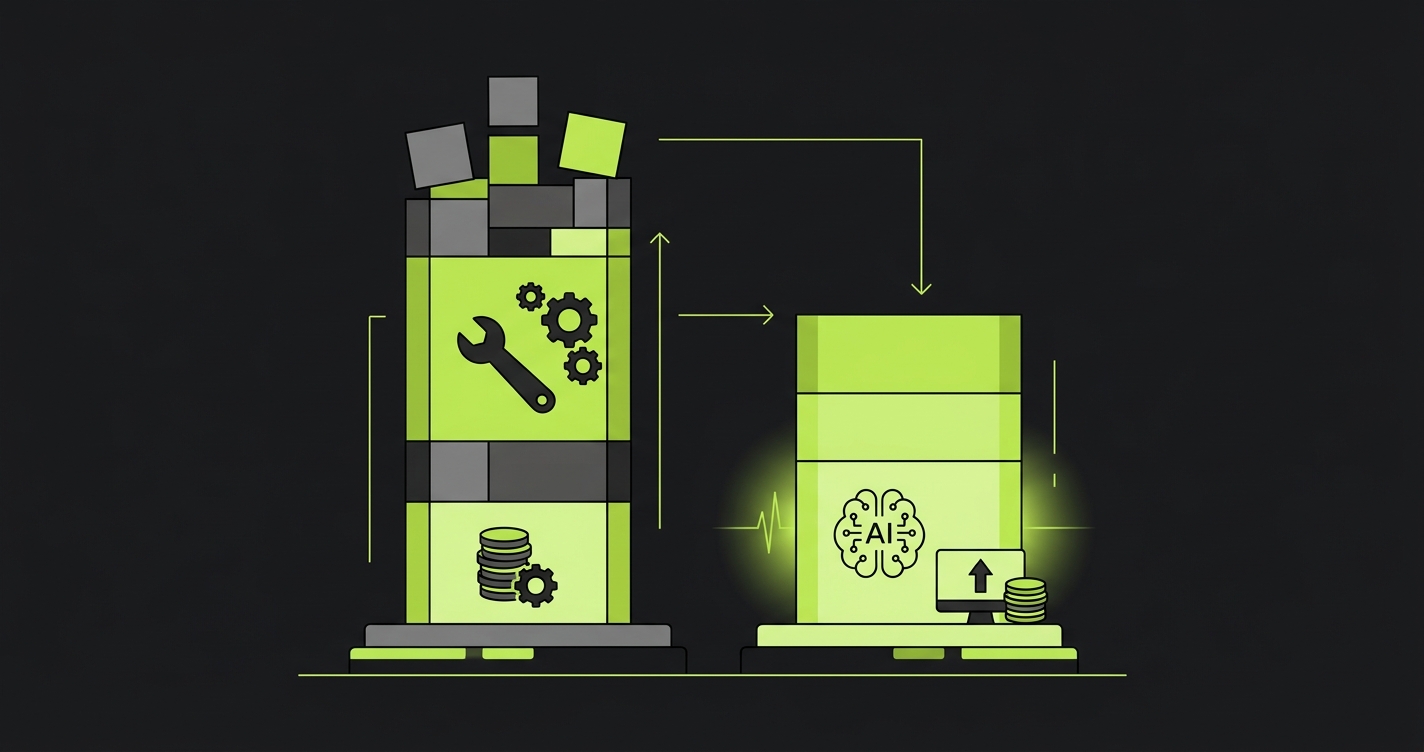
The cost comparison with Drizz has two dimensions: the platform fee and the engineering time that each approach requires.
Drizz's pricing requires a sales conversation, which typically signals enterprise-level pricing. Even if we assume a moderate price point, the real cost includes the engineering hours spent manually writing tests. Drizz reduces maintenance time but does not eliminate test creation. For a team maintaining a mobile app with 300 test cases, the initial creation effort alone represents 150-300 hours of engineering time at $100-150/hour. That is $15,000-45,000 in creation costs before the platform fee.
Autonoma cloud is $499/month ($6K/year) with zero test creation time and zero maintenance time. AI generates and maintains everything. Over three years, that totals $18K with no engineering hours spent on test writing or maintenance.
Autonoma self-hosted eliminates the platform fee entirely. You pay only for infrastructure you provision on AWS, GCP, or Azure, typically $200-400/month. Over three years, roughly $11K total.
The biggest savings is not the subscription difference. It is the elimination of manual test creation. That is the line item Drizz's model cannot address, and it is where most of the engineering budget actually goes.
Migrating from Drizz to Autonoma
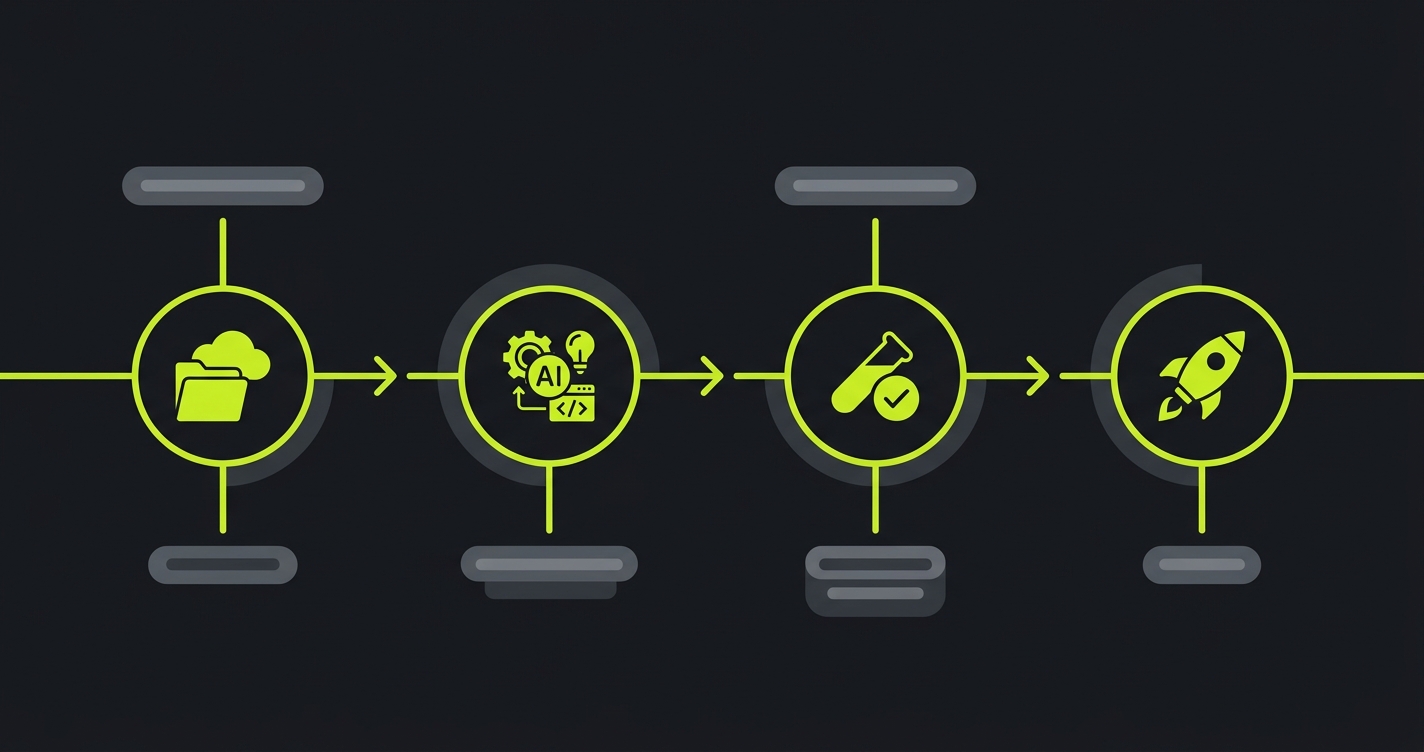
Migration is straightforward because you are not rewriting tests. Autonoma generates them from your codebase.
1. Connect your repo. Sign up for the free tier at getautonoma.com or self-host by cloning the GitHub repo. Connect your GitHub repository and let Autonoma's AI analyze your codebase. This takes minutes.
2. AI generates tests. The test-planner-plugin builds a knowledge base of your application and generates comprehensive E2E test cases automatically. Start with your 5-10 most critical mobile flows and run them alongside your existing Drizz tests to compare.
3. Validate and expand coverage. Compare AI-generated test coverage against your existing suite. Autonoma's vision-based tests are often more resilient than selector-based tests because they understand intent, not element structure. Review gaps, iterate on the AI-generated test plans, and expand to full coverage. Most teams achieve parity within days.
4. Update CI/CD and cut over. Point your CI/CD pipelines at Autonoma, add web testing coverage you did not have with Drizz, and wind down your Drizz subscription. If self-hosting, provision your infrastructure during the validation phase so it is ready for cutover.
The key difference: you are not manually recreating 300 mobile tests. You connect your repo, the AI generates coverage across both web and mobile, and you validate. Migration effort is about reviewing, not rebuilding.
Frequently Asked Questions
Yes. Autonoma is an open-source testing platform available on GitHub. Unlike Drizz's proprietary model, Autonoma offers a free tier with 100K credits and full self-hosting capabilities. You can run Autonoma on your own infrastructure with no feature limitations, or use the cloud version starting free.
Yes, and it goes further. Drizz reduces mobile test maintenance but still requires manual test creation. Autonoma eliminates both: AI generates tests from your codebase automatically and self-heals them when your UI changes. You get full mobile coverage (iOS/Android via Appium) plus web coverage from a single platform.
Yes. Autonoma is fully self-hostable with complete source code on GitHub. You can run it on your infrastructure (AWS, GCP, Azure, on-premise) with zero feature restrictions. Drizz offers no self-hosting option; you are locked into their cloud.
If Drizz shuts down, pivots, or dramatically changes pricing, your testing workflow breaks with no recovery path. Autonoma is open source on GitHub (BSL 1.1, converts to Apache 2.0 in 2028). You can self-host it indefinitely regardless of what happens to the company. The source code is your insurance policy.
Yes. Autonoma supports iOS and Android testing through Appium, including simulators, emulators, and physical devices. Unlike Drizz which focuses narrowly on mobile, Autonoma also covers web testing (Chrome, Firefox, Safari) via Playwright. One platform for your entire test suite.
Drizz reduces maintenance on tests you write manually. Autonoma generates tests automatically from your codebase using AI agents that understand your routes, components, and user flows. Then it maintains those tests via vision-based self-healing. The difference: Autonoma handles the full lifecycle (creation + maintenance), while Drizz only addresses maintenance.
The Bottom Line
Drizz reduces mobile test maintenance, but it is a proprietary, mobile-only startup with no self-hosting, no source code access, no test generation, and real platform risk. You still write every test manually. You are locked into a closed platform from a company with limited track record.
Autonoma solves the full problem. Full source code on GitHub (BSL 1.1, Apache 2.0 in 2028). Self-host on your infrastructure or use our cloud. AI generates and maintains tests from your codebase: zero manual writing, zero maintenance. Web and mobile coverage from a single platform. Unlimited parallels on every plan. No vendor lock-in. Free tier starts at 100K credits, cloud at $499/month, self-hosted at infrastructure cost only.
Ready to try open source testing?
Start Free - 100K credits, no credit card, 5-minute setup
View on GitHub - Inspect source code, self-host documentation
Book Demo - See AI test generation in action
Related Reading: