

Quick summary: Autonoma is the open-source alternative to Eggplant (Keysight). Unlike Eggplant's proprietary model-based testing platform ($50K-150K+/year, SenseTalk lock-in, legacy image recognition), Autonoma generates tests automatically from your codebase using AI agents with modern LLM vision models. Full source code on GitHub (BSL 1.1), self-hosting, AI self-healing, unlimited parallel execution, no vendor lock-in. Free tier: 100K credits. Cloud: $499/month. Self-hosted: no ongoing costs.
Eggplant pioneered the idea that testing software should work visually, interacting with applications the way a human sees them rather than poking at DOM selectors. That was genuinely ahead of its time. The problem is that Eggplant's "visual" approach was built in an era before modern AI vision models existed, and it has not kept up.
Today, Eggplant (acquired by Keysight Technologies in 2020) still relies on pixel-matching image recognition, a proprietary scripting language called SenseTalk that exists nowhere else in the industry, and enterprise-only pricing that starts at $50K/year and regularly exceeds $150K. Keysight is primarily a hardware instrumentation company. Software testing is not their core business, and the product's evolution reflects that.
Autonoma picks up where Eggplant's original vision left off, but with modern AI. Full source code on GitHub, LLM vision models that actually understand your UI (not just match pixels), AI that generates tests from your codebase automatically, and pricing that starts at free. This guide covers where Eggplant falls short, how Autonoma solves those problems, and how to make the switch.
Where Eggplant Falls Short
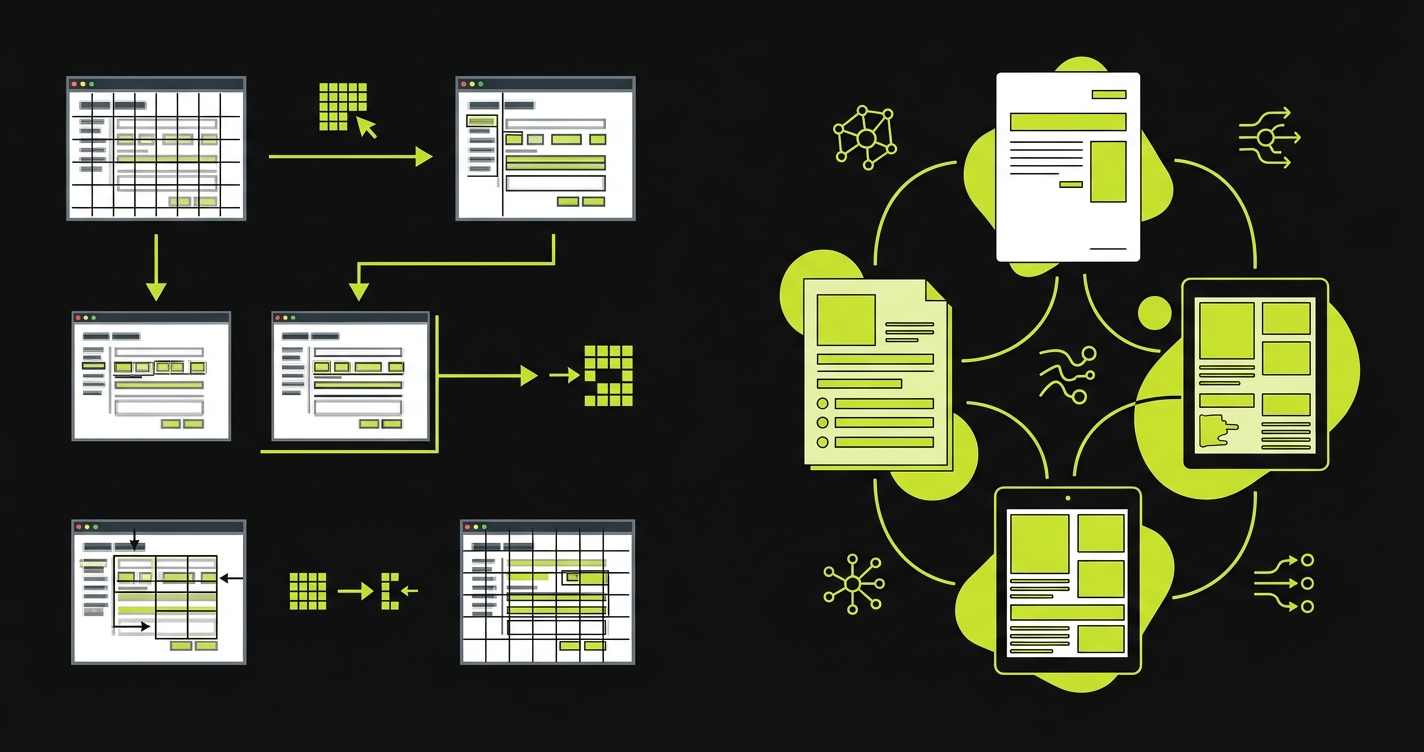
Three fundamental problems push teams away from Eggplant.
Legacy Image Recognition vs Modern AI Vision
Eggplant's visual testing approach was revolutionary when it launched. The idea was simple: instead of writing CSS selectors or XPaths, take a screenshot of the element you want to interact with and let the tool find it on screen. Click the "Submit" button by showing Eggplant what the "Submit" button looks like.
The problem is that this approach uses pixel-matching image recognition, not AI that understands what it sees. Eggplant compares stored reference images against the current screen, pixel by pixel. When your designer changes the button color from blue to teal, the pixel match fails. When your font rendering shifts by a single pixel due to a browser update, tests break. When you switch from light mode to dark mode, every reference image needs to be recaptured.
This is the critical gap. Eggplant sees pixels. Modern LLM vision models see meaning. A model like GPT-4o or Claude's vision does not care if the button is blue or teal. It understands that the element is a submit button based on its text, position, and visual context. The difference between "find pixels that match this screenshot" and "find the submit button" is the difference between brittle automation and resilient testing.
Teams running Eggplant at scale report spending significant engineering hours recapturing reference images after routine UI updates. One QA lead described it as "maintaining a library of thousands of screenshots that break every time design ships a change." That is not visual intelligence. That is visual fragility.
SenseTalk Lock-In
Eggplant tests are written in SenseTalk, a proprietary scripting language created specifically for Eggplant. SenseTalk is not used anywhere else in software development. It is not taught in computer science programs. It does not appear on job postings outside of Eggplant-specific roles. The skills your team develops writing SenseTalk do not transfer to any other tool, framework, or platform.
This creates three compounding problems:
Hiring is nearly impossible. Try finding a "SenseTalk developer" on LinkedIn. The talent pool is vanishingly small. Every new team member needs weeks of training on a language they will never use again if they leave or if you switch tools.
Knowledge does not transfer. Engineers who spend years becoming SenseTalk experts have built skills with zero market value outside Eggplant. This is a career development dead end that makes retention harder. Your best engineers will eventually push back against investing in a proprietary language.
Migration is a full rewrite. SenseTalk scripts cannot be exported, translated, or adapted to any other testing framework. If you decide to leave Eggplant, every test is thrown away. You start from zero. For teams with hundreds or thousands of SenseTalk scripts, this migration cost alone can exceed $100K in engineering time, which is exactly why Eggplant's vendor lock-in is so effective.
Compare this to Autonoma, where nobody writes test scripts at all. AI generates and maintains tests from your codebase. There is no proprietary language to learn, no scripts to maintain, and no lock-in. Your tests are derived from your code, not trapped in a vendor's format.
Enterprise Pricing and Keysight's Direction
Eggplant is enterprise-only software. There is no self-serve plan, no free tier, no transparent pricing page. You contact Keysight sales, go through procurement, and negotiate a contract. Industry sources and customer reports consistently place Eggplant licensing in the $50,000 to $150,000+ per year range, depending on the number of licenses, features, and support tiers.
On top of the license fees, you need SenseTalk expertise. That means either training existing staff (weeks of ramp-up), hiring specialists (scarce and expensive), or engaging Keysight's professional services (additional cost). The total cost of ownership for a mid-sized team easily reaches $100K-200K annually when you include licensing, training, and the engineering hours spent maintaining reference images and SenseTalk scripts.
Then there is the strategic question. Keysight Technologies is a $5B+ electronic test and measurement company. They make oscilloscopes, signal analyzers, and network testing hardware. Software testing is a tiny fraction of their business. Since acquiring Eggplant in 2020, the product has not seen the kind of rapid innovation you would expect from a dedicated software testing company. Updates are incremental. The model-based testing engine is largely unchanged. The AI capabilities have not kept pace with the LLM revolution that transformed every other category of developer tooling.
When your testing platform's parent company views it as a secondary business line, you should worry about long-term investment, roadmap priority, and what happens if Keysight decides to sunset or deprioritize the product.
Autonoma: The Open Source Alternative to Eggplant
Autonoma is an open-source, AI-native testing platform that delivers on the visual testing vision Eggplant pioneered, but with modern AI and an open source model.
Modern LLM Vision Models (Not Pixel Matching)
Where Eggplant compares screenshots pixel by pixel, Autonoma uses LLM vision models that understand your UI semantically. The AI sees your application the way a human does: it recognizes buttons, forms, navigation elements, and content areas based on what they are, not what their pixels look like.
How it works: You connect your GitHub repo, and Autonoma's test-planner-plugin reads your routes, components, and user flows to build a knowledge base of your application. AI agents then generate comprehensive E2E test cases based on your actual code structure. Tests execute using AI vision models that see your app like a human would, with no reference images to capture or maintain. When your designer changes a button's color, border radius, or font, the AI still recognizes it as a button. When your team ships a redesign, tests adapt automatically because the AI understands intent, not pixels.
This is the evolution of Eggplant's original vision. Eggplant was right that visual testing is better than selector-based testing. But pixel matching was a stopgap technology. LLM vision models are what visual testing was always supposed to be.
The practical impact is dramatic. Teams using Eggplant spend hours recapturing reference images after UI changes. Teams using Autonoma spend zero time on visual maintenance because there are no reference images. The AI understands your UI at a semantic level that pixel matching cannot reach.
Open Source and Self-Hosting
Full source code on GitHub. Licensed under BSL 1.1 (converts to Apache 2.0 in 2028). You can use it in production, inspect every line, audit security, and self-host with no feature restrictions. The only limitation: you cannot resell Autonoma's functionality as a commercial service.
Eggplant is proprietary closed-source software. You cannot inspect how the image recognition engine works, audit how your test data is handled, or customize the platform's behavior. With Autonoma, you get full transparency. Need to understand how the vision models process your UI? Read the source. Need to customize test execution for your environment? Fork and modify.
Run Autonoma on your infrastructure: AWS (ECS, EKS, or EC2), GCP (GKE or Compute Engine), Azure (AKS or VMs), or your own data center. When you self-host, your data never leaves your infrastructure. Tests run in your VPC. Credentials stay on your servers.
The technology stack is built on standard open source components: TypeScript and Node.js 24 for the runtime, Playwright for web testing, Appium for mobile testing, PostgreSQL for data storage, and Kubernetes for orchestration. No proprietary runtimes like SenseTalk, no black-box components, no vendor-specific dependencies.
No Scripting Language to Learn
Eggplant requires SenseTalk. Selenium requires Java/Python/JavaScript. Cypress requires JavaScript. Autonoma requires nothing. Nobody writes test scripts. The AI generates tests from your codebase automatically.
Your QA team shifts from writing and maintaining SenseTalk scripts to reviewing AI-generated test plans and analyzing results. This is higher-leverage work that actually improves product quality. Engineers with zero SenseTalk experience (which is essentially every engineer) can start using Autonoma immediately with no training period.
This also eliminates the hiring bottleneck. You do not need to find the handful of engineers in the world who know SenseTalk. Any engineer who can review a test plan and interpret test results can work with Autonoma.
Unlimited Parallel Execution
Every plan (free tier, cloud, and self-hosted) supports unlimited parallel execution. On the free tier that is subject to credit limits, but on cloud and self-hosted plans your test suite scales with your infrastructure. Eggplant's parallel execution depends on how many licenses you purchase, each additional license adding to the annual cost.
Pricing
Free tier: 100K credits, no credit card required, unlimited parallels, all features included. Good for small teams, startups, and evaluating the platform.
Cloud ($499/month): 1M credits per month, unlimited parallels, managed infrastructure, support included. No infrastructure to manage. Autonoma handles everything.
Self-hosted (free platform): No ongoing platform fees. Pay only for infrastructure (AWS/GCP/Azure). No feature restrictions. Full control over data, environment, and scaling.
Eggplant vs Autonoma: Feature Comparison
| Feature | Eggplant (Keysight) | Autonoma |
|---|---|---|
| Open Source | Proprietary closed source | BSL 1.1 on GitHub (Apache 2.0 in 2028) |
| Self-Hosting | On-premise with proprietary license | Self-host anywhere, no license fees |
| Visual Testing Approach | Pixel-matching image recognition | LLM vision models (semantic understanding) |
| Scripting Language | SenseTalk (proprietary, no transferable skills) | No scripting required (AI generates tests) |
| Test Generation | Manual (write SenseTalk scripts) | AI generates tests from your codebase automatically |
| Test Maintenance | Manual (recapture reference images, update scripts) | AI self-healing (zero maintenance) |
| Model-Based Testing | Yes (state-based models, manual model creation) | AI builds application model from codebase automatically |
| Vendor Lock-In | Extreme (SenseTalk scripts, proprietary format) | None (tests generated from code, fork codebase) |
| Parallel Execution | Per-license (each parallel = additional license cost) | Unlimited on all plans |
| Starting Price | ~$50,000/year (enterprise sales only) | Free (100K credits) |
| Cloud Price | Not available (on-premise only) | $499/month (unlimited parallels) |
| Self-Hosted Cost | $50K-150K+/year license | Infrastructure only (no platform fees) |
| Source Code Access | Proprietary, no access | Full source code on GitHub |
| Parent Company Focus | Keysight (hardware instrumentation) | Autonoma (AI testing, sole focus) |
| Web Testing | Via VNC/RDP image recognition | Playwright (native browser automation) |
| Mobile Testing | Via VNC/image recognition | Appium (native mobile automation) |
| Setup Time | Weeks (procurement, installation, training) | Minutes (cloud), hours (self-hosted) |
Cost: Open Source vs Enterprise Licensing
The cost gap between Eggplant and Autonoma is the largest of any testing tool comparison because Eggplant sits at the extreme end of enterprise pricing.
For a mid-sized team, Eggplant licensing runs $50,000-150,000 per year. Add SenseTalk training and consulting ($10K-30K for initial ramp-up), plus the ongoing engineering hours spent maintaining reference images and scripts (10-20 hours/month at $100-150/hour = $12K-36K/year). Over three years, the total cost of ownership reaches $216K-558K.
Autonoma cloud is $499/month ($18K over three years) with zero maintenance hours. AI self-healing handles UI changes automatically. That represents a 92-97% cost reduction.
Autonoma self-hosted eliminates the platform fee entirely. You pay only for the infrastructure you provision, typically $200-400/month. Over three years, that totals roughly $11K: a 95-98% reduction compared to Eggplant's total cost of ownership.
Even if your Eggplant contract is on the low end ($50K/year), the three-year savings by switching to Autonoma cloud exceed $130K. For teams on the higher end, the savings exceed $500K. These are not hypothetical numbers. They are the direct result of eliminating enterprise licensing, proprietary language training, and manual image maintenance.

Migrating from Eggplant to Autonoma
Migration from Eggplant is actually simpler than migrating from most other testing tools, for a counterintuitive reason: your SenseTalk scripts cannot be ported anyway. There is no partial migration path. You are starting fresh regardless of which tool you move to. The question is how fast you can rebuild coverage, and this is where Autonoma's AI generation changes the equation.
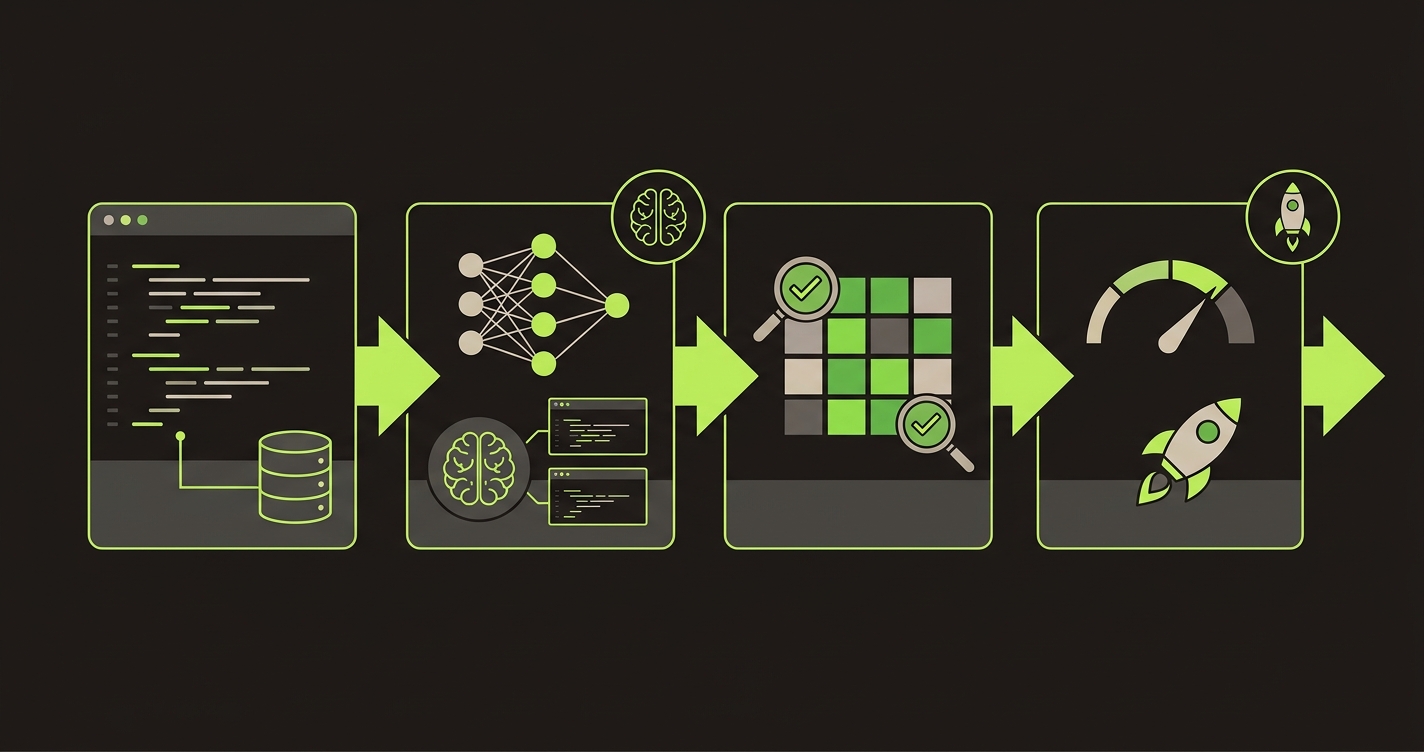
1. Connect your repo. Sign up for the free tier at getautonoma.com or self-host by cloning the GitHub repo and following the deployment docs. Connect your GitHub repository and let Autonoma's AI analyze your codebase (routes, components, and user flows). This takes minutes, not the weeks required to set up Eggplant.
2. AI generates tests. The test-planner-plugin builds a knowledge base of your application and generates comprehensive E2E test cases automatically. Start with your most critical flows (checkout, authentication, core features) and run them alongside your existing Eggplant suite to compare coverage. No SenseTalk required. No reference images to capture.
3. Validate coverage. Compare AI-generated test coverage against your existing Eggplant test suite. Autonoma's LLM vision-based tests will be more resilient than Eggplant's pixel-matching tests because they understand UI semantics, not just screenshots. Most teams achieve equivalent or better coverage within days because the AI generates tests from actual code rather than requiring manual script writing and image capture.
4. Update CI/CD and cut over. Point your CI/CD pipelines at Autonoma, train your team on reviewing AI-generated test plans (minutes, not weeks of SenseTalk training), and let your Eggplant contract expire. The transition is low-risk because you have already validated coverage in step 3.
The key insight: migrating from Eggplant to any tool requires starting from scratch because SenseTalk is non-portable. Autonoma makes "starting from scratch" take days instead of months because AI generates the tests for you.
Frequently Asked Questions
Yes. Autonoma is an open-source testing platform available on GitHub. Unlike Eggplant's proprietary model-based testing that costs $50K-150K+ per year, Autonoma offers a free tier with 100K credits and full self-hosting capabilities. You get modern LLM vision models instead of legacy image recognition, with no SenseTalk lock-in.
Yes. Autonoma is fully self-hostable with complete source code on GitHub. You can run it on your infrastructure (AWS, GCP, Azure, on-premise) with zero feature restrictions. Eggplant requires on-premise installation with proprietary licensing and Keysight support contracts. Autonoma's self-hosting is free: no license fees, no per-user charges.
Eggplant (Keysight) costs $50,000-150,000+ per year for enterprise licenses, plus SenseTalk consulting and training costs. Autonoma offers a free tier with 100K credits, cloud at $499/month, or completely free self-hosting where you pay only for infrastructure. Over three years, teams switching from Eggplant save 92-98% on total cost of ownership.
Eggplant uses legacy pixel-matching image recognition that compares screenshots against stored reference images. It breaks when colors, fonts, or layouts change. Autonoma uses modern LLM vision models that understand what elements are and what they do, not just what they look like. This semantic understanding makes tests far more resilient to visual changes.
Yes. You don't rewrite SenseTalk scripts; you connect your repo and Autonoma's AI generates tests from your codebase automatically. Since Eggplant tests are written in proprietary SenseTalk, they cannot be ported to any other tool anyway. Starting fresh with Autonoma's AI-generated tests is faster than trying to translate SenseTalk scripts. Most teams achieve full coverage within days.
SenseTalk is Eggplant's proprietary scripting language. It exists nowhere else in the software industry. Skills in SenseTalk do not transfer, test scripts cannot be reused outside Eggplant, and hiring SenseTalk developers is nearly impossible. Autonoma eliminates scripting entirely: AI generates and maintains tests automatically from your codebase, so there is no language to learn.
The Bottom Line
Eggplant pioneered visual testing, but its approach is stuck in the pre-AI era. Pixel-matching image recognition, a proprietary scripting language no one else uses, enterprise-only pricing that starts at $50K/year, and a parent company (Keysight) whose primary focus is hardware instrumentation. The total cost of ownership reaches $216K-558K over three years for a mid-sized team.
Autonoma delivers what Eggplant's visual testing vision always promised, but with modern AI. Full source code on GitHub (BSL 1.1, Apache 2.0 in 2028). LLM vision models that understand your UI semantically, not just match pixels. AI that generates and maintains tests from your codebase: zero SenseTalk, zero manual scripting, zero reference image maintenance. Self-host on your infrastructure or use our cloud. Unlimited parallels on every plan. No vendor lock-in. Free tier starts at 100K credits, cloud at $499/month, self-hosted at infrastructure cost only. Three-year savings: 92-98% compared to Eggplant.
Ready to try open source testing?
Start Free - 100K credits, no credit card, 5-minute setup
View on GitHub - Inspect source code, self-host documentation
Book Demo - See AI vision testing in action
Related Reading: