

Quick summary: Autonoma is the open-source alternative to Katalon. Unlike Katalon's proprietary IDE with enterprise pricing ($175-450/license/month), Autonoma generates tests automatically from your codebase using AI agents. No Groovy scripting, no proprietary .tc files, no heavy IDE. Full source code on GitHub (BSL 1.1), self-hosting, vision-based self-healing, unlimited parallel execution, zero vendor lock-in. Free tier: 100K credits. Cloud: $499/month. Self-hosted: no ongoing costs.
Katalon markets itself as the "all-in-one" testing platform: web, mobile, API, and desktop testing bundled into a single IDE. The pitch is compelling. One tool for everything, low-code recording for non-technical testers, Groovy scripting for advanced logic. But "all-in-one" comes with trade-offs that become painful at scale: a heavyweight proprietary IDE, tests locked in a format only Katalon can read, enterprise pricing that climbs fast, and "AI" features that barely scratch the surface of what modern AI testing can do.
For teams that want transparency, real AI-driven testing, and freedom from a proprietary ecosystem, Katalon's model breaks down. Autonoma is the open-source alternative built for these teams. AI generates and maintains tests from your codebase automatically. No IDE to install. No scripts to write. No vendor lock-in. This guide covers where Katalon falls short, how Autonoma solves those problems, and how to make the switch.
Where Katalon Falls Short
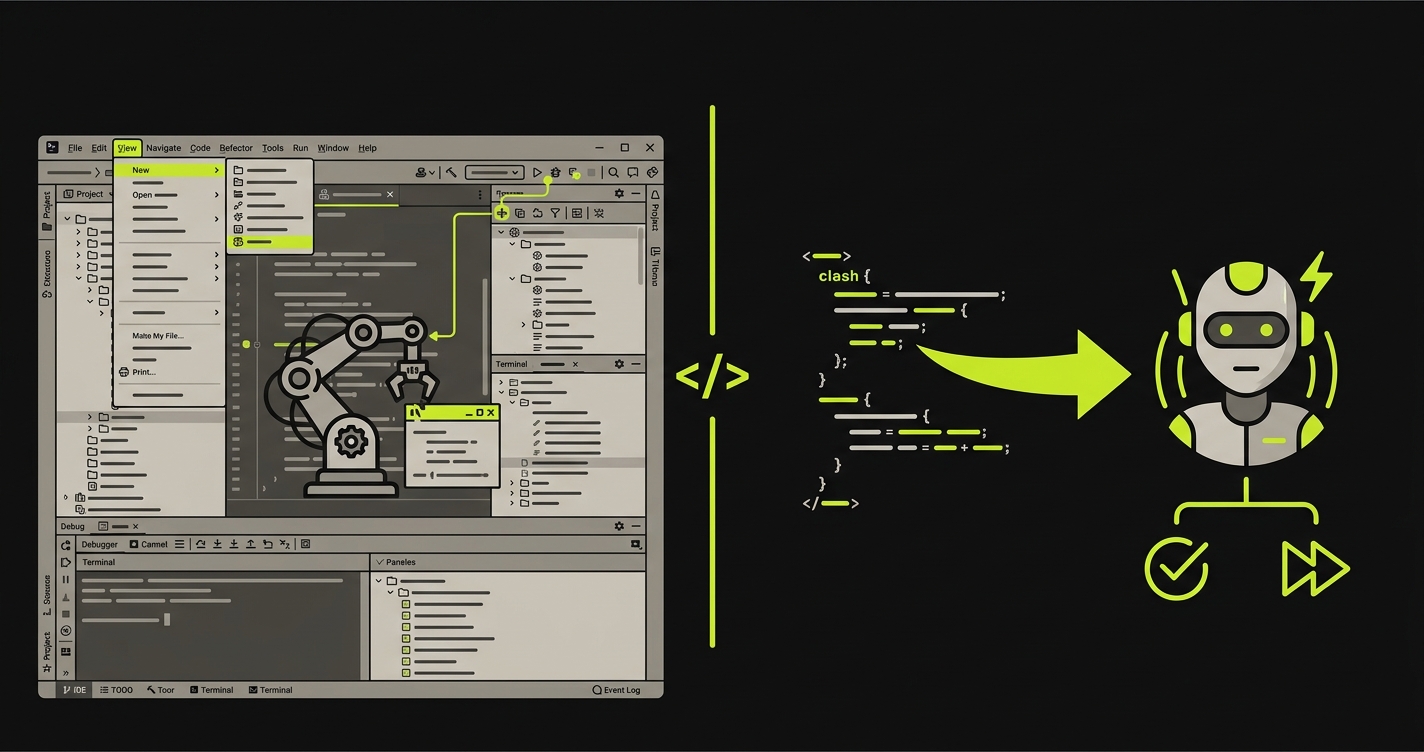
Three core problems drive engineering teams away from Katalon toward open source alternatives.
Proprietary IDE and Ecosystem Lock-In
Katalon Studio is a proprietary IDE built on Eclipse. It is closed source. You cannot inspect how tests execute internally, audit the test engine, or extend the platform beyond what Katalon permits. Every test you create lives in Katalon's proprietary .tc file format, a format no other tool on earth can read.
This creates a lock-in problem that compounds over time. After a year with Katalon, a typical team has 200-400 test cases stored exclusively in .tc files. Those tests reference Katalon-specific keywords, use Katalon's built-in object repository format, and depend on Katalon's Groovy-based scripting engine. If you decide to switch platforms, every single test must be rewritten from scratch. There is no export. There is no converter. You start over.
One engineering manager told us: "We evaluated switching from Katalon after two years. The estimate was 4 months of full-time QA work to rewrite our 350 tests. We stayed with Katalon for another year, not because it was the best tool, but because we couldn't afford to leave."
The IDE itself is another pain point. Katalon Studio is built on Eclipse, which means it inherits Eclipse's notoriously heavy resource footprint. Teams report 4-8 GB of RAM usage, slow startup times, and frequent freezing during test editing. For developers accustomed to lightweight tools like VS Code, Katalon's IDE feels like stepping back a decade. And because Katalon's test format is proprietary, you cannot edit tests in any other editor. You are locked into their IDE whether you like it or not.
"AI" That Doesn't Actually Generate Tests
Katalon promotes AI features, but they are incremental improvements to manual testing, not autonomous test generation. Katalon's AI capabilities include smart wait (automatically adjusting timeouts), self-healing locators (trying alternative selectors when the primary one breaks), and visual testing (screenshot comparison). These features help with test maintenance, but they do nothing to solve the fundamental problem: someone still has to create every test manually.
Self-healing locators sound impressive until you realize they only fix selector breakage. If a developer restructures a form, adds new fields, or changes the user flow, self-healing cannot adapt. It will find the renamed button, but it will not know that a new required field was added before it. The test passes, but it no longer validates the actual user experience. You still need a human to review and update the test logic.
Katalon's "AI" is a maintenance band-aid, not a paradigm shift. You still open the IDE, record or script each test case, maintain the object repository, and update test logic when features change. For a team with 500 test cases, this means 15-25 hours per week of ongoing test maintenance: writing new tests, updating broken ones, debugging flaky locators, and managing the object repository. Katalon's AI reduces that to maybe 10-20 hours per week. The improvement is real but incremental. The fundamental manual workflow remains.
Enterprise Pricing That Escalates Fast
Katalon offers a free edition (Katalon Studio Free) that provides basic recording and scripting with limited features. But the moment you need test orchestration, parallel execution, CI/CD integration, advanced reporting, or team collaboration features, you hit the paywall.
Katalon's paid plans start at $175 per license per month (Katalon Platform, billed annually). The Enterprise tier runs $450 per license per month. These are per-license fees, meaning each team member who needs to create or manage tests requires their own license. A team of 5 QA engineers on the base plan costs $875/month ($10,500/year). On the Enterprise plan, that jumps to $2,250/month ($27,000/year).
And those prices only cover the platform. Katalon TestCloud (their cloud execution environment for cross-browser and mobile testing) is billed separately based on usage. Teams running continuous testing across multiple browser and device configurations frequently see TestCloud charges that double their base platform cost.
The free edition works as a trial, but it is deliberately limited to push teams toward paid plans. No parallel execution, no TestOps orchestration, no cloud execution, no team collaboration features. The free tier is a demo, not a production tool.
Autonoma: The Open Source Alternative to Katalon
Autonoma is an open-source, AI-native testing platform that solves the problems Katalon creates.
Open Source, No Proprietary IDE
Full source code on GitHub. Licensed under BSL 1.1 (converts to Apache 2.0 in 2028). You can inspect every line, audit security, self-host with no feature restrictions, and contribute improvements. The only limitation: you cannot resell Autonoma's functionality as a commercial service.
There is no proprietary IDE to install. Autonoma runs as a platform, not a desktop application. You interact with it through a web dashboard and your existing CI/CD pipeline. Tests are generated from your codebase, not stored in proprietary files. You never need to install a 2 GB IDE, learn a proprietary keyword framework, or manage an object repository. Your existing development workflow stays exactly the same.
This transparency directly solves the compliance problem that Katalon's closed-source model creates. Need to audit testing infrastructure for HIPAA, PCI DSS, or SOC 2? Read the source code. Need to verify how credentials are handled? Inspect the runtime. None of this is possible with Katalon's proprietary platform.
Run Autonoma on your infrastructure. AWS (ECS, EKS, or EC2), GCP (GKE or Compute Engine), Azure (AKS or VMs), or your own data center. When you self-host, your data never leaves your infrastructure. Tests run in your VPC. Credentials stay on your servers.
The technology stack is built on standard open source components: TypeScript and Node.js 24 for the runtime, Playwright for web testing, Appium for mobile testing, PostgreSQL for data storage, and Kubernetes for orchestration. No proprietary runtimes, no black-box components.
AI That Actually Generates Tests
This is the fundamental difference between Autonoma and Katalon. Katalon's AI helps maintain tests you manually create. Autonoma's AI generates tests from your codebase without any manual creation.
How it works: You connect your GitHub repo, and Autonoma's test-planner-plugin reads your routes, components, and user flows to build a knowledge base of your application. AI agents then generate comprehensive E2E test cases based on your actual code structure. No recording sessions. No Groovy scripting. No object repository management. Tests execute using AI vision models that see your app like a human would, meaning no CSS selectors or XPaths to break.
When your UI changes, tests adapt automatically because the AI understands intent, not DOM structure. This is not Katalon's "self-healing locators" that try alternative selectors. Autonoma's vision-based approach does not use selectors at all. A redesigned checkout form with completely new HTML structure still works because the AI recognizes "enter shipping address" as a concept, not a specific #shipping-address-input element.
You do not write tests. You do not maintain selectors. You do not manage an object repository. You do not learn Groovy. The AI handles the entire testing lifecycle: understanding your codebase, generating test cases, executing them, and adapting when things change. Your QA team shifts from writing scripts to reviewing test plans and analyzing results, higher-leverage work that improves product quality.
Unlimited Parallel Execution Without Upsells
Every Autonoma plan (free tier, cloud, and self-hosted) supports unlimited parallel execution. On the free tier that is subject to credit limits, but on cloud and self-hosted plans your test suite scales with your infrastructure. No per-license fees. No parallel caps tied to pricing tiers. No separate TestCloud charges.
Compare this to Katalon, where parallel execution requires a paid plan, TestCloud execution is billed separately, and each team member needs their own license. A team of 5 running 20 parallel tests on Katalon enterprise could easily spend $3,000-4,000/month when you combine platform licenses and TestCloud usage.
With Autonoma self-hosted, that same team pays only for cloud infrastructure: typically $200-400/month depending on parallel needs. That is a 90%+ cost reduction.
Cross-Platform Coverage
Autonoma supports web testing (Chrome, Firefox, Safari via Playwright) and mobile testing (iOS and Android via Appium). The AI is framework agnostic: React, Next.js, Vue, Angular, Flutter, React Native. It reads your routes and component hierarchy, not just the rendered DOM.
Katalon's "all-in-one" pitch includes API and desktop testing alongside web and mobile. In practice, most teams use Katalon primarily for web and mobile E2E testing. API testing is typically handled by dedicated tools (Postman, REST-assured, or framework-specific libraries) that integrate better with development workflows. Desktop testing is a niche use case that affects a small minority of teams. If you genuinely need desktop application testing, Katalon has an edge there. For the 90%+ of teams focused on web and mobile, Autonoma covers the full scope.
No Vendor Lock-In
Tests are generated from your codebase, not stored in proprietary .tc files. There is no Katalon-specific keyword syntax, no proprietary object repository, no Groovy dependency. Fork the project if needed. Switch cloud providers or self-host anytime. Your testing capability is never trapped in a format only one vendor can read.
Pricing
Free tier: 100K credits, no credit card required, unlimited parallels, all features included. This is not a crippled demo like Katalon's free edition. It is the full platform with a usage cap.
Cloud ($499/month): 1M credits per month, unlimited parallels, managed infrastructure, support included. No per-license fees. Your entire team uses one plan.
Self-hosted (free platform): No ongoing platform fees. Pay only for infrastructure (AWS/GCP/Azure). No feature restrictions. Full control over data, environment, and scaling.
Katalon vs Autonoma: Feature Comparison
| Feature | Katalon | Autonoma |
|---|---|---|
| Open Source | No: proprietary closed source | Yes: BSL 1.1 on GitHub (Apache 2.0 in 2028) |
| Self-Hosting | No: Katalon Studio runs locally but orchestration/analytics are cloud-only | Yes: self-host anywhere (AWS, GCP, Azure, on-prem) |
| Test Generation | Manual: record or script each test in proprietary IDE | Automatic: AI generates tests from your codebase |
| Test Maintenance | Manual: self-healing locators help but logic updates require humans | Automatic: vision-based AI adapts to UI and flow changes |
| IDE Required | Yes: Katalon Studio (Eclipse-based, 4-8 GB RAM) | No: web dashboard + CI/CD integration |
| Scripting Language | Groovy (proprietary keyword framework) | None required: AI generates everything |
| Test File Format | Proprietary .tc files (no export, no portability) | Generated from codebase (no proprietary format) |
| Vendor Lock-In | High: proprietary format, IDE, scripting, and ecosystem | None: tests generated from code, fork anytime |
| Parallel Execution | Paid plans only, tied to TestCloud usage | Unlimited on all plans |
| Web Testing | Yes: Chrome, Firefox, Safari, Edge | Yes: Chrome, Firefox, Safari (Playwright) |
| Mobile Testing | Yes: iOS and Android | Yes: iOS and Android (Appium) |
| API Testing | Yes: built-in | Use dedicated tools (Postman, REST-assured) |
| Desktop Testing | Yes: Windows desktop apps | No: web and mobile focused |
| Free Tier | Limited: no parallels, no orchestration, no cloud execution | Full platform: 100K credits, unlimited parallels |
| Paid Pricing | $175-450/license/month (per user) + TestCloud usage | $499/month total (unlimited users and parallels) |
| Self-Hosted Cost | Not available (orchestration is cloud-only) | Infrastructure only (no platform fees) |
| Data Sovereignty | No: TestOps data on Katalon servers | Yes: data stays on your infrastructure |
| Source Code Access | No: proprietary, no access | Yes: full source code on GitHub |
Cost: Open Source vs All-in-One Proprietary
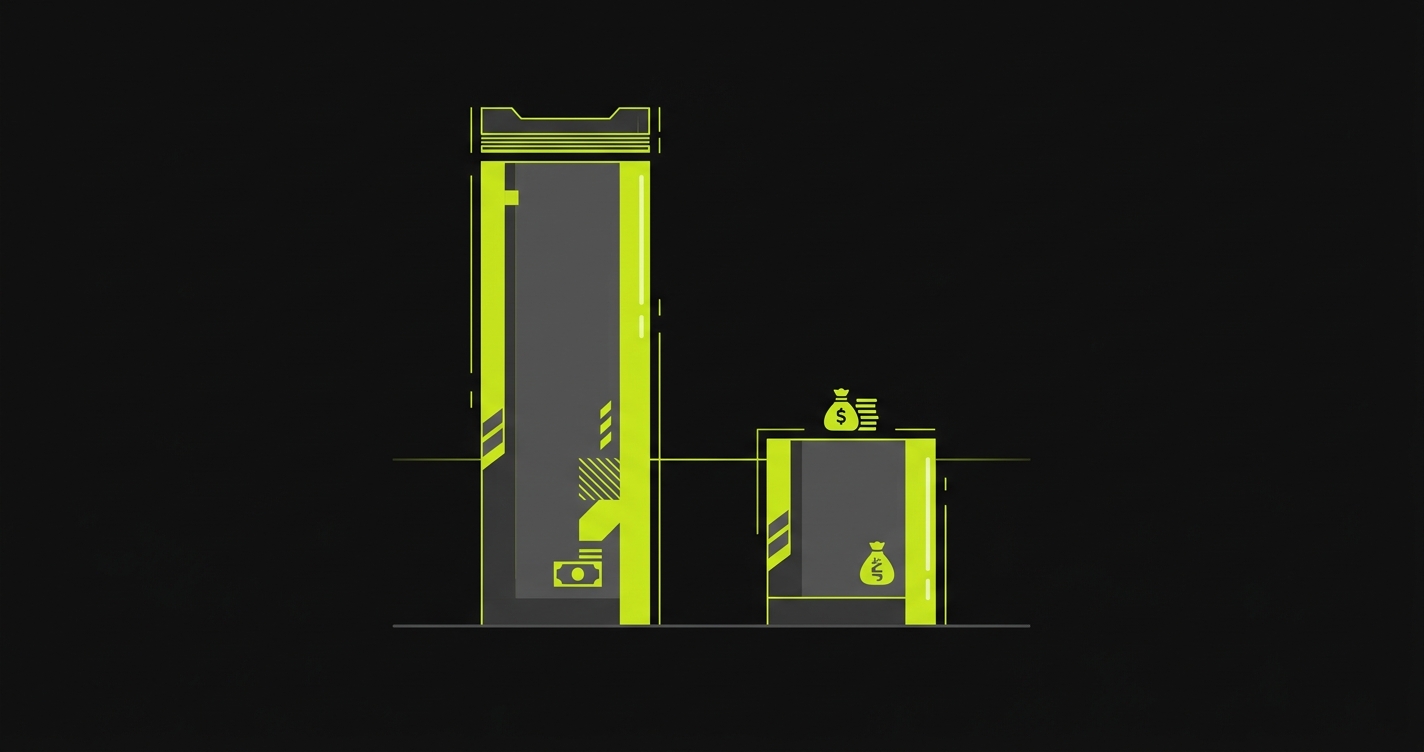
The real cost of Katalon is not just the license fees. It is the licenses plus the engineering hours spent manually creating and maintaining tests inside a proprietary IDE.
For a mid-sized team (5 QA engineers, continuous testing), Katalon costs $875-2,250/month in platform licenses ($10,500-27,000/year). Add TestCloud usage for cross-browser and mobile execution ($200-500/month), and you reach $13,000-33,000/year in platform costs alone. Then factor in test maintenance: 15-25 hours/week of manual work (recording new tests, updating broken scripts, managing the object repository, debugging Groovy errors) at typical QA engineering rates ($80-120/hour). That maintenance costs $62,000-156,000 per year. Over three years, the total cost of ownership reaches $225K-567K when you combine licensing, cloud execution, and maintenance labor.
Autonoma cloud at $499/month ($18K over three years) with zero maintenance hours: AI generates and maintains everything. That is a 92-97% cost reduction.
Autonoma self-hosted eliminates the platform fee entirely. You pay only for infrastructure, typically $200-400/month. Over three years, that totals roughly $11K. The labor savings alone (eliminating 15-25 hours/week of manual test work) dwarf the infrastructure cost.
The biggest savings is not the license difference. It is the elimination of manual test creation and maintenance through AI. That is where Katalon's hidden cost lives, and it is the line item that turns a $27K/year licensing decision into a $200K+/year total cost of ownership.
Migrating from Katalon to Autonoma
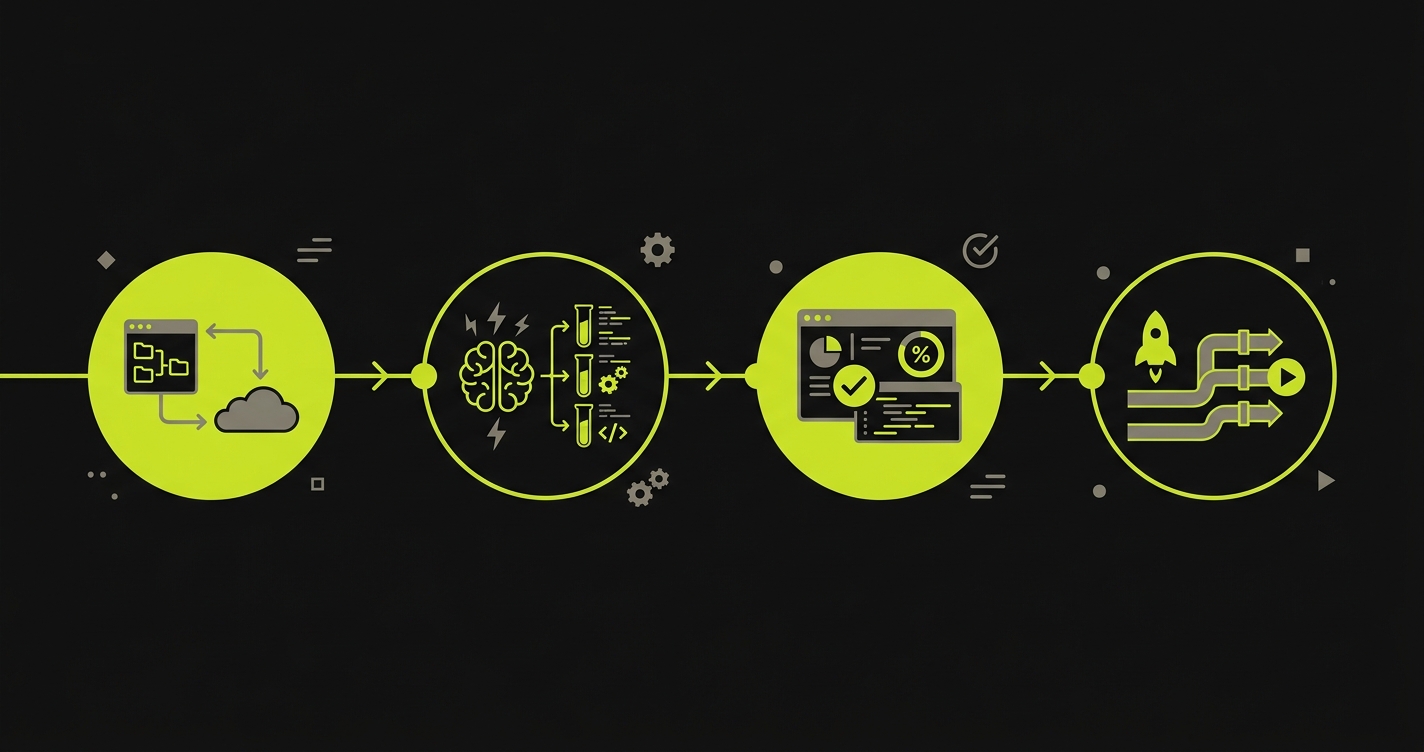
Migration from Katalon is simpler than you would expect because you are not converting proprietary .tc files. Autonoma generates new tests from your codebase. Most teams complete the transition in 1-2 weeks.
1. Connect your repo. Sign up for the free tier at getautonoma.com or self-host by cloning the GitHub repo and following the deployment docs. Connect your GitHub repository and let Autonoma's AI analyze your codebase. This takes minutes.
2. AI generates tests. The test-planner-plugin builds a knowledge base of your application and generates comprehensive E2E test cases automatically. Start with your 5-10 most critical flows (authentication, checkout, core features) and run them in parallel with your existing Katalon suite to compare coverage and reliability.
3. Validate coverage. Compare AI-generated test coverage against your existing Katalon suite. Since Autonoma uses vision-based AI rather than selectors, tests are often more resilient than Katalon's recorded scripts. Review the AI-generated test plans, check for gaps, and iterate. Most teams achieve full coverage within days because the AI generates from your actual codebase rather than requiring manual recording.
4. Update CI/CD and cut over. Point your CI/CD pipelines at Autonoma, train your team on reviewing AI-generated test plans (no more Groovy scripting or object repository management), and cancel your Katalon licenses. The transition is low-risk because you validated coverage in step 3 and your team is already familiar with the results.
The key difference from a traditional Katalon migration: you are not rewriting 400 .tc files into another framework. You connect your repo, the AI generates coverage, and you validate. The migration effort is about reviewing and verifying, not rewriting.
Frequently Asked Questions
Yes. Autonoma is an open-source testing platform available on GitHub (BSL 1.1, converts to Apache 2.0 in 2028). Unlike Katalon's limited free edition (no parallels, no orchestration, no cloud execution), Autonoma's free tier includes 100K credits, unlimited parallels, and all platform features with no restrictions.
Katalon's enterprise plans cost $175-450 per license per month, plus separate TestCloud usage fees. A team of 5 on the base plan pays $10,500/year before cloud execution costs. Autonoma offers a free tier with 100K credits, cloud at $499/month (unlimited users and parallels), and free self-hosting where you pay only for infrastructure.
Yes. You don't need to convert Katalon's proprietary .tc test files. Connect your repo and Autonoma's AI generates tests from your codebase automatically. Most teams achieve full coverage within days. Since Autonoma uses vision-based AI rather than selectors or Groovy scripts, tests are more resilient to UI changes long-term.
No. Unlike Katalon, which requires Groovy scripting for advanced test logic, Autonoma requires no scripting at all. AI agents generate tests automatically from your codebase. Your team reviews test plans and results rather than writing test code in any language.
Autonoma supports web testing (Chrome, Firefox, Safari via Playwright) and mobile testing (iOS and Android via Appium). For API testing, teams typically use dedicated tools like Postman or REST-assured alongside Autonoma. Desktop testing is a niche Katalon feature that most teams don't use. For the 90%+ of teams focused on web and mobile, Autonoma covers the full scope.
Yes. Autonoma is fully self-hostable with complete source code on GitHub. Deploy on AWS, GCP, Azure, or on-premise infrastructure with zero feature restrictions. Katalon Studio runs locally as a desktop app, but its orchestration platform (TestOps) and cloud execution (TestCloud) are proprietary cloud services with no self-hosting option.
The Bottom Line
Katalon is a proprietary all-in-one platform with a heavy IDE, Groovy scripting, tests locked in .tc files only Katalon can read, and enterprise pricing that scales per license. Its "AI" features are maintenance band-aids that still require manual test creation. The total cost of ownership (licensing plus manual labor) reaches $225K-567K over three years for a mid-sized team.
Autonoma eliminates the entire manual testing workflow. Full source code on GitHub (BSL 1.1, Apache 2.0 in 2028). No proprietary IDE. No Groovy scripting. No .tc files. AI generates and maintains tests from your codebase automatically. Self-host on your infrastructure or use our cloud. Unlimited parallels on every plan. No vendor lock-in. Free tier starts at 100K credits, cloud at $499/month, self-hosted at infrastructure cost only. Three-year savings: 92-97% depending on deployment model.
Ready to try open source testing?
Start Free - 100K credits, no credit card, 5-minute setup
View on GitHub - Inspect source code, self-host documentation
Book Demo - See AI test generation in action
Related Reading: