

Quick summary: Autonoma is the open-source alternative to Kobiton. Unlike Kobiton's proprietary mobile testing platform ($40-80/user/month, closed-source even on-prem), Autonoma generates tests automatically from your codebase using AI agents. Full source code on GitHub (BSL 1.1), true self-hosting you can audit, vision-based self-healing, unlimited parallel execution, web + mobile coverage, no vendor lock-in. Free tier: 100K credits. Cloud: $499/month. Self-hosted: no ongoing platform costs.
Kobiton has carved out a niche in mobile-first testing with real device labs and flexible deployment options including cloud, on-premise, and hybrid setups. For teams that need mobile device coverage, it delivers. But its model has fundamental limitations that become painful as teams scale: proprietary closed-source code you cannot audit even when you host it yourself, basic scriptless automation that breaks on UI changes, limited web testing capabilities, and Appium dependency for anything beyond simple record-and-replay flows.
For teams that need true source code transparency, AI-powered test generation that goes beyond record-and-replay, or unified web and mobile coverage without maintaining two toolchains, Kobiton's approach falls short. Autonoma is the open-source alternative built for these teams. Full source code on GitHub, genuine self-hosting you can audit and modify, AI that generates and maintains tests from your codebase, unlimited parallels, and zero vendor lock-in. This guide covers where Kobiton falls short, how Autonoma solves those problems, and how to migrate.
Where Kobiton Falls Short
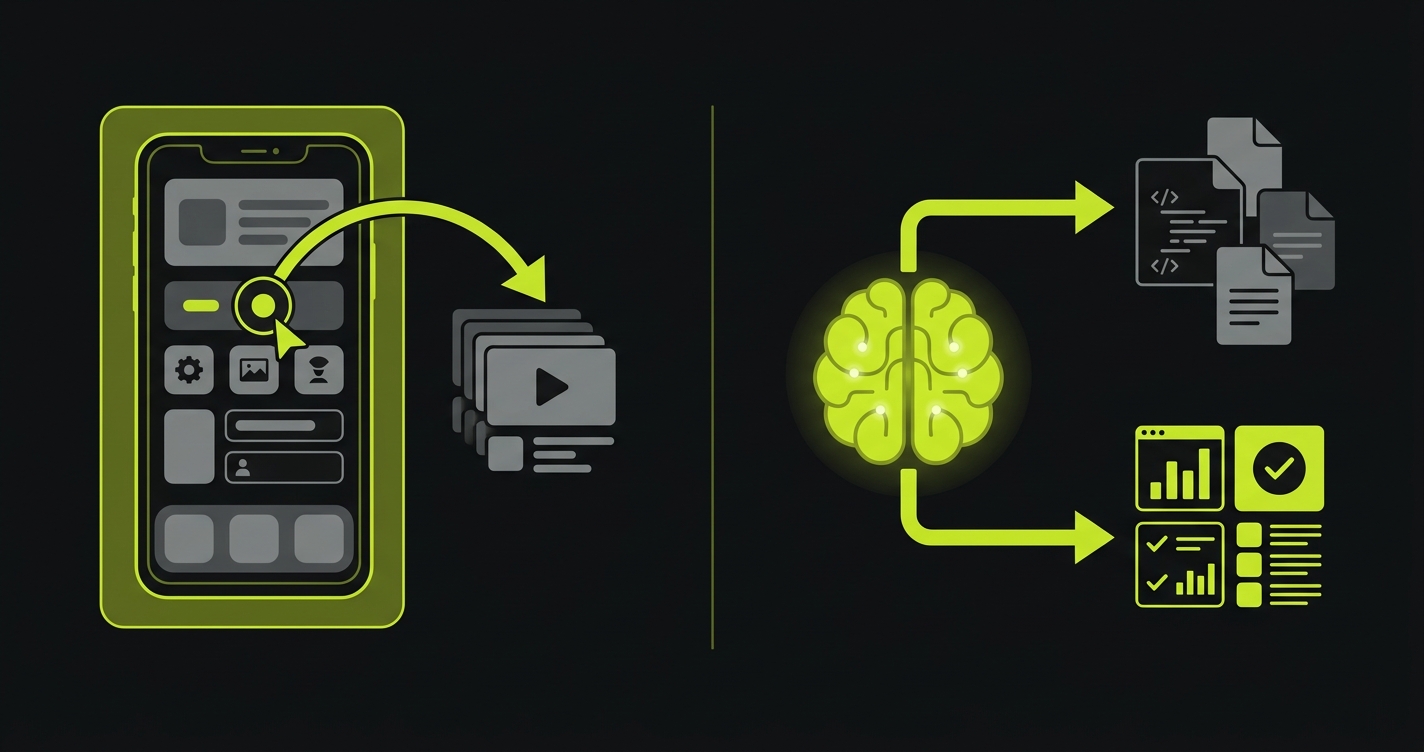
Three core problems push mobile testing teams toward open source alternatives.
Proprietary Code, Even On-Prem
Kobiton markets flexible deployment: cloud, on-premise, and hybrid. This sounds great for compliance-conscious teams. But here is what they do not emphasize: the on-premise deployment is still proprietary closed-source software. You install Kobiton's binaries on your servers, but you cannot inspect how tests execute, audit the codebase for security vulnerabilities, or customize behavior when something does not fit your workflow.
This distinction matters enormously for compliance. When your security team asks to audit the testing infrastructure for SOC 2 or HIPAA, you cannot hand them source code because you do not have it. When a test behaves unexpectedly in your on-prem environment, you cannot debug the platform itself. You file a support ticket and wait. The "on-prem" label gives a false sense of control. You are hosting their black box on your servers, not running software you actually own or understand.
For teams building healthcare, financial, or government applications, this gap between "on-prem deployment" and "true self-hosting with source code" is a dealbreaker. Compliance frameworks increasingly require that testing infrastructure runs on auditable, inspectable systems. Kobiton's closed-source on-prem does not meet that bar.
Scriptless Automation Is Basic Record-and-Replay
Kobiton promotes "scriptless automation" as a key feature. In practice, this means you manually interact with your mobile app while Kobiton records the session, then it replays those interactions as automated tests. This approach has three critical limitations.
First, someone still has to manually walk through every flow to create a test. For a team with 200 user flows across iOS and Android, that means hundreds of recording sessions. Each one requires a human tapping through the app on a real device. This does not scale.
Second, recorded tests are brittle. They capture element identifiers and screen positions at recording time. When your designer moves a button, changes a label, or restructures a screen, the recorded test breaks. Kobiton's "intelligent" element matching helps with minor changes, but significant UI updates require re-recording the entire flow. Teams end up spending more time re-recording tests than the scriptless feature was supposed to save.
Third, for anything beyond simple tap-and-verify flows, you fall back to Appium scripts. Complex conditional logic, data-driven testing, API calls between steps, multi-device scenarios: all of these require hand-written Appium code. The scriptless feature covers the easy cases and leaves the hard ones to manual scripting. One QA lead described it as "scriptless for demos, Appium for production."
Mobile-First Means Web-Second
Kobiton is built around mobile device labs. Web testing exists but it is not the core focus. If your team builds a product that spans both web and mobile, running a React web app alongside a React Native mobile app for example, Kobiton handles the mobile side well but leaves a gap on web.
You end up needing a separate tool for comprehensive cross-browser web testing. That means two platforms to manage, two sets of integrations to maintain, two billing relationships, and two different paradigms for writing and organizing tests. The operational overhead of running parallel testing stacks is significant, and it fragments your QA team's attention.
Kobiton's pricing compounds this problem. At $40-80 per user per month for team plans, you are already paying a meaningful amount for mobile-only coverage. Adding a second platform for web testing doubles your tooling budget. Enterprise pricing with custom quotes can push total costs higher, especially when you need both on-prem deployment and a broad device selection.
Autonoma: The Open Source Alternative to Kobiton
Autonoma is an open-source, AI-native testing platform that solves the problems above with a fundamentally different architecture.
Truly Open Source, Truly Self-Hosted
Full source code on GitHub. Licensed under BSL 1.1 (converts to Apache 2.0 in 2028). You can inspect every line, audit security practices, customize behavior, and self-host with no feature restrictions. The only limitation: you cannot resell Autonoma's functionality as a commercial service.
This is the critical difference from Kobiton's on-prem offering. When you self-host Autonoma, you have the actual source code. Your security team can audit it line by line. Your engineers can debug unexpected behavior by reading the runtime code. You can fork and modify it to fit your workflow. None of this is possible with Kobiton, even when it runs on your own servers.
Run Autonoma on AWS (ECS, EKS, or EC2), GCP (GKE or Compute Engine), Azure (AKS or VMs), or your own data center. Your data never leaves your infrastructure. Test credentials, application URLs, and execution logs stay on your servers. The technology stack uses standard open source components: TypeScript and Node.js 24, Playwright for web, Appium for mobile, PostgreSQL for storage, and Kubernetes for orchestration.
Self-hosting is free: no platform fees, no per-user charges, no per-device markup. You pay only for the cloud infrastructure you provision.
AI Test Generation, Not Record-and-Replay
Unlike Kobiton's scriptless automation where someone manually records interactions, Autonoma generates tests automatically from your codebase with no recording sessions needed.
How it works: Connect your GitHub repo and Autonoma's test-planner-plugin reads your routes, components, and user flows to build a knowledge base of your application. AI agents then generate comprehensive E2E test cases based on your actual code structure. Tests execute using AI vision models that see your app like a human would, which means no element identifiers or screen coordinates to break. When your UI changes, tests adapt automatically because the AI understands intent, not DOM structure.
This is a fundamental leap beyond record-and-replay. Kobiton requires a human to manually walk through each flow. Autonoma's AI reads your codebase and generates test coverage automatically. Kobiton's recorded tests break when element IDs change. Autonoma's vision-based tests understand "tap the login button" regardless of how the button is implemented. Kobiton falls back to Appium for complex flows. Autonoma handles complex scenarios natively because it understands your application architecture, not just surface-level interactions.
You do not record tests. You do not write Appium scripts. You do not maintain element locators. The AI handles the entire lifecycle: understanding your code, generating tests, executing them, and adapting when things change.
Unified Web and Mobile Coverage
Autonoma is not mobile-first or web-first. It covers both equally.
Web testing runs through Playwright, automating Chrome, Firefox, and Safari across desktop and mobile viewports with real browser automation. Mobile testing runs through Appium, supporting iOS simulators, Android emulators, and physical devices with instant spawning so you are not waiting for environments to spin up.
One platform, one integration, one billing relationship, one test organization paradigm. Your QA team works in a single system whether they are testing your web dashboard, your iOS app, or your Android app. The AI generates tests for all platforms from the same codebase analysis, maintaining consistent coverage across web and mobile without duplicating effort.
Autonoma is framework agnostic. React, Next.js, Vue, Angular, Flutter, React Native: the AI understands your application structure and generates tests accordingly, regardless of your frontend framework.
Unlimited Parallel Execution
Every Autonoma plan supports unlimited parallel execution. No per-device caps, no tier-based limits, no negotiations for additional concurrency. On the free tier that is subject to credit limits, but on cloud and self-hosted plans your test suite scales with your infrastructure.
When you self-host, parallel capacity is limited only by the compute resources you allocate. Auto-scale based on demand. Run 50 parallel mobile tests across different device configurations without waiting for device availability or paying per-device premiums.
Pricing
Free tier: 100K credits, no credit card required, unlimited parallels, all features included. Great for evaluating the platform.
Cloud ($499/month): 1M credits per month, unlimited parallels, managed infrastructure, support included. No infrastructure to manage.
Self-hosted (free platform): No ongoing platform fees. Pay only for infrastructure. No feature restrictions. Full source code control.
Kobiton vs Autonoma: Feature Comparison
| Feature | Kobiton | Autonoma |
|---|---|---|
| Open Source | Proprietary closed source | BSL 1.1 on GitHub (Apache 2.0 in 2028) |
| Self-Hosting | On-prem available but closed source | Full source code, true self-hosting |
| Test Generation | Record-and-replay (scriptless) + Appium scripts | AI generates tests from codebase automatically |
| Test Maintenance | Re-record flows or update Appium scripts | AI self-healing (zero maintenance) |
| Web Testing | Limited, mobile-first focus | Full Playwright coverage (Chrome, Firefox, Safari) |
| Mobile Testing | Extensive real device lab | Appium-based (simulators, emulators, physical devices) |
| Parallel Execution | Limited by plan and device availability | Unlimited on all plans |
| Vendor Lock-In | High (proprietary format, recorded tests) | None (tests generated from code, fork codebase) |
| Complex Test Flows | Requires Appium scripts | AI handles complex flows natively |
| Source Code Access | No access, even on-prem | Full source code on GitHub |
| Starting Price | ~$40-80/user/month | Free (100K credits) |
| Enterprise Pricing | Custom quotes required | $499/month cloud or free self-hosted |
| Data Sovereignty | Partial (on-prem but closed source) | Full (open source, auditable) |
| Framework Support | Mobile-focused (iOS, Android) | Web + Mobile (React, Vue, Flutter, React Native, etc.) |
Cost: Open Source vs Proprietary Mobile Testing
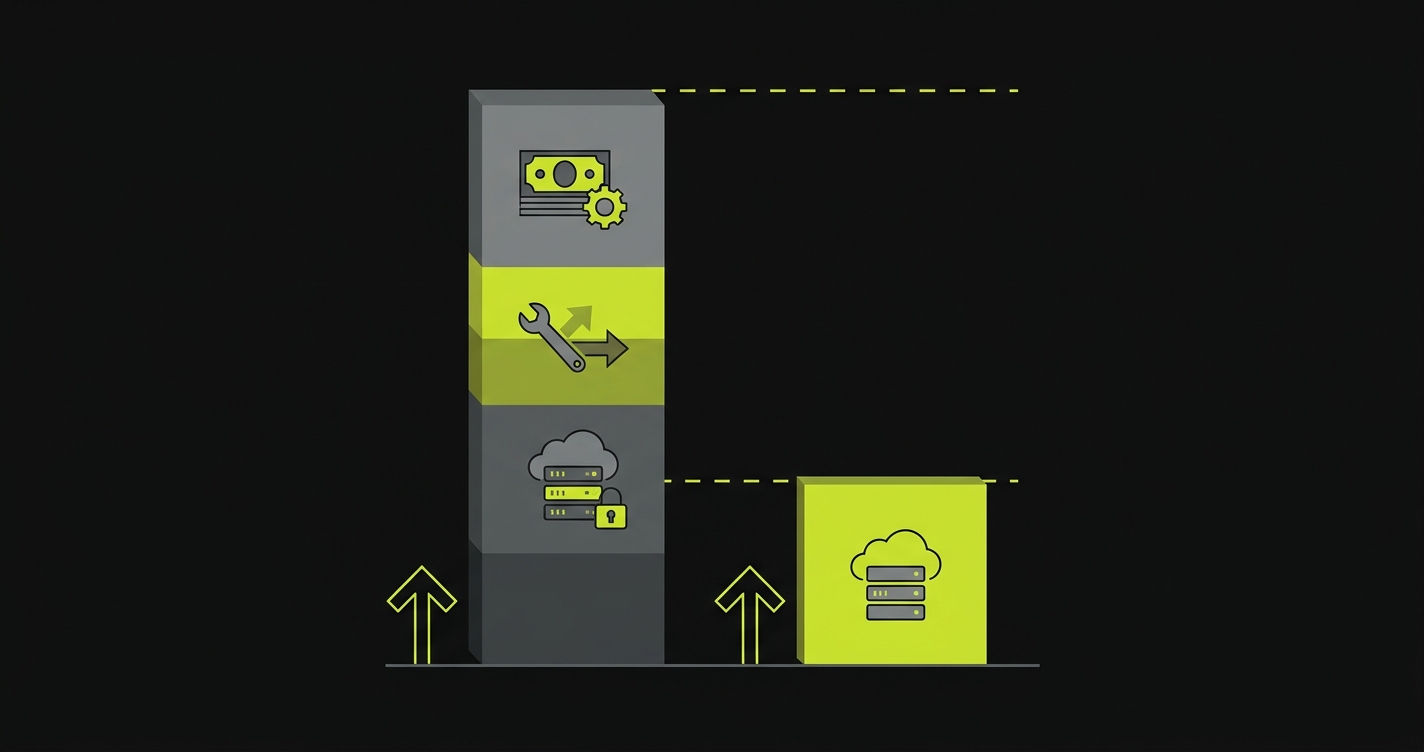
The real cost of Kobiton goes beyond the per-user subscription. Factor in the engineering hours spent recording test sessions, maintaining Appium scripts, re-recording flows after UI changes, and managing a second tool for web testing.
For a mid-sized team (10 users, continuous mobile testing), Kobiton costs approximately $40-80 per user per month ($4,800-9,600/year on team plans). Enterprise plans with on-prem deployment and broader device access push this higher with custom pricing. Add 10-15 hours per month maintaining recorded tests and Appium scripts at engineering rates ($100-150/hour), and maintenance alone costs $12,000-27,000 per year. If you also need a separate web testing tool, add that subscription on top. Over three years, the combined total (Kobiton + maintenance + web testing tool) can reach $70K-90K.
Autonoma cloud at $499/month ($18K over three years) covers both web and mobile with zero maintenance hours. AI self-healing handles UI changes automatically. That is a 74-80% cost reduction with unified coverage.
Autonoma self-hosted eliminates the platform fee. You pay only for infrastructure, typically $200-400/month. Over three years, roughly $11K: an 85-88% reduction compared to Kobiton's total cost of ownership.
The biggest savings come from three places: eliminating test recording sessions, eliminating Appium script maintenance, and consolidating web and mobile testing into a single platform.
Migrating from Kobiton to Autonoma
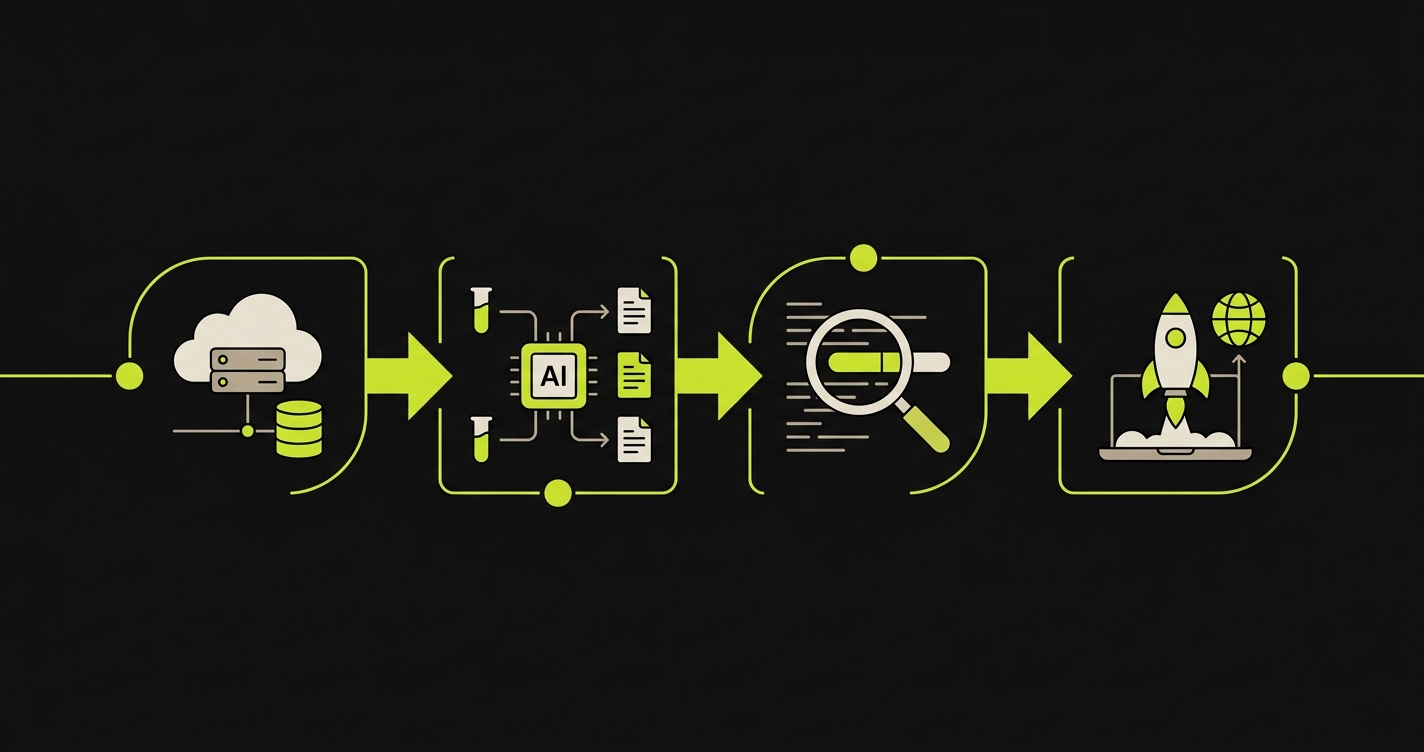
Migration is simpler than expected because you are not re-recording tests or rewriting Appium scripts. Autonoma generates tests from your codebase. Most teams complete the process in 1-2 weeks.
1. Connect your repo. Sign up for the free tier at getautonoma.com or self-host by cloning the GitHub repo and following the deployment docs. Connect your GitHub repository and let Autonoma's AI analyze your codebase. This takes minutes.
2. AI generates tests. The test-planner-plugin builds a knowledge base of your application and generates comprehensive E2E test cases automatically for both web and mobile. Start with 5-10 critical flows and run them in parallel with your existing Kobiton suite to compare results.
3. Validate coverage. Compare AI-generated test coverage against your existing Kobiton tests (both scriptless recordings and Appium scripts). Autonoma's vision-based tests are typically more resilient than Kobiton's recorded interactions because they understand intent rather than relying on element identifiers. Check for gaps, review AI-generated test plans, and iterate. Most teams achieve full coverage within days.
4. Update CI/CD and cut over. Point your CI/CD pipelines at Autonoma, train your team on reviewing AI-generated test plans, and cancel your Kobiton subscription. If you are self-hosting, provision infrastructure during the validation phase so it is ready for cutover.
The key difference: you are not re-recording 200 test sessions one by one. You connect your repo, the AI generates coverage for web and mobile, and you validate. The migration effort is about reviewing and verifying, not rebuilding.
Frequently Asked Questions
Yes. Autonoma is an open-source testing platform available on GitHub. Unlike Kobiton's proprietary closed-source model, Autonoma offers a free tier with 100K credits and full self-hosting capabilities. You can run Autonoma on your own infrastructure with no feature limitations, or use the cloud version starting free.
Yes. Autonoma is fully self-hostable with complete source code on GitHub. You can run it on your infrastructure (AWS, GCP, Azure, on-premise) with zero feature restrictions. Kobiton offers on-prem deployment but it's still proprietary closed-source software you cannot audit or modify. Autonoma gives you actual source code.
Kobiton's scriptless automation is record-and-replay: a human manually walks through flows while Kobiton records, then replays those interactions. Tests break when UI changes. Autonoma's AI generates tests directly from your codebase using vision models that understand intent. No recording sessions needed, no element identifiers to break, and tests self-heal when your app evolves.
Yes. Autonoma supports mobile testing through Appium for iOS and Android, including simulators, emulators, and physical devices. Unlike Kobiton which is primarily mobile-focused, Autonoma also provides comprehensive web testing via Playwright across Chrome, Firefox, and Safari: unified in one platform.
Yes. You don't re-record tests or rewrite Appium scripts. Connect your repo and Autonoma's AI generates tests from your codebase automatically. Migration involves validating AI-generated coverage against your existing test suite. Most teams achieve full coverage within days.
Kobiton costs approximately $40-80 per user per month for team plans, with enterprise pricing requiring custom quotes. Autonoma offers a free tier with 100K credits, then $499/month for 1M credits with unlimited parallels. Self-hosting Autonoma eliminates ongoing platform costs entirely: you pay only for infrastructure.
The Bottom Line
Kobiton is proprietary closed source (even on-prem), limited to basic record-and-replay scriptless automation, primarily mobile-focused, and requires Appium scripts for complex flows. Teams end up paying for Kobiton plus a separate web testing tool, plus engineering hours maintaining recorded tests and scripts. Total three-year cost for a mid-sized team: $70K-90K.
Autonoma solves every one of those problems. Full source code on GitHub (BSL 1.1, Apache 2.0 in 2028). True self-hosting with code you can audit and modify. AI generates and maintains tests from your codebase for both web and mobile: zero recording sessions, zero Appium scripts, zero maintenance. Unlimited parallels. No vendor lock-in. Free tier starts at 100K credits, cloud at $499/month, self-hosted at infrastructure cost only. Three-year savings: 74-88% depending on deployment model.
Ready to try open source testing?
Start Free - 100K credits, no credit card, 5-minute setup
View on GitHub - Inspect source code, self-host documentation
Book Demo - See AI test generation in action
Related Reading:


