

Quick summary: Autonoma is the open-source alternative to LambdaTest (now TestMu AI). Unlike LambdaTest's proprietary cloud platform (~$15-25/user/month, limited parallels, no source code), Autonoma generates tests automatically from your codebase using AI agents. Full source code on GitHub (BSL 1.1, Apache 2.0 in 2028), self-hosting on your infrastructure, vision-based self-healing, unlimited parallel execution, no vendor lock-in. Free tier: 100K credits. Cloud: $499/month. Self-hosted: no ongoing costs.
LambdaTest built its reputation as the more affordable alternative to BrowserStack. And for years, that positioning worked. Teams migrated to LambdaTest for cheaper cloud Selenium and Cypress grids, broader browser coverage, and a friendlier pricing model. Then in 2025, the company rebranded to TestMu AI, layering proprietary AI features on top of the same closed-source SaaS model.
The rebrand signals where the industry is heading: AI-powered testing. But TestMu AI's approach keeps everything proprietary. You cannot inspect the AI models, self-host the platform, or audit how your data is processed. The AI features are black boxes bolted onto a cloud testing grid. For teams that need transparency, infrastructure control, or freedom from vendor lock-in, the LambdaTest-to-TestMu evolution solves the wrong problems.
Autonoma takes the opposite approach. Full source code on GitHub, self-hosting on your infrastructure or our cloud, AI that generates and maintains tests automatically from your codebase, unlimited parallel execution, and zero vendor lock-in. This guide covers where LambdaTest falls short, how Autonoma solves those problems, and how to switch.
Where LambdaTest Falls Short
Three fundamental problems push engineering teams toward open source alternatives, and LambdaTest's TestMu AI rebrand does not fix any of them.
Closed Source with No Self-Hosting
LambdaTest is closed source. You cannot inspect the platform code, audit how tests execute, or customize runtime behavior. When their infrastructure has an incident, you open a support ticket and wait. There is no way to debug the platform, reproduce issues in your own environment, or verify that their execution environment matches production.
Every test run sends your application URLs, login credentials, and potentially sensitive data to LambdaTest's cloud. There is no self-hosting option. For teams subject to HIPAA, PCI DSS, SOC 2, or data residency requirements, this is frequently a dealbreaker. The TestMu AI rebrand added AI features, but the AI itself is another black box running on their infrastructure. You cannot audit how your codebase data feeds into their models, where it is stored, or who else can access it.
Pricing Tiers and Parallel Limits
LambdaTest's pricing starts around $15-25 per user per month for team plans, which is cheaper than BrowserStack. But "cheaper" and "cost-effective" are different things. The team plans cap parallel execution at 2-5 concurrent tests depending on your tier. Increasing parallels requires upgrading to higher tiers or negotiating enterprise contracts.
Consider a growing team with 400 E2E tests averaging 1 minute each. At 5 parallels, the full suite takes roughly 80 minutes. To get that under 20 minutes, you need 20+ parallels, but LambdaTest ties parallel count to pricing. Every parallel increase means a pricing conversation, a contract change, or an enterprise negotiation. The per-user pricing model also means costs scale linearly with headcount. A team of 20 engineers at $20/user/month pays $4,800/year before hitting the parallel wall.
LambdaTest also offers a generous free tier for individual developers, which is genuinely useful for open source contributors and personal projects. But the free tier does not translate to team-scale testing. Once you need multiple parallels, CI/CD integration, and team collaboration, you are back in the paid tier with the same limitations.
Manual Test Writing and Maintenance
LambdaTest runs tests you write. It supports Selenium, Cypress, Playwright, and Appium, which means you have framework flexibility. But you still write every test, maintain every selector, and fix every broken locator when your UI changes.
The TestMu AI rebrand introduced AI-assisted features, like KaneAI for test generation and intelligent test analytics. These features are steps forward, but they operate within the same paradigm: you still manage test scripts, and the AI assists rather than replaces the manual work. KaneAI helps generate tests from natural language descriptions, but the generated tests still use traditional selectors that break when your UI evolves. The AI is an assistant, not an autonomous system.
One engineering lead told us: "We switched to LambdaTest to save money on BrowserStack. We saved on the subscription, but we're still spending the same engineering hours maintaining 300+ test scripts. The real cost was never the platform fee."
Vendor lock-in compounds the problem. Your CI/CD pipelines reference LambdaTest's hub URLs and API keys. Your test configurations use LambdaTest-specific capabilities and tunnel settings. Migrating away means rewriting configurations, updating every pipeline, and potentially restructuring your test infrastructure.
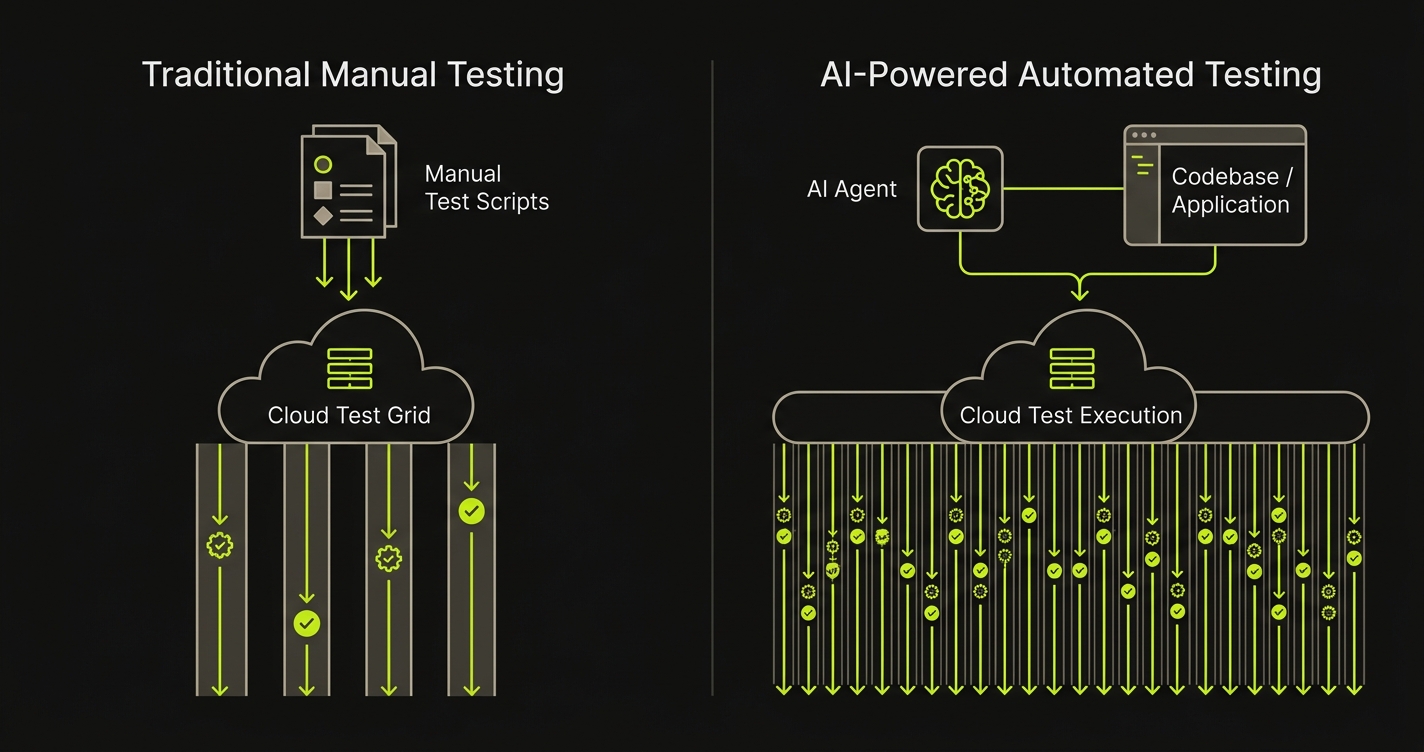
Autonoma: The Open Source Alternative to LambdaTest
Autonoma is an open-source, AI-native testing platform built to solve the problems above. Where LambdaTest provides a cloud grid for running your tests, Autonoma provides an autonomous system that generates, executes, and maintains tests for you.
Open Source and Self-Hosting
Full source code on GitHub. Licensed under BSL 1.1 (converts to Apache 2.0 in 2028). You can use it in production, inspect every line, audit security, and self-host with no feature restrictions. The only limitation: you cannot resell Autonoma's functionality as a commercial service.
This transparency directly addresses the trust problem with LambdaTest's AI features. When TestMu AI processes your codebase, you cannot see how. When Autonoma's AI analyzes your repository, you can read the source code that does the analysis. Every model interaction, every test generation step, every self-healing decision is auditable. For compliance-driven teams, this is not a nice-to-have. It is a requirement.
Run Autonoma on your infrastructure. AWS (ECS, EKS, or EC2), GCP (GKE or Compute Engine), Azure (AKS or VMs), or your own data center. Your data never leaves your network. Tests run inside your VPC. Credentials stay on your servers. Application URLs are never exposed to external systems. Self-hosting is free: no platform fees, no per-user charges, no per-parallel markup.
AI-Powered Autonomous Testing
Unlike LambdaTest where you write tests and the platform runs them, Autonoma generates tests automatically from your codebase.
How it works: You connect your GitHub repo, and Autonoma's test-planner-plugin reads your routes, components, and user flows to build a knowledge base of your application. AI agents then generate comprehensive E2E test cases based on your actual code structure, with no manual test writing required. Tests execute using AI vision models that see your app like a human would, which means no CSS selectors or XPaths to break. When your UI changes, tests adapt automatically because the AI understands intent, not DOM structure.
This is fundamentally different from LambdaTest's KaneAI approach. KaneAI generates selector-based tests from natural language prompts. Autonoma's AI reads your actual codebase and generates vision-based tests that do not rely on selectors at all. A button that changes from btn-submit to cta-primary breaks a KaneAI-generated Selenium test. It does not break an Autonoma vision-based test that understands "click the submit button."
You do not write tests. You do not maintain selectors. You do not update test scripts when features change. The AI handles the entire testing lifecycle. Your QA team shifts from maintaining scripts to reviewing test plans and analyzing results: higher-leverage work that actually improves product quality.
Unlimited Parallel Execution
Every plan (free tier, cloud, and self-hosted) supports unlimited parallel execution. On the free tier that is subject to credit limits, but on cloud and self-hosted plans your test suite scales with your infrastructure. No negotiations, no pricing tiers, no artificial ceilings.
This removes the bottleneck that frustrates LambdaTest users as their suites grow. Instead of negotiating enterprise contracts to increase parallels from 5 to 20, you spin up as many parallel workers as your infrastructure supports. When you self-host, parallel capacity is limited only by the compute resources you allocate.
Cross-Platform Coverage
Autonoma uses Playwright for web testing (Chrome, Firefox, Safari across desktop and mobile viewports) and Appium for mobile testing (iOS simulators, Android emulators, physical devices). Instant environment spawning means you are not waiting for browser sessions to spin up.
LambdaTest offers 3,000+ browser/OS combinations, including older browsers and niche configurations. In practice, most teams test on 10-15 essential configurations. Autonoma covers that 95% use case. If you genuinely need IE11 compatibility testing or obscure Android device models, LambdaTest's breadth is unmatched. But ask yourself: are you actively testing those configurations in CI, or do they sit unused in your plan?
No Vendor Lock-In
Tests are generated from your codebase, not stored in a proprietary format. There are no LambdaTest hub URLs or tunnel configurations woven into your CI/CD pipeline. Fork the project if needed. Switch cloud providers or self-host anytime. Your testing capability is never held hostage by a vendor relationship.
Pricing
Free tier: 100K credits, no credit card required, unlimited parallels, all features included. Good for small teams, startups, and evaluating the platform.
Cloud ($499/month): 1M credits per month, unlimited parallels, managed infrastructure, support included. No infrastructure to manage. Autonoma handles everything.
Self-hosted (free platform): No ongoing platform fees. Pay only for infrastructure (AWS/GCP/Azure). No feature restrictions. Full control over data, environment, and scaling.
LambdaTest vs Autonoma: Feature Comparison
| Feature | LambdaTest (TestMu AI) | Autonoma |
|---|---|---|
| Open Source | Proprietary closed source | BSL 1.1 on GitHub (Apache 2.0 in 2028) |
| Self-Hosting | Cloud only, no self-hosting | Self-host anywhere (AWS, GCP, Azure, on-prem) |
| Parallel Execution | Limited by plan tier (2-5 on team plans) | Unlimited on all plans |
| Test Generation | KaneAI generates selector-based tests | AI generates vision-based tests from codebase |
| Test Maintenance | Manual (selectors break on UI changes) | AI self-healing (zero maintenance) |
| AI Transparency | Proprietary black-box AI | Open source AI, fully auditable |
| Vendor Lock-In | Moderate (hub URLs, tunnel configs, API keys) | None (tests from code, fork anytime) |
| Browser Coverage | 3,000+ browser/OS combinations | Chrome, Firefox, Safari, iOS, Android |
| Framework Support | Selenium, Cypress, Playwright, Appium | Framework-agnostic (AI reads any codebase) |
| Starting Price | Free (limited), ~$15/user/month (teams) | Free (100K credits, unlimited parallels) |
| Cloud Price | $15-25/user/month (scales with headcount) | $499/month flat (unlimited parallels) |
| Self-Hosted Cost | Not available | Infrastructure only (no platform fees) |
| Data Sovereignty | Data on LambdaTest servers | Data stays on your infrastructure |
| Source Code Access | No access, proprietary | Full source code on GitHub |
Cost: Open Source vs Proprietary
LambdaTest is cheaper than BrowserStack, but the total cost of ownership tells a different story when you factor in test maintenance.
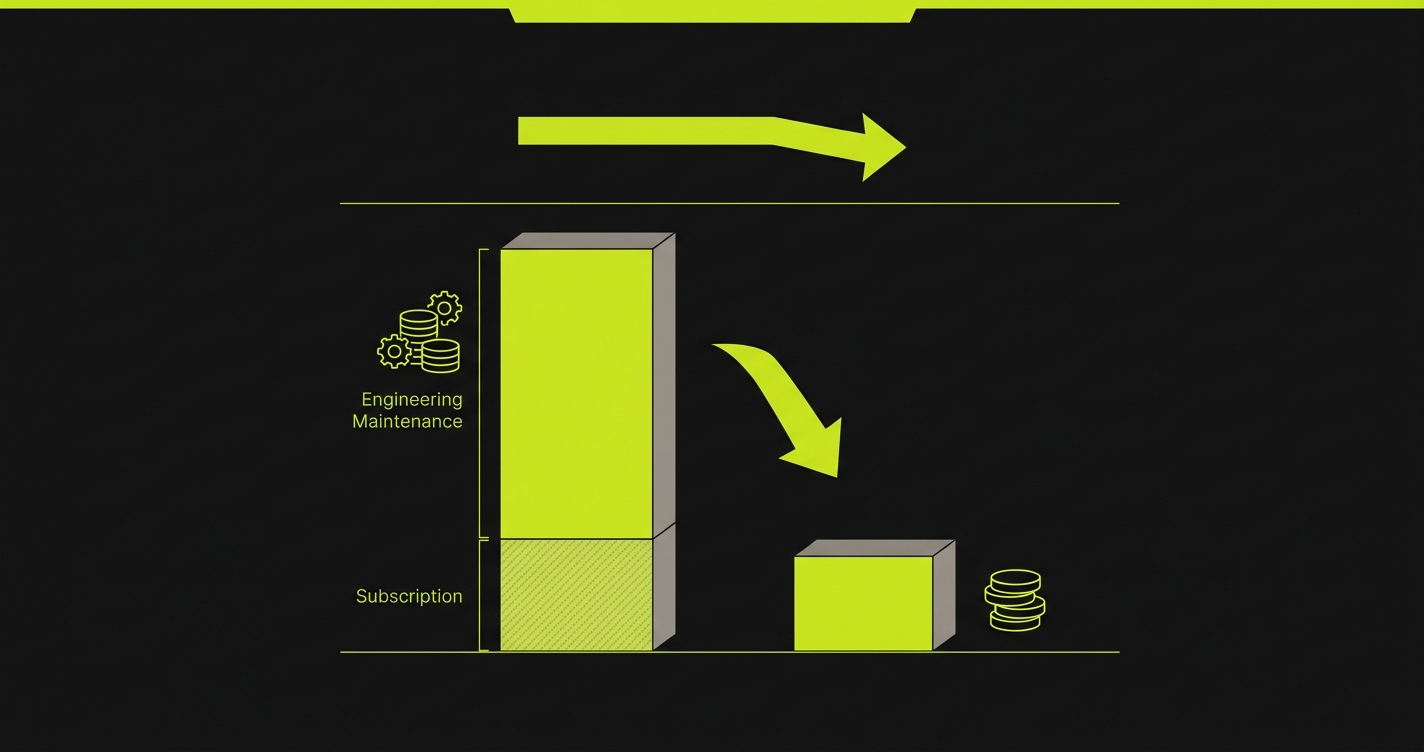
For a mid-sized team (15 engineers), LambdaTest costs roughly $15-25/user/month, or $2,700-4,500/year. That is genuinely more affordable than BrowserStack. But test maintenance is the same regardless of which cloud grid you use. Teams still spend 10-15 hours/month updating broken selectors, debugging flaky tests, and rewriting scripts after UI changes, at $100-150/hour engineering rates. Maintenance alone costs $12,000-27,000 per year. Over three years, subscription plus maintenance totals $35K-55K.
Autonoma cloud is $499/month ($18K over three years) with zero maintenance hours. AI self-healing handles UI changes automatically. That represents a 49-67% cost reduction compared to LambdaTest's total cost of ownership.
Autonoma self-hosted eliminates the platform fee entirely. Infrastructure costs run $200-400/month on AWS, GCP, or Azure. Over three years, roughly $11K total: a 69-80% reduction.
The savings are smaller than the BrowserStack comparison because LambdaTest's subscription is already lower. But the maintenance cost is identical. Regardless of whether your cloud grid costs $150/month or $25/user/month, the $12K-27K annual maintenance burden remains. Autonoma eliminates that line item entirely through AI self-healing, and that is where the real savings compound.
Migrating from LambdaTest to Autonoma
Migration is straightforward because you are not rewriting tests. Autonoma generates them from your codebase. Most teams complete the process in 1-2 weeks.
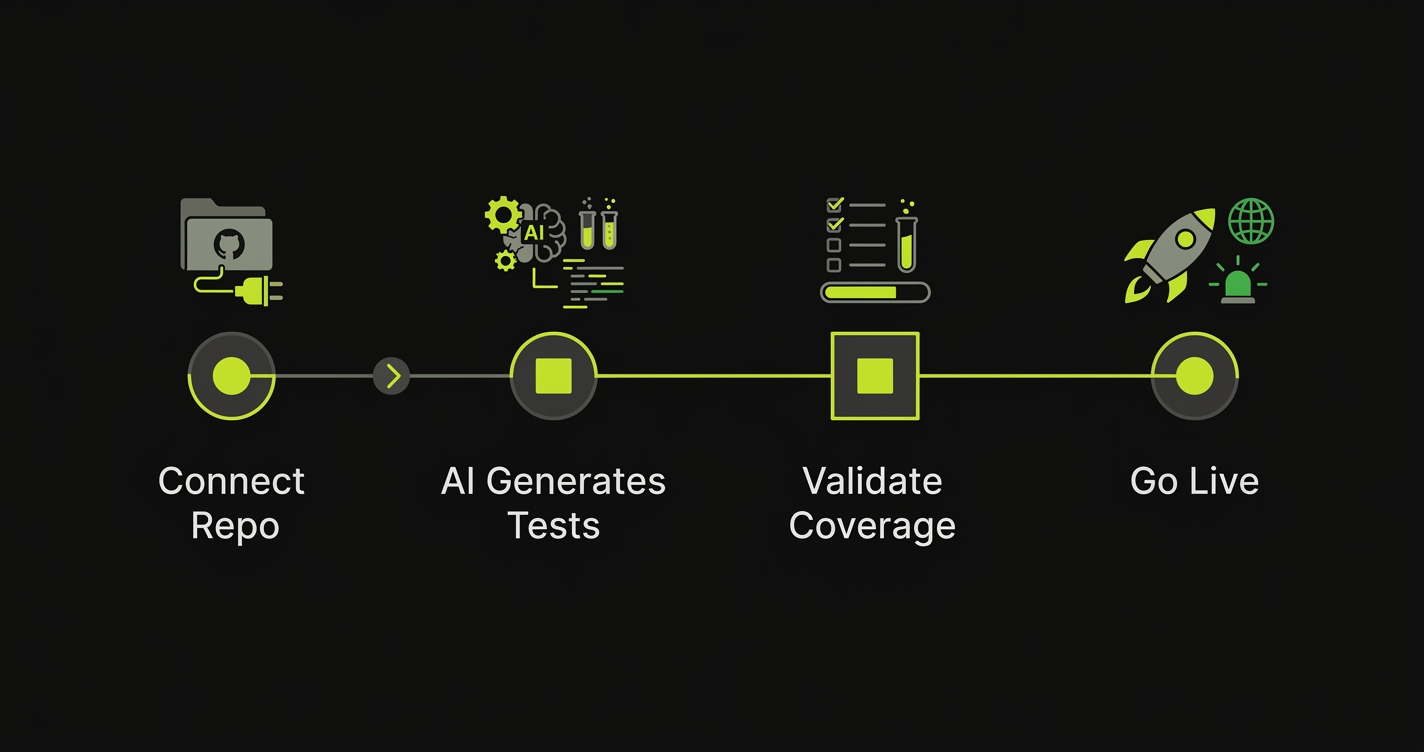
1. Connect your repo. Sign up for the free tier at getautonoma.com or self-host by cloning the GitHub repo and following the deployment docs. Connect your GitHub repository and let Autonoma's AI analyze your codebase (routes, components, and user flows).
2. AI generates tests. The test-planner-plugin builds a knowledge base of your application and generates comprehensive E2E test cases automatically. Start with 5-10 critical flows and run them alongside your existing LambdaTest suite to compare reliability and speed side by side. This dual-run approach is risk-free.
3. Validate coverage. Compare AI-generated test coverage against your existing Selenium/Cypress/Playwright suite. Autonoma's vision-based tests are often more resilient than selector-based tests because they understand intent, not DOM structure. Review the AI-generated test plans, check for gaps, and iterate. Most teams achieve full coverage within days because the AI generates tests from your actual codebase.
4. Update CI/CD and cut over. Replace LambdaTest hub URLs and tunnel configurations in your CI/CD pipelines with Autonoma endpoints. Train your team on reviewing AI-generated test plans. Cancel your LambdaTest subscription. If you are self-hosting, provision your infrastructure during the validation phase so the cutover is seamless.
The key difference from a traditional migration: you are not porting 400 Selenium tests from LambdaTest's grid to another grid. You connect your repo, the AI generates coverage, and you validate. The effort is reviewing and verifying, not rebuilding.
Frequently Asked Questions
Yes. Autonoma is an open-source testing platform available on GitHub. Unlike LambdaTest's proprietary closed-source model, Autonoma offers a free tier with 100K credits and full self-hosting capabilities. You can run Autonoma on your own infrastructure with no feature limitations, or use the cloud version starting free.
LambdaTest rebranded to TestMu AI in 2025, adding AI-powered features like KaneAI to its cloud testing platform. The core product remains a proprietary, closed-source SaaS with no self-hosting option. The AI features are proprietary additions; you cannot audit or customize them.
LambdaTest costs approximately $15-25/user/month for team plans with limited parallel testing, scaling with headcount. Autonoma offers a free tier with 100K credits, then a flat $499/month for 1M credits with unlimited parallels regardless of team size. Self-hosting Autonoma eliminates ongoing cloud costs entirely.
Yes. You don't rewrite tests; you connect your repo and Autonoma's AI generates tests from your codebase automatically. Migration involves validating AI-generated coverage against your existing test suite. Most teams achieve full coverage within days. Autonoma's vision-based tests are more resilient than selector-based LambdaTest tests.
KaneAI generates selector-based tests from natural language prompts. Autonoma's AI reads your actual codebase (routes, components, user flows) and generates vision-based tests that don't rely on selectors. Critically, Autonoma's AI is open source: you can inspect, audit, and customize it. KaneAI is a proprietary black box.
Autonoma supports Chrome, Firefox, Safari (web) and iOS/Android (mobile) through Playwright and Appium. LambdaTest offers 3,000+ browser/OS combinations, but most teams only test 10-15 essential configurations. Autonoma covers the 95% use case at a fraction of the cost.
The Bottom Line
LambdaTest (TestMu AI) is cheaper than BrowserStack, but it shares the same fundamental limitations: closed source, cloud-only, limited parallels, manual test writing, and vendor lock-in. The 2025 AI rebrand added proprietary black-box features without addressing any of these structural problems.
Autonoma solves every one of them. Full source code on GitHub (BSL 1.1, Apache 2.0 in 2028). Self-host on your infrastructure or use our cloud. AI generates and maintains tests from your codebase: zero manual writing, zero maintenance. Unlimited parallels on every plan. No vendor lock-in. Free tier starts at 100K credits, cloud at $499/month, self-hosted at infrastructure cost only. Three-year savings: 49-80% depending on deployment model.
Ready to try open source testing?
Start Free - 100K credits, no credit card, 5-minute setup
View on GitHub - Inspect source code, self-host documentation
Book Demo - See AI test generation in action
Related Reading: