
Quick summary: Autonoma is the open-source alternative to Mobot. Unlike Mobot's physical-robot approach (enterprise pricing $10K-50K+/month, mobile-only, limited by hardware), Autonoma uses AI vision models to test your app virtually. Full source code on GitHub (BSL 1.1, Apache 2.0 in 2028), self-hosting on your infrastructure, AI generates tests from your codebase, vision-based self-healing, unlimited parallel execution, web + mobile coverage. Free tier: 100K credits. Cloud: $499/month. Self-hosted: no ongoing costs.
Mobot has built something genuinely novel: physical robots with mechanical fingers that tap on real phone screens to test mobile apps. It is a creative solution to a real problem. But as teams scale their testing needs, the physics of that approach become the bottleneck. Robots take real-world time to physically interact with devices. Adding parallelism means buying more robots. And the entire model is limited to mobile, leaving web applications uncovered.
For teams looking for realistic, human-perspective testing without the constraints of physical hardware, there is now an open-source path. Autonoma achieves the same "sees the app like a human" approach using AI vision models, but runs virtually at machine speed, scales to unlimited parallels, covers web and mobile, and gives you full source code on GitHub.
This guide breaks down where Mobot's robotic model falls short, how Autonoma solves those problems with AI, and how to get started.
Where Mobot Falls Short
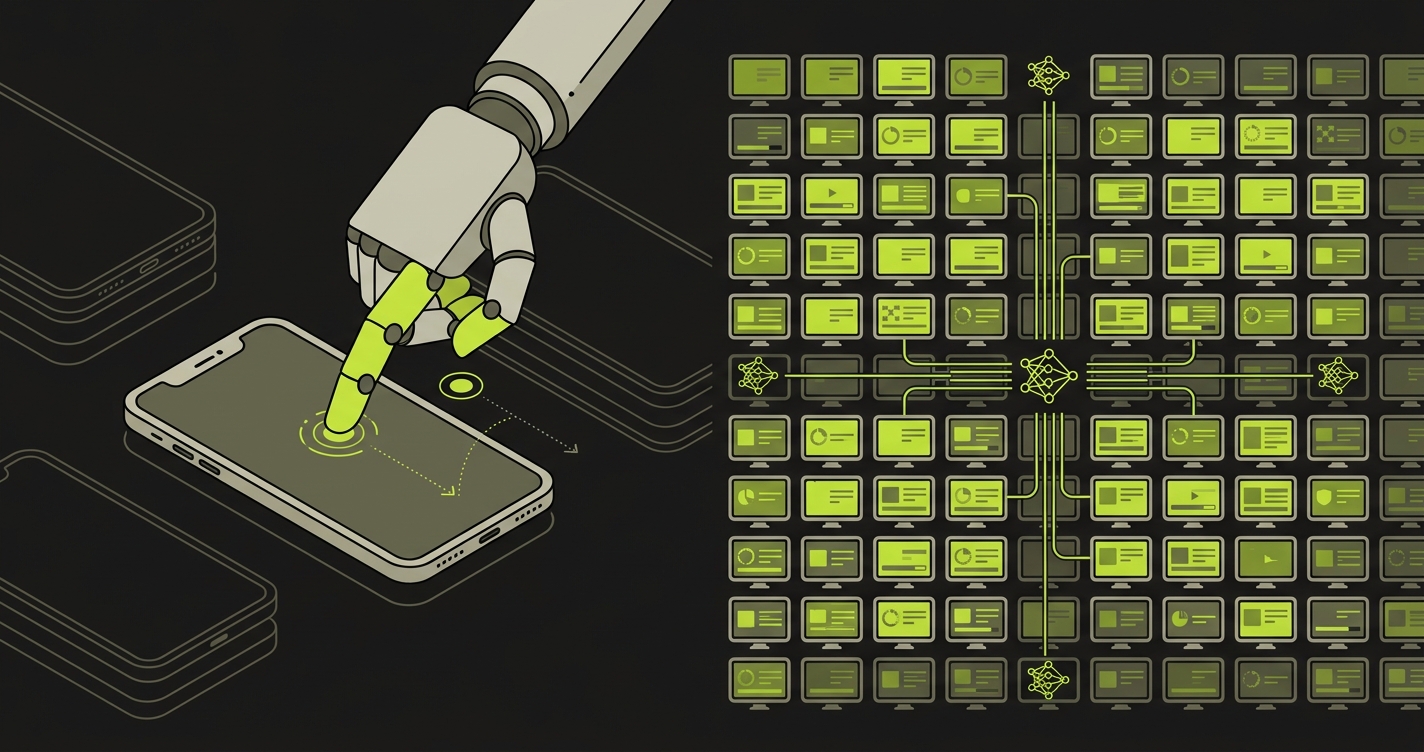
Mobot's physical robot approach is innovative, but three fundamental constraints limit its viability for scaling QA teams.
Physical Robots Do Not Scale
Each Mobot test requires a physical robotic arm to interact with a real device screen in real time. A button tap takes the same amount of time for a robot as it does for a human. A 30-step checkout flow takes 2-3 minutes of physical interaction per device, per test.
Want to run 50 tests in parallel? You need 50 physical robots, 50 devices, and the lab space to house them. This is not a configuration change or a pricing tier upgrade. It is a physical infrastructure problem. Robot arms need space, power, cooling, calibration, and maintenance. Scaling from 5 parallel tests to 50 means a 10x increase in hardware, lab space, and operational overhead.
Compare this with virtual testing, where spinning up 50 parallel test instances means provisioning 50 containers. No physical space needed. No hardware procurement. No maintenance crew. The scaling curve is fundamentally different: linear cost for physical robots versus near-zero marginal cost for virtual instances.
One engineering lead put it plainly: "We loved the concept of robotic testing, but when we needed to go from 10 parallel tests to 100, the quote came back at 10x the cost. Virtual AI testing gave us 100 parallels on day one."
Extremely Expensive
Mobot does not publish pricing on their website. That alone signals enterprise-level costs. Industry estimates and team reports consistently place Mobot contracts in the range of $10,000 to $50,000+ per month, depending on the number of robots, devices, and test volume.
This pricing reflects real costs on Mobot's side. Physical robots are expensive to build, maintain, and operate. Lab space in major cities is not cheap. Technicians need to calibrate robots, replace worn components, and manage device fleets. These operational costs get passed directly to customers.
For most engineering teams, this price point limits Mobot to a narrow use case: final validation on a handful of critical flows. It is not economically viable for comprehensive test coverage. You cannot afford to run hundreds of tests across dozens of scenarios when each test requires dedicated physical hardware time.
Limited to Mobile Only
Mobot tests mobile applications exclusively. If your product includes a web application, a desktop experience, an admin dashboard, or any browser-based interface, Mobot cannot test it. You need a separate testing solution for everything that is not a native mobile app.
For teams building cross-platform products (which is most teams today), this creates fragmentation. Your mobile tests run on physical robots through Mobot. Your web tests run on a completely different platform. Test results live in different dashboards. Coverage gaps appear at the seams between platforms. Your QA team manages two entirely separate testing workflows.
Modern products are rarely mobile-only. Even mobile-first companies have web-based admin panels, onboarding flows, payment portals, and support dashboards. Testing only the mobile surface while ignoring web surfaces leaves critical paths unverified.
Autonoma: The Open Source Alternative to Mobot
Autonoma is an open-source, AI-native testing platform that achieves the same "real user perspective" testing that Mobot provides, but without physical hardware constraints.
Open Source and Self-Hosting
Full source code on GitHub. Licensed under BSL 1.1 (converts to Apache 2.0 in 2028). You can use it in production, inspect every line, audit security, and self-host with no feature restrictions. The only limitation: you cannot resell Autonoma's functionality as a commercial service.
Mobot is entirely proprietary. Their testing capability is inseparable from their physical hardware. You cannot inspect how tests are executed, audit their process, or run anything on your own infrastructure. When you stop paying Mobot, your testing capability disappears entirely because it lives in their lab, on their robots, controlled by their systems.
With Autonoma, you own the platform. Self-host on AWS (ECS, EKS, or EC2), GCP (GKE or Compute Engine), Azure (AKS or VMs), or your own data center. Your test data, application credentials, and execution logs never leave your infrastructure. Fork the project, modify it, extend it. Your testing capability is never held hostage by a vendor relationship or a hardware dependency.
AI-Powered Testing Without Robots
Mobot's key selling point is that physical robots interact with apps "like a real user." The insight is valid: testing should see the app the way humans see it, not through DOM selectors and XPaths. But physical robots are not the only way to achieve that perspective.
Autonoma's AI vision models perceive your application visually, the same way a human (or a Mobot robot) would. The AI sees buttons, forms, navigation elements, and interactive components through computer vision, not CSS selectors. It understands "click the checkout button" by recognizing the button visually, exactly as a human finger (or a Mobot robotic finger) would find it on screen.
The critical difference: Autonoma does this virtually, at machine speed. A vision model can process a screen in milliseconds. A physical robot arm takes seconds to move, position, and tap. Multiply that across hundreds of test steps and thousands of test runs, and the speed difference becomes enormous.
How it works: Connect your GitHub repo and Autonoma's test-planner-plugin analyzes your routes, components, and user flows. AI agents generate comprehensive E2E test cases from your actual code structure. Tests execute using vision models that see your app like a human would. When your UI changes, tests adapt automatically because the AI understands intent, not pixel positions or DOM structure.
You do not write tests. You do not maintain them. You do not need a robotic arm. The AI handles the entire testing lifecycle.
Unlimited Parallel Execution
Every Autonoma plan (free tier, cloud, and self-hosted) supports unlimited parallel execution. Want to run 200 tests simultaneously? Spin up 200 containers. No additional hardware. No lab expansion. No waiting for robots to become available.
This is the most fundamental advantage over Mobot's physical model. Parallelism in Mobot requires proportional physical hardware. Parallelism in Autonoma requires proportional compute resources, which are elastic, on-demand, and orders of magnitude cheaper than robotic arms.
On the free tier, parallel execution is subject to credit limits. On cloud and self-hosted plans, the only limit is the infrastructure you provision. Auto-scale based on demand: spin up 50 parallels during CI/CD runs and scale back to zero when idle. You pay for compute time, not idle robot time.
Cross-Platform Coverage
Autonoma covers the full application surface:
Web testing through Playwright: Chrome, Firefox, and Safari across desktop and mobile viewports. Real browser automation with full JavaScript execution, network interception, and visual validation.
Mobile testing through Appium: iOS simulators, Android emulators, and physical devices. Native app testing with the same AI vision approach that understands your UI visually.
This means one platform, one dashboard, one test suite covering your entire product. No separate tools for web and mobile. No fragmented coverage reports. No gaps at the seams between platforms.
Mobot covers mobile only. If you have a web application (and you almost certainly do), you need a second testing tool alongside Mobot. With Autonoma, you need nothing else.
No Vendor Lock-In
Mobot creates deep vendor lock-in through hardware dependency. Your tests run on their robots, in their lab, using their proprietary systems. Leave Mobot and you start from zero with no tests, no infrastructure, and no way to replicate what they built.
Autonoma generates tests from your codebase, not stored in a proprietary format or tied to specific hardware. Fork the project if needed. Switch cloud providers or self-host at any time. Your testing capability belongs to you.
Pricing
Free tier: 100K credits, no credit card required, unlimited parallels, all features included. Ideal for evaluation, small teams, and startups.
Cloud ($499/month): 1M credits per month, unlimited parallels, managed infrastructure, support included. No hardware to manage. No lab space to lease.
Self-hosted (free platform): No ongoing platform fees. Pay only for cloud infrastructure (AWS/GCP/Azure). No feature restrictions. Full control.
Compare this to Mobot's enterprise-only pricing ($10,000-50,000+/month) and the economics are clear. Autonoma's cloud plan costs roughly what one day of Mobot service costs per month.
Mobot vs Autonoma: Feature Comparison
| Feature | Mobot | Autonoma |
|---|---|---|
| Open Source | Proprietary hardware + software | BSL 1.1 on GitHub (Apache 2.0 in 2028) |
| Self-Hosting | Not possible (requires physical robots) | Self-host anywhere (AWS, GCP, Azure, on-prem) |
| Testing Method | Physical robotic arms tapping screens | AI vision models (virtual, machine speed) |
| Parallel Execution | Limited by number of physical robots | Unlimited on all plans |
| Test Speed | Real-time physical interaction (seconds per step) | Virtual execution (milliseconds per step) |
| Web Testing | Not supported | Chrome, Firefox, Safari via Playwright |
| Mobile Testing | Physical devices via robotic arms | iOS/Android via Appium (simulators, emulators, physical) |
| Test Generation | Manual test script creation | AI generates tests from your codebase |
| Self-Healing | Limited (hardware-dependent) | Vision-based AI self-healing |
| Scaling Model | Buy more robots (linear hardware cost) | Spin up containers (elastic compute) |
| Starting Price | Enterprise only ($10K+/month) | Free (100K credits) |
| Vendor Lock-In | High (proprietary hardware dependency) | None (open source, fork anytime) |
| Data Sovereignty | Tests run in Mobot's physical lab | Data stays on your infrastructure |
| Source Code Access | No access | Full source code on GitHub |
Cost: Open Source vs Robotic Testing
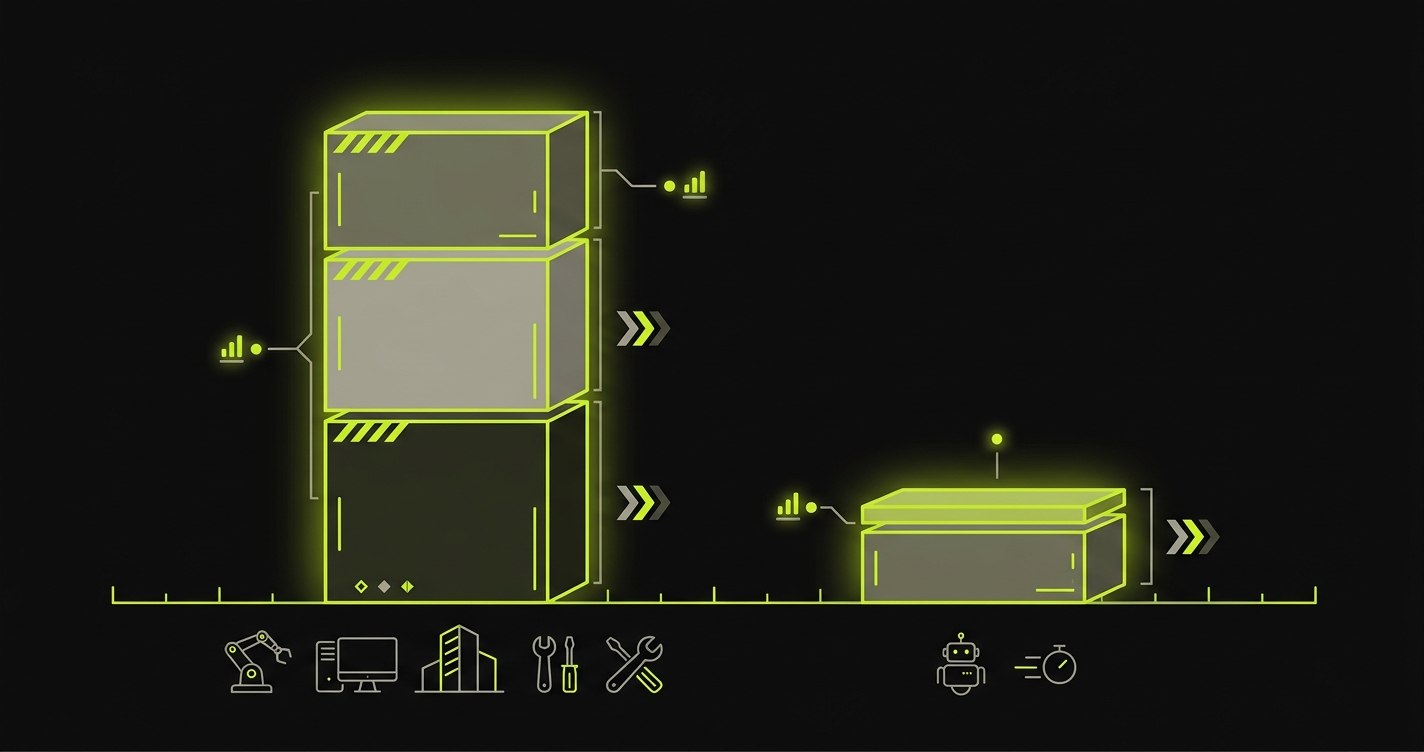
The cost difference between physical robot testing and AI virtual testing is not incremental. It is a fundamentally different cost structure.
Mobot's cost model is driven by physical hardware. Each robot arm costs thousands to build and maintain. Lab space in cities where Mobot operates runs $50-100+ per square foot annually. Technicians calibrate robots, replace components, and manage device inventories. These costs scale linearly: twice the test volume requires roughly twice the robots, space, and staff. At enterprise pricing of $10,000-50,000+/month, a three-year engagement costs $360K-1.8M.
Autonoma Cloud ($499/month) eliminates every physical cost. No robots. No lab space. No technicians. No hardware procurement. AI generates tests from your codebase and runs them in virtual environments at machine speed. Three-year cost: $18K. That is a 95-99% reduction compared to Mobot.
Autonoma Self-Hosted goes further. No platform fees at all. You provision cloud infrastructure (typically $200-400/month depending on parallel needs) and run Autonoma on your own servers. Three-year cost: roughly $7K-14K in infrastructure. That is a 96-99% reduction.
But the headline cost comparison understates the real savings. With Mobot, you are also paying for:
- Idle robot time: Robots sitting unused between test runs still cost money (space, power, depreciation)
- Hardware failures: Mechanical components wear out and need replacement
- Device management: Real phones need charging, OS updates, and replacement when they age out
- Geographic constraints: Your robots are in one physical location, adding latency for global teams
None of these costs exist with virtual AI testing. Containers spin up on demand and disappear when idle. There is no hardware to fail. No devices to charge. No geographic limitation on where tests run.
Migrating from Mobot to Autonoma
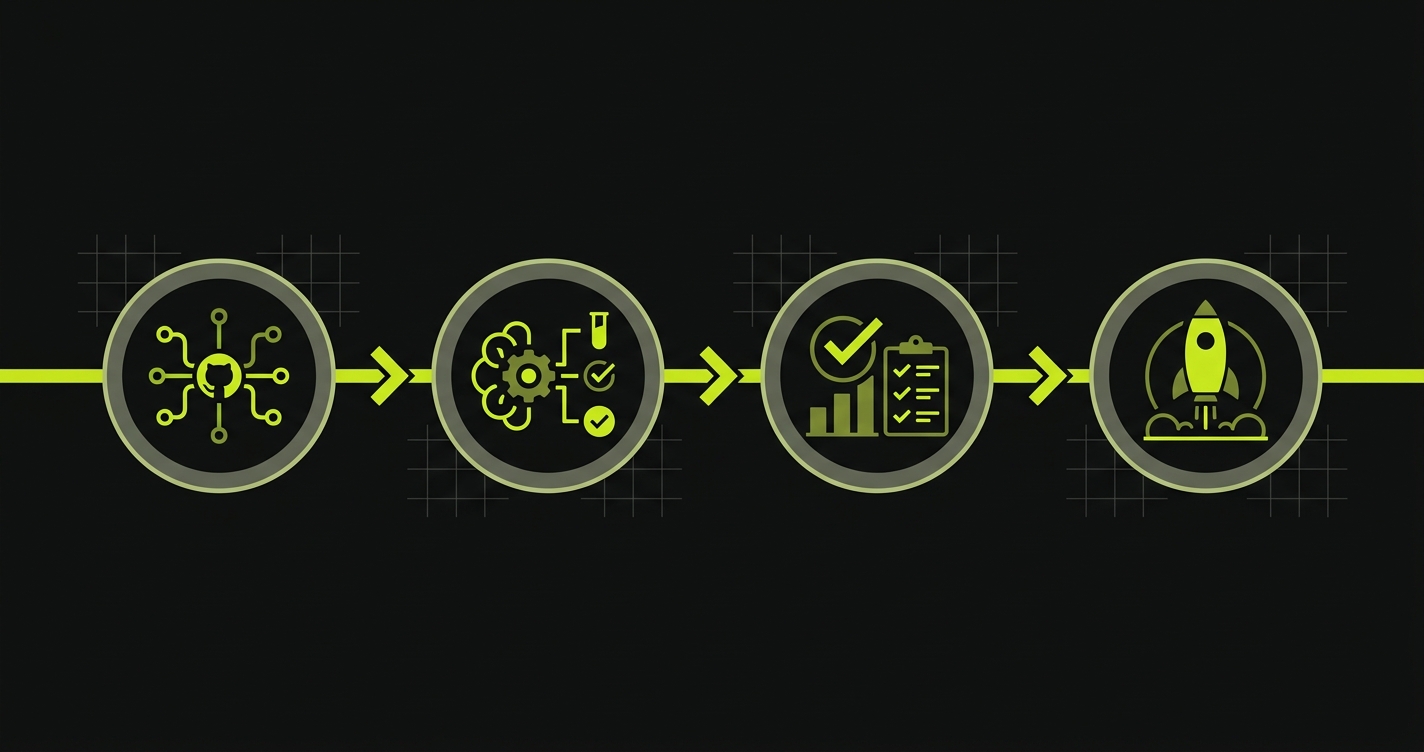
Migrating away from Mobot is actually simpler than migrating between traditional testing platforms because you are not rewriting test scripts. Autonoma generates tests from your codebase.
1. Connect your repo. Sign up for the free tier at getautonoma.com or self-host by cloning the GitHub repo. Connect your GitHub repository and let Autonoma's AI analyze your codebase (routes, components, user flows). This takes minutes.
2. AI generates tests. The test-planner-plugin builds a knowledge base of your application and generates comprehensive E2E test cases automatically. Start with 5-10 critical mobile flows that Mobot currently covers. Run them in Autonoma while keeping Mobot active so you can compare results side by side: same flows, same expected outcomes, different execution methods.
3. Validate coverage. Compare AI-generated test coverage against your existing Mobot test suite. Autonoma's vision-based tests cover the same user perspective that Mobot's robots test, but also extend to web flows that Mobot cannot touch. Check for gaps, review the AI-generated test plans, and iterate. Most teams achieve full mobile coverage within days, then immediately gain web coverage they never had before.
4. Go live and expand. Point your CI/CD pipelines at Autonoma, train your team on reviewing AI-generated test plans, and end your Mobot contract. If you are self-hosting, provision infrastructure during the validation phase so it is ready for cutover. Then expand coverage to web flows, admin panels, and other surfaces that Mobot never tested.
The key advantage of this migration: you do not just replicate your existing coverage. You expand it. Mobot could only test your mobile app. Autonoma tests your entire product surface from day one.
Frequently Asked Questions
Yes. Autonoma is an open-source testing platform available on GitHub. Unlike Mobot's proprietary hardware-dependent model, Autonoma offers a free tier with 100K credits and full self-hosting capabilities. It uses AI vision models instead of physical robots, making it faster, cheaper, and more scalable.
Mobot uses physical robotic arms to tap on real device screens, which limits speed, parallelism, and scalability. Autonoma uses AI vision models that see your app like a human would, but tests virtually at machine speed. This means unlimited parallel execution, cross-platform coverage (web + mobile), and no dependency on physical hardware.
Mobot requires enterprise contracts typically ranging from $10,000 to $50,000+ per month due to physical robot hardware, lab space, and maintenance costs. Autonoma offers a free tier with 100K credits, cloud at $499/month with unlimited parallels, and free self-hosting where you pay only for infrastructure.
Yes. Autonoma supports iOS and Android testing through Appium, including simulators, emulators, and physical devices. Unlike Mobot which is mobile-only, Autonoma also covers web testing through Playwright (Chrome, Firefox, Safari). You get cross-platform coverage from a single platform.
Yes. Autonoma is fully self-hostable with complete source code on GitHub. You can run it on your own infrastructure (AWS, GCP, Azure, on-premise) with zero feature restrictions. Mobot requires their proprietary physical robot hardware and cannot be self-hosted.
Autonoma's AI vision models perceive your application the same way a human user would, identifying buttons, forms, and interactive elements visually rather than through DOM selectors. This achieves the same 'real user perspective' that Mobot claims with physical robots, but without the speed, cost, and scalability limitations of hardware.
The Bottom Line
Mobot pioneered an innovative idea: test mobile apps with physical robots to simulate real human interaction. But the physics of that approach create hard limits on speed, scale, and cost. Robots take real time to tap screens. Parallelism requires proportional hardware. Pricing reaches $10,000-50,000+ per month. And the entire model is limited to mobile, leaving web applications untested.
Autonoma achieves the same human-perspective testing through AI vision models, but without any of those constraints. Full source code on GitHub (BSL 1.1, Apache 2.0 in 2028). Self-host on your infrastructure or use our cloud. AI generates and maintains tests from your codebase: zero manual writing, zero maintenance. Unlimited parallels on every plan. Web and mobile coverage from a single platform. No vendor lock-in, no hardware dependency. Free tier starts at 100K credits, cloud at $499/month, self-hosted at infrastructure cost only. Three-year savings: 95-99% compared to Mobot.
Ready to try open source testing?
Start Free - 100K credits, no credit card, 5-minute setup
View on GitHub - Inspect source code, self-host documentation
Book Demo - See AI vision testing in action
Related Reading: