

Quick summary: Autonoma is the open-source alternative to Panto AI. Unlike Panto AI's proprietary mobile-only QA tool, Autonoma generates tests automatically from your codebase using AI agents and covers both web and mobile. Full source code on GitHub (BSL 1.1), self-hosting, vision-based self-healing, unlimited parallel execution, no vendor lock-in. Free tier: 100K credits. Cloud: $499/month. Self-hosted: no ongoing costs.
Panto AI entered the mobile QA space with AI-augmented testing, promising smarter workflows for mobile teams. But the product has a fundamental constraint: it only covers mobile. If your team ships web applications, cross-platform products, or anything beyond native mobile apps, Panto AI leaves you stitching together multiple tools. And because it is proprietary with no self-hosting option, you are trading control and transparency for convenience that only works in a narrow slice of your testing needs.
Autonoma is the open-source alternative built for teams that need complete coverage. Full source code on GitHub, self-hosting on your infrastructure or our cloud, AI that generates and maintains tests automatically from your codebase for both web and mobile, unlimited parallel execution, and zero vendor lock-in. This guide covers where Panto AI falls short, how Autonoma solves those problems, and how to get started.
Where Panto AI Falls Short
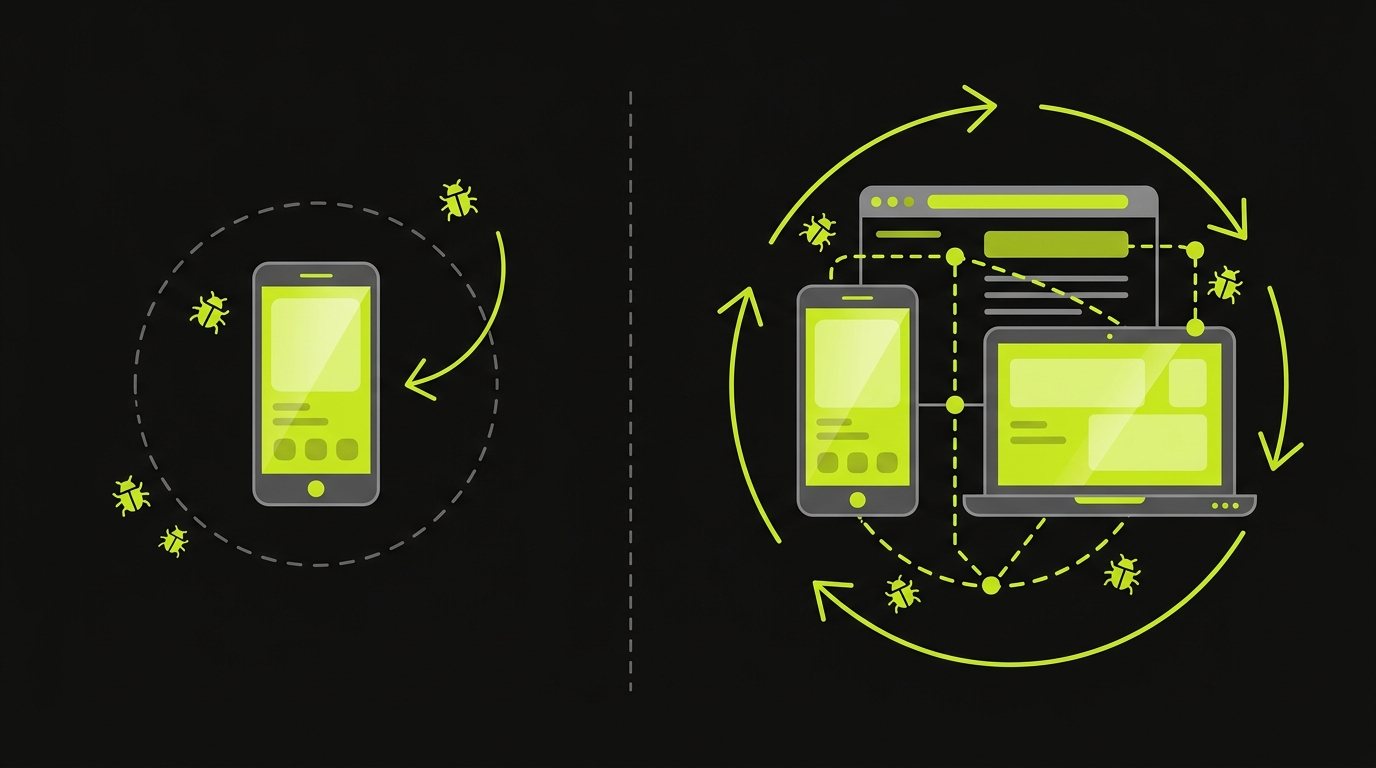
Three core problems drive engineering teams toward a more comprehensive alternative.
Mobile Only: No Web Testing Coverage
Panto AI is a mobile QA tool. That is its entire scope. If your team builds web applications, progressive web apps, cross-platform products, or any combination of web and mobile, Panto AI cannot help with the web side. You need a separate testing tool for your web frontend, which means two platforms to manage, two sets of integrations to maintain, and two different workflows for your QA team to learn.
This fragmentation creates real problems. Test results live in different systems. Coverage gaps emerge at the seams between tools. Your team context-switches between platforms instead of working in a unified workflow. When a bug spans both web and mobile (authentication flows, shared APIs, cross-platform user journeys), no single tool gives you the full picture.
Most modern products are not mobile-only. They are web-first with mobile apps, or cross-platform from day one. A testing tool that only covers mobile is a point solution in a world that demands platform coverage.
AI Assists but Does Not Automate the Full Lifecycle
Panto AI uses artificial intelligence to augment mobile QA, but there is a meaningful difference between AI-assisted testing and AI-automated testing. Panto AI helps testers work faster within the existing manual workflow. Testers still define test cases, guide execution, and handle maintenance. The AI provides suggestions and speeds up certain steps, but the human is still the driver.
This means your QA team still spends significant time on the test lifecycle: planning tests, writing test scenarios, executing them, updating them when the mobile app changes. The AI reduces friction but does not eliminate the manual work. For teams with limited QA resources or fast-moving product cycles, this model does not scale.
The question is not whether AI should be involved in testing. It is whether AI should assist human testers or replace the manual parts of the workflow entirely. Panto AI chose the first approach. Teams looking for full automation need something different.
Proprietary, No Self-Hosting, Limited Transparency
Panto AI is closed source. You cannot inspect how their AI processes your mobile app data, audit their security practices, or customize behavior for your environment. There is no self-hosting option: your app binaries, test data, and execution logs all pass through their infrastructure.
For teams building healthcare apps, financial platforms, or government mobile applications, this is a compliance problem. HIPAA, PCI DSS, and SOC 2 frameworks often require that testing infrastructure runs on controlled, auditable environments. A proprietary tool with no source code access and no self-hosting makes compliance audits significantly harder.
As an early-stage startup, Panto AI also carries the risk profile common to newer entrants. Limited market presence means fewer community resources, less battle-tested infrastructure, and less certainty about long-term viability. If Panto AI pivots, gets acquired, or shuts down, your testing workflow goes with it.
Autonoma: The Open Source Alternative to Panto AI
Autonoma is an open-source, AI-native testing platform that solves every limitation above.
Full Web and Mobile Coverage from a Single Platform
Autonoma tests both web and mobile applications from one unified platform. Web testing runs through Playwright (Chrome, Firefox, Safari across desktop and mobile viewports). Mobile testing runs through Appium (iOS simulators, Android emulators, and physical devices). One tool, one workflow, one dashboard, complete coverage.
This means your QA team works in a single platform regardless of what they are testing. Test results for web and mobile live in the same system. Coverage reports span both platforms. When a user journey crosses from web to mobile (or vice versa), Autonoma handles it without tool-switching or data stitching.
Autonoma is framework agnostic. Whether you are building with React, Next.js, Vue, Angular, Flutter, React Native, or Swift, the AI understands your application structure and generates tests accordingly. It reads your routes and component hierarchy, not just the rendered output, which means test generation works regardless of your frontend framework or mobile stack.
AI That Fully Automates the Testing Lifecycle
Unlike Panto AI where AI assists testers in a manual workflow, Autonoma's AI automates the entire testing lifecycle end to end.
How it works: You connect your GitHub repo, and Autonoma's test-planner-plugin reads your routes, components, and user flows to build a knowledge base of your application. AI agents then generate comprehensive E2E test cases based on your actual code structure, with no manual test writing required. Tests execute using AI vision models that see your app like a human would, which means no CSS selectors or XPaths to break. When your UI changes, tests adapt automatically because the AI understands intent, not DOM structure.
You do not write tests. You do not maintain selectors. You do not update test scripts when features change. The AI handles everything from understanding your codebase to generating, executing, and maintaining tests. Your QA team shifts from maintaining test scripts to reviewing test plans and analyzing results: higher-leverage work that actually improves product quality.
This is the fundamental difference. Panto AI augments manual mobile QA. Autonoma replaces the manual testing lifecycle with full AI automation across both web and mobile.
Open Source and Self-Hosting
Full source code on GitHub. Licensed under BSL 1.1 (converts to Apache 2.0 in 2028). You can use it in production, inspect every line, audit security, and self-host with no feature restrictions. The only limitation: you cannot resell Autonoma's functionality as a commercial service.
Run Autonoma on your infrastructure. AWS (ECS, EKS, or EC2), GCP (GKE or Compute Engine), Azure (AKS or VMs), or your own data center. When you self-host, your data never leaves your infrastructure. Tests run in your VPC. App binaries and credentials stay on your servers. Application URLs are never exposed to external systems.
The technology stack is built on standard open source components: TypeScript and Node.js 24 for the runtime, Playwright for web testing, Appium for mobile testing, PostgreSQL for data storage, and Kubernetes for orchestration. No proprietary runtimes, no black-box components, no vendor-specific dependencies.
Unlimited Parallel Execution
Every plan (free tier, cloud, and self-hosted) supports unlimited parallel execution. On the free tier that is subject to credit limits, but on cloud and self-hosted plans your test suite scales with your infrastructure. Add more tests, spawn more instances. No negotiations, no pricing tiers, no artificial limits.
When you self-host, parallel capacity is limited only by the compute resources you allocate, and you can auto-scale based on demand. This means your CI/CD pipeline runs as fast as your infrastructure allows, with no vendor-imposed bottlenecks.
No Vendor Lock-In
Tests are generated from your codebase, not stored in a proprietary format. There are no Panto AI-specific APIs woven into your workflow. Fork the project if needed. Switch cloud providers or self-host anytime. Your testing capability is never held hostage by a vendor relationship or a startup's trajectory.
Panto AI vs Autonoma: Feature Comparison
| Feature | Panto AI | Autonoma |
|---|---|---|
| Open Source | Proprietary closed source | BSL 1.1 on GitHub (Apache 2.0 in 2028) |
| Self-Hosting | Not available | Self-host anywhere (AWS, GCP, Azure, on-prem) |
| Web Testing | Not supported | Chrome, Firefox, Safari via Playwright |
| Mobile Testing | AI-augmented mobile QA | iOS and Android via Appium |
| AI Automation Level | AI assists manual QA workflows | AI automates entire test lifecycle |
| Test Generation | Manual with AI suggestions | Fully automatic from codebase |
| Test Maintenance | Manual with AI assistance | AI self-healing (zero maintenance) |
| Parallel Execution | Depends on plan | Unlimited on all plans |
| Vendor Lock-In | High (proprietary platform) | None (open source, tests from code) |
| Cross-Platform Coverage | Mobile only | Web + mobile from single platform |
| Data Sovereignty | Data on vendor servers | Data stays on your infrastructure |
| Source Code Access | No access | Full source code on GitHub |
| Pricing Transparency | Custom quotes, not publicly listed | Fully transparent (free tier, $499/mo cloud) |
| Market Maturity | Early stage, limited presence | Open source with proven architecture |
Cost: Open Source Platform vs Proprietary Point Solution

The cost comparison between Panto AI and Autonoma goes beyond subscription fees. It is about what you get for your spend and what hidden costs you absorb.
Panto AI does not publicly list pricing, which is common for early-stage startups that negotiate custom deals. This lack of transparency makes budgeting difficult and creates uncertainty for procurement teams. You are committing to a vendor relationship without clear cost predictability.
With Panto AI covering only mobile, teams also need a separate web testing tool. That means paying for two platforms: Panto AI for mobile QA plus whatever web testing solution you choose (Selenium Grid, Playwright infrastructure, or another SaaS tool). The combined cost of two tools, two integrations, and two maintenance workflows adds up fast.
Autonoma pricing is fully transparent:
Free tier: 100K credits, no credit card required, unlimited parallels, all features included. Web and mobile testing from day one.
Cloud ($499/month): 1M credits per month, unlimited parallels, managed infrastructure, web and mobile coverage, support included.
Self-hosted (free platform): No ongoing platform fees. Pay only for infrastructure (AWS/GCP/Azure). No feature restrictions. Full web and mobile coverage.
Because Autonoma covers both web and mobile from a single platform, you eliminate the cost of maintaining separate tools. And because AI automates the full test lifecycle, you eliminate the engineering hours spent writing and maintaining tests manually. The savings are not just in subscription fees. They are in the engineering time you reclaim and the tool consolidation you achieve.
Migrating from Panto AI to Autonoma
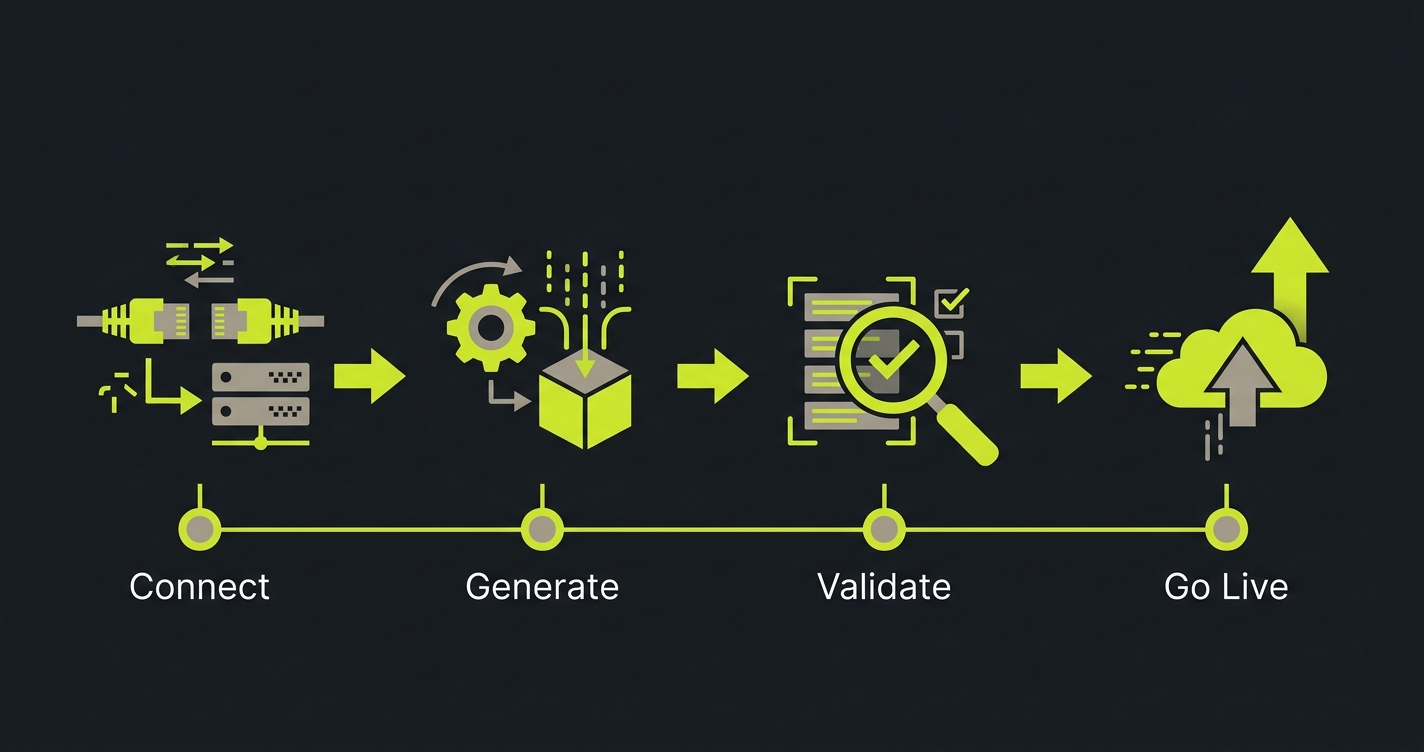
Migration is straightforward because Autonoma generates tests from your codebase rather than requiring you to rewrite anything.
1. Connect your repo. Sign up for the free tier at getautonoma.com or self-host by cloning the GitHub repo and following the deployment docs. Connect your GitHub repository and let Autonoma's AI analyze your codebase. This takes minutes.
2. AI generates tests. The test-planner-plugin builds a knowledge base of your application and generates E2E test cases automatically. Start with your critical mobile flows to compare against existing Panto AI coverage, then expand to web testing coverage you did not have before. Run both tools in parallel during the transition to compare results side by side.
3. Validate and expand coverage. Compare AI-generated test coverage against your existing mobile test suite. Autonoma's vision-based tests are often more resilient than traditional mobile tests because they understand intent, not element hierarchies. Then review the web testing coverage Autonoma generates. For most teams, this is net-new coverage that was previously impossible with Panto AI's mobile-only scope.
4. Update CI/CD and cut over. Point your CI/CD pipelines at Autonoma, train your team on reviewing AI-generated test plans, and decommission Panto AI. The transition is low-risk because you have already validated coverage in step 3. You now have unified web and mobile testing from a single platform.
The key advantage: you are not just migrating from one tool to another. You are upgrading from a mobile-only point solution to a full-lifecycle AI testing platform that covers your entire product surface.
Frequently Asked Questions
Yes. Autonoma is an open-source AI testing platform available on GitHub. Unlike Panto AI's proprietary mobile-only tool, Autonoma covers both web and mobile testing, offers a free tier with 100K credits, and supports full self-hosting with no feature restrictions.
Yes. Autonoma uses Playwright for web testing (Chrome, Firefox, Safari) and Appium for mobile testing (iOS and Android). Panto AI focuses exclusively on mobile QA, so teams with web applications need a separate tool. Autonoma covers both from a single platform.
Panto AI uses AI to augment manual mobile QA workflows, assisting testers but not replacing the manual test lifecycle. Autonoma's AI fully automates the entire testing lifecycle: it generates tests from your codebase, executes them using vision models, and self-heals when the UI changes. No manual test writing or maintenance required.
Yes. Autonoma is fully self-hostable with complete source code on GitHub (BSL 1.1 license). You can run it on AWS, GCP, Azure, or on-premise with zero feature restrictions. Panto AI offers no self-hosting option.
Panto AI does not publicly list pricing, relying on custom quotes. Autonoma offers a free tier (100K credits), cloud at $499/month with unlimited parallels, and free self-hosting where you pay only for infrastructure. Autonoma's pricing is fully transparent with no hidden costs.
Yes. You don't rewrite tests. Connect your repo to Autonoma and its AI generates tests from your codebase automatically. Since Panto AI focuses on mobile, you'll gain web testing coverage you didn't have before. Most teams achieve full coverage within days.
The Bottom Line
Panto AI is a proprietary, mobile-only AI QA tool with no self-hosting, no web coverage, and AI that assists rather than automates. It is a point solution for a subset of your testing needs, with limited market presence and opaque pricing.
Autonoma is the open-source alternative that covers the full picture. Full source code on GitHub (BSL 1.1, Apache 2.0 in 2028). Self-host on your infrastructure or use our cloud. AI generates and maintains tests from your codebase for both web and mobile: zero manual writing, zero maintenance. Unlimited parallels on every plan. No vendor lock-in. Free tier starts at 100K credits, cloud at $499/month, self-hosted at infrastructure cost only.
If you need more than mobile-only AI assistance, Autonoma is the platform-grade alternative.
Ready to try open source testing?
Start Free - 100K credits, no credit card, 5-minute setup
View on GitHub - Inspect source code, self-host documentation
Book Demo - See AI autonomous testing in action
Related Reading:


