
Quick summary: Autonoma is the open-source alternative to PractiTest. Unlike PractiTest's proprietary test management platform (~$39-49/user/month, no self-hosting, Smart Fox AI that suggests but does not execute), Autonoma generates, executes, and maintains tests automatically from your codebase using AI agents. Full source code on GitHub (BSL 1.1), self-hosting, vision-based self-healing, unlimited parallel execution, no vendor lock-in. Free tier: 100K credits. Cloud: $499/month flat. Self-hosted: no ongoing costs.
PractiTest is one of the most established test management platforms on the market. It organizes your test cases, tracks requirements traceability, manages test runs, and recently added Smart Fox AI for intelligent suggestions and insights. Its integration ecosystem is genuinely impressive: Jira, Jenkins, Selenium, Azure DevOps, GitLab, and dozens more. For enterprise teams that need compliance audit trails and structured test management workflows, PractiTest delivers.
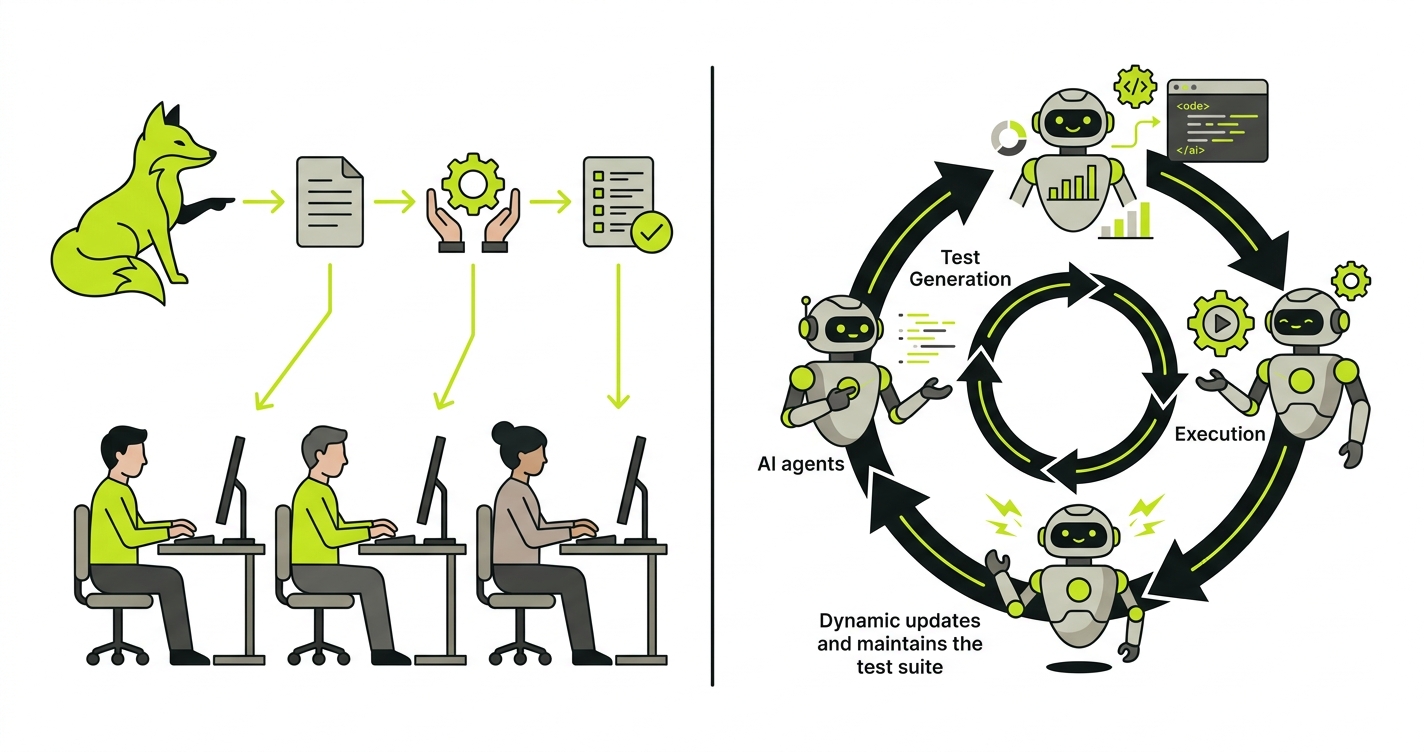
But there is a fundamental problem with the test management model itself. PractiTest manages tests. It does not write them. It does not execute them autonomously. And it does not maintain them when your application changes. Smart Fox AI is a step forward, but it suggests and advises rather than generating and running tests end-to-end. Your team still writes every test case, maintains every script, and manually orchestrates every test run.
Autonoma takes a different approach entirely. Instead of managing tests your team writes, Autonoma's AI generates, executes, and maintains tests directly from your codebase. Full source code on GitHub, self-hosting on your infrastructure or our cloud, and zero per-user pricing. This guide covers where PractiTest falls short, how Autonoma solves those problems, and how to switch.
Where PractiTest Falls Short
Three structural limitations drive engineering teams to look beyond PractiTest.
Smart Fox AI Suggests but Does Not Execute
PractiTest's Smart Fox AI is their headline feature, and to be fair, it is useful. It analyzes your test history to suggest which tests to prioritize, identifies potential gaps in coverage, and provides insights into test quality trends. For teams drowning in test management overhead, Smart Fox helps surface what matters.
But Smart Fox is fundamentally an advisory layer. It suggests test cases; it does not generate executable test code. It identifies coverage gaps; it does not fill them. It recommends priority; it does not run the tests. Your QA engineers still write every test case by hand, maintain every selector, and manually trigger execution through connected tools like Selenium or Jenkins.
One QA lead described it this way: "Smart Fox tells us what we should test. That is helpful. But we still need engineers to actually write and maintain every single test. The bottleneck was never knowing what to test. It was the engineering hours to write and maintain the tests."
The gap between "AI that advises" and "AI that acts" is enormous. Suggestions reduce decision overhead, but they do not reduce the engineering hours that consume 60-70% of QA budgets: writing test scripts, debugging flaky selectors, and updating tests after every UI change.
Per-User Pricing That Scales Against You
PractiTest charges approximately $39-49 per user per month depending on the plan and contract terms. That model works when you have a small, dedicated QA team of 3-5 people. But as your organization grows, costs scale linearly with headcount.
A team of 15 QA engineers and developers who need access pays $7,000-8,800 per year just for test management. Add a team of 25 and you are looking at $11,700-14,700 annually. And that is before you factor in the cost of the separate test execution tools (Selenium Grid, BrowserStack, or similar) that PractiTest coordinates with but does not replace.
The per-user model also creates a perverse incentive: limiting who has access to the testing platform. Teams start restricting licenses to "core QA" only, which means developers cannot see test results directly, product managers cannot verify coverage, and new team members wait weeks for license approval. The tool designed to improve quality visibility ends up creating information silos.
Enterprise pricing compounds the issue. PractiTest's enterprise tier adds compliance features (audit trails, role-based access, SSO) at a premium. Teams that need these features for regulatory requirements have no option but to pay the higher per-user rate, and the cost scales with every person who needs access.
No Self-Hosting, Closed Source
PractiTest is a cloud-only SaaS platform. There is no option to self-host on your own infrastructure. Your test data, requirements, traceability matrices, and execution results all live on PractiTest's servers. The source code is proprietary and closed.
For teams building applications in regulated industries (healthcare, finance, government, defense), this is often a non-starter. HIPAA, PCI DSS, SOC 2, and FedRAMP compliance frameworks frequently require that testing tools and data reside on controlled, auditable infrastructure. PractiTest cannot accommodate this.
Even outside regulated industries, the lack of self-hosting creates dependency risk. If PractiTest experiences an outage, your test management workflow stops. If they change their API, your integrations break. If they deprecate a feature you depend on, you adapt or leave. And leaving means exporting your data from a proprietary format and rebuilding your workflow from scratch.
The closed-source nature also means you cannot inspect how PractiTest handles your data, audit their security implementation, or customize behavior for your specific workflow. You trust their security practices because you have no alternative.
Autonoma: The Open Source Alternative to PractiTest
Autonoma is an open-source, AI-native testing platform that replaces both the test management layer and the manual test authoring that PractiTest coordinates.
AI That Generates, Executes, and Maintains Tests
Where PractiTest's Smart Fox suggests what to test, Autonoma's AI handles the complete lifecycle.
How it works: You connect your GitHub repo, and Autonoma's test-planner-plugin reads your routes, components, and user flows to build a knowledge base of your application. AI agents then generate comprehensive E2E test cases based on your actual code structure with no manual test writing required. Tests execute using AI vision models that see your app like a human would, which means no CSS selectors or XPaths to break. When your UI changes, tests adapt automatically because the AI understands intent, not DOM structure. Each step includes verification layers to ensure consistent, reliable behavior.
This is not an advisory layer. Autonoma does not suggest tests for your team to write. It generates the tests, runs them, and updates them when your application changes. The engineering hours your team currently spends writing test cases, maintaining selectors, and debugging flaky scripts drop to zero. QA shifts from writing and maintaining test scripts to reviewing AI-generated test plans and analyzing results: higher-leverage work that improves product quality.
The difference from PractiTest is structural. PractiTest is a test management tool with an AI assistant. Autonoma is an autonomous testing system. One manages the work humans do. The other eliminates the work entirely.
Open Source and Self-Hosting
Full source code on GitHub. Licensed under BSL 1.1 (converts to Apache 2.0 in 2028). You can use it in production, inspect every line, audit security, and self-host with no feature restrictions. The only limitation: you cannot resell Autonoma's functionality as a commercial service.
Run Autonoma on your infrastructure. AWS (ECS, EKS, or EC2), GCP (GKE or Compute Engine), Azure (AKS or VMs), or your own data center. When you self-host, your data never leaves your infrastructure. Test results, execution logs, and application data stay on your servers. This directly solves the compliance problem that PractiTest's cloud-only model cannot address.
The technology stack is built on standard open source components: TypeScript and Node.js 24 for the runtime, Playwright for web testing, Appium for mobile testing, PostgreSQL for data storage, and Kubernetes for orchestration. No proprietary runtimes, no black-box components, no vendor-specific dependencies.
Flat Pricing, No Per-User Fees
Autonoma does not charge per user. Every plan supports unlimited team members.
Free tier: 100K credits, no credit card required, unlimited parallels, all features included. Good for small teams, startups, and evaluating the platform.
Cloud ($499/month): 1M credits per month, unlimited parallels, managed infrastructure, support included. No per-user fees. Your entire team gets access regardless of size.
Self-hosted (free platform): No ongoing platform fees. Pay only for infrastructure (AWS/GCP/Azure). No feature restrictions. Full control over data, environment, and scaling.
Compare this to PractiTest: a 15-person team on PractiTest pays $7,000-8,800/year for test management alone, plus the cost of separate execution tools. Autonoma cloud costs $5,988/year for the entire team with test generation, execution, and maintenance included. Self-hosting eliminates the platform fee entirely.
Robust Integration Through Code, Not Connectors
PractiTest's integration ecosystem is genuinely impressive. Jira, Jenkins, Selenium, Azure DevOps, GitLab, Bamboo, TeamCity, and more. But these integrations exist because PractiTest needs to coordinate between separate tools for test management, execution, CI/CD, and defect tracking.
Autonoma takes a different approach. Because it generates and executes tests directly from your codebase, it eliminates the need for many of these integration points. You do not need a Selenium integration because Autonoma uses Playwright natively. You do not need a Jenkins connector for triggering test runs because Autonoma integrates directly into your CI/CD pipeline via GitHub Actions or any standard CI system. Defect tracking happens through your existing GitHub issues or Jira workflow.
The result is fewer moving parts. Instead of a test management tool connected to an execution tool connected to a CI server connected to a defect tracker, you have a single platform that handles generation, execution, and reporting.
PractiTest vs Autonoma: Feature Comparison
| Feature | PractiTest | Autonoma |
|---|---|---|
| Open Source | Proprietary closed source | BSL 1.1 on GitHub (Apache 2.0 in 2028) |
| Self-Hosting | Cloud only, no self-hosting | Self-host anywhere (AWS, GCP, Azure, on-prem) |
| AI Capabilities | Smart Fox AI: suggests tests, provides insights | AI generates, executes, and maintains tests end-to-end |
| Test Generation | Manual (engineers write all test cases) | AI generates tests from your codebase automatically |
| Test Execution | Requires separate tools (Selenium, etc.) | Built-in execution via Playwright and Appium |
| Test Maintenance | Manual (engineers maintain all scripts) | AI self-healing with vision models (zero maintenance) |
| Pricing Model | ~$39-49/user/month (scales with headcount) | Flat pricing, no per-user fees |
| Integrations | Extensive (Jira, Jenkins, Selenium, Azure DevOps, etc.) | GitHub, CI/CD pipelines (fewer needed due to built-in execution) |
| Compliance / Audit Trails | Enterprise tier (audit logs, role-based access) | Full source code audit, self-host for compliance |
| Requirements Traceability | Built-in traceability matrix | Tests traced to codebase routes and components |
| Parallel Execution | Depends on connected execution tool | Unlimited on all plans |
| Vendor Lock-In | High (proprietary format, data on their servers) | None (tests generated from code, fork codebase) |
| Free Tier | 14-day trial only | 100K credits, no time limit |
| Source Code Access | No access | Full source code on GitHub |
Cost: Open Source vs Proprietary Test Management
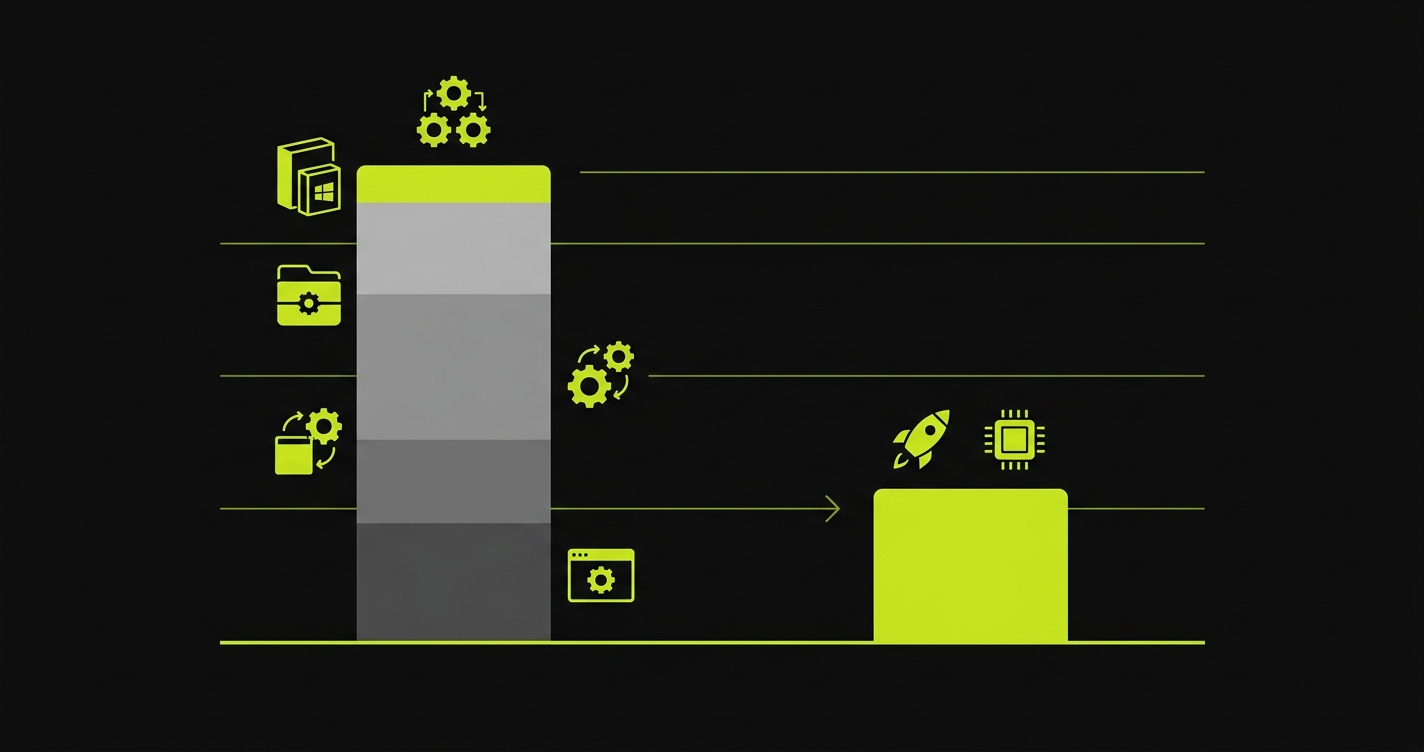
The real cost comparison between PractiTest and Autonoma goes beyond subscription fees. You need to account for the full cost of ownership: the platform, the execution tools PractiTest coordinates with, and the engineering hours spent writing and maintaining tests manually.
PractiTest total cost for a 15-person team:
- PractiTest licenses: ~$7,000-8,800/year ($39-49/user/month)
- Separate test execution tool (BrowserStack, Sauce Labs, or self-managed Selenium Grid): $2,000-5,000/year
- Engineering hours writing and maintaining tests: 15-20 hours/month at $100-150/hour = $18,000-36,000/year
- Three-year total: $81,000-149,400
Autonoma cloud ($499/month, flat):
- Platform: $5,988/year (includes generation, execution, and maintenance)
- Separate execution tool: none needed (built in)
- Engineering hours for test maintenance: zero (AI self-healing)
- Three-year total: $17,964
Autonoma self-hosted (free platform):
- Platform: $0
- Infrastructure: ~$200-400/month ($2,400-4,800/year)
- Engineering hours for test maintenance: zero
- Three-year total: $7,200-14,400
The savings range from 78% (cloud) to 90% (self-hosted) compared to PractiTest's total cost of ownership. The biggest line item eliminated is not the PractiTest subscription itself. It is the engineering hours spent writing and maintaining tests that PractiTest manages but does not automate.
Migrating from PractiTest to Autonoma
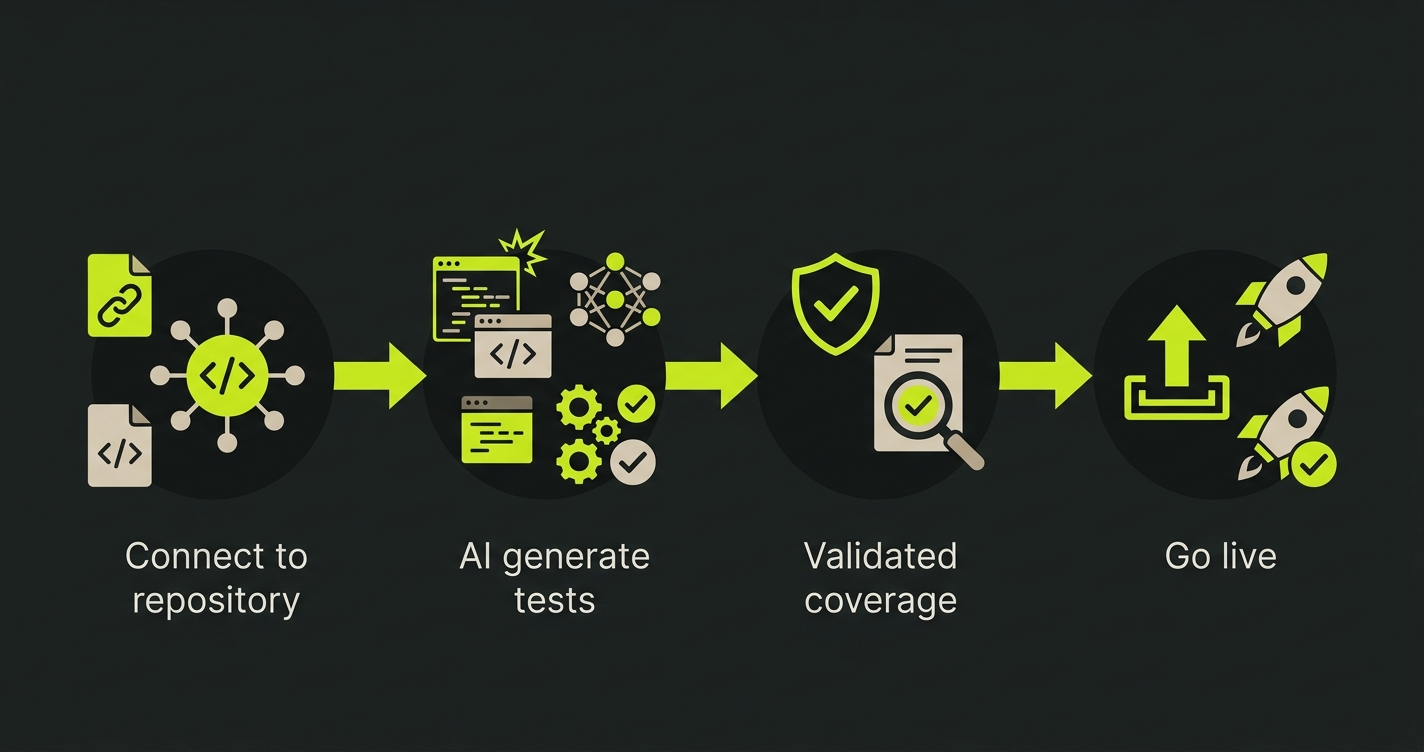
Migration from PractiTest is straightforward because Autonoma does not require you to recreate your existing test cases. It generates new tests from your codebase.
1. Connect your repo. Sign up for the free tier at getautonoma.com or self-host by cloning the GitHub repo and following the deployment docs. Connect your GitHub repository and let Autonoma's AI analyze your codebase (routes, components, and user flows). This takes minutes.
2. AI generates tests. The test-planner-plugin builds a knowledge base of your application and generates comprehensive E2E test cases automatically. Start with your critical user flows (the same ones you have documented in PractiTest) and let the AI generate executable tests for them. Run these in parallel with your existing PractiTest-coordinated test suite to compare coverage.
3. Validate coverage. Compare AI-generated test coverage against your PractiTest test case inventory. Map your PractiTest requirements traceability to Autonoma's codebase-derived coverage. Most teams find that Autonoma's AI identifies flows they had not explicitly tested in PractiTest because it analyzes routes and components comprehensively rather than relying on manually written test cases.
4. Update CI/CD and cut over. Point your CI/CD pipelines at Autonoma, retire the separate execution tools (Selenium Grid, BrowserStack) that PractiTest was coordinating with, and cancel your PractiTest subscription. The transition consolidates your toolchain: one platform replaces the test management tool, the execution tool, and the manual test authoring process.
Most teams complete the migration in 1-2 weeks. The effort is validation and review, not rewriting hundreds of test cases.
Frequently Asked Questions
Yes. Autonoma is an open-source testing platform available on GitHub. Unlike PractiTest's proprietary closed-source model, Autonoma offers a free tier with 100K credits and full self-hosting capabilities. AI generates tests from your codebase automatically with no per-user pricing.
Yes. Autonoma is fully self-hostable with complete source code on GitHub. You can run it on your infrastructure (AWS, GCP, Azure, on-premise) with zero feature restrictions. PractiTest offers no self-hosting option; it is a cloud-only SaaS platform.
PractiTest's Smart Fox AI suggests test cases and provides insights, but does not generate executable tests or run them autonomously. It is an advisory layer on top of a manual test management platform. Autonoma's AI generates, executes, and maintains tests from your codebase end-to-end with no manual test writing required.
PractiTest costs approximately $39-49 per user per month, scaling linearly with team size. A 15-person team pays $7,000-8,800/year for test management alone, plus separate execution tools. Autonoma offers a free tier with 100K credits, cloud at $499/month flat (no per-user fees), and free self-hosting where you pay only infrastructure costs.
Yes. You connect your repo and Autonoma's AI generates tests from your codebase automatically. You do not need to manually recreate test cases from PractiTest. Most teams achieve full coverage within days because the AI generates tests from your actual code rather than requiring manual writing.
Autonoma integrates with GitHub and CI/CD pipelines. PractiTest has broader third-party integrations (Jira, Jenkins, Selenium, Azure DevOps). However, Autonoma's AI-native approach eliminates the need for many of these integrations because it generates and executes tests directly from code rather than coordinating between separate tools.
The Bottom Line
PractiTest is a solid test management platform with genuine strengths: Smart Fox AI for intelligent suggestions, deep integrations, enterprise compliance features, and structured workflows. But it is still a test management tool. It manages tests your team writes manually, coordinates execution through separate tools, charges per user, and offers no self-hosting.
Autonoma eliminates the manual work PractiTest manages. Full source code on GitHub (BSL 1.1, Apache 2.0 in 2028). Self-host on your infrastructure or use our cloud. AI generates, executes, and maintains tests from your codebase: zero manual writing, zero maintenance. Flat pricing with no per-user fees. Unlimited parallels on every plan. No vendor lock-in. Free tier starts at 100K credits, cloud at $499/month, self-hosted at infrastructure cost only. Three-year savings: 78-90% compared to PractiTest's total cost of ownership.
Ready to try open source testing?
Start Free - 100K credits, no credit card, 5-minute setup
View on GitHub - Inspect source code, self-host documentation
Book Demo - See AI test generation in action
Related Reading: