

Quick summary: Autonoma is the open-source alternative to SeleniumBox. While SeleniumBox provides enterprise Selenium/Appium grid infrastructure behind your firewall, it still requires manual test writing and locks you into the aging Selenium paradigm. Autonoma replaces that entire stack: AI generates tests from your codebase, modern Playwright replaces Selenium, vision-based self-healing eliminates maintenance, and full source code on GitHub (BSL 1.1) means you can self-host behind your firewall with complete transparency. Free tier: 100K credits. Cloud: $499/month. Self-hosted: no platform fees.
SeleniumBox solves a real problem: running Selenium and Appium grids on your own infrastructure, behind your firewall, without managing the complexity yourself. For security-conscious enterprises that cannot send test traffic to external clouds, that matters. But SeleniumBox only solves the infrastructure piece. You still write every test by hand. You still maintain brittle CSS selectors and XPaths. You are still locked into the Selenium ecosystem, a framework designed in 2004 that has not fundamentally changed in two decades.
The question is not whether you need behind-firewall testing. The question is whether your behind-firewall testing should also be intelligent, self-maintaining, and built on modern browser automation. Autonoma is the open-source alternative that delivers all of that. This guide covers where SeleniumBox falls short, how Autonoma solves those problems, and how to migrate.
Where SeleniumBox Falls Short
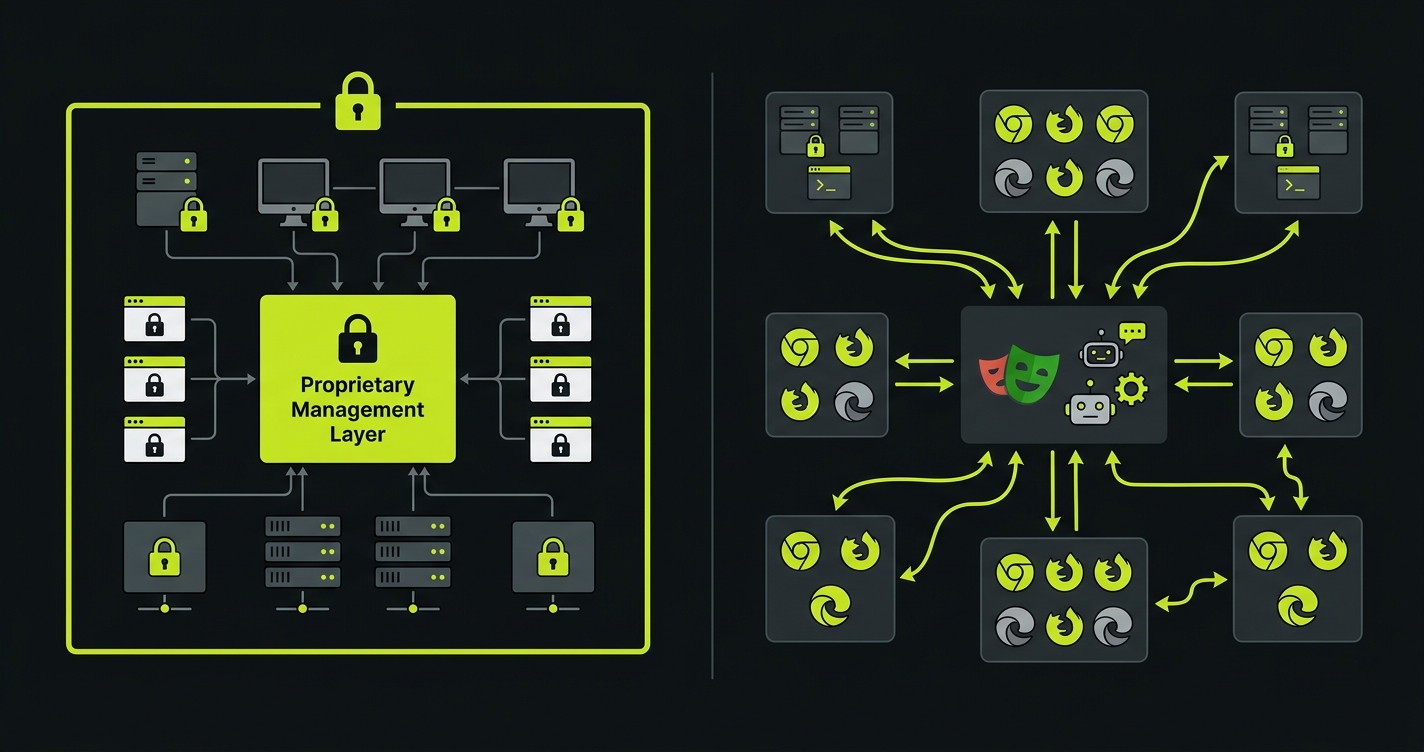
Three core problems push engineering teams to look beyond SeleniumBox.
Proprietary Management Layer on Open Source Infrastructure
SeleniumBox sells itself as enterprise Selenium grid management. But the irony is thick: it wraps a proprietary, closed-source management layer around open-source Selenium. You get Selenium's limitations plus a vendor's black box on top.
You cannot inspect how SeleniumBox manages your grid. You cannot audit the management layer for security vulnerabilities. You cannot customize session routing, node allocation, or failure handling beyond what their configuration exposes. When something breaks in their orchestration, you file a support ticket and wait. For teams that chose on-premise deployment specifically because they need infrastructure control and auditability, having a proprietary layer you cannot inspect defeats the purpose.
One engineering lead told us: "We went on-prem for security and compliance. Then we realized our grid manager was a black box we couldn't audit. We traded one vendor dependency for another."
Autonoma's source code is fully available on GitHub. Every line of orchestration, session management, and test execution logic is inspectable. For HIPAA, PCI DSS, SOC 2, and FedRAMP compliance, this transparency is not a feature; it is a requirement.
Still Requires Manual Selenium Test Writing
SeleniumBox manages infrastructure. It does not write tests. It does not maintain tests. It does not understand your application. You provision a grid, and then your engineers spend weeks writing Selenium scripts with CSS selectors and XPath expressions that break every time a developer changes a class name or restructures a component.
This is the hidden cost that SeleniumBox's pricing page does not show. A team with 300 Selenium E2E tests spends 15-25 hours per month maintaining them: updating broken selectors, debugging flaky waits, rewriting flows after UI changes. At typical engineering rates ($100-150/hour), that is $18,000-45,000 per year in maintenance labor alone, often more than the SeleniumBox license itself.
SeleniumBox does not solve the test maintenance problem because it is not designed to. It manages the grid. Your team manages everything else.
Locked into the Selenium Paradigm
SeleniumBox exists because of Selenium. Its entire value proposition depends on teams continuing to use Selenium WebDriver and Appium. But Selenium is showing its age. It was designed for a web that no longer exists: server-rendered HTML pages with stable DOM structures and predictable page loads.
Modern web applications built with React, Next.js, Vue, or Angular produce dynamic, component-driven UIs where DOM structure changes with every render cycle. Selenium's WebDriver protocol was not designed for this. Flaky waits, stale element references, and timing issues are not bugs in your tests; they are fundamental limitations of Selenium's architecture.
Meanwhile, Playwright (developed by Microsoft) was built from scratch for modern web applications. It offers auto-waiting, network interception, multi-tab support, and native handling of dynamic content. Playwright runs 2-3x faster than Selenium for equivalent test suites because it communicates with browsers via CDP (Chrome DevTools Protocol) instead of the slower WebDriver protocol.
By investing in SeleniumBox, you are doubling down on Selenium's limitations. You are not just choosing an infrastructure provider; you are choosing to maintain a Selenium-based testing stack for years to come. Every engineer you hire needs Selenium expertise. Every new test follows Selenium patterns. And when your team eventually wants to modernize, you are rewriting everything from scratch.
Autonoma: The Open Source Alternative to SeleniumBox
Autonoma is an open-source, AI-native testing platform that replaces SeleniumBox's entire approach: modern infrastructure, intelligent test generation, and full source transparency.
Truly Open Source, Truly Self-Hostable
Full source code on GitHub. Licensed under BSL 1.1 (converts to Apache 2.0 in 2028). You can deploy Autonoma behind your firewall on AWS (ECS, EKS, or EC2), GCP (GKE or Compute Engine), Azure (AKS or VMs), or your own bare-metal data center. No feature restrictions when self-hosting. The only limitation: you cannot resell Autonoma's functionality as a commercial service.
Unlike SeleniumBox's proprietary management layer, every component of Autonoma is inspectable. Need to audit test orchestration for SOC 2? Read the source. Need to verify how credentials are handled during execution? Inspect the runtime. Need to customize session routing for your infrastructure topology? Fork and modify. This is the transparency that security-conscious teams actually need when they choose on-premise deployment.
The technology stack uses standard open-source components: TypeScript and Node.js for the runtime, Playwright for web testing, Appium for mobile testing, PostgreSQL for data storage, and Kubernetes for orchestration. No proprietary runtimes, no black-box orchestration layers, no vendor-specific dependencies buried in your infrastructure.
Self-hosting is free: no platform fees, no per-user charges, no per-node markup. You pay only for the cloud infrastructure or hardware you provision.
AI Generates and Maintains Tests Automatically
This is the fundamental difference between Autonoma and SeleniumBox. SeleniumBox manages the grid your manual tests run on. Autonoma generates the tests themselves.
How it works: Connect your GitHub repo, and Autonoma's test-planner-plugin analyzes your routes, components, and user flows to build a knowledge base of your application. AI agents then generate comprehensive E2E test cases based on your actual code structure. No manual test writing required. Tests execute using AI vision models that see your application like a human would, not through brittle CSS selectors or XPaths.
When your UI changes, tests adapt automatically. A button that changes from btn-submit to cta-primary breaks a Selenium test. It does not break a vision-based test that understands "click the submit button." This self-healing compounds over time: fewer false failures, less noise in CI/CD, more trust in the test suite.
The engineering hours your team currently spends writing and maintaining Selenium tests drop to zero. Your QA engineers shift from maintaining test scripts to reviewing test plans and analyzing results, which is higher-leverage work that actually improves product quality.
Modern Playwright Engine, Not Legacy Selenium
Autonoma uses Playwright for browser automation, replacing Selenium WebDriver entirely. This is not a preference; it is a technical upgrade across every dimension that matters.
Speed: Playwright communicates with browsers via Chrome DevTools Protocol, which is faster than Selenium's WebDriver HTTP protocol. Tests execute 2-3x faster for equivalent coverage.
Reliability: Playwright auto-waits for elements, handles dynamic content natively, and eliminates the explicit waits and sleep statements that make Selenium tests flaky. No more WebDriverWait chains or Thread.sleep() hacks.
Modern web support: Playwright was built for single-page applications, shadow DOM, iframes, and component-driven architectures. Selenium was built for server-rendered pages with stable DOM trees.
Cross-browser: Playwright supports Chromium, Firefox, and WebKit (Safari) with identical APIs. No browser-specific workarounds needed.
For teams currently running Selenium grids on SeleniumBox, switching to Playwright through Autonoma means faster test execution, fewer flaky tests, and less maintenance, without writing a single line of Playwright code yourself (the AI handles it).
Unlimited Parallel Execution
Every Autonoma plan (free tier, cloud, and self-hosted) supports unlimited parallel execution. When you self-host, parallel capacity is limited only by the compute resources you allocate. No per-node licensing, no parallel caps tied to pricing tiers.
SeleniumBox charges based on grid capacity, and scaling means paying for more nodes. Autonoma self-hosted lets you auto-scale dynamically based on demand, spinning up workers when your CI/CD triggers a test run and scaling down when idle. You control the scaling, not a vendor's pricing model.
SeleniumBox vs Autonoma: Feature Comparison
| Feature | SeleniumBox | Autonoma |
|---|---|---|
| Source Code | Proprietary management layer (closed source) | Full source on GitHub (BSL 1.1, Apache 2.0 in 2028) |
| Behind-Firewall Deployment | Yes (on-premise Selenium grid) | Yes (self-host anywhere, full source audit) |
| Browser Automation Engine | Selenium WebDriver (legacy protocol) | Playwright (modern CDP-based, 2-3x faster) |
| Test Generation | None (you write all tests manually) | AI generates tests from your codebase automatically |
| Test Maintenance | Manual (you maintain selectors and scripts) | AI self-healing (zero maintenance) |
| Parallel Execution | Limited by grid capacity / licensing | Unlimited on all plans |
| Test Intelligence | None (infrastructure only) | AI vision models understand application intent |
| Vendor Lock-In | High (Selenium ecosystem + proprietary management) | None (open source, fork anytime) |
| Mobile Testing | Appium grid management | Appium + AI test generation for iOS/Android |
| Source Code Auditability | Selenium is open source, but management layer is not | 100% auditable, every component |
| Compliance (SOC 2, HIPAA) | Partial (can audit Selenium, not management layer) | Full (audit entire stack including orchestration) |
| Starting Price | Custom enterprise pricing | Free (100K credits, no credit card) |
| Cloud Option | No (on-premise only) | Yes ($499/month, fully managed) |
| Self-Hosted Cost | License fee + infrastructure | Infrastructure only (no platform fees) |
Cost: Open Source vs Proprietary Grid Management
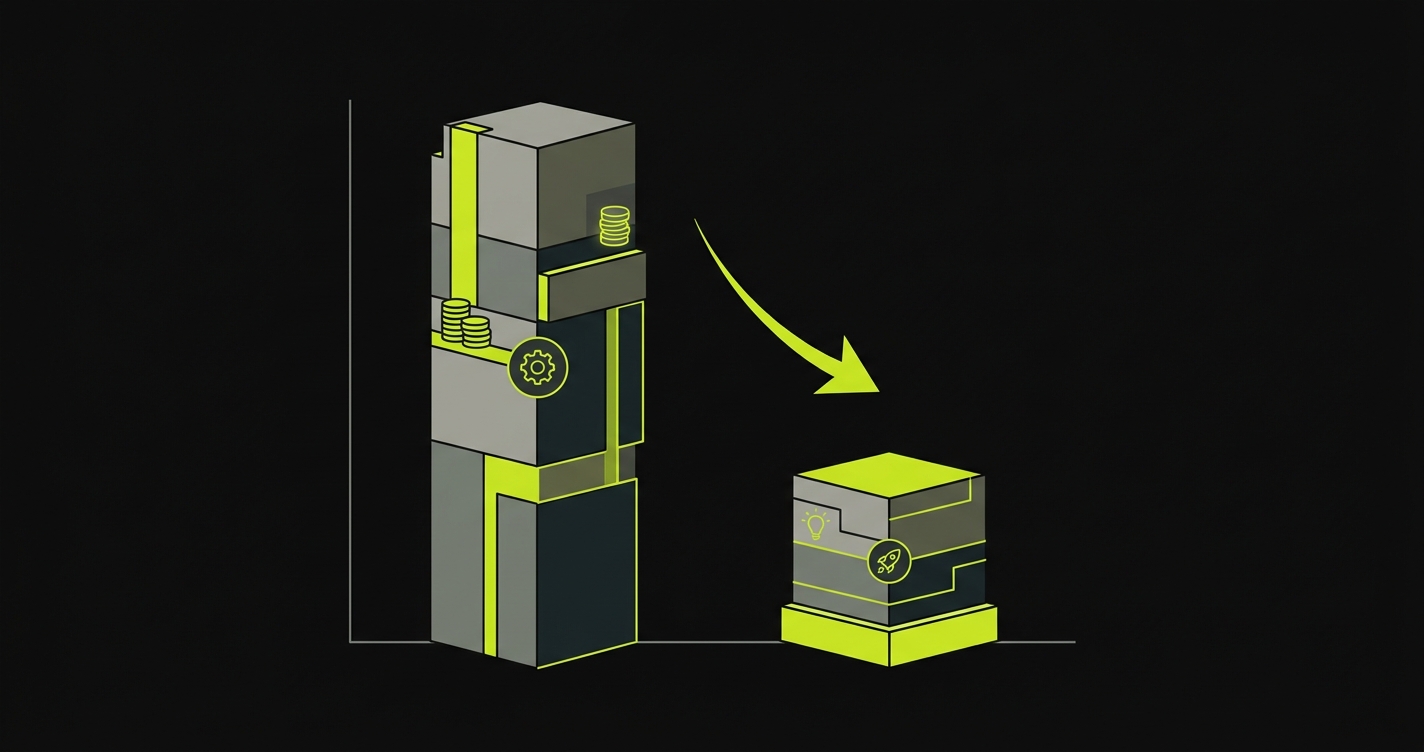
The total cost of SeleniumBox is not just the license fee. It is the license plus the Selenium test maintenance that SeleniumBox cannot eliminate.
For a mid-sized team (15 developers, continuous testing), SeleniumBox's enterprise license typically runs $10,000-30,000 per year depending on grid size and node count. Add 15-25 hours per month of Selenium test maintenance (updating broken selectors, debugging flaky waits, rewriting scripts after UI changes) at $100-150/hour, and maintenance costs $18,000-45,000 per year. Over three years, the total cost of ownership reaches $84,000-225,000 when you combine licensing and maintenance labor.
Autonoma cloud is $499/month ($18K over three years) with zero test maintenance hours. AI self-healing handles UI changes automatically. That represents a 79-92% cost reduction.
Autonoma self-hosted eliminates the platform fee entirely. You pay only for the infrastructure you provision, typically $200-400/month depending on your parallel needs. Over three years, that totals roughly $11K, a 87-95% reduction compared to SeleniumBox's total cost of ownership.
The biggest savings is not swapping one license for another. It is eliminating the 15-25 hours per month of manual Selenium test maintenance that SeleniumBox was never designed to solve. That labor cost is the dominant expense in most testing budgets, and it is invisible on SeleniumBox's pricing page.
Migrating from SeleniumBox to Autonoma
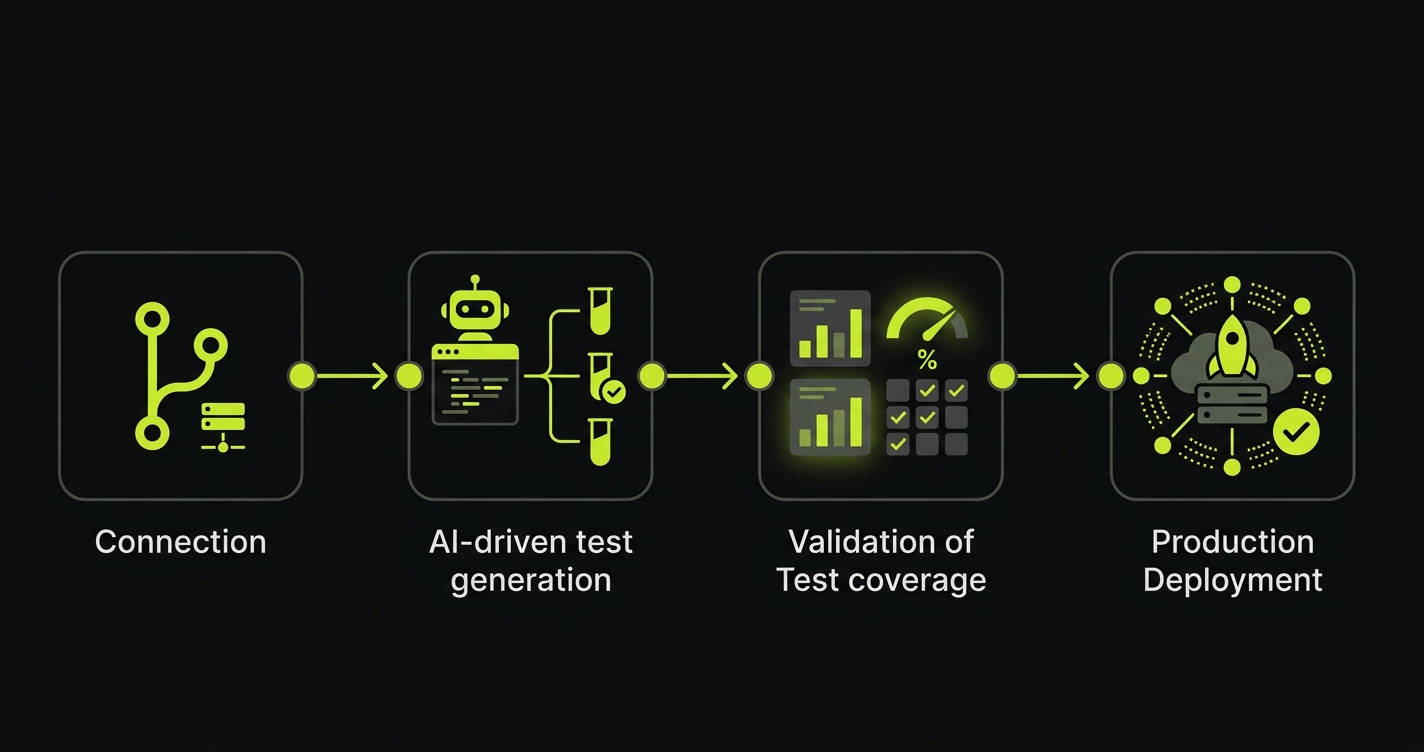
Migration is simpler than you would expect because you are not rewriting Selenium tests into Playwright tests. Autonoma generates entirely new tests from your codebase. Most teams complete the transition in 1-2 weeks.
1. Deploy Autonoma behind your firewall. If you chose SeleniumBox for on-premise deployment, you likely need Autonoma behind your firewall too. Clone the GitHub repo, follow the self-hosting deployment docs, and provision your infrastructure (ECS cluster, database, orchestration). Alternatively, start with Autonoma cloud for a faster evaluation before committing to self-hosted infrastructure.
2. Connect your repo and generate tests. Connect your GitHub repository and let Autonoma's test-planner-plugin analyze your codebase. AI agents generate comprehensive E2E test cases from your routes, components, and user flows. Start with 5-10 critical paths (authentication, checkout, core workflows) and run them in parallel with your existing Selenium suite on SeleniumBox. Compare results side by side.
3. Validate coverage and reliability. Compare AI-generated Playwright tests against your existing Selenium suite. In most cases, Autonoma's vision-based tests catch the same bugs with fewer false failures because they understand application intent rather than relying on DOM selectors. Check for coverage gaps, review AI-generated test plans, and iterate. Most teams achieve equivalent or better coverage within days.
4. Decommission SeleniumBox and cut over. Update your CI/CD pipelines to point at Autonoma, train your team on reviewing AI-generated test plans instead of writing Selenium scripts, and decommission your SeleniumBox grid. Your Selenium test code becomes archival since Autonoma's AI-generated tests replace it entirely. You no longer need Selenium expertise for new hires.
The key insight: you are not porting 500 Selenium tests to Playwright line by line. You are replacing manual test authoring with AI generation. The migration effort is reviewing and validating, not rewriting.
Frequently Asked Questions
Yes. Autonoma is an open-source testing platform on GitHub. Unlike SeleniumBox's proprietary management layer, Autonoma offers full source code access, a free tier with 100K credits, and self-hosting with no feature restrictions. You can deploy it behind your firewall just like SeleniumBox, but with AI test generation and modern Playwright automation included.
Yes. Autonoma is fully self-hostable on AWS, GCP, Azure, or bare-metal infrastructure behind your firewall. Unlike SeleniumBox's proprietary management layer, Autonoma's entire stack is open source and auditable. You get the same behind-firewall deployment with full source code transparency for compliance audits.
SeleniumBox manages Selenium/Appium grids behind your firewall but requires manual test writing. Autonoma replaces the entire stack: modern Playwright replaces legacy Selenium, AI generates tests from your codebase automatically, vision-based self-healing eliminates maintenance, and the full source code is auditable. You get better infrastructure plus intelligent test automation.
No rewriting is needed. You connect your repo and Autonoma's AI generates new tests from your codebase automatically. These tests use vision models instead of CSS selectors, making them more resilient than existing Selenium tests. Your old Selenium code becomes archival. Most teams achieve full coverage within days without writing a single test.
Yes. Autonoma's full source code is on GitHub under BSL 1.1 license (converts to Apache 2.0 in 2028). Every component: orchestration, session management, test execution: is inspectable and auditable. SeleniumBox's management layer is proprietary and closed source, which limits your ability to audit the complete testing infrastructure.
Playwright was built for modern web applications. It's 2-3x faster than Selenium (CDP vs WebDriver protocol), auto-waits for elements (eliminating flaky explicit waits), handles dynamic SPAs natively, and supports Chromium, Firefox, and WebKit with identical APIs. With Autonoma, you don't need to learn Playwright: the AI generates Playwright tests automatically from your codebase.
The Bottom Line
SeleniumBox solves the infrastructure problem: running Selenium grids behind your firewall. But it leaves the bigger problems untouched: manual test writing, brittle selector maintenance, legacy Selenium limitations, and a proprietary management layer you cannot audit. The total cost (license plus maintenance labor) runs $84K-225K over three years for a mid-sized team.
Autonoma solves every one of those problems. Full source code on GitHub (BSL 1.1, Apache 2.0 in 2028). Self-host behind your firewall or use our cloud. AI generates and maintains tests from your codebase with zero manual writing. Modern Playwright replaces legacy Selenium. Unlimited parallels on every plan. No vendor lock-in. Free tier starts at 100K credits, cloud at $499/month, self-hosted at infrastructure cost only. Three-year savings: 79-95% depending on deployment model.
Ready to replace SeleniumBox with open source?
Start Free - 100K credits, no credit card, 5-minute setup
View on GitHub - Full source code, self-host documentation
Book Demo - See AI test generation in action
Related Reading: