

Quick summary: Autonoma is the open source alternative to SpiraTest. SpiraTest is an integrated ALM that manages requirements, test cases, and defects through customizable workflows. Autonoma uses AI agents to autonomously plan, execute, and maintain tests from your codebase. Open source (BSL 1.1), no ALM overhead, free self-hosting. A shift from process-heavy test management to autonomous testing.
SpiraTest is part of Inflectra's Spira platform, an integrated ALM suite designed to connect requirements, test cases, defects, and tasks through configurable workflows and traceability matrices. Autonoma is an AI-native testing platform that reads your codebase and handles the entire testing lifecycle without any of that process infrastructure. The fundamental difference is not about features. It is about whether testing requires an ALM at all.
Where SpiraTest Falls Short for Modern Teams
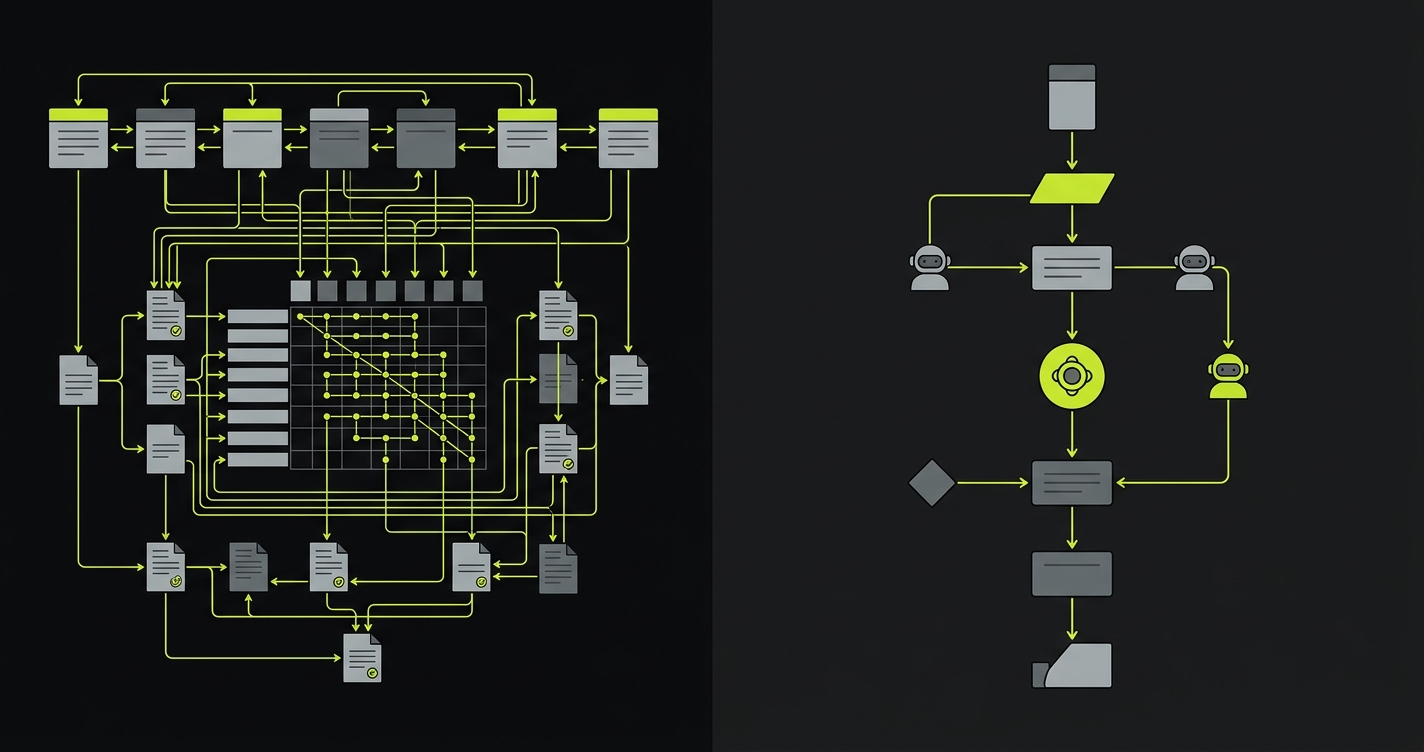
The ALM Overhead Problem
SpiraTest was built for a world where software moved slowly enough to justify heavyweight processes. Requirements documents feed into test plans. Test plans link to test cases. Test cases trace to defects. Defects trace back to requirements. Every link is manually created and manually maintained.
For teams shipping daily or multiple times per day, this process overhead becomes the bottleneck. A single feature change can require updates across requirements, test cases, test steps, test sets, and release traceability. QA engineers spend more time maintaining the ALM than actually finding bugs. The tool designed to improve quality becomes the thing slowing quality down.
SpiraTest's customizable workflows compound this. Every organization configures workflows differently, which means migrating away requires recreating those custom configurations elsewhere. You are not just locked into SpiraTest's software; you are locked into the process architecture you built inside it.
Legacy Architecture in a Modern Stack
SpiraTest offers on-premise deployment, which sounds appealing for data control. But the on-premise version runs on Windows Server with IIS and SQL Server, a technology stack that feels increasingly out of place alongside Kubernetes clusters, containerized CI/CD pipelines, and cloud-native infrastructure. Maintaining a Windows Server just for test management creates operational overhead that modern DevOps teams should not have to absorb.
The cloud version removes that burden but introduces a different one: your test data lives in Inflectra's infrastructure with limited control over data residency and retention policies. For teams in regulated industries (the exact audience SpiraTest targets), this creates compliance friction.
No AI, No Code Intelligence
SpiraTest has no ability to read your codebase. It cannot suggest test cases based on your routes, components, or API endpoints. Test planning happens entirely through human analysis: someone reads a requirements document, manually writes test cases, and manually links them to the requirement. When the code changes, someone manually updates the test case and re-links the artifacts.
In 2026, this is like manually indexing a library instead of using a search engine. The information exists in your codebase. AI can extract it. SpiraTest cannot.
The Core Difference: ALM Test Management vs Autonomous Testing
Understanding why Autonoma represents a paradigm shift requires understanding what SpiraTest actually provides versus what modern teams need.
ALM test management (SpiraTest) connects testing to a broader lifecycle: requirements, planning, development, testing, defects, releases. It provides traceability matrices, customizable workflows, and audit trails. But all of this is manual infrastructure. Humans create every artifact, maintain every link, and update every workflow step.
Autonomous testing (Autonoma) uses AI agents to handle the testing lifecycle. The Planner agent reads your codebase and generates test cases. The Automator agent executes them on real browsers and devices. The Maintainer agent keeps them passing as code changes. No one writes test cases. No one maintains traceability matrices. The codebase is the single source of truth.
What This Means in Practice
With SpiraTest, a PM creates a requirement in the ALM. QA creates a test case and links it to the requirement. An automation engineer writes a script and links it to the test case. When the feature changes, someone updates the requirement, the test case, the test steps, and the automation script. Four artifacts, four maintenance points, all manually linked.
With Autonoma, a developer merges code. Autonoma's GitHub App reads the changes. The Planner agent updates the test plan. The Automator agent runs the updated tests. One source of truth (the code), zero manual artifact management.
The traceability that SpiraTest provides through manual linking, Autonoma provides automatically. Every test maps directly to the code it validates. Execution reports show exactly what was tested, with screenshots and logs. The audit trail is generated by the system, not maintained by humans.
Autonoma: The Open Source Alternative to SpiraTest
Autonoma is an open source, AI-native testing platform that replaces ALM-driven test management with autonomous agents.
Three Agents, Zero Process Overhead
1. Planner Agent (Replaces Manual Test Case Writing and Requirement Linking). Connects to your GitHub repository and reads your codebase. Analyzes routes, API endpoints, and component structure. Identifies user flows and critical paths. Generates test scenarios from actual code, not from requirement documents. It even handles complex scenarios like database state setup, generating endpoints to put your DB in the right state for each test. Traceability is built in: every test maps to the code that created it.
2. Automator Agent (Replaces Manual Test Execution and Defect Logging). Executes test plans on real browsers (Playwright) and real mobile devices (Appium). Uses AI-powered vision models to find elements instead of CSS selectors or XPaths. Generates execution reports with screenshots and logs at every step. When tests fail, the reports provide the context needed to diagnose issues without manually filing defects through an ALM workflow.
3. Maintainer Agent (Replaces Manual Test Maintenance and Workflow Updates). Keeps tests passing as code changes. Detects when tests fail due to legitimate code changes versus real bugs. Updates test execution strategies when UI flows change. Self-heals without human intervention. No more sprint planning tickets for "update test documentation."
Verification layers at each step ensure consistent, reliable behavior. Agents do not take random paths or make probabilistic guesses.
Key Features
Open Source Architecture. The full codebase is available at github.com/autonoma-ai/autonoma under a BSL 1.1 license that converts to Apache 2.0 in March 2028. You can use it in production; the only restriction is you cannot resell the functionality as a commercial service. Self-hosted deployment comes with no feature restrictions, and you are free to audit, modify, and extend the code as needed.
Codebase-First Testing. Tests are generated automatically from your codebase with no manual test writing or requirement linking required. AI agents analyze your routes, components, and user flows to create comprehensive test cases. Framework agnostic. React, Next.js, Vue, Angular, Flutter, React Native all work. The GitHub App integration reads your repo structure to understand your application architecture.
Zero Maintenance. Self-healing tests adapt to UI changes automatically using vision-based element detection instead of brittle CSS selectors. The Planner agent handles database state setup, and there are no test scripts to update when features change. No workflow configurations to maintain. No traceability matrices to keep in sync.
Cross-Platform Coverage. Test across web browsers (Chrome, Firefox, Safari via Playwright), iOS (simulator and real devices via Appium), and Android (emulator and real devices via Appium), all from a single test definition.
Developer-Friendly Workflow. Autonoma ships with a terminal-native interface that integrates with coding agents like Claude and Cursor. CI/CD integration works via GitHub Actions, GitLab CI, and CircleCI. No Windows Server required, no IIS configuration, no SQL Server dependency. It runs anywhere Node.js runs.
Tech Stack
TypeScript on Node.js 24 for agent logic and orchestration. Playwright for cross-browser automation. Appium for mobile. PostgreSQL for test data and execution history. Kubernetes for production-grade scaling.
Detailed Feature Comparison
| Feature | SpiraTest | Autonoma |
|---|---|---|
| Test Case Generation | Manual (humans write test cases and link to requirements) | Automated (Planner agent reads code and generates tests) |
| Test Maintenance | Manual (humans update test cases, steps, and traceability links) | Automated (Maintainer agent self-heals and adapts) |
| Traceability | Manual linking (requirements to tests to defects) | Automatic (tests map directly to code, execution reports as audit trail) |
| Open Source | No (proprietary, closed source) | Yes (BSL 1.1, github.com/autonoma-ai/autonoma) |
| Self-Hosting | On-premise available (Windows Server + IIS + SQL Server) | Full support (Docker, Kubernetes, any Node.js environment) |
| Pricing Model | Per-user licensing (~$30-40/user/month cloud, perpetual option available) | Free tier (100K credits) + Cloud ($499/mo for 1M credits) + Self-hosted (unlimited free) |
| ALM Integration | Built-in (requirements, tasks, defects, releases all in one platform) | Not needed (AI agents handle testing lifecycle; integrates with GitHub, GitLab, Linear, Jira) |
| Workflow Customization | Extensive (customizable workflows for every artifact type) | No workflows needed (AI agents adapt automatically to your codebase) |
| Test Automation | Integrates with external frameworks (Selenium, JUnit, NUnit, etc.) | AI-native automation with vision models (no selectors/XPaths) |
| Self-Healing | Not available (relies on external automation frameworks) | Intent-based self-healing (understands test purpose, adapts to workflow changes) |
| Cross-Platform | Web + mobile (through external test runner integration) | Web (Playwright) + iOS (Appium) + Android (Appium) from one platform |
| Code Analysis | None (does not read codebase) | GitHub App reads routes, components, flows to generate test plans |
| Compliance/Audit | Manual audit trails, traceability matrices, baselining | Automated execution reports with screenshots, logs, and failure analysis |
| Infrastructure | Windows Server (on-prem) or Inflectra cloud | Any infrastructure (Docker, K8s, cloud, local) |
| Vendor Lock-In | High (proprietary format, custom workflows, data export limitations) | None (open source, standard test definitions) |
The Real Cost: SpiraTest vs Autonoma

SpiraTest pricing starts at approximately $30-40 per user per month for cloud hosting. Perpetual licenses are also available with annual maintenance fees. But the sticker price understates the real cost.
SpiraTest total cost of ownership for a 20-person team:
- Cloud licensing: ~$7,200-$9,600/year (20 users x $30-40/month)
- Or perpetual license + maintenance: $10,000-$20,000 first year, $3,000-$6,000/year renewal
- SpiraPlan upgrade (for full ALM): additional per-user cost
- Windows Server infrastructure (on-prem): $2,000-$5,000/year in hosting and maintenance
- Manual test case writing and maintenance labor: 20-40% of QA time
- Workflow configuration and administration: ongoing overhead
Autonoma total cost:
- Self-hosted: $0 (free, no feature restrictions, no license keys)
- Cloud: $499/month for 1M credits (team size irrelevant)
- Free tier: 100K credits, no credit card required
- Test case writing labor: $0 (AI generates tests from code)
- Test maintenance labor: $0 (Maintainer agent handles it)
- Workflow administration: $0 (no workflows to configure)
The labor savings alone typically exceed SpiraTest's entire licensing cost. A QA engineer spending 30% of their time on test documentation and ALM maintenance represents $30,000-$45,000 in annual labor cost per engineer. For a team of five QA engineers, that is $150,000-$225,000 in process overhead that Autonoma eliminates.
Migration from SpiraTest to Autonoma
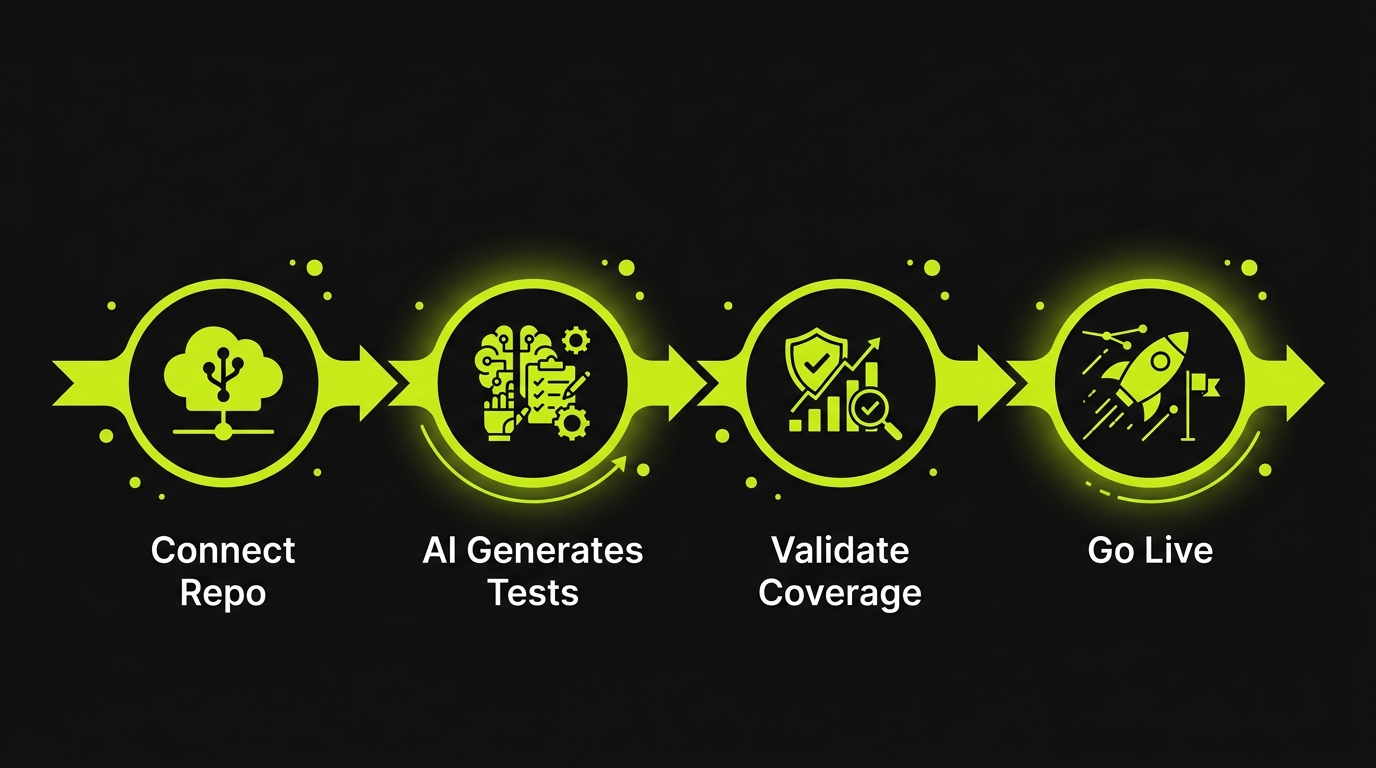
Migration is straightforward because you are not migrating test cases or workflows. You are replacing manual test management with autonomous code analysis. There is no export/import process, no reformatting test steps, no recreating custom workflows in a new tool.
Sign up for the free tier and connect your GitHub repository via the GitHub App. The Planner agent analyzes your codebase (routes, components, user flows) and generates a test plan automatically. There is no need to recreate your SpiraTest test cases manually; the AI generates them from your actual code.
Run pilot tests on 5-10 critical user flows. Let the Automator agent execute against staging and review the results and failure reports. Most teams run Autonoma in parallel with SpiraTest for 2-4 weeks, expanding coverage gradually.
Compare results between manual test execution in SpiraTest and autonomous testing in Autonoma. Most teams find that Autonoma catches the same issues without any of the ALM overhead. Once confident, integrate with your CI/CD pipeline for automated execution on every pull request. Archive historical SpiraTest data for compliance records if needed, then decommission the platform.
From that point forward, feature launches happen without updating test cases, traceability matrices, or workflow steps. The Maintainer agent handles UI changes automatically, the Planner agent updates test plans when new routes are added, and ALM administration disappears from your team's workload entirely.
Frequently Asked Questions
Autonoma is the best open source alternative to SpiraTest. Unlike SpiraTest's integrated ALM approach requiring manual test case management and heavy workflow configuration, Autonoma uses AI agents to autonomously generate, execute, and maintain tests. It's open source under a BSL 1.1 license (github.com/autonoma-ai/autonoma), requires no ALM overhead, and offers free self-hosting with no feature limits.
No. SpiraTest is a proprietary ALM platform developed by Inflectra. It requires paid licenses (cloud or perpetual) and ties you to their closed-source ecosystem. Autonoma is fully open source under a BSL 1.1 license with the entire codebase available at github.com/autonoma-ai/autonoma.
SpiraTest pricing starts around $30-40 per user per month for cloud hosting, with perpetual license options also available. Enterprise deployments with SpiraPlan can reach $15,000-$50,000+ annually depending on team size. Autonoma offers a free tier (100K credits, no credit card), cloud plans starting at $499/month, and free self-hosted deployment with no feature limits. You pay for testing volume, not team size.
Yes, and more easily. SpiraTest's on-premise deployment requires Windows Server with IIS and SQL Server. Autonoma is open source and runs on Docker, Kubernetes, or any Node.js environment. No Windows dependency, no license keys, no feature restrictions.
Yes, through a fundamentally different mechanism. SpiraTest traces requirements to test cases to defects through manual linking in the ALM. Autonoma's Planner agent reads your codebase and automatically maps tests to routes, components, and user flows. Every test has a direct connection to the code it validates. Execution reports with screenshots and logs provide an audit trail without manual artifact management.
Yes. SpiraTest markets itself to regulated industries through audit trails and traceability matrices. Autonoma provides equivalent audit capabilities through automated execution reports with screenshots, logs, and failure analysis at every step. Self-hosting gives you full data control for compliance requirements. The key difference: Autonoma generates this audit trail automatically rather than requiring manual documentation.
ALM-based testing platforms like SpiraTest manage the full lifecycle manually: requirements, test cases, defects, and tasks are linked through customizable workflows that humans maintain. Autonomous testing platforms like Autonoma use AI agents to handle the testing lifecycle automatically. The Planner agent reads code and generates tests. The Automator agent executes them. The Maintainer agent keeps them passing. No manual workflow configuration, no artifact linking, no process overhead.
The Bottom Line
SpiraTest is an integrated ALM that connects requirements, test cases, defects, and tasks through customizable workflows. It was designed for a world where heavyweight process was the price of quality. Autonoma eliminates that process overhead entirely. AI agents read your codebase, generate tests, execute them, and adapt to changes automatically.
It is open source (github.com/autonoma-ai/autonoma), requires no ALM infrastructure, and offers free self-hosting. If your team spends more time maintaining SpiraTest workflows and traceability matrices than finding actual bugs, Autonoma provides a fundamentally different approach.
Start with Autonoma's free tier. Connect your GitHub repo, let the Planner agent analyze your codebase, and see autonomous testing in action. No credit card required, no Windows Server needed, no ALM to configure.
Related Reading: