

Quick summary: Autonoma is the open source alternative to TestCollab. TestCollab offers a QA Copilot that assists humans in writing test cases and supports data-driven testing. Autonoma uses AI agents to autonomously plan, execute, and maintain tests from your codebase. Open source (BSL 1.1), self-hostable for free, no per-user pricing. The shift from copilot-assisted to autonomous testing.
TestCollab positions itself as an affordable test management platform with an AI "QA Copilot" that helps you write test cases faster. The key word is helps. You still write the tests. You still maintain them. You still execute them with separate tools. Autonoma takes a fundamentally different approach: AI agents that handle the entire testing lifecycle without human involvement. That is the core distinction, and it matters more than any feature checklist.
Where TestCollab Falls Short
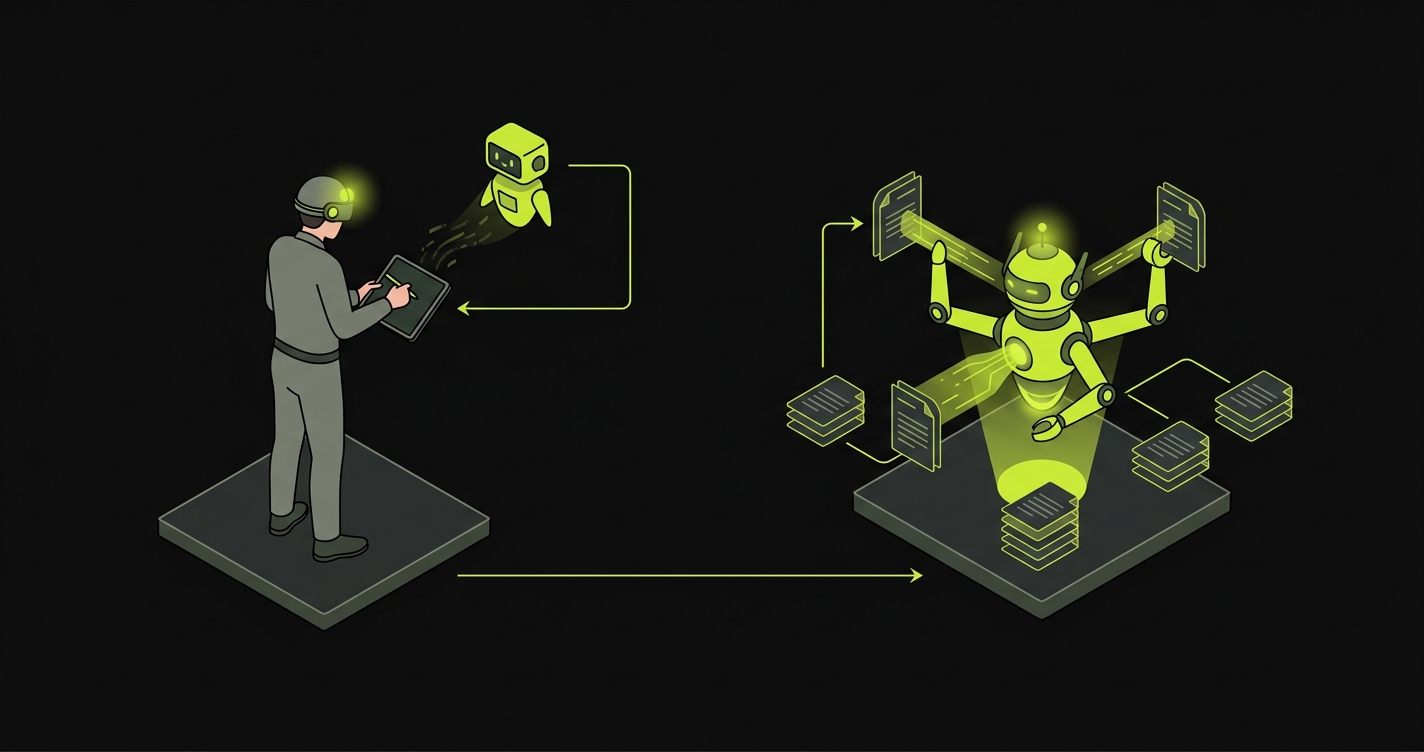
The Copilot Ceiling
TestCollab's QA Copilot is their flagship AI feature. It suggests test case steps, helps structure test scenarios, and speeds up the writing process. But a copilot is, by definition, an assistant to the pilot. You are still the pilot. Every test case still requires a human to initiate, review, approve, and maintain it.
This creates a productivity ceiling. A copilot can make you 2-3x faster at writing test cases, but it cannot make the work disappear. Your QA engineers still spend their days inside a test management UI, creating and updating documentation that exists separately from your codebase. When a developer ships a feature change, someone still needs to open TestCollab and update the affected test cases, copilot-assisted or not.
The fundamental bottleneck is not writing speed. It is the fact that humans are in the loop at all for routine test maintenance.
Test Management Without Test Execution
TestCollab manages test cases. It does not execute them. For automated testing, you need Selenium, Playwright, Cypress, or another execution framework integrated separately. This creates a two-system problem: your test documentation lives in TestCollab, your automated test code lives in a repository, and keeping them in sync is a manual, ongoing burden.
Data-driven testing in TestCollab means you can parameterize test cases with CSV or Excel data. That is useful for manual test planning, but it does not bridge the gap between test documentation and test automation. You still write the automation code yourself. The data-driven capability helps you organize manual test scenarios, not execute them automatically.
For teams that want end-to-end coverage, TestCollab is only half the picture. You pay for test management and still need to build or buy test execution separately.
Small Ecosystem, No Self-Hosting
TestCollab is built by a smaller company, which has trade-offs. The integration ecosystem is limited compared to enterprise platforms. There is no self-hosting option, which means your test data lives on their infrastructure with no alternative. If the company changes direction, raises prices, or shuts down, your test management data goes with it.
The platform also lacks the deep CI/CD integrations that modern engineering workflows demand. While basic webhooks and API access exist, there is no native GitHub App, no first-class GitLab CI integration, and no Kubernetes-native deployment option. For teams running infrastructure-as-code and GitOps workflows, TestCollab requires workarounds rather than direct integration.
The Core Difference: Copilot vs Autonomous
Understanding the difference between TestCollab and Autonoma requires understanding two fundamentally different approaches to AI in testing.
Copilot-assisted testing (TestCollab) means AI helps humans do work faster. The QA Copilot suggests test steps, auto-completes scenarios, and structures test cases. But the human initiates every action, reviews every suggestion, and maintains every test case. The human is doing the work; AI makes them more efficient.
Autonomous testing (Autonoma) means AI agents do the work independently. The Planner agent reads your codebase and generates test cases. The Automator agent executes them on real browsers and devices. The Maintainer agent keeps them passing as your code evolves. Humans set goals and review results. The AI handles execution.
This is not a subtle distinction. It is the difference between a faster typewriter and a document that writes itself.
What This Means in Practice
With TestCollab, a developer ships a feature. A QA engineer opens TestCollab, uses the QA Copilot to draft new test cases, reviews and edits them, links them to requirements, then separately writes automation code in Playwright or Cypress. When the feature changes next sprint, someone reopens TestCollab, updates the test cases (copilot-assisted), and updates the automation code. Two maintenance points, every change, forever.
With Autonoma, a developer merges code. Autonoma's GitHub App detects the change. The Planner agent updates the test plan based on code analysis. The Automator agent runs the updated tests. One source of truth (the code), zero manual maintenance.
Autonoma: The Open Source Alternative to TestCollab
Autonoma is an open source, AI-native testing platform that replaces copilot-assisted test writing with fully autonomous agents.
Three Agents, Zero Manual Work
1. Planner Agent (Replaces QA Copilot and Manual Test Writing). Connects to your GitHub repository and reads your codebase. Analyzes routes, API endpoints, and component structure. Identifies user flows and critical paths. Generates test scenarios from actual code, not from human descriptions. It handles complex scenarios like database state setup, generating endpoints to put your DB in the right state for each test. Unlike the QA Copilot which suggests test steps for you to review, the Planner agent creates complete, executable test plans autonomously.
2. Automator Agent (Replaces Separate Execution Tools). Executes test plans on real browsers (Playwright) and real mobile devices (Appium). Uses AI-powered vision models to find elements instead of CSS selectors or XPaths. Generates execution reports with screenshots and logs. TestCollab requires you to integrate and maintain separate automation frameworks. Autonoma handles execution natively.
3. Maintainer Agent (Eliminates Ongoing Test Maintenance). Keeps tests passing as code changes. Detects when tests fail due to legitimate code changes versus real bugs. Updates test execution strategies when UI flows change. Self-heals without human intervention. No more sprint tasks for "update test cases in TestCollab." The Maintainer agent handles it automatically.
Verification layers at each step ensure consistent, reliable behavior. Agents do not take random paths or make probabilistic guesses.
Key Features
Open Source Architecture. The full codebase is available at github.com/autonoma-ai/autonoma under a BSL 1.1 license that converts to Apache 2.0 in March 2028. Self-hosted deployment comes with no feature restrictions. You can audit, modify, and extend the code as needed. TestCollab offers no equivalent: it is closed source with no self-hosting option.
Codebase-First Testing. Tests are generated from your codebase with no manual test writing required. AI agents analyze your routes, components, and user flows to create comprehensive test cases. Framework agnostic: React, Next.js, Vue, Angular, Flutter, React Native all work. No copilot suggestions to review; the Planner agent creates complete test plans from code analysis.
Zero Maintenance. Self-healing tests adapt to UI changes automatically using vision-based element detection instead of brittle CSS selectors. The Planner agent handles database state setup. There are no test scripts to update when features change, no test documentation to keep in sync with code.
Cross-Platform Coverage. Test across web browsers (Chrome, Firefox, Safari via Playwright), iOS (simulator and real devices via Appium), and Android (emulator and real devices via Appium), all from a single test definition. TestCollab manages test cases for different platforms but requires separate automation tools for each.
Developer-Friendly Workflow. Terminal-native interface that integrates with coding agents like Claude and Cursor. CI/CD integration via GitHub Actions, GitLab CI, and CircleCI. Runs locally or in cloud infrastructure. No separate test management UI to context-switch into.
Detailed Feature Comparison
| Feature | TestCollab | Autonoma |
|---|---|---|
| AI Approach | QA Copilot (assists humans in writing tests) | Autonomous agents (AI generates, executes, and maintains tests independently) |
| Test Case Generation | Copilot-assisted (human initiates, reviews, approves) | Fully automated (Planner agent reads codebase and generates tests) |
| Test Execution | Not included (requires separate tools like Selenium, Playwright) | Built-in (Automator agent runs on real browsers and devices) |
| Test Maintenance | Manual (copilot helps, but humans update test cases) | Automated (Maintainer agent self-heals as code changes) |
| Data-Driven Testing | CSV/Excel parameterization for manual test cases | AI generates test data from codebase analysis, including DB state setup |
| Open Source | No (proprietary, closed source) | Yes (BSL 1.1, github.com/autonoma-ai/autonoma) |
| Self-Hosting | Not available (cloud-only) | Full support (deploy anywhere, no feature restrictions) |
| Pricing Model | Per-user ($9-24/user/month depending on plan) | Free tier (100K credits) + Cloud ($499/mo for 1M credits) + Self-hosted (unlimited free) |
| Code Analysis | None (does not read your codebase) | GitHub App reads routes, components, flows to generate test plans |
| Self-Healing | Not available | Vision-based, intent-aware self-healing (no selectors or XPaths) |
| Cross-Platform | Test case management only (execution requires separate tools) | Web (Playwright) + iOS (Appium) + Android (Appium) from one platform |
| CI/CD Integration | Basic webhooks and API | Native GitHub Actions, GitLab CI, CircleCI integration |
| Database Setup | Manual configuration | Planner agent generates endpoints for DB state setup automatically |
| Vendor Lock-In | Moderate (proprietary format, no data portability guarantees) | None (open source, standard test definitions) |
Cost Comparison: TestCollab vs Autonoma
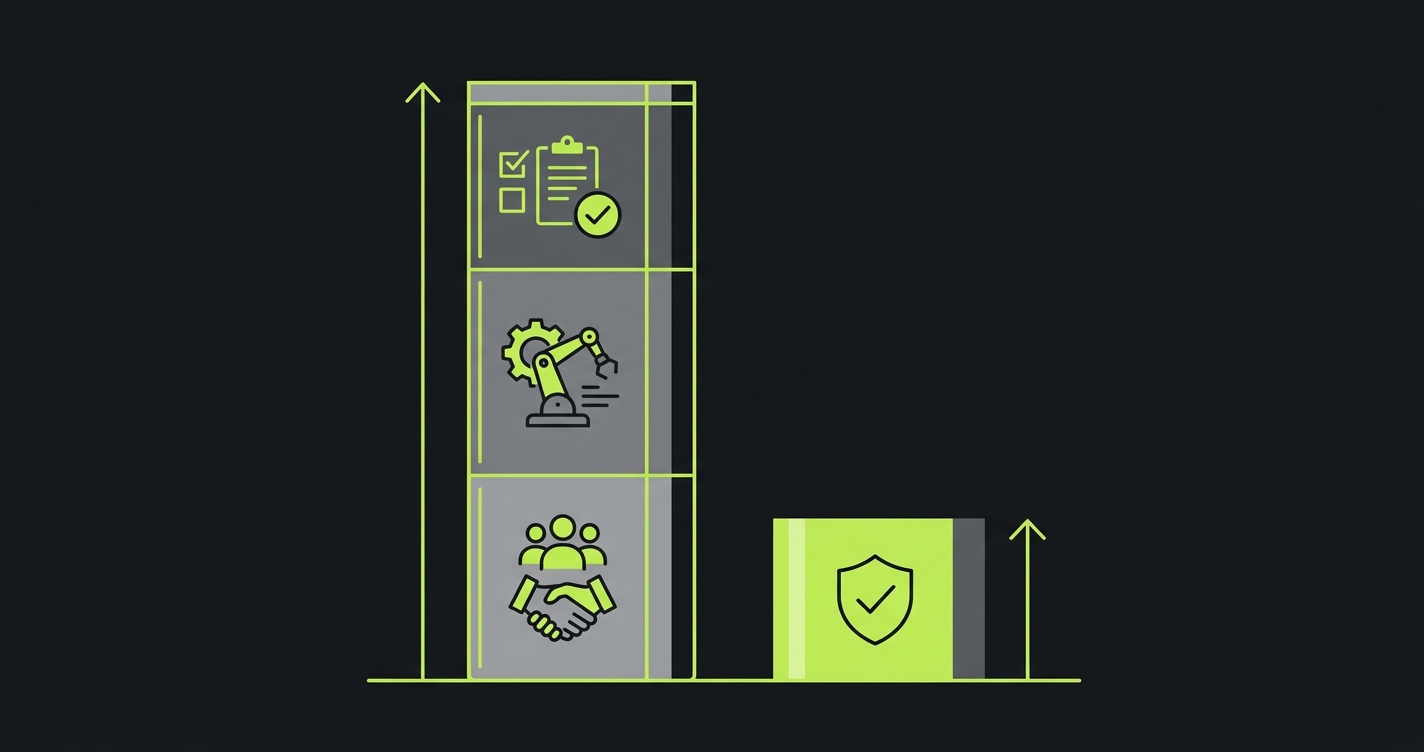
TestCollab's pricing is affordable compared to enterprise tools, ranging from roughly $9 to $24 per user per month. For a 10-person QA team, that is $90-$240/month. For a 30-person team, $270-$720/month. Add-ons for integrations and storage increase costs further. And crucially, these costs cover only test management. Test execution tooling (Selenium Grid, BrowserStack, LambdaTest) is a separate line item.
Autonoma's pricing model is fundamentally different. Self-hosted is free with no feature restrictions. Cloud starts at $499/month for 1M credits, with a free tier (100K credits, no credit card). You pay for testing volume, not team size. A 5-person team and a 50-person team pay the same if they run the same tests. And because Autonoma includes test execution, there is no separate bill for execution infrastructure.
The deeper cost difference is labor. TestCollab's QA Copilot makes humans faster, but those humans still spend 20-40% of their time on test documentation. Autonoma eliminates that labor entirely. For a team of 10 QA engineers at $100K average salary, that is $200K-$400K in annual labor savings from removing manual test case management.
Migration from TestCollab to Autonoma
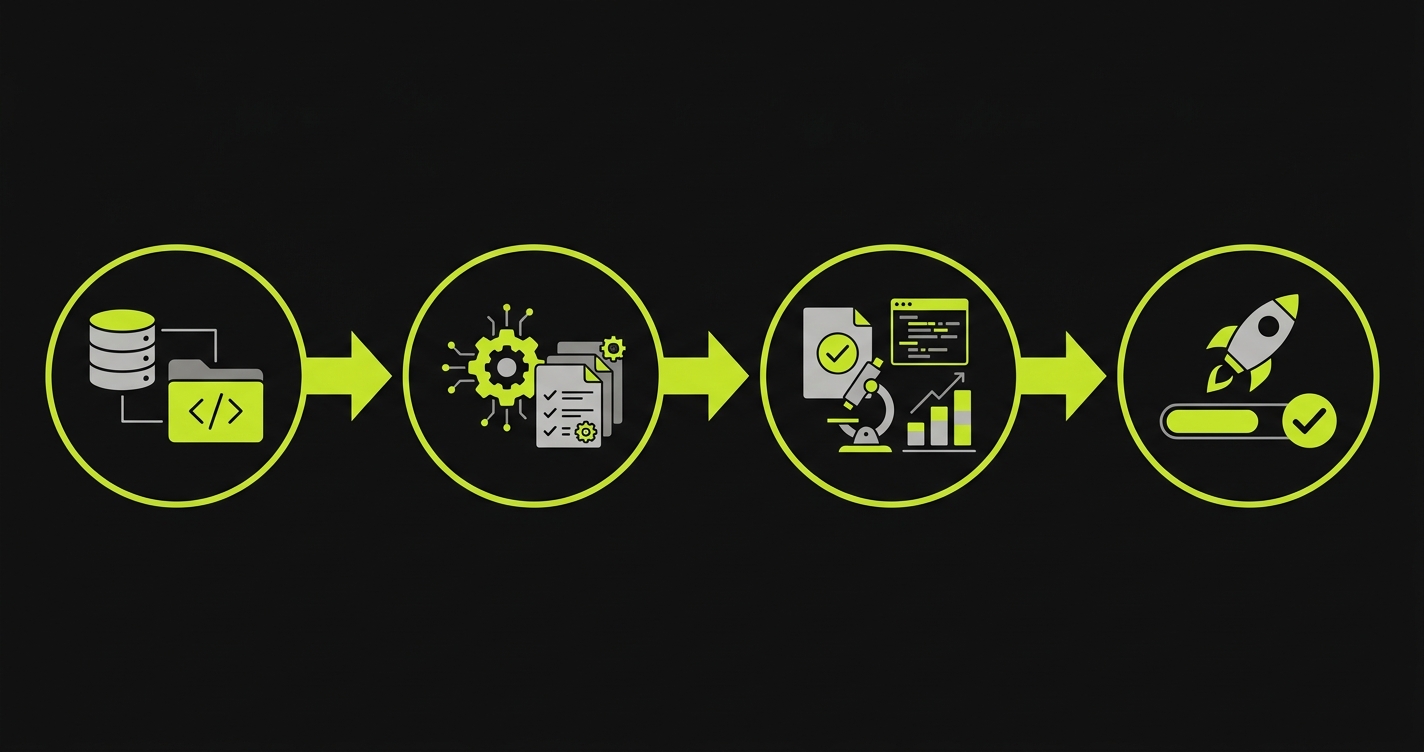
Migration is straightforward because you are not migrating test cases. You are replacing test case management with autonomous code analysis.
Sign up for the free tier and connect your GitHub repository via the GitHub App. The Planner agent analyzes your codebase (routes, components, user flows) and generates a test plan automatically. There is no need to export or recreate your TestCollab test cases. Run pilot tests on 5-10 critical user flows. Let the Automator agent execute against staging and review the results.
Most teams run Autonoma in parallel with TestCollab for 2-4 weeks. Compare results between copilot-assisted manual testing and autonomous testing. Most teams find the AI-generated tests cover flows they never thought to document manually, because the Planner agent reads code paths rather than relying on human memory.
Once confident, integrate with your CI/CD pipeline for automated execution on every pull request. Archive historical TestCollab data if needed for compliance. Cancel the subscription. From that point forward, feature launches happen without test case updates, sprint planning drops "update test documentation" from the backlog, and your QA engineers shift from writing tests to reviewing autonomous test results.
Frequently Asked Questions
Autonoma is the best open source alternative to TestCollab. Unlike TestCollab's QA Copilot that assists humans in writing test cases, Autonoma uses AI agents to autonomously generate, execute, and maintain tests from your codebase. It's open source under a BSL 1.1 license (github.com/autonoma-ai/autonoma), self-hostable for free, and eliminates per-user pricing.
TestCollab's QA Copilot assists humans in writing test cases faster. You still create, review, and maintain every test case. Autonoma's AI agents work autonomously: the Planner reads your codebase and generates test cases, the Automator executes them, and the Maintainer keeps them passing as code changes. Copilot makes you faster; autonomous agents do the work for you.
TestCollab charges $9-24 per user per month depending on the plan, scaling linearly with team size. Autonoma offers a free tier (100K credits, no credit card), cloud plans starting at $499/month for 1M credits, and free self-hosted deployment with no feature limits. With Autonoma, pricing is based on test volume, not team size.
Yes. Autonoma is open source (BSL 1.1 license) and can be self-hosted on your infrastructure with zero feature restrictions. Clone the repo from github.com/autonoma-ai/autonoma and deploy on Kubernetes, Docker, or any Node.js environment. TestCollab offers no self-hosting option.
No. TestCollab is a test management platform. It helps you organize and write test cases, but does not execute automated tests. You need separate tools like Selenium, Playwright, or Cypress for execution. Autonoma handles the full lifecycle: AI agents generate tests from your codebase, execute them on real browsers and devices, and maintain them as code changes.
TestCollab supports data-driven testing through CSV/Excel parameterization of manual test cases. This helps you organize test data for manual scenarios. Autonoma's Planner agent generates test data automatically from codebase analysis, including database state setup endpoints. The data is derived from your actual code, not manually prepared spreadsheets.
The Bottom Line
TestCollab offers affordable test management with a QA Copilot that helps humans write test cases faster. Autonoma eliminates the need to write test cases at all. AI agents read your codebase, generate tests, execute them on real browsers and devices, and maintain them as your code evolves.
It is open source (github.com/autonoma-ai/autonoma), self-hostable for free, and priced by test volume rather than team size. If your team is using a copilot to write tests faster but still spending hours every sprint on test maintenance, Autonoma offers a fundamentally different model: let AI do the work, not just assist with it.
Start with Autonoma's free tier. Connect your GitHub repo, let the Planner agent analyze your codebase, and see autonomous testing in action. No credit card required, no per-user pricing, no test cases to write.
Related Reading: