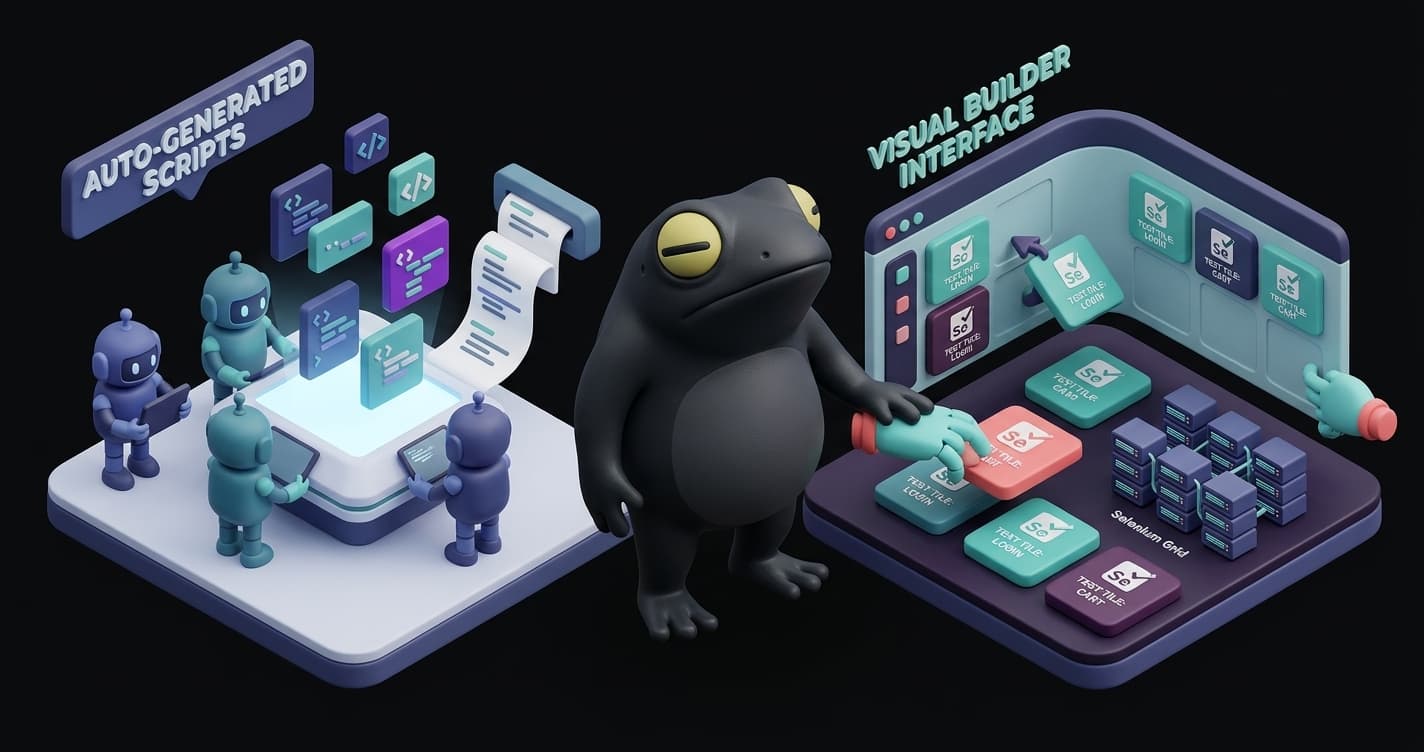

Quick summary: Autonoma is the open-source alternative to TestCraft. Unlike TestCraft's proprietary visual Selenium builder (enterprise pricing, Selenium lock-in, Perforce-owned), Autonoma generates tests automatically from your codebase using AI agents. No Selenium dependency, no visual builder to maintain, no vendor lock-in. Full source code on GitHub (BSL 1.1), self-hosting, vision-based self-healing, unlimited parallel execution. Free tier: 100K credits. Cloud: $499/month. Self-hosted: no ongoing costs.
TestCraft built its reputation on a simple promise: create Selenium tests visually, without writing code. Drag and drop elements, define flows, and let TestCraft generate the Selenium scripts. For teams that couldn't hire automation engineers, this was genuinely useful. But underneath the visual builder, every test is still a Selenium script. And Selenium's well-documented fragility, slow execution, and maintenance burden don't disappear because you built the test with a GUI instead of a text editor.
Since Perforce acquired TestCraft in 2020, the product has been folded into the Perfecto enterprise suite. Pricing is opaque. The roadmap is controlled by an enterprise parent company. And the fundamental architecture, visual Selenium test building, hasn't evolved to match modern testing approaches that use AI vision and codebase analysis instead of DOM selectors.
Autonoma is the open-source alternative for teams that want to move beyond Selenium entirely. AI generates tests from your codebase. Vision models replace DOM selectors. Full source code on GitHub. This guide covers where TestCraft falls short, how Autonoma solves those problems, and how to migrate.
Where TestCraft Falls Short
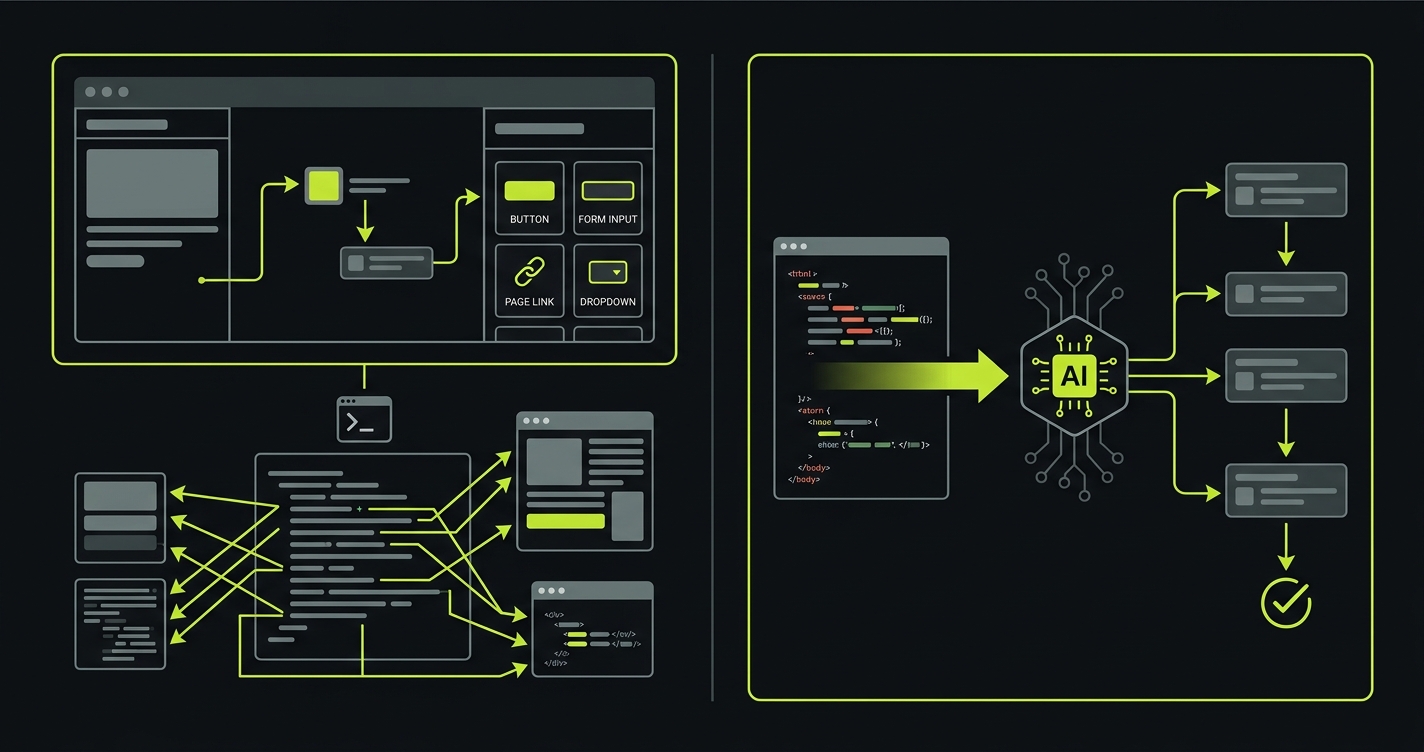
Three fundamental limitations drive teams away from TestCraft.
Still Selenium Under the Hood
TestCraft's visual builder is a UI layer on top of Selenium WebDriver. Every test you create, regardless of how you build it, executes as a Selenium script. This means you inherit every limitation Selenium carries: slow execution compared to modern frameworks, high resource consumption, inconsistent cross-browser behavior, and a massive dependency on DOM selectors.
Selenium's architecture was designed in 2004 for a different web. Modern single-page applications, shadow DOM components, dynamic rendering, and complex state management all create friction that Selenium was never built to handle. TestCraft's visual builder makes it easier to create Selenium tests, but it cannot fix the fact that those tests are inherently fragile.
When a developer changes a CSS class, restructures a component, or updates a form layout, Selenium locators break. TestCraft's AI-based self-healing attempts to fix broken locators automatically, but this approach is fundamentally reactive. It waits for locators to break, then tries to find a replacement. If the UI change is significant enough, such as restructuring a checkout flow or redesigning a navigation menu, locator patching cannot keep up. You end up manually rebuilding visual flows from scratch.
One QA lead told us: "TestCraft's self-healing fixed maybe 60% of broken locators automatically. The other 40% required us to open the visual builder and re-record the flow. We were spending 8-10 hours per sprint on maintenance."
Visual Builder Lock-In
TestCraft stores tests in a proprietary visual format tied to their platform. You cannot export tests as standard Selenium scripts that run independently. You cannot version-control test definitions in Git alongside your application code. You cannot run tests outside TestCraft's infrastructure.
This creates deep vendor lock-in. Your entire test suite exists only inside TestCraft's platform. If you decide to switch tools, you rewrite everything. There is no migration path because there is no portable test format to migrate. Teams that invested months building hundreds of visual test flows are effectively locked into TestCraft until they are willing to absorb the cost of starting over.
The visual builder also introduces a ceiling on test complexity. Simple linear flows (navigate, click, fill, assert) work well. But tests that require conditional logic, data-driven parameterization, API setup/teardown, or complex state management quickly hit the limits of drag-and-drop. Teams end up needing custom code extensions, which undermines the entire "no-code" value proposition.
Perforce Acquisition and Enterprise Pricing
Perforce acquired TestCraft in 2020 and merged it into the Perfecto product suite. This has several practical implications for TestCraft users:
Opaque pricing. TestCraft no longer publishes pricing publicly. You must contact sales, go through a discovery call, and negotiate an enterprise contract. Teams report quotes ranging from $500 to $1,000+ per month depending on usage, users, and parallel execution needs. There is no free tier, no self-serve option, and no way to evaluate the product without engaging with sales.
Enterprise roadmap control. Product direction is now driven by Perforce's enterprise strategy, not by the needs of individual QA teams. Feature requests go through corporate prioritization. Innovation pace slows under enterprise governance. The scrappy TestCraft startup that shipped features quickly is now a line item inside a $1B+ enterprise software company.
Integration with Perfecto. Perforce positions TestCraft as part of the Perfecto continuous testing platform. This means more upselling pressure, tighter integration with Perfecto's device cloud (at additional cost), and less focus on TestCraft as a standalone tool.
Autonoma: The Open Source Alternative to TestCraft
Autonoma is an open-source, AI-native testing platform that replaces the entire Selenium-based visual builder model with something fundamentally different.
No Selenium, No Locators, No Visual Builder
Autonoma does not use Selenium. Tests run on Playwright, a modern browser automation framework built by Microsoft that is faster, more reliable, and better suited to modern web applications than Selenium. But more importantly, Autonoma's AI does not rely on DOM selectors or locators at all.
How it works: You connect your GitHub repo, and Autonoma's test-planner-plugin reads your routes, components, and user flows to build a knowledge base of your application. AI agents then generate comprehensive E2E test cases based on your actual code structure. Tests execute using AI vision models that see your application like a human would. The AI understands "click the submit button" by visually identifying the button, not by looking up a CSS selector or XPath.
This eliminates the entire category of problems that TestCraft's self-healing tries to patch. A button that changes from btn-submit to cta-primary breaks a Selenium locator. TestCraft's self-healing might find the new selector, or it might not. Autonoma's vision model never knew about the selector in the first place. It sees a button labeled "Submit" and clicks it. No locator to break. No self-healing needed. No maintenance.
You don't build tests visually. You don't write test code. You don't maintain anything. The AI handles the entire testing lifecycle: understanding your codebase, generating tests, executing them, and adapting when your UI changes. Your QA team shifts from building and maintaining test flows to reviewing test plans and analyzing results.
Open Source and Self-Hosting
Full source code on GitHub. Licensed under BSL 1.1 (converts to Apache 2.0 in 2028). You can use it in production, inspect every line, audit security, and self-host with no feature restrictions. The only limitation: you cannot resell Autonoma's functionality as a commercial service.
TestCraft is proprietary, closed-source, and cloud-only. You cannot inspect how tests execute, audit the platform, or run it on your infrastructure. With Autonoma, everything is transparent. Need to audit testing infrastructure for HIPAA, PCI DSS, or SOC 2 compliance? Read the source code. Need to verify how credentials are handled? Inspect the runtime. Need to customize behavior? Fork and modify.
Run Autonoma on your infrastructure: AWS (ECS, EKS, EC2), GCP (GKE, Compute Engine), Azure (AKS, VMs), or your own data center. Your test data, application credentials, and execution logs never leave your infrastructure. Self-hosting is free: no platform fees, no per-user charges, no per-parallel markup. You pay only for compute resources.
The technology stack uses standard open source components: TypeScript and Node.js 24 for the runtime, Playwright for web testing, Appium for mobile testing, PostgreSQL for data storage, and Kubernetes for orchestration. No proprietary runtimes, no black-box components, no vendor-specific dependencies.
Unlimited Parallel Execution
Every Autonoma plan supports unlimited parallel execution. Free tier is subject to credit limits, but cloud and self-hosted plans scale with your infrastructure. Add more tests, spawn more instances. No negotiations, no pricing tiers, no artificial limits.
TestCraft's parallel execution is tied to your enterprise contract and Perfecto allocation. Increasing parallels means renegotiating your deal. With Autonoma, you spin up as many parallel workers as your infrastructure supports. When self-hosting, parallel capacity is limited only by compute resources you allocate, and you can auto-scale based on demand.
Cross-Platform Coverage
Autonoma uses Playwright for web testing across Chrome, Firefox, and Safari on desktop and mobile viewports. Mobile testing runs through Appium, supporting iOS simulators, Android emulators, and physical devices. Autonoma is framework agnostic: React, Next.js, Vue, Angular, Flutter, React Native. The AI reads your routes and component hierarchy, not just the rendered DOM.
TestCraft is limited to web-only Selenium testing. If you need mobile testing, Perforce will point you toward Perfecto's device cloud, at additional cost. Autonoma covers web and mobile in a single platform.
TestCraft vs Autonoma: Feature Comparison
| Feature | TestCraft | Autonoma |
|---|---|---|
| Open Source | Proprietary closed source | BSL 1.1 on GitHub (Apache 2.0 in 2028) |
| Self-Hosting | Cloud only | Self-host anywhere |
| Test Creation | Visual drag-and-drop builder | AI generates tests from codebase automatically |
| Underlying Engine | Selenium WebDriver | Playwright + AI vision models |
| Self-Healing | Locator patching (reactive) | Vision-based (no locators to break) |
| Test Maintenance | Manual rebuilds when self-healing fails | Zero maintenance (AI adapts automatically) |
| Coding Required | No (visual builder) | No (AI generates everything) |
| Vendor Lock-In | High (proprietary visual format) | None (tests generated from code, fork codebase) |
| Mobile Testing | Not included (requires Perfecto add-on) | Included (Appium, iOS/Android) |
| Parallel Execution | Limited by enterprise contract | Unlimited on all plans |
| Pricing Transparency | Contact sales (no public pricing) | Public pricing, free tier available |
| Starting Price | ~$500-1,000+/month (estimated) | Free (100K credits) |
| Cloud Price | Enterprise contract required | $499/month (unlimited parallels) |
| Self-Hosted Cost | Not available | Infrastructure only (no platform fees) |
| Source Code Access | Proprietary, no access | Full source code on GitHub |
| Parent Company | Perforce (enterprise conglomerate) | Independent (venture-backed startup) |
| Data Sovereignty | Data on TestCraft/Perfecto servers | Data stays on your infrastructure |
Cost: Open Source vs Proprietary Visual Builder
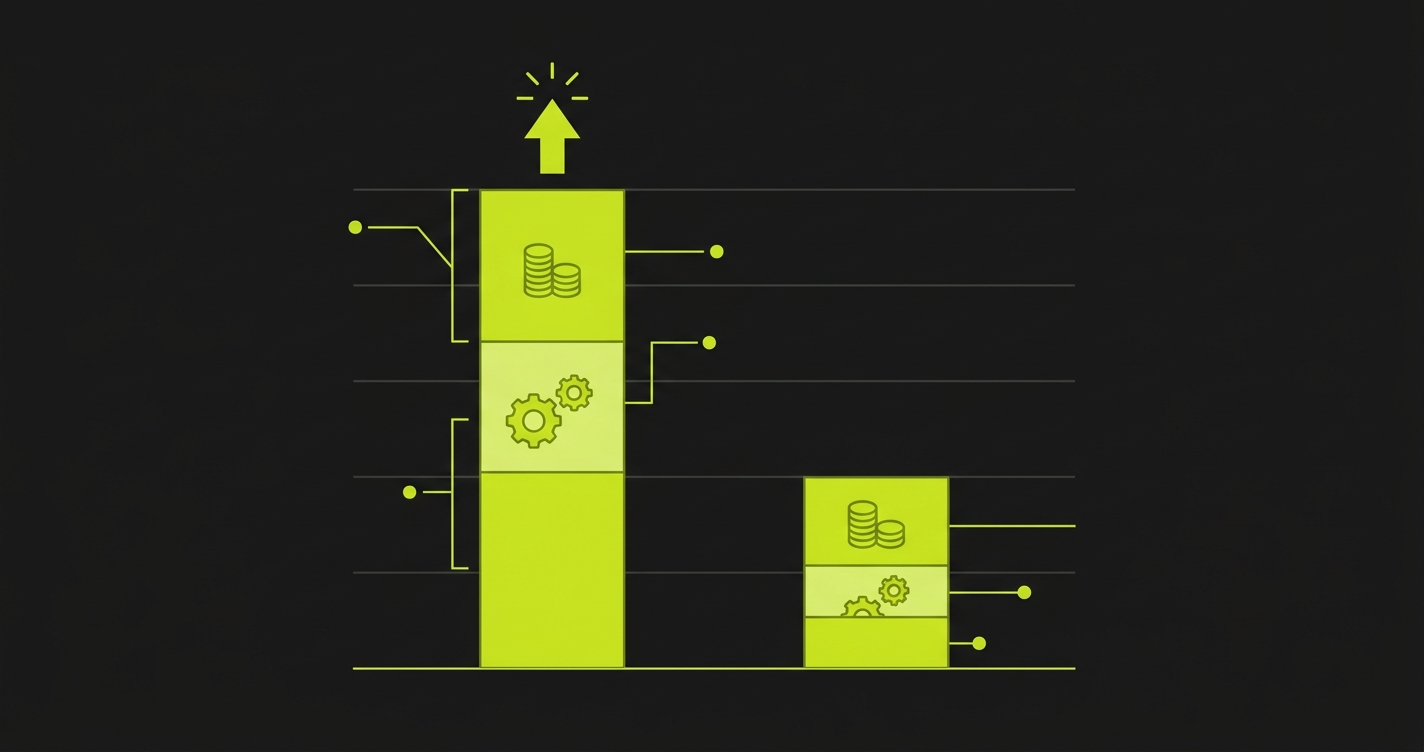
The real cost of TestCraft is not just the subscription. It is the subscription plus the engineering hours spent maintaining visual test flows that break.
TestCraft does not publish pricing, but enterprise contracts typically start at $500-1,000+ per month based on team size, parallel execution, and Perfecto integrations. For a mid-sized team, annual costs range from $6,000-12,000+ in subscription fees alone. Add 8-12 hours per month of visual flow maintenance (rebuilding broken test steps, re-recording flows after UI changes, working around visual builder limitations) at engineering rates of $100-150/hour, and maintenance costs $9,600-21,600 per year. Over three years, total cost of ownership reaches $47K-100K+ when you combine subscription and maintenance.
Autonoma cloud is $499/month ($18K over three years) with zero maintenance hours. AI vision-based testing eliminates the locator breakage cycle entirely. That represents a 62-82% cost reduction compared to TestCraft's total cost of ownership.
Autonoma self-hosted eliminates the platform fee. You pay only for infrastructure you provision on AWS, GCP, or Azure, typically $200-400/month depending on parallel needs. Over three years, roughly $11K total: a 77-89% reduction compared to TestCraft.
The biggest savings is the elimination of test maintenance. TestCraft's visual builder trades coding for clicking, but the underlying maintenance burden remains because Selenium locators still break. Autonoma's vision-based approach eliminates the root cause, not just the symptom.
Migrating from TestCraft to Autonoma
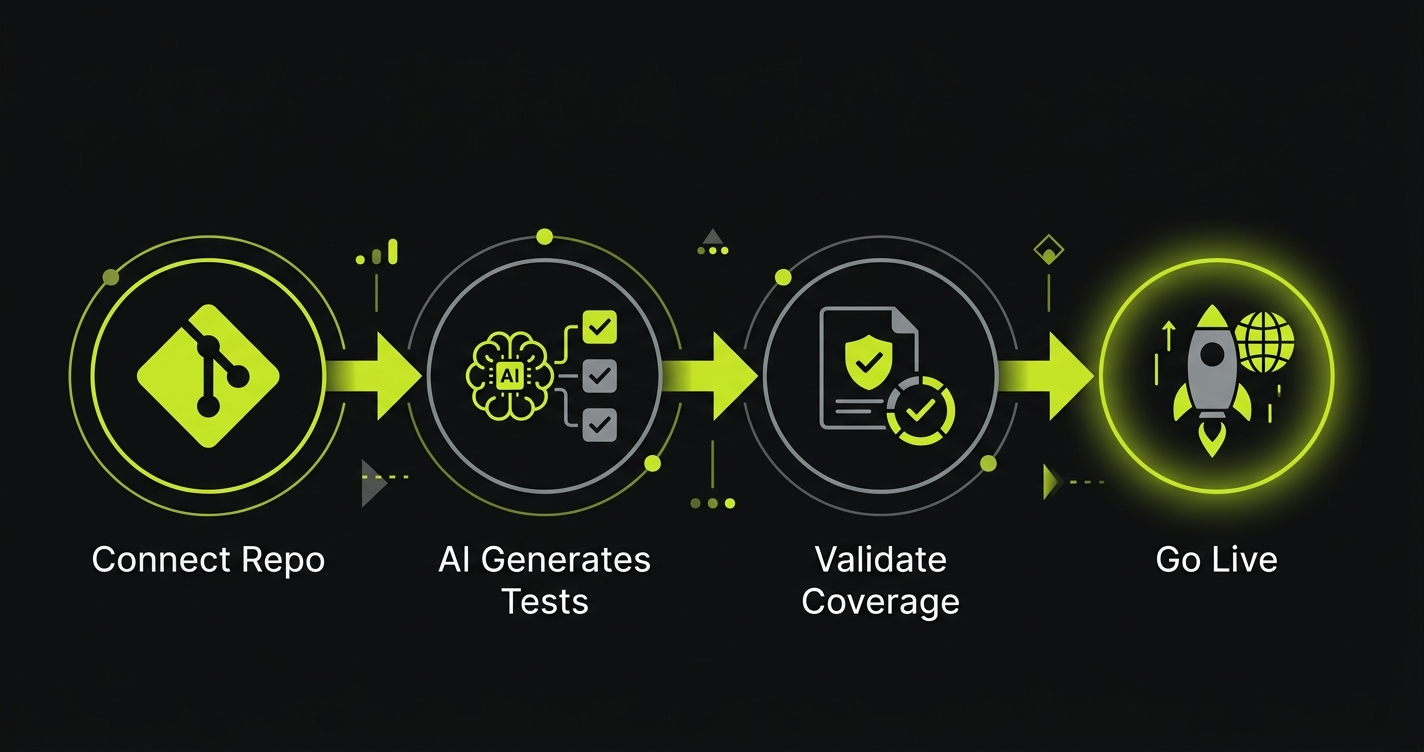
Migration is straightforward because you are not converting TestCraft's proprietary visual flows. Autonoma generates fresh tests from your codebase. Most teams complete the transition in 1-2 weeks.
1. Connect your repo. Sign up for the free tier at getautonoma.com or self-host by cloning the GitHub repo and following the deployment docs. Connect your GitHub repository and let Autonoma's AI analyze your codebase (routes, components, user flows). This takes minutes.
2. AI generates tests. The test-planner-plugin builds a knowledge base of your application and generates comprehensive E2E test cases automatically. Start with your 5-10 most critical flows and run them in parallel with your existing TestCraft suite. Compare results side by side: reliability, execution speed, and coverage.
3. Validate coverage. Compare AI-generated coverage against your existing TestCraft test suite. Autonoma's vision-based tests are typically more resilient than TestCraft's Selenium-based flows because they understand user intent, not DOM structure. Since TestCraft tests cannot be exported in a portable format, you validate by comparing functional coverage rather than converting tests line by line. Most teams achieve full coverage within days.
4. Update CI/CD and cut over. Point your CI/CD pipelines at Autonoma, train your team on reviewing AI-generated test plans instead of building visual flows, and cancel your TestCraft/Perfecto contract. The transition is low-risk because you validated coverage in step 3.
The key advantage over a traditional migration: there is nothing to convert. TestCraft's proprietary visual format has no export path. With other tools, that would be a problem. With Autonoma, it is irrelevant because the AI generates better tests from your codebase than you could rebuild manually.
Frequently Asked Questions
Yes. Autonoma is an open-source testing platform available on GitHub. Unlike TestCraft's proprietary visual Selenium builder, Autonoma offers a free tier with 100K credits, AI-powered test generation from your codebase, and full self-hosting capabilities with no feature restrictions.
Yes. TestCraft's main appeal is no-code visual test creation. Autonoma goes further: nobody writes tests at all. AI agents analyze your codebase and generate comprehensive E2E tests automatically. You review test plans and results, but no coding or manual test building is required.
TestCraft's self-healing patches broken Selenium locators when DOM elements change. Autonoma's AI uses vision models that understand your UI like a human would, so it never relies on locators in the first place. This eliminates the entire category of locator breakage rather than patching it after the fact.
TestCraft was acquired by Perforce in 2020 and integrated into the Perfecto product suite. Development priorities are now set by Perforce's enterprise roadmap. Autonoma is actively developed with daily updates, full source code on GitHub, and community-driven development.
TestCraft does not publish pricing; you must request a quote. Enterprise contracts typically start at $500-1,000+/month. Autonoma offers a free tier with 100K credits, cloud at $499/month with unlimited parallels, and self-hosting at infrastructure cost only with no platform fees.
Yes. You don't need to recreate tests manually. Connect your repo and Autonoma's AI generates tests from your codebase automatically. Since TestCraft tests are stored in a proprietary visual format with no export, Autonoma's AI-generated tests typically provide broader coverage within days without any manual conversion.
The Bottom Line
TestCraft is a proprietary visual Selenium builder owned by Perforce. It makes Selenium test creation easier, but the tests still break because Selenium locators still break. Self-healing patches some failures. The visual builder creates vendor lock-in with no export path. Pricing is opaque and enterprise-only. Mobile testing requires a separate Perfecto add-on. The total cost of ownership (subscription plus maintenance) runs $47K-100K+ over three years for a mid-sized team.
Autonoma replaces the entire model. Full source code on GitHub (BSL 1.1, Apache 2.0 in 2028). No Selenium, no locators, no visual builder to maintain. AI generates and maintains tests from your codebase using vision models. Self-host on your infrastructure or use our cloud. Unlimited parallels on every plan. No vendor lock-in. Free tier starts at 100K credits, cloud at $499/month, self-hosted at infrastructure cost only. Three-year savings: 62-89% depending on deployment model.
Ready to move beyond visual Selenium testing?
Start Free - 100K credits, no credit card, 5-minute setup
View on GitHub - Inspect source code, self-host documentation
Book Demo - See AI vision-based testing in action
Related Reading: