

Quick summary: Autonoma is the open-source alternative to TestGrid. Unlike TestGrid's proprietary scriptless platform (record-and-replay, cloud-only devices, no source code access), Autonoma generates tests automatically from your codebase using AI agents. Full source code on GitHub (BSL 1.1), self-hosting, vision-based self-healing, unlimited parallel execution, no vendor lock-in. Free tier: 100K credits. Cloud: $499/month. Self-hosted: no ongoing costs.
TestGrid markets itself as a scriptless testing platform with a real device cloud and network simulation. Record your user flows, replay them across devices, throttle network conditions to simulate real-world scenarios. On paper it sounds like a productivity win: no code, no scripting, just click through and let TestGrid handle the rest.
In practice, "scriptless" means "record-and-replay." And record-and-replay has a well-documented failure mode: the moment your UI changes, recorded scripts break. TestGrid's real device cloud is useful, but it is closed source, cloud-only, and ties your entire test suite to a proprietary format you cannot inspect, export, or self-host. For teams that need transparency, infrastructure control, or resilience against UI changes, this model falls apart.
Autonoma takes a fundamentally different approach. Instead of recording user actions, AI reads your codebase and generates tests automatically. Vision-based execution means tests understand intent, not pixel coordinates or recorded click paths. Full source code on GitHub, self-hosting on your infrastructure or our cloud, and zero vendor lock-in.
Where TestGrid Falls Short
Three structural problems push teams away from TestGrid and toward open source alternatives.
Record-and-Replay Is Inherently Brittle
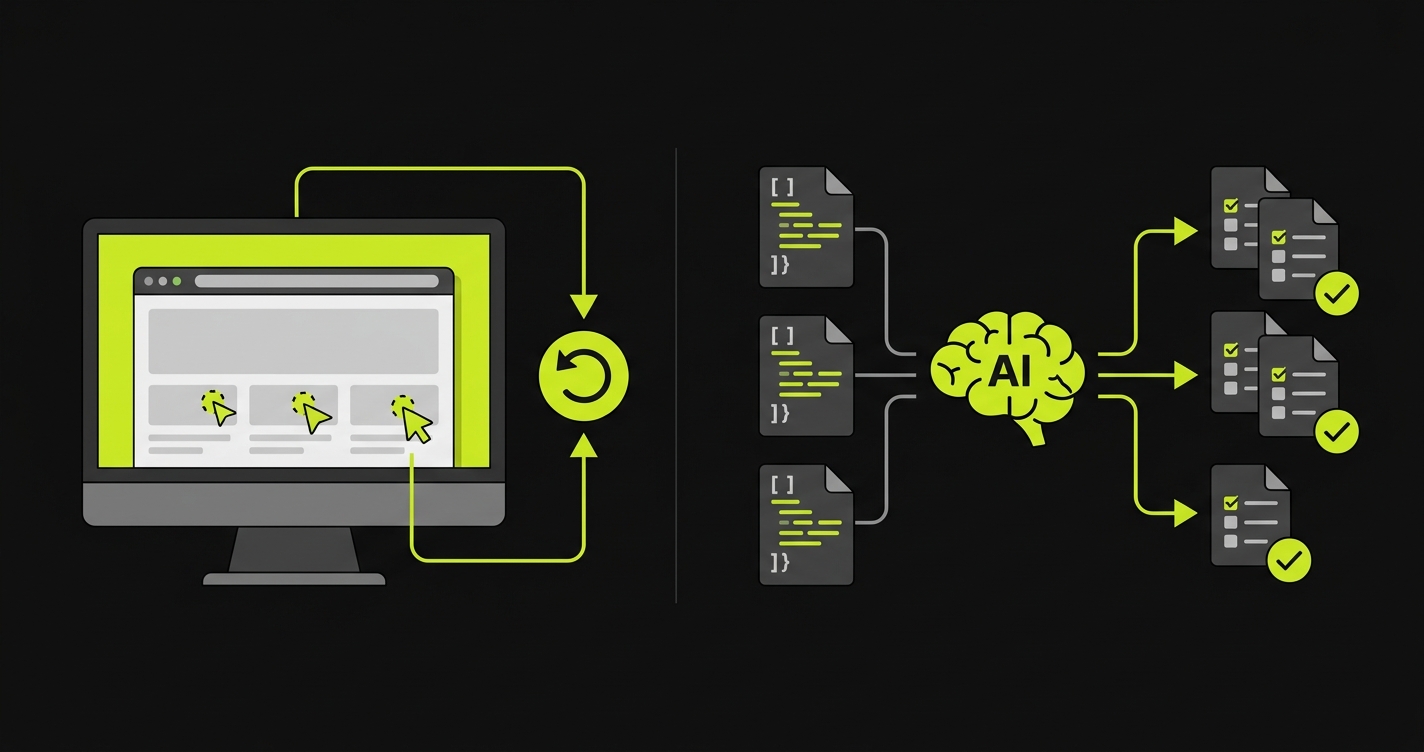
TestGrid's core value proposition is scriptless testing through visual recording. You click through a flow, TestGrid captures the actions, and it replays them later. This works well on day one. By week three, recorded tests start failing because the UI has changed.
A designer moves a button from the left column to the right. A developer renames a form field. A new modal appears before the checkout step. Each of these changes breaks recorded scripts because the recorder captured a specific sequence of coordinates, element positions, and page states. When those change, the replay fails. You re-record. Then something else changes. You re-record again.
This is the fundamental problem with record-and-replay: it captures what happened, not what should happen. It has no understanding of intent. It does not know that "click the Add to Cart button" means "find the primary action on the product page." It knows "click at coordinates (450, 320) on an element matching this selector." When that element moves, the test breaks.
Teams with active development cycles: shipping weekly or faster: find themselves in a constant re-recording loop. The maintenance burden grows proportionally with the number of recorded tests and the pace of UI changes. One QA lead told us their team spent more time re-recording tests than the recording sessions saved in the first place.
Closed Source, No Self-Hosting
TestGrid is proprietary and closed source. You cannot inspect how tests execute on their device cloud, audit their security practices, or verify how your application data is handled during test runs. When tests fail in unexpected ways on their infrastructure, your debugging options are limited to their dashboard and support channels.
More importantly, there is no self-hosting option. Your test recordings, application URLs, login credentials, and test execution data all live on TestGrid's servers. For teams in regulated industries: healthcare, finance, government: this is often a non-starter. HIPAA, PCI DSS, and SOC 2 compliance frameworks require control over where sensitive data is processed.
Even outside regulated industries, the trend toward data sovereignty is real. Teams increasingly want to control their testing infrastructure, not rent it from a vendor whose internal practices they cannot audit.
Smaller Ecosystem and Limited Community
TestGrid is a smaller player in the testing tool market compared to BrowserStack, Sauce Labs, or open source frameworks like Playwright and Cypress. This has real consequences. Smaller community means fewer integrations, less third-party documentation, fewer Stack Overflow answers when you hit edge cases, and a higher risk of the product pivoting or shutting down.
The network simulation feature: throttling bandwidth to test under 3G, LTE, or degraded network conditions: is genuinely useful. But it is one feature inside a broader platform that limits you in several other dimensions. Autonoma covers the full testing lifecycle while giving you infrastructure control that TestGrid cannot offer.
Autonoma: The Open Source Alternative to TestGrid
Autonoma is an open-source, AI-native testing platform that replaces recorded scripts with AI-generated tests grounded in your actual codebase.
AI Test Generation vs Record-and-Replay
This is the fundamental difference. TestGrid requires you to record flows manually by clicking through your application. Autonoma requires nothing manual at all.
How it works: You connect your GitHub repo, and Autonoma's test-planner-plugin reads your routes, components, and user flows to build a knowledge base of your application. AI agents then generate comprehensive E2E test cases based on your actual code structure: no recording sessions, no clicking through flows, no manual scripting of any kind.
Tests execute using AI vision models that see your app like a human would. No CSS selectors, no XPaths, no recorded coordinates. When your UI changes, tests adapt automatically because the AI understands intent, not DOM structure or pixel positions. A button that moves from the sidebar to the header does not break a vision-based test that understands "click the primary navigation action." That same change would break every TestGrid recording that referenced the old position.
This resilience is not incremental. It is structural. Record-and-replay will always be brittle because it captures state, not intent. Vision-based AI testing will always be more resilient because it understands what users are trying to do, not where they clicked last Tuesday.
Open Source and Self-Hosting
Full source code on GitHub. Licensed under BSL 1.1 (converts to Apache 2.0 in 2028). You can use it in production, inspect every line, audit security, and self-host with no feature restrictions. The only limitation: you cannot resell Autonoma's functionality as a commercial service.
Run Autonoma on your infrastructure. AWS (ECS, EKS, or EC2), GCP (GKE or Compute Engine), Azure (AKS or VMs), or your own data center. When you self-host, your data never leaves your infrastructure. Tests run in your VPC. Credentials stay on your servers. Application URLs are never exposed to external systems.
The technology stack is built on standard open source components: TypeScript and Node.js 24 for the runtime, Playwright for web testing, Appium for mobile testing, PostgreSQL for data storage, and Kubernetes for orchestration. No proprietary runtimes, no black-box components.
Unlimited Parallel Execution
Every Autonoma plan (free tier, cloud, and self-hosted) supports unlimited parallel execution. TestGrid's parallel limits depend on your pricing tier and device availability in their cloud. With Autonoma, you spin up as many parallel workers as your infrastructure supports. When you self-host, parallel capacity is limited only by the compute resources you allocate.
Cross-Platform Coverage
Autonoma uses Playwright for web testing (Chrome, Firefox, Safari across desktop and mobile viewports) and Appium for mobile testing (iOS simulators, Android emulators, and physical devices). It is framework agnostic: React, Next.js, Vue, Angular, Flutter, React Native: the AI reads your routes and component hierarchy regardless of framework.
TestGrid's real device cloud and network simulation are genuinely useful features. If your primary use case is testing under degraded network conditions on specific physical devices, TestGrid serves that niche well. But for end-to-end test coverage across your application, Autonoma covers more of the testing lifecycle: generation, execution, maintenance, and self-healing: in a single open source platform.
No Vendor Lock-In
Tests are generated from your codebase, not stored as proprietary recordings. There are no TestGrid-specific formats or APIs woven into your CI/CD pipeline. Fork the project if needed. Switch providers or self-host anytime. Your testing capability is never held hostage by a vendor relationship.
TestGrid vs Autonoma: Feature Comparison
| Feature | TestGrid | Autonoma |
|---|---|---|
| Open Source | Proprietary closed source | BSL 1.1 on GitHub (Apache 2.0 in 2028) |
| Self-Hosting | Cloud only | Self-host anywhere |
| Test Creation | Record-and-replay (scriptless) | AI generates tests from codebase automatically |
| Test Maintenance | Re-record when UI changes | AI self-healing (zero maintenance) |
| UI Change Resilience | Low (recorded scripts break) | High (vision-based intent understanding) |
| Real Device Cloud | Yes (with network simulation) | Yes (physical devices via Appium) |
| Network Simulation | Yes (3G, LTE, custom profiles) | Via infrastructure configuration |
| Parallel Execution | Limited by plan tier | Unlimited on all plans |
| Vendor Lock-In | High (proprietary recordings) | None (tests from code, fork codebase) |
| Browser Coverage | Chrome, Firefox, Safari, Edge | Chrome, Firefox, Safari, iOS, Android |
| Source Code Access | No access | Full source code on GitHub |
| Starting Price | ~$199/month (teams) | Free (100K credits) |
| Self-Hosted Cost | Not available | Infrastructure only (no platform fees) |
| Data Sovereignty | Data on TestGrid servers | Data stays on your infrastructure |
Cost: Open Source vs Proprietary
The cost picture for TestGrid follows the same pattern as other proprietary testing tools: subscription fees plus hidden maintenance hours.
TestGrid pricing starts around $199/month for team plans (~$2,400/year). Add the maintenance burden of re-recording tests when UI changes break them: conservatively 8-12 hours per month for a team with 200+ recorded tests: at typical engineering rates ($100-150/hour), and maintenance costs $9,600-21,600 per year. Over three years, the total cost of ownership lands in the $36K-67K range when you combine subscription and re-recording labor.
Autonoma cloud is $499/month ($18K over three years) with zero maintenance hours. AI self-healing handles UI changes automatically. No re-recording, no manual intervention.
Autonoma self-hosted eliminates the platform fee entirely. You pay only for the infrastructure you provision: typically $200-400/month depending on your parallel needs. Over three years, roughly $11K. That is a 69-84% reduction compared to TestGrid's total cost of ownership.
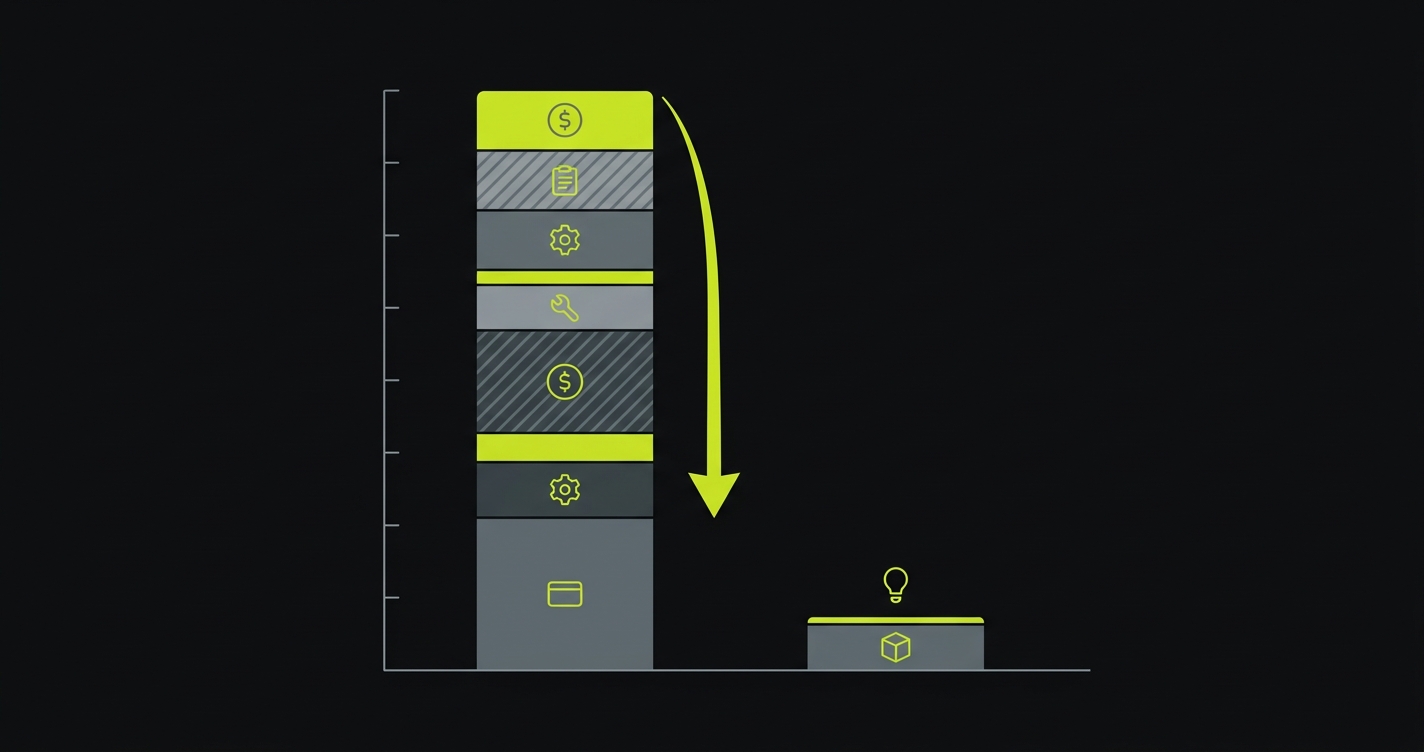
The largest savings is not the subscription difference. It is the elimination of re-recording labor through AI-generated, vision-based tests. That is the hidden cost of record-and-replay that teams underestimate until they are knee-deep in broken recordings every sprint.
Migrating from TestGrid to Autonoma
Migration is straightforward because you are not converting recorded scripts. Autonoma generates tests from your codebase, so recorded TestGrid flows are left behind entirely. Most teams complete the process in 1-2 weeks.
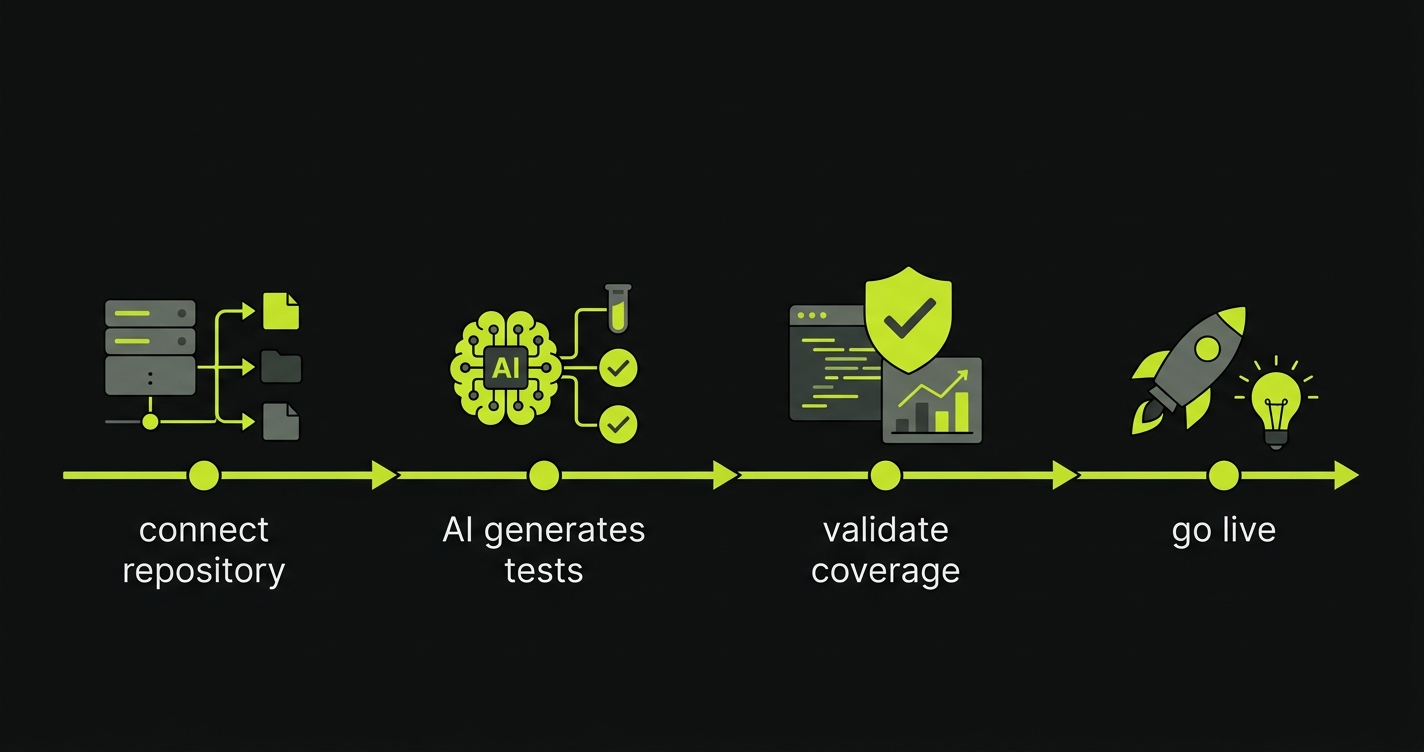
1. Connect your repo. Sign up for the free tier at getautonoma.com or self-host by cloning the GitHub repo and following the deployment docs. Connect your GitHub repository and let Autonoma's AI analyze your codebase (routes, components, user flows). This takes minutes.
2. AI generates tests. The test-planner-plugin builds a knowledge base of your application and generates E2E test cases automatically. Start with your most critical flows: authentication, checkout, core feature paths: and run them alongside your existing TestGrid recordings to compare coverage and reliability.
3. Validate coverage. Compare AI-generated tests against your existing TestGrid suite. Autonoma's vision-based tests will likely cover the same flows with greater resilience because they understand user intent rather than replaying recorded coordinates. Check for gaps, review AI-generated test plans, and iterate. Most teams achieve equivalent or better coverage within days.
4. Update CI/CD and cut over. Point your CI/CD pipelines at Autonoma, train your team on reviewing AI-generated test plans instead of managing recordings, and cancel your TestGrid subscription. If self-hosting, provision infrastructure during the validation phase so it is ready for the cutover.
The key difference: you are not converting 300 recorded scripts one by one. You connect your repo, the AI generates coverage from your actual codebase, and you validate. The migration effort is about reviewing and verifying, not rebuilding.
Frequently Asked Questions
Yes. Autonoma is an open-source testing platform available on GitHub. Unlike TestGrid's proprietary scriptless model, Autonoma offers a free tier with 100K credits and full self-hosting capabilities. AI generates tests from your codebase automatically: no recording or scripting needed.
Yes. Autonoma is fully self-hostable with complete source code on GitHub. You can run it on your infrastructure (AWS, GCP, Azure, on-premise) with zero feature restrictions. TestGrid offers no self-hosting option.
TestGrid uses record-and-replay to create scriptless tests: you click through flows and it captures the actions. Autonoma's AI generates tests directly from your codebase without any recording. Vision-based execution means tests adapt automatically when UI changes, unlike recorded scripts that break on any layout shift.
Yes. You don't convert recorded scripts: you connect your repo and Autonoma's AI generates tests from your codebase automatically. Most teams achieve full coverage within days. Unlike TestGrid's recorded flows, Autonoma's vision-based tests are resilient to UI changes long-term.
Yes. Autonoma supports physical devices via Appium, plus iOS simulators and Android emulators. The difference is that Autonoma is open source and self-hostable, so you control the infrastructure and your data stays on your network. TestGrid's network simulation feature is useful but Autonoma covers a broader testing lifecycle.
No. Nobody writes or records tests: the AI does everything. Unlike TestGrid where someone records flows manually, Autonoma generates tests automatically from your codebase. AI agents analyze your routes, components, and user flows, then create comprehensive E2E tests. Team members review test plans and results, but no recording or coding is required.
The Bottom Line
TestGrid offers scriptless testing through record-and-replay, a real device cloud, and network simulation. But recorded scripts are brittle, the platform is closed source and cloud-only, and your test suite is locked in a proprietary format you cannot inspect or export.
Autonoma solves every one of those problems. Full source code on GitHub (BSL 1.1, Apache 2.0 in 2028). Self-host on your infrastructure or use our cloud. AI generates and maintains tests from your codebase: no recording sessions, no manual scripting, zero maintenance. Vision-based execution that understands intent, not coordinates. Unlimited parallels on every plan. No vendor lock-in. Free tier starts at 100K credits, cloud at $499/month, self-hosted at infrastructure cost only. Three-year savings: 69-84% depending on deployment model.
Ready to try open source testing?
Start Free - 100K credits, no credit card, 5-minute setup
View on GitHub - Inspect source code, self-host documentation
Book Demo - See AI test generation in action
Related Reading: