

Quick summary: Autonoma is the open-source alternative to TestingBot. Unlike TestingBot's proprietary Selenium/Appium cloud grid ($19-149/month, limited parallels, manual test writing), Autonoma generates tests automatically from your codebase using AI agents. Full source code on GitHub (BSL 1.1), self-hosting, vision-based self-healing, unlimited parallel execution, no vendor lock-in. Free tier: 100K credits. Cloud: $499/month. Self-hosted: no ongoing costs.
TestingBot carved out a niche as the affordable alternative to BrowserStack and Sauce Labs. Starting at $19/month for individuals, it gives small teams access to a Selenium and Appium cloud grid without enterprise pricing. That value proposition made sense five years ago. Today, the landscape has shifted, and affordability alone is not enough when the entire testing model is the problem.
TestingBot still requires you to write every test manually. It still runs those tests on infrastructure you do not control. It still locks your test suite into a proprietary cloud with no self-hosting option. The price is lower, but the limitations are the same as every other cloud grid provider.
Autonoma is the open-source alternative that changes the equation entirely. AI generates tests from your codebase. You self-host on your infrastructure or use our cloud. Tests self-heal when your UI changes. Unlimited parallels on every plan. Full source code on GitHub. This guide covers where TestingBot falls short, how Autonoma solves those problems, and how to switch.
Where TestingBot Falls Short
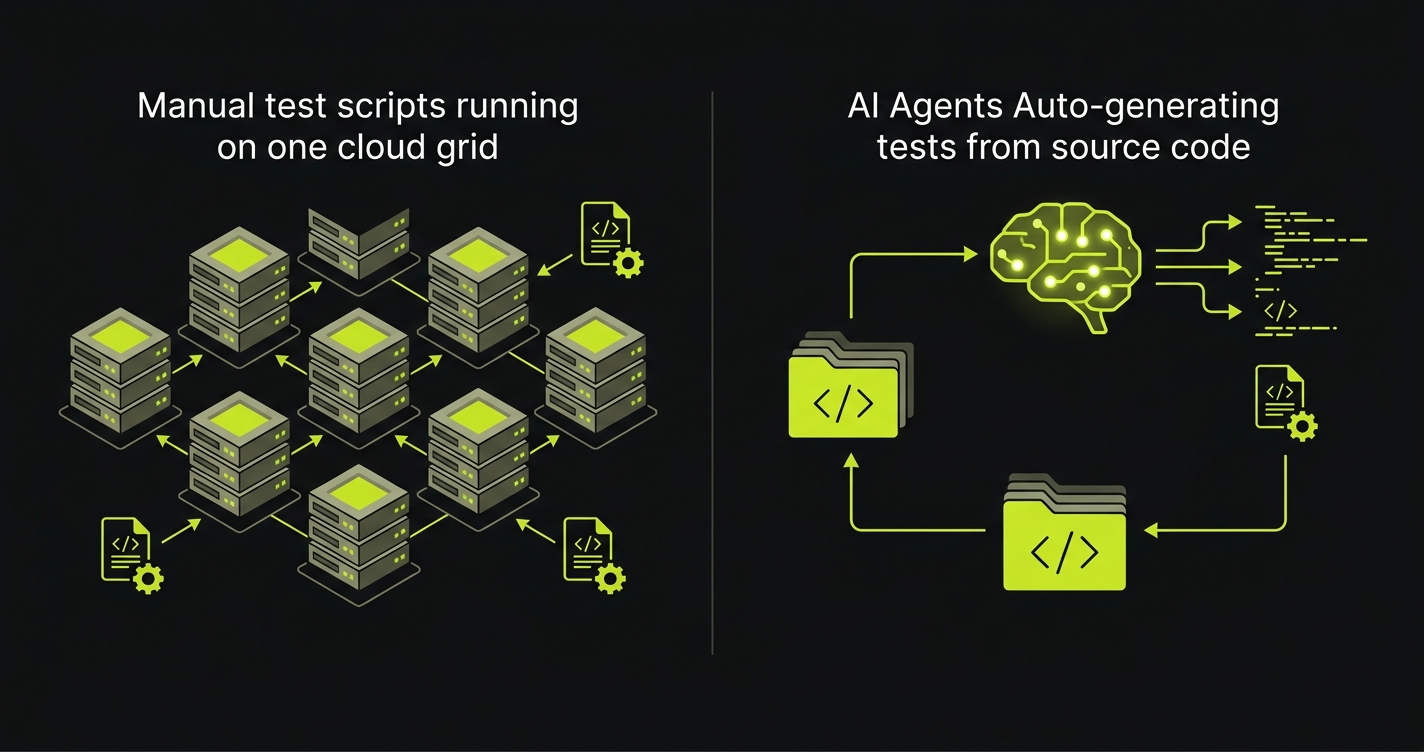
TestingBot does what it promises: affordable cloud-based Selenium and Appium test execution. But three structural problems limit what it can offer your team.
You Still Write and Maintain Every Test
TestingBot is a test execution grid. It runs Selenium WebDriver and Appium scripts on their cloud browsers and devices. You write the tests. You maintain them. You fix them when they break.
This is the same model as BrowserStack and Sauce Labs, just at a lower price point. The fundamental problem remains: your engineering team spends hours every sprint writing new test scripts, debugging broken selectors, and updating locators after UI changes. A developer renames a CSS class and three Selenium tests fail. A designer restructures a form layout and your XPath locators stop working. These are not bugs in your application. They are maintenance overhead created by the test automation approach itself.
For small teams, this hurts more because you typically do not have dedicated QA engineers. Developers are writing Selenium scripts between feature work, context-switching constantly, and the testing never gets the attention it needs. TestingBot's affordable pricing becomes less meaningful when you factor in the engineering hours required to keep tests running.
One startup founder told us: "We chose TestingBot because it was cheap. Then we realized we were spending 15 hours a week maintaining Selenium tests. The grid subscription was $49/month but the engineering time was costing us $6,000/month."
No Self-Hosting, No Source Code Access
Despite being a smaller, more nimble platform, TestingBot offers no self-hosting option. Your tests run exclusively on their cloud. Your application URLs, login credentials, and test data all pass through their servers. You cannot inspect how the platform works, audit security practices, or customize execution behavior.
For teams building applications in regulated industries (healthcare, finance, government), this is a blocker. HIPAA, PCI DSS, and SOC 2 compliance frameworks often require testing infrastructure to run on controlled, auditable environments. TestingBot cannot accommodate this requirement.
Even for teams without strict compliance needs, the lack of self-hosting means you are dependent on TestingBot's infrastructure availability, network latency to their servers, and their roadmap decisions. When their grid has an outage, your CI/CD pipeline stops. When they deprecate a browser version, you adjust on their timeline.
The absence of source code access means you cannot debug platform-level issues, extend functionality, or verify how your data is handled. You are trusting a black box with your test infrastructure.
Limited Scale Compared to Larger Providers
TestingBot positions itself as a cost-effective alternative to BrowserStack and Sauce Labs, but that affordability comes with trade-offs in scale. The device and browser catalog is smaller. Parallel execution is capped by plan tier. Real device availability can be limited during peak hours.
For teams that outgrow TestingBot's capacity, the typical path is migrating to a larger (and more expensive) cloud grid. That migration means rewriting CI/CD configurations, updating test runner settings, and potentially adjusting scripts for platform-specific differences. You are trading one proprietary cloud for another, paying more, and still writing every test by hand.
The core issue is not that TestingBot is too small. It is that the cloud grid model itself has a ceiling. Whether you run your Selenium tests on TestingBot, BrowserStack, or Sauce Labs, you are still writing tests manually, maintaining brittle selectors, and paying ongoing subscription fees for infrastructure you do not control.
Autonoma: The Open Source Alternative to TestingBot
Autonoma is an open-source, AI-native testing platform that replaces both the grid and the manual test writing.
Open Source and Self-Hosting
Full source code on GitHub. Licensed under BSL 1.1 (converts to Apache 2.0 in 2028). You can use it in production, inspect every line, audit security, and self-host with no feature restrictions. The only limitation: you cannot resell Autonoma's functionality as a commercial service.
Run Autonoma on your infrastructure. AWS (ECS, EKS, or EC2), GCP (GKE or Compute Engine), Azure (AKS or VMs), or your own data center. When you self-host, your data never leaves your network. Tests execute in your VPC. Credentials stay on your servers. Application URLs are never exposed to external systems. This directly addresses the compliance gap that TestingBot cannot fill.
The technology stack is built on standard open source components: TypeScript and Node.js 24 for the runtime, Playwright for web testing, Appium for mobile testing, PostgreSQL for data storage, and Kubernetes for orchestration. No proprietary runtimes, no black-box components, no vendor-specific dependencies.
Self-hosting is free: no platform fees, no per-user charges, no per-parallel markup. You pay only for the cloud infrastructure you provision. For teams currently spending $49-149/month on TestingBot plus engineering hours on test maintenance, the total cost drops dramatically.
AI-Powered Test Generation
This is where Autonoma fundamentally diverges from TestingBot. You do not write Selenium or Appium scripts. Autonoma's AI generates tests from your codebase automatically.
How it works: Connect your GitHub repo and Autonoma's test-planner-plugin analyzes your routes, components, and user flows to build a knowledge base of your application. AI agents then generate comprehensive E2E test cases based on your actual code structure. No WebDriver scripts. No CSS selectors. No XPath locators. Tests execute using AI vision models that see your application like a human would.
When your UI changes, tests adapt automatically because the AI understands intent, not DOM structure. A button that moves from the header to the sidebar does not break the test. A form that gains a new field gets tested automatically. The entire test maintenance burden that consumes engineering hours every sprint simply disappears.
For small teams that chose TestingBot because they could not afford BrowserStack, this is transformative. You no longer need dedicated QA engineers writing Selenium scripts. The AI handles test generation, execution, and maintenance. Your developers focus on building features instead of maintaining test infrastructure.
Unlimited Parallel Execution
Every Autonoma plan (free tier, cloud, and self-hosted) supports unlimited parallel execution. On the free tier that is subject to credit limits, but on cloud and self-hosted plans your test suite scales with your infrastructure. No negotiations, no pricing tiers, no artificial caps.
TestingBot limits parallels by plan: the $19/month individual plan includes 2 parallels, while higher tiers offer more but still cap execution. With Autonoma self-hosted, parallel capacity is limited only by the compute resources you allocate. Add more containers, run more tests simultaneously.
Cross-Platform Coverage
Autonoma uses Playwright for web testing (Chrome, Firefox, Safari across desktop and mobile viewports) and Appium for mobile testing (iOS simulators, Android emulators, physical devices). The AI generates tests that work across platforms without requiring separate scripts for each environment.
TestingBot's browser and device catalog covers Selenium and Appium grid configurations. Autonoma covers the same essential browsers and devices that 95% of teams actually test. If you need obscure legacy browsers, a dedicated device lab may still be necessary. But for the standard testing matrix (latest Chrome, Firefox, Safari on desktop, key iOS/Android configurations on mobile), Autonoma handles it with AI-generated tests instead of hand-written scripts.
No Vendor Lock-In
Tests are generated from your codebase, not stored in a proprietary format. There are no TestingBot-specific APIs woven into your CI/CD pipeline. Fork the project if needed. Switch cloud providers or self-host at any time. Your testing capability is never held hostage by a vendor relationship.
With TestingBot, your Selenium scripts depend on their grid endpoints, capability configurations, and API. Migrating away means reconfiguring every test runner. With Autonoma, there is nothing to reconfigure because the AI generates tests from your code, not from a platform-specific format.
TestingBot vs Autonoma: Feature Comparison
| Feature | TestingBot | Autonoma |
|---|---|---|
| Open Source | Proprietary closed source | BSL 1.1 on GitHub (Apache 2.0 in 2028) |
| Self-Hosting | Cloud only | Self-host anywhere |
| Test Generation | You write Selenium/Appium scripts manually | AI generates tests from your codebase automatically |
| Test Maintenance | Manual (you maintain selectors and scripts) | AI self-healing (zero maintenance) |
| Parallel Execution | Limited by plan tier (2-10+) | Unlimited on all plans |
| Vendor Lock-In | Moderate (Selenium grid config, API dependency) | None (tests generated from code, fork codebase) |
| Browser Coverage | Chrome, Firefox, Safari, Edge, IE | Chrome, Firefox, Safari, iOS, Android |
| Mobile Testing | Appium grid (real devices and emulators) | Appium + Playwright (simulators, emulators, physical devices) |
| Starting Price | $19/month (individual, 2 parallels) | Free (100K credits, unlimited parallels) |
| Team Price | $79-149/month (limited parallels) | $499/month (unlimited parallels, AI test generation) |
| Self-Hosted Cost | Not available | Infrastructure only (no platform fees) |
| Data Sovereignty | Data on TestingBot servers | Data stays on your infrastructure |
| Source Code Access | No access | Full source code on GitHub |
| Setup Time | Minutes (cloud only) | Minutes (cloud), hours (self-hosted) |
Cost: Open Source vs Affordable Proprietary
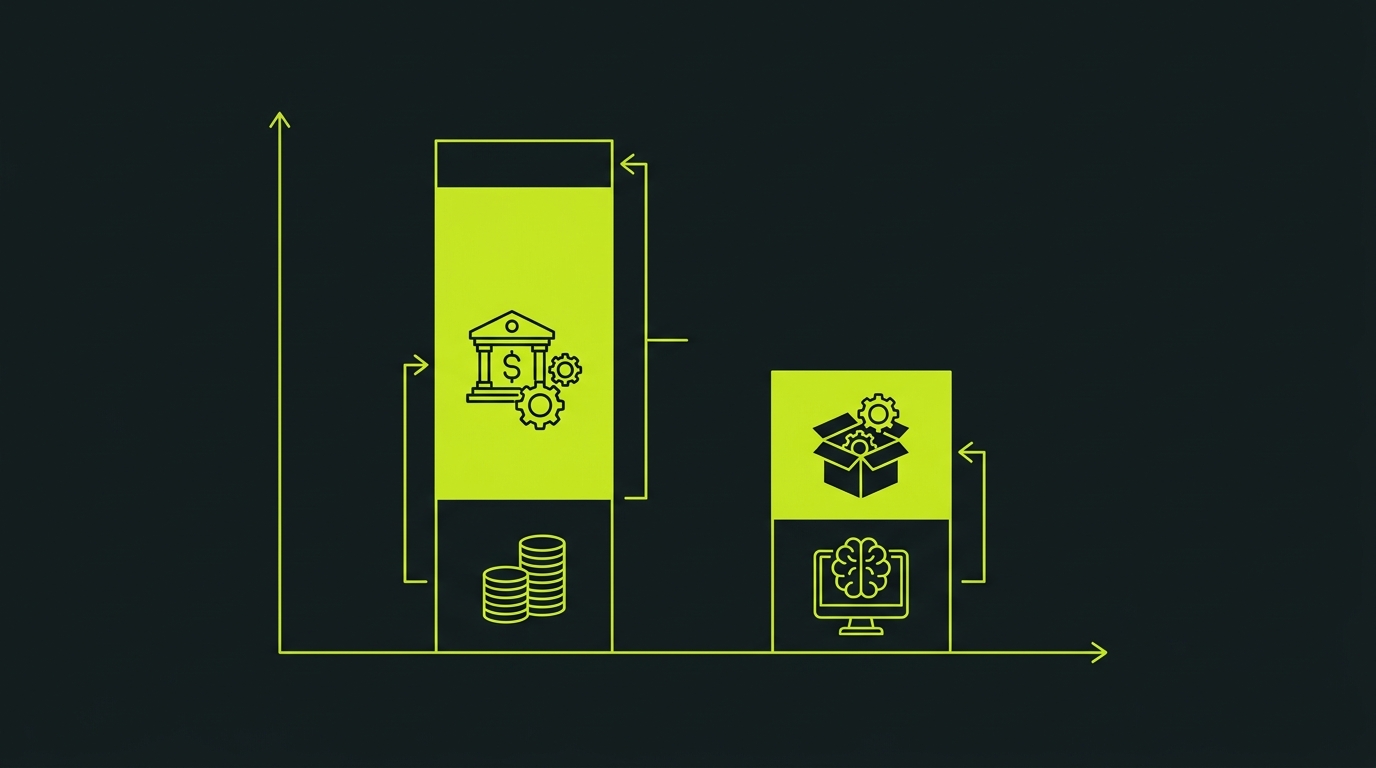
TestingBot's headline pricing is genuinely affordable. The individual plan starts at $19/month. Team plans run $79-149/month. Compared to BrowserStack at $150-375/month, that is a real savings on the subscription line.
But the subscription is not the full cost. The real expense is the engineering time to write and maintain the Selenium and Appium tests that run on the grid.
For a small team (5 developers, growing test suite), TestingBot costs $79-149/month in subscription fees ($948-1,788/year). Add 8-12 hours/month of test writing and maintenance at typical engineering rates ($100-150/hour), and the annual engineering cost reaches $9,600-21,600. Over three years, the total comes to $32K-70K when you combine subscription and maintenance.
Autonoma cloud is $499/month ($18K over three years) with zero test writing or maintenance hours. AI generates and maintains tests automatically. That is a 44-74% cost reduction when you account for engineering time.
Autonoma self-hosted eliminates the platform fee entirely. You pay only for infrastructure, typically $200-400/month. Over three years, that totals roughly $11K: a 66-84% reduction compared to TestingBot's total cost of ownership.
The counterintuitive finding: Autonoma's cloud plan costs more per month than TestingBot's subscription ($499 vs $79-149), but the total cost is significantly lower because you eliminate the engineering hours that actually dominate the budget. The cheapest grid is not the cheapest testing solution.
Migrating from TestingBot to Autonoma
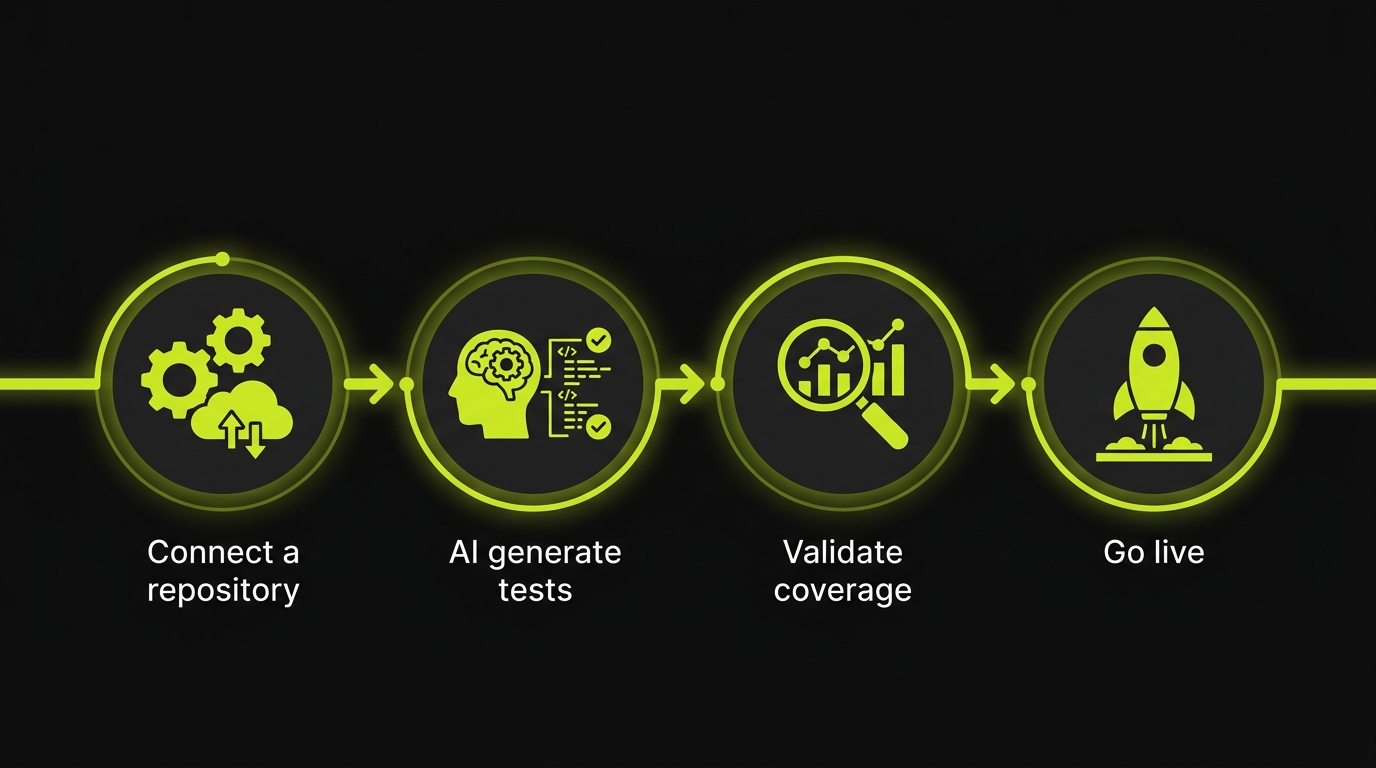
Migration is simpler than switching between cloud grids because you are not rewriting Selenium scripts. You are replacing manual test writing with AI-generated tests entirely.
1. Connect your repo. Sign up for the free tier at getautonoma.com or self-host by cloning the GitHub repo and following the deployment docs. Connect your GitHub repository and let Autonoma's AI analyze your codebase. This takes minutes.
2. AI generates tests. The test-planner-plugin builds a knowledge base of your application and generates comprehensive E2E test cases automatically. Start with your critical flows (login, checkout, core features) and run them alongside your existing TestingBot suite to compare coverage.
3. Validate coverage. Compare AI-generated tests against your existing Selenium/Appium suite. Autonoma's vision-based tests are typically more resilient than selector-based scripts because they understand user intent, not DOM structure. Review the AI-generated test plans, identify any gaps, and iterate. Most teams achieve equivalent or better coverage within days.
4. Update CI/CD and cut over. Point your CI/CD pipelines at Autonoma, remove TestingBot grid configurations and Selenium runner dependencies, and cancel your TestingBot subscription. If self-hosting, provision infrastructure during the validation phase so it is ready for cutover.
The key difference from migrating between cloud grids: you are not translating Selenium scripts from one platform to another. You are replacing manual test writing entirely. Your existing TestingBot tests become the validation benchmark, not the migration target.
Frequently Asked Questions
Yes. Autonoma is an open-source testing platform available on GitHub. Unlike TestingBot's proprietary cloud-only model, Autonoma offers a free tier with 100K credits, full self-hosting capabilities, and AI-generated tests. You can run Autonoma on your own infrastructure with no feature limitations, or use the cloud version starting free.
Yes. Autonoma is fully self-hostable with complete source code on GitHub. You can run it on your infrastructure (AWS, GCP, Azure, on-premise) with zero feature restrictions. TestingBot offers no self-hosting option despite being a smaller platform.
TestingBot starts at $19/month for individuals and ranges up to $149/month for teams with limited parallels. Autonoma offers a free tier with 100K credits, then $499/month for 1M credits with unlimited parallels and AI-generated tests. Self-hosting Autonoma eliminates ongoing cloud costs entirely (pay only infrastructure).
You do not rewrite your existing tests. Connect your repo and Autonoma's AI generates tests from your codebase automatically using vision models. Unlike TestingBot where you write Selenium or Appium scripts, Autonoma handles the entire testing lifecycle from generation to execution to maintenance. Tests self-heal when your UI changes.
For small teams, Autonoma's free tier (100K credits) is comparable to TestingBot's entry pricing ($19/month) but includes AI test generation that eliminates the need to write and maintain tests manually. Small teams benefit most because they typically lack dedicated QA engineers to write Selenium scripts.
Autonoma supports Chrome, Firefox, Safari (web) and iOS/Android (mobile) through Playwright and Appium. TestingBot offers a broader browser list including Edge and IE. Most teams only test 10-15 essential configurations. Autonoma covers that 95% use case with AI-generated tests instead of hand-written scripts.
If you're familiar with Kubernetes, Docker, and cloud infrastructure (AWS/GCP/Azure), self-hosting takes 2-4 hours for initial setup. Autonoma provides deployment documentation and infrastructure templates. If you don't have DevOps resources, start with Autonoma cloud ($499/month, fully managed) and migrate to self-hosted later if needed.
The Bottom Line
TestingBot solved the pricing problem: affordable Selenium and Appium cloud testing for teams that could not justify BrowserStack's prices. But it did not solve the deeper problems: manual test writing, ongoing maintenance, no self-hosting, no source code access, and no AI capabilities. The subscription is cheap, but the total cost of ownership is not when you count the engineering hours.
Autonoma solves all of it. Full source code on GitHub (BSL 1.1, Apache 2.0 in 2028). Self-host on your infrastructure or use our cloud. AI generates and maintains tests from your codebase: zero manual writing, zero maintenance. Unlimited parallels on every plan. No vendor lock-in. Free tier starts at 100K credits, cloud at $499/month, self-hosted at infrastructure cost only. Three-year savings: 44-84% depending on deployment model compared to TestingBot's total cost.
Ready to try open source testing?
Start Free - 100K credits, no credit card, 5-minute setup
View on GitHub - Inspect source code, self-host documentation
Book Demo - See AI test generation in action
Related Reading: