

Quick summary: Autonoma is the open source alternative to TestQuality. TestQuality stores manually-written test cases inside GitHub. Autonoma reads your GitHub repo and uses AI agents to generate, execute, and maintain tests autonomously. Open source (BSL 1.1), free self-hosting, no manual test cases to write. A shift from GitHub-native test management to autonomous testing.
TestQuality had the right instinct: tests should live close to code, not in a separate tool. Their native GitHub integration puts test cases alongside pull requests and commits. But proximity is not the same as automation. You still write every test case by hand. You still update them when features change. You still execute and track them manually. Autonoma takes the same GitHub-first philosophy and removes the manual layer entirely.
Where TestQuality Falls Short
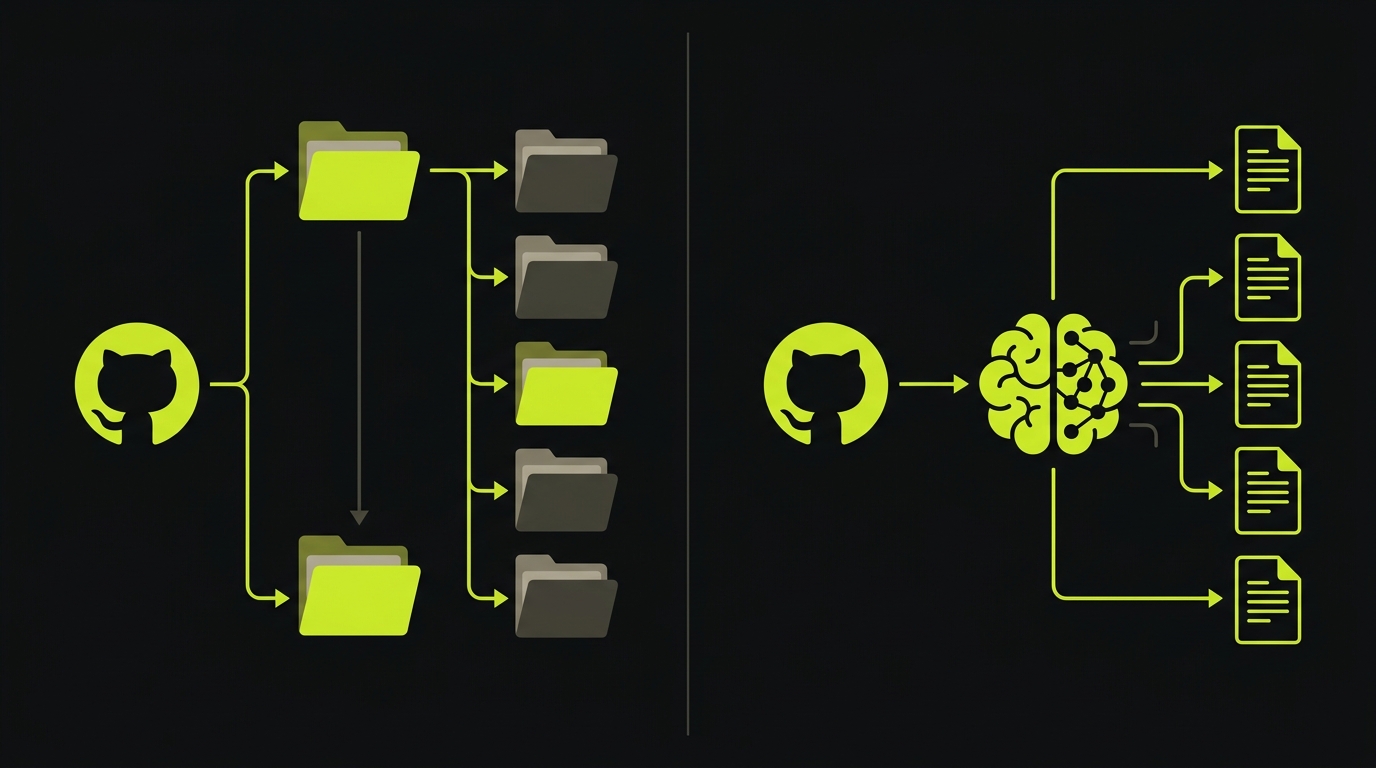
The "Developer-Friendly" Paradox
TestQuality markets itself as developer-friendly because it lives inside GitHub. And compared to tools like Zephyr Scale that lock you into Jira, that is a genuine improvement. Tests appear alongside code. QA engineers and developers share the same platform. The GitHub integration is real and well-executed.
But "developer-friendly" should mean developers spend less time on testing overhead, not that they do the same manual work in a more convenient location. Moving test case management from Jira to GitHub does not reduce the work; it relocates it. A developer still writes test steps. A QA engineer still maintains test documentation. Someone still manually executes test runs and tracks results. The filing cabinet moved to a nicer office, but it is still a filing cabinet.
No Test Generation, No AI, No Execution Intelligence
TestQuality is a test management tool. It organizes test cases. It tracks test runs. It integrates with CI/CD pipelines to display results. What it does not do: generate tests from your codebase, execute tests autonomously, adapt tests when your UI changes, or understand your application architecture.
Your GitHub repo contains everything needed to generate comprehensive test coverage: routes, components, API endpoints, user flows, database schemas. TestQuality sits next to all of that code and does nothing with it. It waits for a human to manually translate code into test cases.
This is the fundamental gap. TestQuality integrates with GitHub but does not leverage GitHub. It sees the repo as a storage location, not as a source of testing intelligence.
Pricing Scales with People, Not Value
TestQuality offers a free tier for public repositories, which is genuinely useful for open source projects. For private repos and teams, pricing runs approximately $12-30 per user per month depending on the plan. That per-user model means costs scale linearly as your team grows.
A 10-person team pays $120-300/month. A 30-person engineering org pays $360-900/month. A 50-person team pays $600-1,500/month. And those costs buy test management: the ability to organize, track, and report on tests that humans still write and maintain. You pay more as you add people, but the tool does not do more work. It just gives more people access to the same manual workflow.
The hidden cost is larger: the engineering time spent writing and maintaining test cases. If your QA engineers spend 20-30% of their time on test documentation, that is the real expense. TestQuality does not reduce that time; it structures it.
Autonoma: The Open Source Alternative to TestQuality
Autonoma is an open source, AI-native testing platform that replaces manual test case management with autonomous agents. Like TestQuality, it integrates with GitHub. Unlike TestQuality, it actually reads your code and generates tests from it.
Three Agents, Zero Manual Test Cases
1. Planner Agent (Replaces Manual Test Case Writing). Connects to your GitHub repository via a GitHub App and reads your codebase. Analyzes routes, API endpoints, component structure, and user flows. Generates test scenarios automatically from actual code. Handles database state setup by generating endpoints to prepare your DB for each test. You do not write test cases; the Planner agent creates them by understanding your application architecture.
2. Automator Agent (Replaces Manual Test Execution). Executes test plans on real browsers (Playwright) and real mobile devices (Appium). Uses AI-powered vision models to find elements instead of CSS selectors or XPaths. Adapts to your UI dynamically. Generates execution reports with screenshots and logs. You do not track test runs; the Automator agent handles execution end-to-end.
3. Maintainer Agent (Replaces Manual Test Maintenance). Keeps tests passing as code changes. Detects when tests fail due to legitimate code changes versus real bugs. Updates test execution strategies when UI flows change. Self-heals without human intervention. You do not update test cases when features change; the Maintainer agent handles adaptation automatically.
Verification layers at each step ensure consistent, reliable behavior. Agents do not take random paths or make probabilistic guesses.
GitHub Integration: Same Starting Point, Different Outcome
Both TestQuality and Autonoma connect to GitHub. The difference is what happens next.
TestQuality connects to GitHub and provides a UI layer for humans to create, organize, and track test cases. Tests live in GitHub as metadata, linked to repos and pull requests. A human writes every test. A human maintains every test. GitHub is the storage layer.
Autonoma connects to GitHub and reads your actual code. The Planner agent analyzes your routes, components, and user flows. It generates test cases automatically. The Automator agent executes them. The Maintainer agent keeps them passing. GitHub is the intelligence layer, the source of truth that drives autonomous testing.
Same integration point. Fundamentally different outcomes.
Open Source Architecture
The full codebase is available at github.com/autonoma-ai/autonoma under a BSL 1.1 license that converts to Apache 2.0 in March 2028. You can use it in production; the only restriction is you cannot resell the functionality as a commercial service. Self-hosted deployment comes with no feature restrictions, and you are free to audit, modify, and extend the code as needed.
TestQuality is closed source. You cannot self-host it, audit its code, or customize its behavior. If TestQuality's pricing changes, features get removed, or the service shuts down, you have no fallback. With Autonoma, you own your testing infrastructure.
Key Features
Codebase-First Testing. Tests are generated automatically from your codebase with no manual test writing required. AI agents analyze your routes, components, and user flows to create comprehensive test cases. Framework agnostic: React, Next.js, Vue, Angular, Flutter, React Native all work.
Zero Maintenance. Self-healing tests adapt to UI changes automatically using vision-based element detection instead of brittle CSS selectors. The Planner agent handles database state setup, and there are no test scripts to update when features change.
Cross-Platform Coverage. Test across web browsers (Chrome, Firefox, Safari via Playwright), iOS (simulator and real devices via Appium), and Android (emulator and real devices via Appium), all from a single test definition.
Developer-Friendly Workflow. Terminal-native interface that integrates with coding agents like Claude and Cursor. CI/CD integration works via GitHub Actions, GitLab CI, and CircleCI. Runs locally or in cloud infrastructure.
Detailed Feature Comparison
| Feature | TestQuality | Autonoma |
|---|---|---|
| Test Case Generation | Manual (humans write test cases) | Automated (Planner agent reads code and generates tests) |
| Test Execution | Manual execution tracking; integrates with CI for results display | Automated (Automator agent executes on real browsers and devices) |
| Test Maintenance | Manual (humans update when features change) | Automated (Maintainer agent self-heals) |
| GitHub Integration | Native (tests stored alongside code in GitHub) | Native (GitHub App reads code and generates tests from it) |
| Open Source | No (proprietary SaaS, closed source) | Yes (BSL 1.1, github.com/autonoma-ai/autonoma) |
| Self-Hosting | Not available (cloud-only SaaS) | Full support (deploy anywhere, no restrictions) |
| Pricing Model | Per-user ($12-30/user/month); free for public repos | Free tier (100K credits) + Cloud ($499/mo for 1M credits) + Self-hosted (unlimited free) |
| Code Analysis | None (does not read codebase despite living in GitHub) | GitHub App reads routes, components, flows to generate test plans |
| Self-Healing | Not available | Intent-based self-healing (understands test purpose, adapts to changes) |
| Cross-Platform | Web-focused test management | Web (Playwright) + iOS (Appium) + Android (Appium) from one platform |
| Database Setup | Manual configuration | Planner agent generates endpoints for DB state setup automatically |
| AI Capabilities | None | AI agents for planning, execution, and maintenance |
| Test Approach | Organizes manually-written test cases in GitHub | AI generates tests from your actual codebase |
| Vendor Lock-In | Medium (proprietary format, no self-hosting) | None (open source, standard test definitions) |
| CI/CD Integration | Imports results from CI tools, displays in GitHub | Native GitHub Actions, GitLab CI, CircleCI integration with autonomous execution |
The Real Cost Comparison
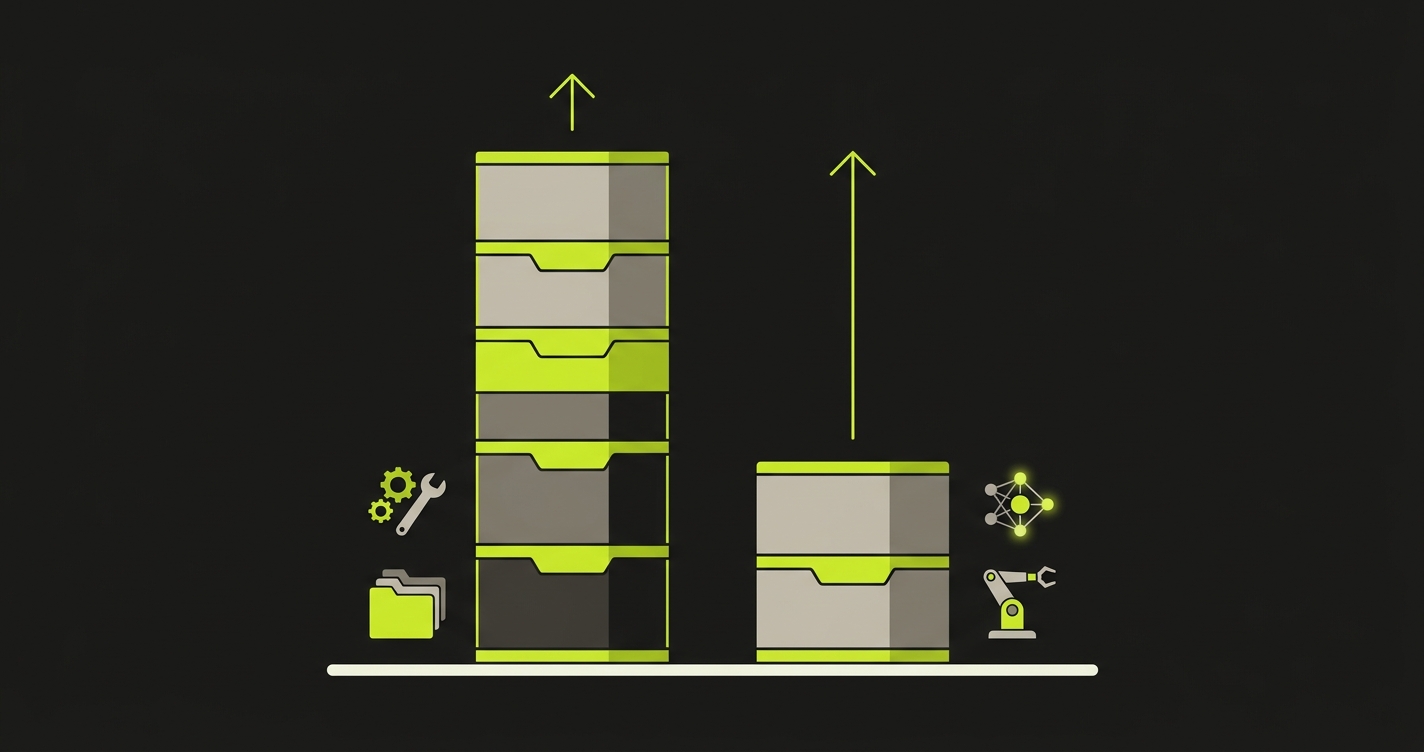
TestQuality's sticker price looks reasonable: $12-30 per user per month, with a free tier for public repos. But the sticker price obscures the total cost of ownership.
TestQuality total cost includes the subscription ($12-30/user/month), plus the engineering time to write test cases (20-30% of QA time), plus the engineering time to maintain test documentation (10-20% of QA time), plus the cost of tests falling out of sync with code. For a 20-person team with 5 QA engineers at $120K average salary, the manual overhead alone represents $120K-$180K annually in labor costs. The TestQuality subscription is a rounding error compared to the manual work it enables.
Autonoma total cost includes cloud pricing ($499/month for 1M credits) or self-hosted (free), plus near-zero manual testing overhead. AI agents handle test creation, execution, and maintenance. QA engineers shift from writing test cases to reviewing AI-generated coverage and investigating real bugs. The same 5 QA engineers spend their time on exploratory testing and quality strategy instead of test documentation.
The comparison is not $12/user versus $499/month. It is $12/user plus six figures in manual labor versus $499/month with that labor automated.
Migration from TestQuality to Autonoma
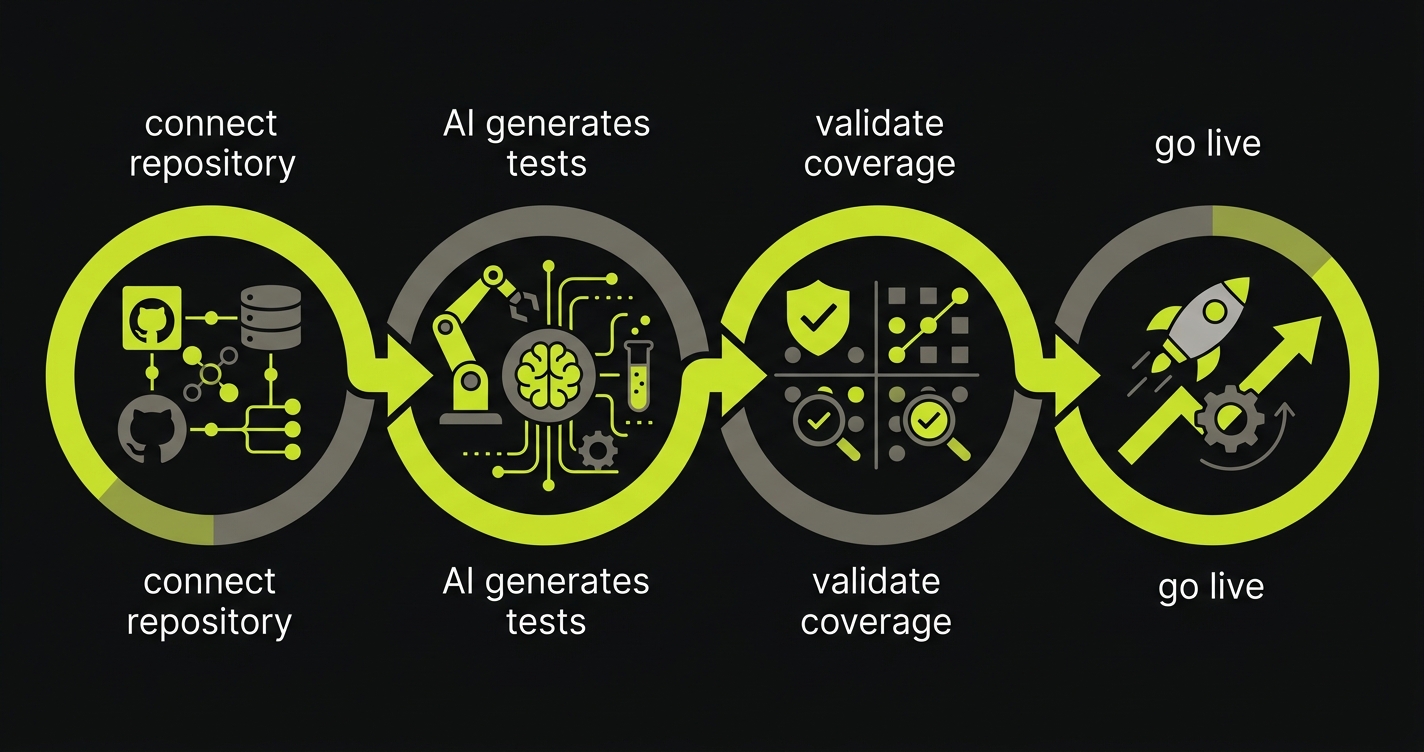
Migration does not require exporting test cases. You are not moving tests from one management tool to another. You are replacing manual test case management with autonomous testing.
Sign up for the free tier and connect your GitHub repository via the GitHub App. The Planner agent analyzes your codebase (routes, components, user flows) and generates a test plan automatically. There is no need to recreate your TestQuality test cases. The AI generates better coverage from your actual code than manually-written tests typically achieve.
Run pilot tests on 5-10 critical user flows. Let the Automator agent execute against staging and review the results and failure reports. Most teams run Autonoma in parallel with TestQuality for 2-4 weeks, expanding coverage gradually. Compare AI-generated tests with your manually-written tests. Most teams find the AI catches edge cases and user flows that manual test planning missed.
Once confident, integrate with your CI/CD pipeline for automated execution on every pull request. Archive historical TestQuality data if needed for compliance, then cancel the subscription. From that point forward, feature launches happen without test case updates. "Write test cases" and "update test documentation" disappear from sprint planning.
Frequently Asked Questions
Autonoma is the best open source alternative to TestQuality. While TestQuality offers native GitHub integration for test management, Autonoma uses AI agents to autonomously generate, execute, and maintain tests from your GitHub repository. It's open source under a BSL 1.1 license (github.com/autonoma-ai/autonoma), offers free self-hosting, and eliminates manual test case management entirely.
Yes. Autonoma integrates with GitHub via a GitHub App, just like TestQuality. The difference is what happens after integration. TestQuality stores manually-written test cases alongside your code. Autonoma reads your actual code and generates tests automatically. Both live in your GitHub workflow, but Autonoma eliminates the manual test writing step.
TestQuality charges $12-30 per user per month with a free tier for public repos. Costs scale linearly with team size. Autonoma offers a free tier (100K credits, no credit card), cloud plans starting at $499/month for 1M credits, and free self-hosted deployment with no feature limits. Autonoma charges by testing volume, not headcount.
Yes. Autonoma is open source (BSL 1.1 license) and can be self-hosted on your infrastructure with zero feature restrictions. Clone the repo from github.com/autonoma-ai/autonoma and deploy on Kubernetes, Docker, or any Node.js environment. You get the same AI-powered autonomous testing capabilities as the cloud version.
No. TestQuality is a proprietary SaaS platform with a closed-source codebase. You cannot self-host it, audit its code, or customize its behavior. If TestQuality changes pricing or discontinues features, you have no fallback. Autonoma is fully open source with the entire codebase available at github.com/autonoma-ai/autonoma.
GitHub-native test management (TestQuality) stores human-written test cases in GitHub. You still write, organize, and maintain tests manually. Autonomous testing (Autonoma) uses AI agents to read your GitHub repo, generate test cases from your actual code, execute them, and maintain them as your code changes. Both integrate with GitHub, but one requires manual work and the other automates the entire testing lifecycle.
Yes. Autonoma uses vision models instead of CSS selectors or XPaths. When your UI changes, the Maintainer agent understands the test intent and adapts the entire test flow. It's not just healing selectors: it's understanding what you're testing and maintaining that intent through code changes. TestQuality does not offer self-healing capabilities.
The Bottom Line
TestQuality had the right idea: tests should live close to code, inside GitHub. But storing manually-written test cases in GitHub is a half-measure. Autonoma takes the same GitHub-first approach and automates the entire testing lifecycle. AI agents read your codebase, generate tests, execute them, and adapt to changes automatically.
It is open source (github.com/autonoma-ai/autonoma), requires no per-user licensing, and offers free self-hosting. If your team uses TestQuality because you wanted tests near code but still spends hours writing and maintaining test cases by hand, Autonoma delivers on the promise that GitHub-native testing started.
Start with Autonoma's free tier. Connect your GitHub repo, let the Planner agent analyze your codebase, and see autonomous testing in action. No credit card required, no per-user fees, no test cases to write.
Related Reading: