
Quick summary: Autonoma is the open source alternative to Tuskr. Tuskr is a budget-friendly test management tool for small teams. Autonoma uses AI agents to autonomously plan, generate, execute, and maintain tests from your codebase. Open source (BSL 1.1), free self-hosting, free cloud tier. Tuskr manages tests you write by hand; Autonoma eliminates the need to write them at all. A shift from test management to autonomous testing.
Tuskr positions itself as the affordable test management option: simple, startup-friendly, under $10/user/month. For teams that just need a place to organize manual test cases, the pitch works. But the real question is not whether you can afford test management. It is whether you should be doing manual test management at all.
Autonoma does not compete with Tuskr on price. It competes by making the entire category of manual test management unnecessary. AI agents read your codebase, generate tests, execute them, and maintain them as your code changes. The free tier alone is more capable than anything Tuskr offers at any price point.
Where Tuskr Falls Short
Basic Functionality, No AI
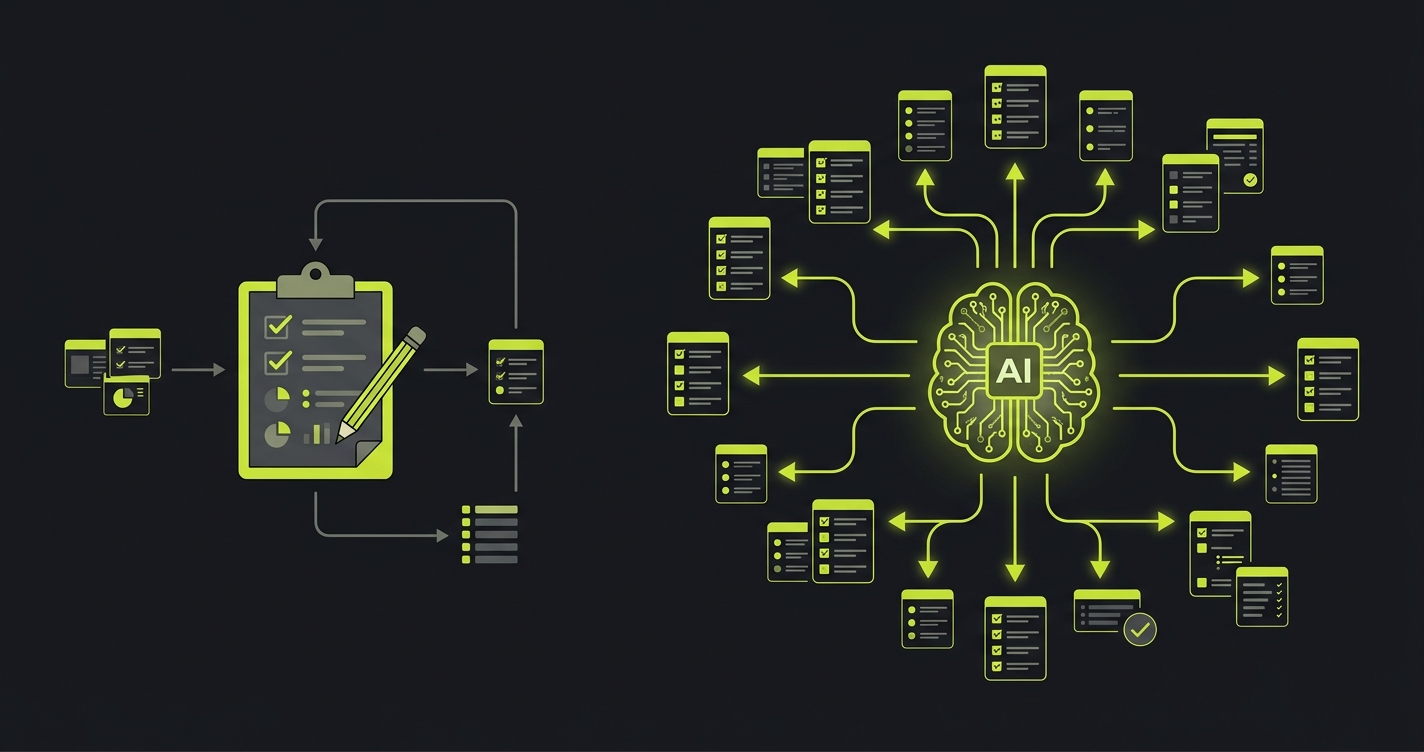
Tuskr provides straightforward test case management: create test cases, organize them into test suites, execute test runs, and generate reports. That is it. There is no AI test generation, no codebase analysis, no automated execution beyond what you script yourself. You write every test case by hand, you update them by hand, and you execute them by hand.
For a tool launched in the era of AI-powered development, this is a significant gap. Your IDE has AI code completion. Your CI pipeline has intelligent failure analysis. Your monitoring has anomaly detection. But your test management tool is still a spreadsheet with extra steps.
No Test Execution
Tuskr is a management layer, not an execution platform. It tracks test cases and their pass/fail status, but it does not run tests. You still need separate tools (Playwright, Cypress, Selenium) and separate infrastructure to actually execute automated tests. Then you manually reconcile results between your automation framework and Tuskr. Two systems that should be one, connected by copy-paste and human memory.
This matters because the gap between "test documentation" and "test execution" is where testing debt accumulates. Features ship, automation scripts get updated, but the test cases in Tuskr fall behind. Within weeks, your test management tool no longer reflects reality. The tool designed to bring order to testing becomes yet another artifact to maintain.
Small Team, Limited Roadmap
Tuskr is built by a small team. That keeps costs down and the product focused, but it also means feature development moves slowly. Enterprise-grade capabilities like advanced integrations, sophisticated reporting, or AI-powered features require engineering investment that a lean startup may struggle to prioritize. You are betting your testing infrastructure on a team that may not have the resources to keep pace with the industry's shift toward AI-native tooling.
There is also no self-hosting option. Your test data lives on Tuskr's infrastructure with no alternative. For teams with compliance requirements or data residency needs, this is a non-starter regardless of the price.
Autonoma: The Open Source Alternative to Tuskr
Autonoma is an open source, AI-native testing platform that replaces manual test case management with autonomous agents. Where Tuskr helps you organize tests you write by hand, Autonoma eliminates the need to write them.
Three Agents, Zero Manual Work
1. Planner Agent (Replaces Manual Test Case Writing). Connects to your GitHub repository and reads your codebase. Analyzes routes, API endpoints, and component structure. Identifies user flows and critical paths. Generates test scenarios from actual code, including complex setups like database state initialization. You do not write test cases; the Planner agent creates them by understanding your application architecture. This single capability makes Tuskr's entire value proposition redundant.
2. Automator Agent (Replaces Manual Test Execution). Executes test plans on real browsers (Playwright) and real mobile devices (Appium). Uses AI-powered vision models to find elements instead of CSS selectors or XPaths. Adapts to your UI automatically. Generates execution reports with screenshots and logs. No separate automation framework needed. No reconciliation between test documentation and test code.
3. Maintainer Agent (Replaces Manual Test Maintenance). Keeps tests passing as code changes. Detects when tests fail due to legitimate code changes versus real bugs. Updates test execution strategies when UI flows change. Self-heals without human intervention. The constant sprint-over-sprint maintenance burden that consumes 20-40% of QA time simply disappears.
Verification layers at each step ensure consistent, reliable behavior. Agents do not take random paths or make probabilistic guesses.
Key Features
Open Source Architecture. The full codebase is available at github.com/autonoma-ai/autonoma under a BSL 1.1 license that converts to Apache 2.0 in March 2028. You can use it in production; the only restriction is you cannot resell the functionality as a commercial service. Self-hosted deployment comes with no feature restrictions. Tuskr is entirely closed source with no self-hosting option.
Codebase-First Testing. Tests are generated automatically from your codebase with no manual test writing required. AI agents analyze your routes, components, and user flows to create comprehensive test cases. Framework agnostic: React, Next.js, Vue, Angular, Flutter, React Native all work. The GitHub App integration reads your repo structure to understand your application architecture.
Zero Maintenance. Self-healing tests adapt to UI changes automatically using vision-based element detection instead of brittle CSS selectors. The Planner agent handles database state setup, and there are no test scripts to update when features change.
Cross-Platform Coverage. Test across web browsers (Chrome, Firefox, Safari via Playwright), iOS (simulator and real devices via Appium), and Android (emulator and real devices via Appium), all from a single test definition.
Developer-Friendly Workflow. Terminal-native interface that integrates with coding agents like Claude and Cursor. CI/CD integration works via GitHub Actions, GitLab CI, and CircleCI. Runs locally or in cloud infrastructure.
Tech Stack
TypeScript on Node.js 24 for agent logic and orchestration. Playwright for cross-browser automation. Appium for mobile. PostgreSQL for test data and execution history. Kubernetes for production-grade scaling.
Detailed Feature Comparison
| Feature | Tuskr | Autonoma |
|---|---|---|
| Test Case Generation | Manual (humans write every test case) | Automated (Planner agent reads code and generates tests) |
| Test Execution | Not included (management only, separate tools needed) | Built-in (Automator agent runs tests on real browsers and devices) |
| Test Maintenance | Manual (humans update when features change) | Automated (Maintainer agent self-heals) |
| AI Capabilities | None | Full AI lifecycle: plan, generate, execute, maintain |
| Open Source | No (proprietary, closed source) | Yes (BSL 1.1, github.com/autonoma-ai/autonoma) |
| Self-Hosting | Not available | Full support (deploy anywhere, no restrictions) |
| Pricing Model | Under $10/user/month (scales with headcount) | Free tier (100K credits) + Cloud ($499/mo for 1M credits) + Self-hosted (unlimited free) |
| Codebase Analysis | None (does not read your code) | GitHub App reads routes, components, flows to generate test plans |
| Self-Healing | Not available | Vision-based self-healing (understands test intent, adapts to UI changes) |
| Cross-Platform | Web-based test management interface | Web (Playwright) + iOS (Appium) + Android (Appium) from one platform |
| Database Setup | Manual configuration by QA team | Planner agent generates endpoints for DB state setup automatically |
| Integrations | Jira, basic CI/CD webhooks | GitHub, GitLab, CI/CD tools, coding agents (Claude, Cursor) |
| Reporting | Basic test run reports and dashboards | Execution reports with screenshots, logs, and AI failure analysis |
| Target Audience | Small teams wanting affordable test management | Any team wanting to eliminate manual test management entirely |
| Vendor Lock-In | Moderate (proprietary format, no data export guarantees) | None (open source, standard test definitions) |
The Real Cost Comparison
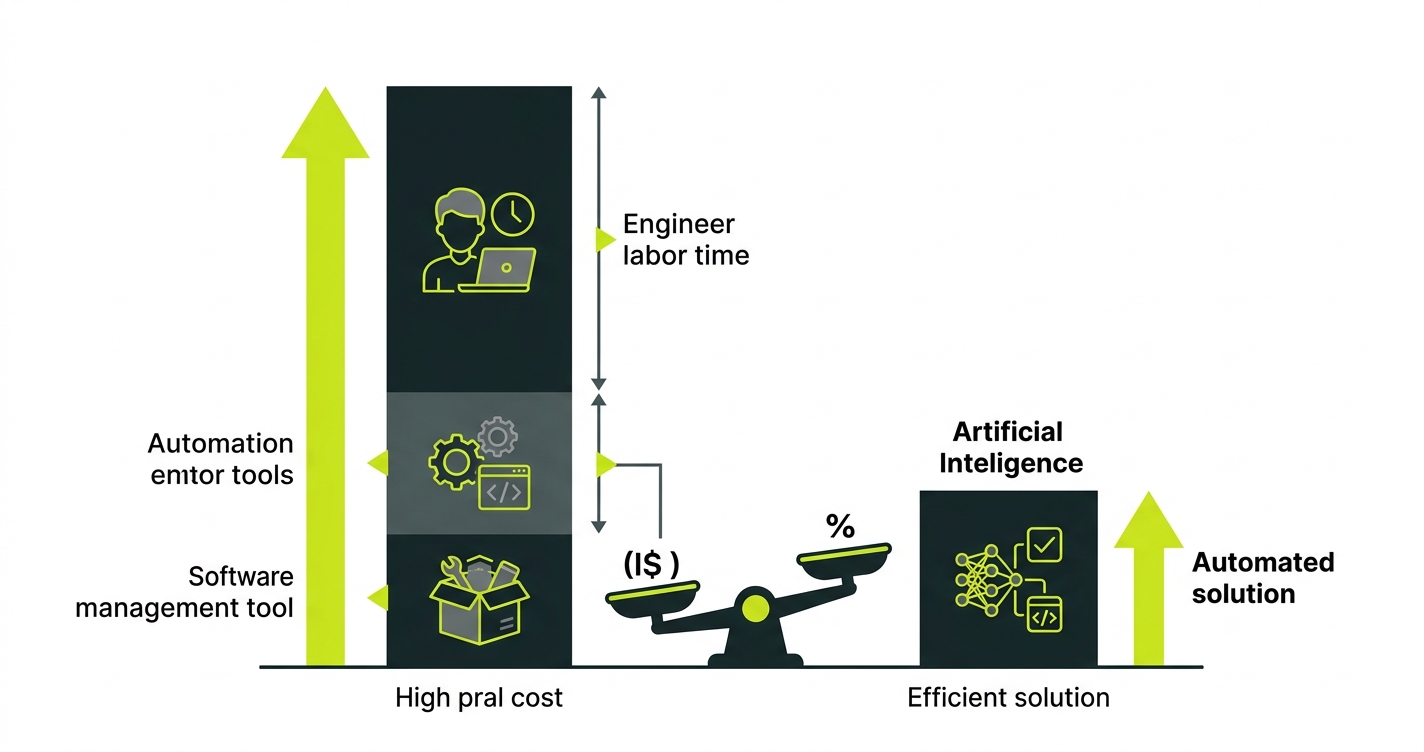
Tuskr's headline pricing is compelling: under $10/user/month. For a team of 10, that is under $1,200/year. Compared to enterprise tools charging $25,000+ annually, it feels like a bargain.
But the sticker price misses the real cost.
The hidden cost of manual testing. A QA engineer earning $90,000/year who spends 30% of their time writing and maintaining test cases in Tuskr burns $27,000/year on test documentation overhead alone. For a team of 5 QA engineers, that is $135,000/year in labor costs to maintain something an AI agent handles automatically. The $1,200 Tuskr license is a rounding error compared to the labor it enables.
Autonoma's pricing eliminates both costs. Self-hosted deployment is free with no feature limits. The cloud free tier includes 100K credits with no credit card. Cloud plans start at $499/month for 1M credits. And the key difference: because AI agents generate and maintain tests, you redirect that 30% of QA time toward exploratory testing, test strategy, and quality engineering work that actually requires human judgment.
Even if Tuskr were completely free, the fundamental problem remains: someone still has to write every test case, and someone still has to update them when features change. Autonoma eliminates that overhead at every price tier, including the free one.
Migration from Tuskr to Autonoma
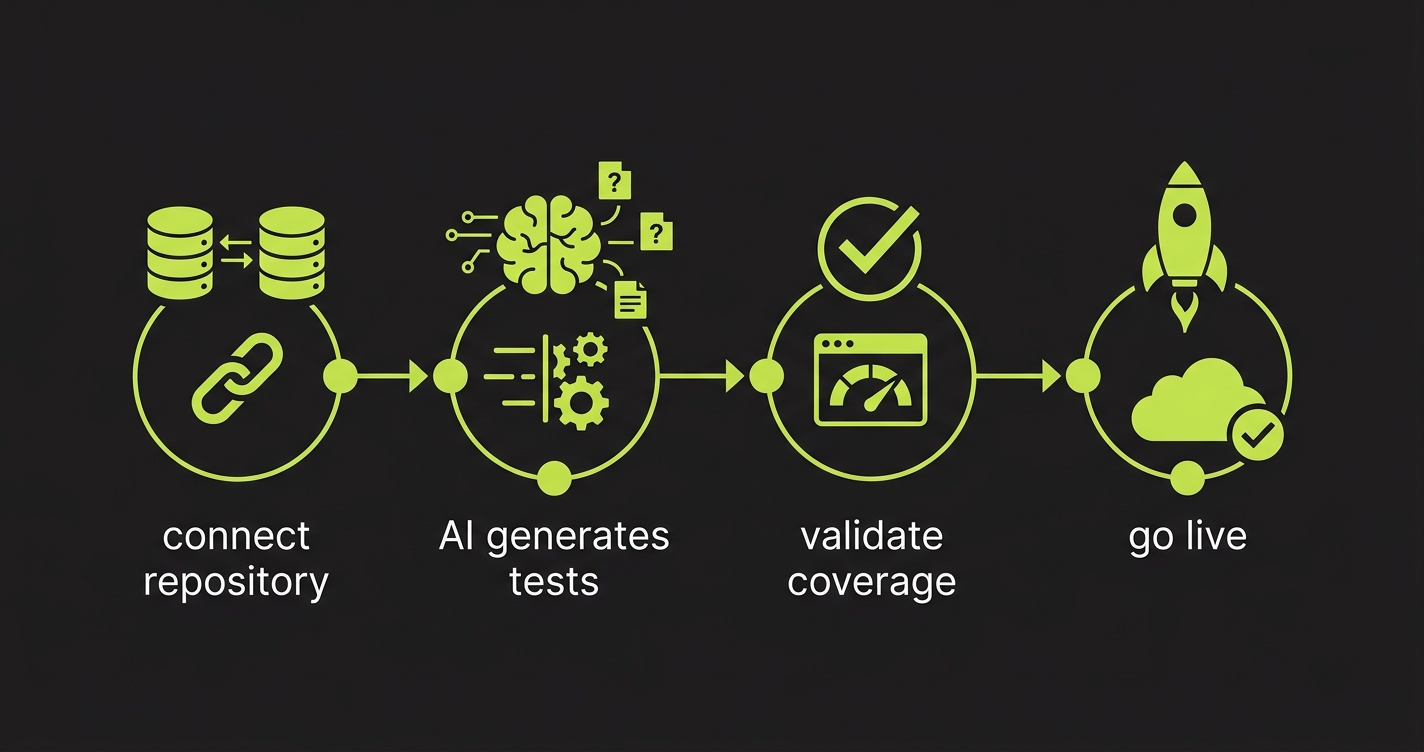
Migration is straightforward because you are not importing test cases; you are replacing the need for them entirely. No export/import process, no reformatting test steps, no recreating test suites.
Sign up for the free tier and connect your GitHub repository via the GitHub App. The Planner agent analyzes your codebase (routes, components, user flows) and generates a test plan automatically. Your existing Tuskr test cases become a reference to validate coverage, not a migration target.
Run pilot tests on 5-10 critical user flows. Let the Automator agent execute against staging and review the results. Compare coverage between your Tuskr test cases and what the Planner agent generated. Most teams discover the AI-generated plan covers scenarios they had not thought to document manually.
Run Autonoma in parallel with Tuskr for 2-4 weeks. Expand coverage gradually. Once confident, integrate with your CI/CD pipeline for automated execution on every pull request. Cancel the Tuskr subscription.
From that point forward: no test case writing, no sprint-over-sprint maintenance, no reconciling test documentation with actual code. The Maintainer agent handles changes automatically, the Planner agent updates plans when new routes are added, and "update test cases" disappears from your backlog permanently.
Frequently Asked Questions
Autonoma is the best open source alternative to Tuskr. Unlike Tuskr's manual test case management, Autonoma uses AI agents to autonomously generate, execute, and maintain tests from your codebase. It's open source under a BSL 1.1 license (github.com/autonoma-ai/autonoma), self-hosted for free with no feature limits, and its free cloud tier includes AI test generation: something Tuskr cannot do at any price.
Tuskr is designed for small teams with its simple UI and under-$10/user pricing. However, small teams benefit the most from not having to write tests manually. Autonoma's free tier gives small teams AI-powered test generation, execution, and maintenance at zero cost: capabilities Tuskr cannot match regardless of price.
Tuskr charges under $10/user/month, scaling with headcount. A 10-person team pays about $1,200/year. Autonoma offers a free cloud tier (100K credits, no credit card), cloud plans starting at $499/month, and completely free self-hosted deployment. But the real savings come from eliminating manual test writing labor: typically 20-40% of QA engineer time.
Yes. Autonoma is open source (BSL 1.1 license) and can be self-hosted on your own infrastructure with zero feature restrictions. Clone the repo from github.com/autonoma-ai/autonoma and deploy on Kubernetes, Docker, or any Node.js environment. Tuskr does not offer self-hosting at all.
No. Tuskr is a manual test management tool. You write every test case by hand, organize them into suites, and execute them manually or via separate automation tools. Autonoma's Planner agent connects to your GitHub repository, reads your codebase, and generates test scenarios automatically from your routes, components, and user flows.
Autonoma includes full test execution. The Automator agent runs tests on real browsers via Playwright and real mobile devices via Appium. Tuskr is management-only: it tracks test cases and results but does not execute tests. You need separate tools and infrastructure for that.
Test management platforms like Tuskr help you organize, track, and execute manually-created test cases. You still write every test step and maintain them when your app changes. Autonomous testing platforms like Autonoma use AI agents to plan, generate, execute, and maintain tests automatically. The Planner reads your code, the Automator runs tests, the Maintainer keeps them passing. No manual test case management required.
The Bottom Line
Tuskr is cheap. Autonoma's free tier is free. But the real comparison is not about price. Tuskr manages tests you write by hand. Autonoma eliminates the need to write them entirely. AI agents read your codebase, generate tests, execute them, and keep them passing as your code evolves.
It is open source (github.com/autonoma-ai/autonoma), self-hostable with no feature restrictions, and the free cloud tier already includes AI test generation that Tuskr cannot match at any price point. If your small team is spending hours every sprint writing and maintaining test cases in a budget tool, Autonoma offers a fundamentally different approach.
Start with Autonoma's free tier. Connect your GitHub repo, let the Planner agent analyze your codebase, and see autonomous testing in action. No credit card required, no per-user fees, no test cases to write.
Related Reading: