

Quick summary: Autonoma is the open-source alternative to Virtuoso QA. Unlike Virtuoso's proprietary AI platform (enterprise pricing, no self-hosting, closed source), Autonoma generates tests automatically from your codebase using AI agents. No natural language scripting required. Full source code on GitHub (BSL 1.1), self-hosting on your infrastructure, vision-based self-healing, unlimited parallel execution, no vendor lock-in. Free tier: 100K credits. Cloud: $499/month. Self-hosted: no ongoing costs.
Virtuoso is one of the more interesting players in AI testing. Their pitch is genuinely compelling: write tests in plain English, let AI handle the execution. Self-healing built in. Visual regression testing included. It is closer to the future of testing than most legacy tools. But "closer" is not the same as "there." Virtuoso still requires humans to describe every test. It is closed source, cloud-only, and priced behind enterprise sales calls. If your team values transparency, infrastructure control, or the ability to inspect and modify the testing platform itself, Virtuoso's model has hard limits.
Autonoma takes the AI-native approach further. Instead of requiring you to describe tests in natural language, Autonoma's AI reads your codebase and generates tests automatically. Full source code on GitHub, self-host anywhere, and pricing you can see before talking to sales. This guide covers where Virtuoso falls short, how Autonoma solves those problems, and how to switch.
Where Virtuoso Falls Short
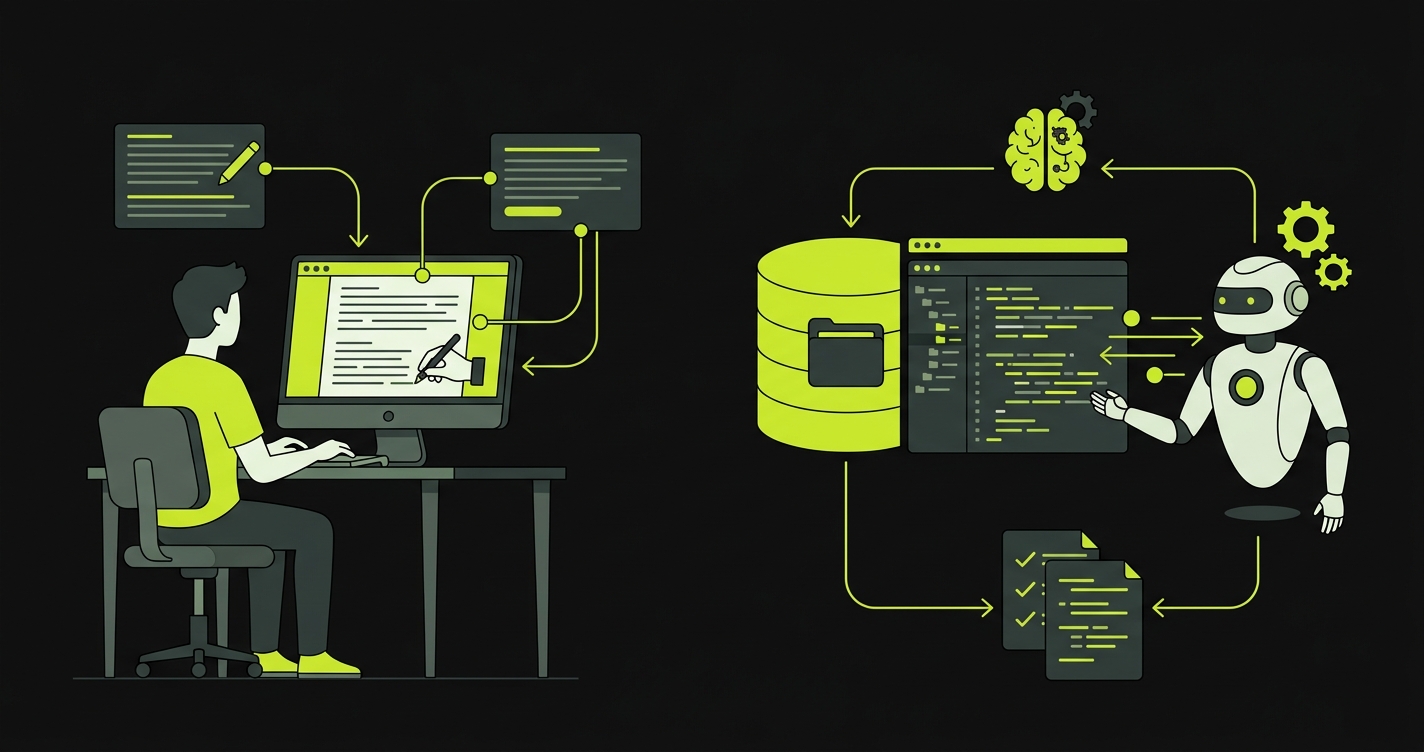
Virtuoso is a real step forward from legacy tools like Selenium IDE or Katalon. But three fundamental limitations keep it from being the testing platform modern engineering teams actually need.
You Still Write the Tests (Just in English)
Virtuoso's headline feature is natural language test authoring. Instead of writing Selenium scripts or Cypress commands, you describe tests in plain English: "Navigate to login page, enter username, click sign in." The AI translates that into executable steps. It is genuinely easier than writing code.
But the bottleneck was never the programming language. It was the human effort required to decide what to test, describe every flow, and keep descriptions updated as the product evolves. Virtuoso shifts the authoring format from code to English. It does not eliminate authoring.
Consider a team shipping a new checkout flow. With Virtuoso, a QA engineer still needs to sit down and describe the test: "Go to cart, enter shipping address, select payment method, confirm order, verify confirmation page." They need to think through edge cases: expired cards, invalid addresses, coupon codes, quantity limits. Each scenario is a separate natural language description that someone writes, reviews, and maintains.
When the checkout flow changes (new payment provider, redesigned address form, added gift card field), those descriptions need updating. The AI is smart about handling minor UI changes through self-healing, but structural flow changes require humans to rewrite the natural language scripts. The maintenance burden is smaller than with coded tests, but it is not zero. It is not even close to zero for teams shipping frequently.
One engineering lead told us: "Virtuoso is great if you have QA people with time to describe tests. We don't. We need tests that exist without anyone having to think about them."
Autonoma eliminates this entirely. AI agents analyze your codebase, read your routes and components, understand user flows from the code itself, and generate comprehensive E2E tests. Nobody writes test descriptions. Nobody maintains them. The AI understands your application because it reads your code, not because a human explained it in English.
Closed Source with No Self-Hosting
Virtuoso is entirely proprietary. You cannot inspect the source code, audit how tests execute, or verify how your data is handled. The platform runs exclusively on Virtuoso's cloud infrastructure. There is no self-hosting option.
For many teams, this is a non-starter. Healthcare companies bound by HIPAA need to audit testing infrastructure. Financial platforms under PCI DSS require controlled environments. Government contractors working toward FedRAMP need every system on approved infrastructure. Virtuoso cannot accommodate any of these requirements because you cannot run it on your own servers.
Even teams without strict compliance mandates increasingly want control over where their application data goes during testing. Every Virtuoso test run sends your application URLs, login credentials, form data, and potentially sensitive user information through their servers. You are trusting a third party with your production-adjacent data, and you have no way to verify how it is stored, processed, or retained because the platform is closed source.
When something goes wrong with test execution, you cannot debug the platform. You file a support ticket and wait. When you need a feature that does not exist, you submit a request and hope. When a security vulnerability is discovered, you trust that Virtuoso patches it without being able to verify. This is the fundamental trade-off of proprietary platforms, and for a growing number of teams, it is unacceptable.
Autonoma's full source code is on GitHub. Licensed under BSL 1.1 (converts to Apache 2.0 in 2028). Self-host on AWS, GCP, Azure, or your own data center. Audit every line. Fork and modify. Your data never leaves your infrastructure.
Enterprise Pricing with No Transparency
Virtuoso does not publish pricing. You contact sales, go through a demo, and receive a custom quote. Industry reports and user reviews suggest annual contracts starting at $20,000-50,000+ for mid-sized teams, scaling significantly higher for enterprise deployments. The exact numbers depend on team size, test volume, and negotiation leverage.
This pricing model creates several problems. You cannot evaluate cost before committing to a sales process. You cannot compare pricing directly against alternatives without multiple sales calls. Budget approval requires an internal champion willing to push through an opaque quote. And once you sign an annual contract, switching costs lock you in for at least a year.
For startups and mid-sized teams, the sales-driven pricing model is a barrier to adoption. Many teams want to evaluate a tool hands-on before committing budget. Virtuoso offers limited trials, but the full platform requires a commercial agreement. There is no free tier for ongoing use, no self-service pricing, and no way to start small and scale up predictably.
Autonoma: The Open Source Alternative to Virtuoso
Autonoma is an open-source, AI-native testing platform that eliminates the limitations above. Where Virtuoso requires you to describe tests in natural language, Autonoma generates them from your codebase. Where Virtuoso is closed and cloud-only, Autonoma is open source and self-hostable. Where Virtuoso hides pricing behind sales calls, Autonoma publishes every plan publicly.
Code-Aware AI vs Natural Language Prompts
This is the core philosophical difference. Virtuoso asks: "How do you want to describe this test?" Autonoma asks: "What does your codebase do?"
How it works: You connect your GitHub repo, and Autonoma's test-planner-plugin reads your routes, components, and user flows to build a knowledge base of your application. AI agents then generate comprehensive E2E test cases based on your actual code structure. No descriptions. No prompts. No natural language authoring. Tests execute using AI vision models that see your app like a human would, which means no CSS selectors, no XPaths, and no DOM-dependent locators to break. When your UI changes, tests adapt automatically because the AI understands intent, not markup.
Virtuoso's self-healing handles minor UI tweaks well (button text changes, element repositioning). But when flows change structurally, someone rewrites the natural language description. Autonoma's AI re-reads your updated codebase and regenerates tests to match. The difference compounds over time: Virtuoso's maintenance burden grows linearly with your test suite size. Autonoma's stays near zero.
The result: your QA team stops writing and maintaining test scripts (even "easy" natural language ones) and starts reviewing AI-generated test plans and analyzing results. That is higher-leverage work that actually improves product quality.
Open Source and Self-Hosting
Full source code on GitHub. Licensed under BSL 1.1 (converts to Apache 2.0 in 2028). You can use it in production, inspect every line, audit security, and self-host with no feature restrictions. The only limitation: you cannot resell Autonoma's functionality as a commercial service.
Run Autonoma on your infrastructure. AWS (ECS, EKS, or EC2), GCP (GKE or Compute Engine), Azure (AKS or VMs), or your own data center. When you self-host, your data never leaves your infrastructure. Tests run in your VPC. Credentials stay on your servers. Application URLs are never exposed to external systems.
The technology stack is built on standard open source components: TypeScript and Node.js 24 for the runtime, Playwright for web testing, Appium for mobile testing, PostgreSQL for data storage, and Kubernetes for orchestration. No proprietary runtimes, no black-box components, no vendor-specific dependencies.
This directly solves the compliance problem that disqualifies Virtuoso for regulated industries. Need to audit testing infrastructure for HIPAA? Read the source code. Need to verify credential handling? Inspect the runtime. Need to run tests on FedRAMP-authorized infrastructure? Self-host on GovCloud.
Unlimited Parallel Execution
Every plan (free tier, cloud, and self-hosted) supports unlimited parallel execution. On the free tier that is subject to credit limits, but on cloud and self-hosted plans your test suite scales with your infrastructure. No negotiations, no seat-based limits, no artificial caps.
Virtuoso's parallel execution depends on your contract tier. More parallels means a larger contract. With Autonoma, you spin up as many parallel workers as your infrastructure supports. When you self-host, parallel capacity is limited only by the compute resources you allocate.
Cross-Platform Coverage
Autonoma uses Playwright for web testing (Chrome, Firefox, Safari across desktop and mobile viewports) and Appium for mobile testing (iOS simulators, Android emulators, and physical devices). The platform is framework agnostic: React, Next.js, Vue, Angular, Flutter, React Native. The AI reads your routes and component hierarchy, not just the rendered DOM.
Virtuoso supports major browsers and offers visual testing capabilities. Both platforms cover the essential browser and device combinations that most teams actually test in practice. The difference is not in coverage breadth; it is in how tests are created and maintained.
Transparent Pricing
Free tier: 100K credits, no credit card required, unlimited parallels, all features included. Start testing in minutes.
Cloud ($499/month): 1M credits per month, unlimited parallels, managed infrastructure, support included. No sales calls, no custom quotes, no annual contract required.
Self-hosted (free platform): No ongoing platform fees. Pay only for infrastructure (AWS/GCP/Azure). No feature restrictions. Full control.
Virtuoso vs Autonoma: Feature Comparison
| Feature | Virtuoso | Autonoma |
|---|---|---|
| Open Source | Proprietary closed source | BSL 1.1 on GitHub (Apache 2.0 in 2028) |
| Self-Hosting | Cloud only, no self-hosting | Self-host anywhere (AWS, GCP, Azure, on-prem) |
| Test Creation | Natural language descriptions (human writes in English) | AI generates from codebase automatically (no human input) |
| Test Maintenance | Self-healing for UI tweaks; rewrites needed for flow changes | AI re-reads codebase and regenerates (zero maintenance) |
| AI Approach | Translates English to test steps | Reads code, understands routes and components, generates tests |
| Vision-Based Testing | Visual regression testing included | Vision models for execution and self-healing |
| Parallel Execution | Depends on contract tier | Unlimited on all plans |
| Vendor Lock-In | High (proprietary format, no export) | None (tests generated from code, fork codebase) |
| Pricing Transparency | Contact sales for custom quote | Public pricing, free tier, no sales calls |
| Starting Price | ~$20,000+/year (estimated) | Free (100K credits) |
| Cloud Price | Enterprise contracts ($20K-50K+/year) | $499/month ($5,988/year), unlimited parallels |
| Self-Hosted Cost | Not available | Infrastructure only (no platform fees) |
| Data Sovereignty | Data on Virtuoso servers | Data stays on your infrastructure |
| Source Code Access | Proprietary, no access | Full source code on GitHub |
| Browser Support | Chrome, Firefox, Safari, Edge | Chrome, Firefox, Safari, iOS, Android |
| Mobile Testing | Mobile web testing | Native mobile via Appium (iOS + Android) |
| Setup Time | Days (sales process + onboarding) | Minutes (cloud), hours (self-hosted) |
Cost: Open Source vs Proprietary AI Testing
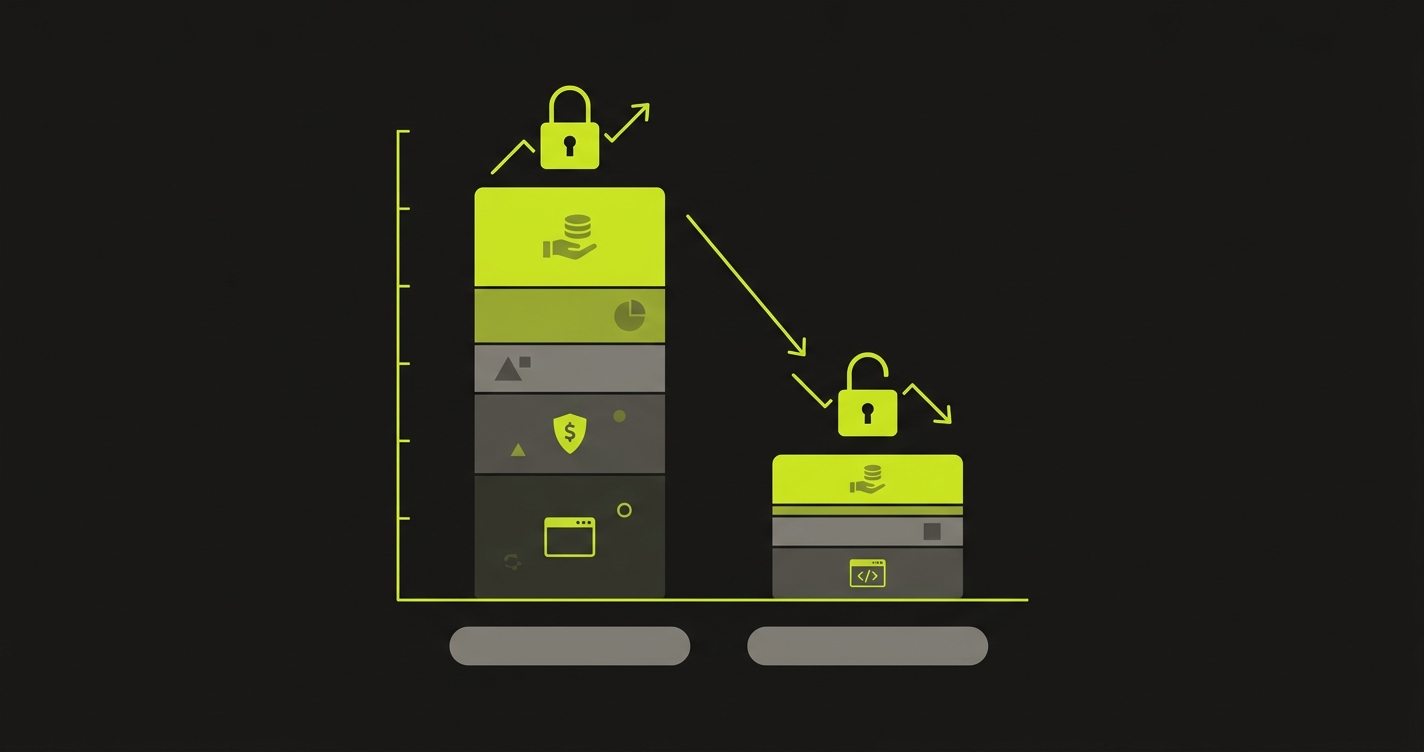
The cost difference between Virtuoso and Autonoma goes beyond subscription fees.
Virtuoso's enterprise pricing is opaque, but based on industry data and user reports, mid-sized teams typically pay $20,000-50,000+ per year on annual contracts. Larger enterprises pay significantly more. Even at the lower end, that is a substantial commitment for a platform you cannot self-host, cannot inspect, and cannot leave without losing your entire test suite.
With Virtuoso, you also pay in engineering hours. Someone still writes natural language test descriptions, reviews and updates them when flows change, and manages the test suite. This is less effort than coding Selenium scripts, but it is not zero. Estimate 5-10 hours per month for a mid-sized team maintaining natural language tests as the product evolves. At $100-150/hour for QA engineering time, that adds $6,000-18,000/year in maintenance costs.
Three-year total cost of Virtuoso (mid-sized team): $60,000-150,000 in subscription fees plus $18,000-54,000 in maintenance labor. Total: $78,000-204,000.
Three-year total cost of Autonoma cloud: $499/month x 36 = $17,964. Zero maintenance hours (AI generates and maintains tests from your codebase). Total: $17,964.
Three-year total cost of Autonoma self-hosted: Infrastructure costs of $200-400/month x 36 = $7,200-14,400. Zero platform fees. Zero maintenance hours. Total: $7,200-14,400.
That is a 77-96% cost reduction depending on your Virtuoso contract and deployment model. The savings come from two places: lower platform costs and eliminated maintenance labor. The maintenance elimination is the bigger factor for most teams.
Migrating from Virtuoso to Autonoma
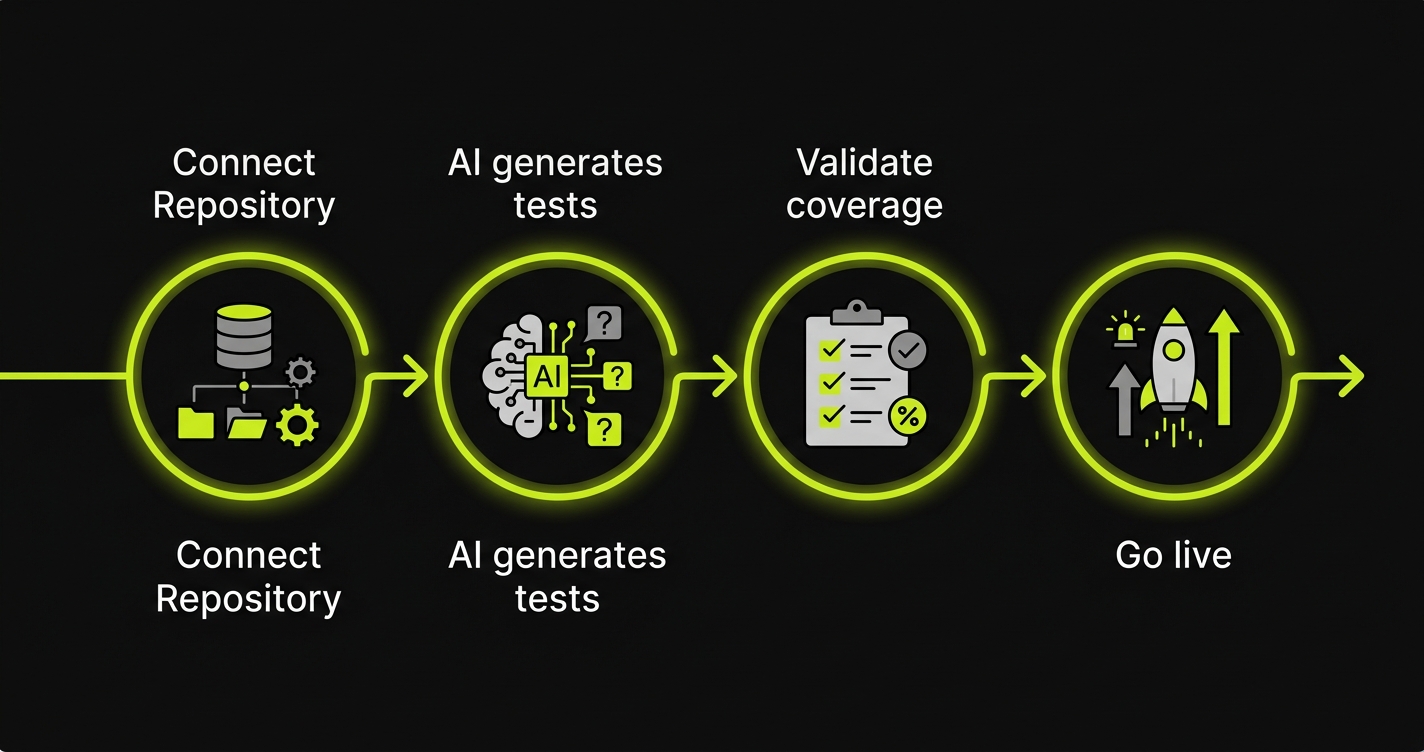
Migration from Virtuoso is straightforward because you are not converting natural language tests into another format. You are letting Autonoma generate fresh coverage from your codebase.
1. Connect your repo. Sign up for the free tier at getautonoma.com or self-host by cloning the GitHub repo and following the deployment docs. Connect your GitHub repository and let Autonoma's AI analyze your codebase. This takes minutes.
2. AI generates tests. The test-planner-plugin builds a knowledge base of your application and generates comprehensive E2E test cases automatically. Start with your most critical flows (authentication, checkout, core features) and run them alongside your existing Virtuoso suite to compare.
3. Validate coverage. Compare AI-generated test coverage against your Virtuoso suite. Since Virtuoso tests are stored in their proprietary platform with no standard export format, the comparison is functional: does Autonoma cover the same user journeys? In most cases, Autonoma's code-aware generation discovers flows and edge cases that humans did not think to describe in natural language. Coverage often increases.
4. Update CI/CD and cut over. Point your CI/CD pipelines at Autonoma, train your team on reviewing AI-generated test plans instead of writing natural language descriptions, and end your Virtuoso contract. The transition is low-risk because you have validated coverage in step 3.
The migration effort is about reviewing and verifying, not rebuilding. Most teams complete the process in 1-2 weeks.
Frequently Asked Questions
Yes. Autonoma is an open-source testing platform available on GitHub. Unlike Virtuoso's proprietary closed-source model with opaque enterprise pricing, Autonoma offers a free tier with 100K credits and full self-hosting capabilities. You can run Autonoma on your own infrastructure with no feature limitations, or use the cloud version starting free.
Virtuoso requires you to describe tests in plain English. Someone still decides what to test and writes those descriptions. Autonoma eliminates that step entirely: AI agents analyze your codebase (routes, components, user flows) and generate comprehensive E2E tests automatically. No prompts, no descriptions, no manual test authoring of any kind.
Yes. Autonoma is fully self-hostable with complete source code on GitHub. You can run it on your infrastructure (AWS, GCP, Azure, on-premise) with zero feature restrictions. Virtuoso offers no self-hosting option; you are locked into their cloud.
Virtuoso uses opaque enterprise pricing, typically $20,000-50,000+/year for mid-sized teams on annual contracts. Autonoma offers a free tier with 100K credits, cloud at $499/month ($5,988/year) with unlimited parallels, and free self-hosting where you pay only infrastructure costs. Three-year savings: 77-96%.
Yes. You don't rewrite tests; you connect your repo and Autonoma's AI generates tests from your codebase automatically. Since Virtuoso tests are stored in their proprietary platform, migration means letting Autonoma regenerate coverage from your actual code. Most teams achieve full coverage within days.
No. Nobody writes tests; the AI does. Unlike Virtuoso where someone describes tests in English, Autonoma generates tests automatically from your codebase. AI agents analyze your routes, components, and user flows, then create comprehensive E2E tests. Team members review test plans and results, but no writing is required.
The Bottom Line
Virtuoso is a genuine step forward from legacy testing tools. Natural language authoring and built-in self-healing put it ahead of most competitors. But it is still proprietary, cloud-only, enterprise-priced, and requires humans to describe every test. Their AI understands English. It does not understand your code.
Autonoma goes further. Full source code on GitHub (BSL 1.1, Apache 2.0 in 2028). Self-host on your infrastructure or use our cloud. AI reads your codebase and generates tests automatically: no descriptions, no prompts, no maintenance. Unlimited parallels on every plan. No vendor lock-in. Free tier starts at 100K credits, cloud at $499/month, self-hosted at infrastructure cost only. Three-year savings: 77-96% compared to Virtuoso.
Ready to try open source testing?
Start Free - 100K credits, no credit card, 5-minute setup
View on GitHub - Inspect source code, self-host documentation
Book Demo - See AI test generation in action
Related Reading: