
Quick summary: Autonoma is the open-source alternative to QA Wolf. QA Wolf charges $4K-10K+/month for human engineers to write and maintain your Playwright tests. Autonoma's AI agents do the same work autonomously: generating tests from your codebase, self-healing with vision models, running unlimited parallels. Full source code on GitHub (BSL 1.1), self-hosting, no outsourced dependency. Free tier: 100K credits. Cloud: $499/month. Self-hosted: no ongoing costs. You own the capability instead of renting a team.
QA Wolf popularized an appealing idea: what if someone else just handled all your QA? They assign human engineers to your team, those engineers write Playwright tests, and they maintain them as your product changes. No hiring QA engineers, no managing test suites, no dealing with flaky tests. It sounds great: until you look at the invoice and realize you have built a critical dependency on an external team you do not control.
The core problem is not that QA Wolf does bad work. Their engineers are competent. The problem is that outsourcing your entire testing capability to a human service creates structural risks that compound over time: and it costs 10-20x what AI can deliver today.
Autonoma is the open-source alternative. AI agents that do what QA Wolf's human engineers do, but faster, cheaper, and without creating an external dependency. This guide covers where QA Wolf's model falls short, how Autonoma solves those problems, and how to make the switch.
Where QA Wolf Falls Short
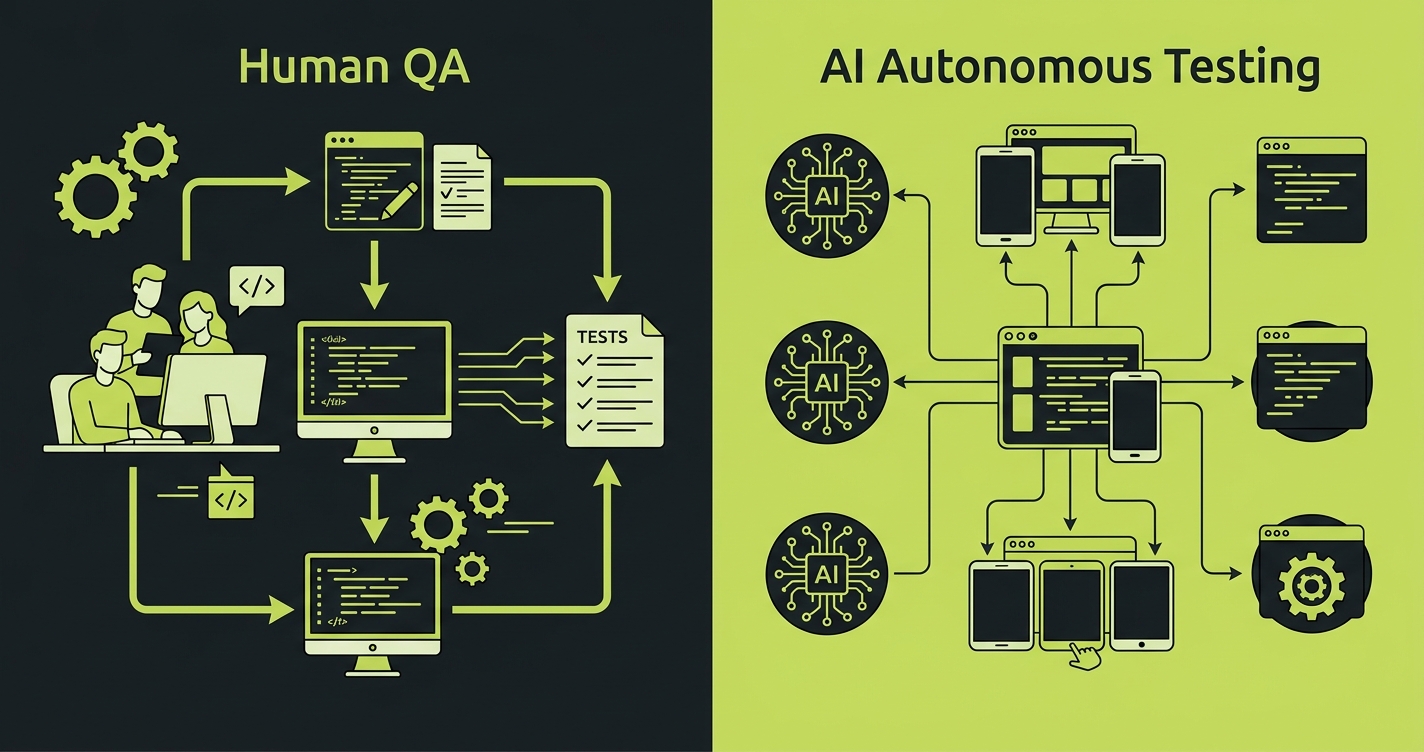
Three structural problems make QA Wolf's model increasingly hard to justify in 2026.
You Are Outsourcing a Core Capability
When you hire QA Wolf, you are paying someone else to understand how your product should work. Their engineers learn your application, write tests that encode your business logic, and maintain those tests as your product evolves. That knowledge lives in their heads, not in your organization.
This creates a dependency that gets worse over time. The longer QA Wolf works on your codebase, the more institutional testing knowledge accumulates outside your walls. If you cancel, that knowledge walks out the door. You are left with a pile of Playwright tests that technically belong to you but that nobody on your team wrote, understands, or knows how to maintain.
One engineering director told us: "We used QA Wolf for 18 months. When we tried to bring testing in-house, we realized nobody on our team understood our own test suite. We were essentially starting from scratch."
This is not a failure of QA Wolf specifically. It is a structural flaw in any outsourced QA model. Testing is not a commodity service like cloud hosting. It encodes product knowledge, business rules, and user behavior understanding. Outsourcing it means outsourcing that understanding.
Human Engineers Do Not Scale Like AI
QA Wolf's service runs on human engineers. Humans need to be hired, onboarded, trained on your specific codebase, and managed. When QA Wolf has turnover: and every company does: a new engineer needs to re-learn your application from scratch. That ramp-up period means slower test updates, missed edge cases, and temporary coverage gaps.
Human engineers also work in serial. One engineer can write maybe 5-10 tests per day for a complex application. Need 200 new tests after a major feature launch? That takes weeks of human effort. Need tests updated across 50 flows after a design system overhaul? Your QA Wolf engineers are going to be busy for a while.
AI agents operate differently. Autonoma's AI analyzes your entire codebase: routes, components, user flows: and generates comprehensive test coverage in hours, not weeks. When your UI changes, vision-based self-healing adapts tests automatically. There is no onboarding period, no turnover risk, no serial bottleneck. The AI scales instantly with your codebase.
The math is straightforward. QA Wolf assigns 1-3 engineers to your account depending on the plan. Those engineers have finite capacity. Autonoma's AI has effectively infinite capacity: limited only by compute, which scales on demand.
The Price Tag Is Hard to Justify
QA Wolf is a premium service. Pricing starts around $4,000/month and commonly reaches $10,000+/month for larger teams with extensive test suites. That is $48K-120K+ per year: the salary of a full-time senior QA engineer, except you get a shared resource who also works on other clients' products.
For that money, you get human-written Playwright tests that still break when your UI changes (QA Wolf just fixes them for you), execution on their infrastructure (no self-hosting), and a dependency on their team's availability and expertise. The tests are Playwright code you technically own, but the maintenance capability is entirely theirs.
Compare that to Autonoma at $499/month ($6K/year) or free when self-hosted. AI generates tests, AI maintains tests, AI heals tests when UI changes. You own the entire capability: the platform is open source on GitHub. The cost difference is 85-95%, and you eliminate the external dependency entirely.
Autonoma: The Open Source Alternative to QA Wolf
Autonoma replaces QA Wolf's human QA-as-a-service with AI agents that generate, execute, and maintain tests autonomously.
AI Agents Instead of Human Engineers
The fundamental difference: QA Wolf assigns human engineers to your account. Autonoma assigns AI agents to your codebase.
How it works: Connect your GitHub repo, and Autonoma's test-planner-plugin analyzes your routes, components, and user flows to build a comprehensive knowledge base of your application. AI agents then generate E2E test cases automatically: the same kind of tests QA Wolf's engineers would write, but generated in hours instead of weeks.
Tests execute using AI vision models that see your application like a human would. No CSS selectors, no XPaths, no brittle locators. When your designer changes a button from btn-primary to cta-button, the AI still understands "click the sign-up button." This vision-based approach means tests self-heal automatically when your UI changes: no human intervention required.
QA Wolf fixes broken tests by having their engineers update selectors and rewrite assertions. Autonoma fixes broken tests by having AI re-evaluate the intent and adapt. One requires human time and attention. The other happens automatically in your CI/CD pipeline.
Open Source and Self-Hosted
Full source code on GitHub. Licensed under BSL 1.1 (converts to Apache 2.0 in 2028). You can inspect every line, audit security, contribute improvements, and self-host on your own infrastructure with zero feature restrictions.
QA Wolf is a managed service. You cannot self-host it. You cannot inspect how their engineers work on your tests. You cannot audit their internal processes. Your test execution happens on their infrastructure, and your application credentials pass through their systems.
With Autonoma self-hosted, everything runs on your infrastructure: AWS (ECS, EKS, EC2), GCP (GKE, Compute Engine), Azure (AKS, VMs), or your own data center. Your code, credentials, and test data never leave your environment. For teams with compliance requirements: HIPAA, PCI DSS, SOC 2, FedRAMP: this is often the deciding factor.
The technology stack uses standard open source components: TypeScript and Node.js 24 for the runtime, Playwright for browser automation, Appium for mobile testing, PostgreSQL for data storage, and Kubernetes for orchestration. No proprietary runtimes, no black-box components.
You Own the Capability
This is the most important difference. When you use QA Wolf, you rent a testing capability. When you use Autonoma, you own one.
If you cancel QA Wolf, your testing capability disappears. Yes, you keep the Playwright test files, but the expertise to maintain and evolve them is gone. You need to hire QA engineers or find another service.
If you stop paying for Autonoma cloud, you can self-host the exact same platform for free. The AI models, the test generation, the vision-based execution: it all runs on your infrastructure. Your testing capability is permanent and portable. No vendor can take it away.
For teams building testing as a long-term organizational capability rather than a line item to outsource, this distinction matters enormously.
Unlimited Parallel Execution
Every Autonoma plan supports unlimited parallel execution. QA Wolf runs tests on their infrastructure with capacity constraints tied to your plan level. Autonoma lets you run as many parallel tests as your infrastructure supports.
When you self-host, parallel capacity is limited only by the compute resources you allocate. Need 50 parallels during a release? Spin up more workers. Need 5 parallels for nightly runs? Scale down. Auto-scaling means you pay for capacity only when you need it.
Cross-Platform Coverage
Autonoma supports web testing via Playwright (Chrome, Firefox, Safari) and mobile testing via Appium (iOS and Android). The AI is framework-agnostic: React, Next.js, Vue, Angular, Flutter, React Native: it reads your codebase and generates tests regardless of your stack.
QA Wolf primarily focuses on web testing with Playwright. If you need mobile testing, you typically need a separate solution. Autonoma covers both from a single platform.
QA Wolf vs Autonoma: Feature Comparison
| Feature | QA Wolf | Autonoma |
|---|---|---|
| Model | Human QA-as-a-service | AI autonomous testing platform |
| Open Source | ❌ Proprietary service | ✅ BSL 1.1 on GitHub (Apache 2.0 in 2028) |
| Self-Hosting | ❌ Managed service only | ✅ Self-host anywhere (AWS, GCP, Azure, on-prem) |
| Who Writes Tests | QA Wolf's human engineers | AI agents (automatic from codebase) |
| Who Maintains Tests | QA Wolf's human engineers | AI vision-based self-healing (automatic) |
| Test Technology | Playwright (selector-based) | Playwright + AI vision models (intent-based) |
| Scaling Speed | ⚠️ Weeks (hire/onboard engineers) | ✅ Hours (AI generates from codebase) |
| Turnover Risk | ⚠️ Engineers leave, knowledge lost | ✅ None (AI capability is permanent) |
| Parallel Execution | ⚠️ Limited by service capacity | ✅ Unlimited on all plans |
| Mobile Testing | ⚠️ Limited (web focus) | ✅ iOS and Android via Appium |
| Data Sovereignty | ❌ Tests run on QA Wolf infrastructure | ✅ Self-host: data never leaves your infra |
| Source Code Access | ❌ No platform access | ✅ Full source on GitHub |
| Vendor Lock-In | ⚠️ High (capability depends on their team) | ✅ None (open source, self-hostable) |
| Starting Price | ~$4,000/month | Free (100K credits) |
| Mid-Tier Price | $4,000-10,000+/month | $499/month (unlimited parallels) |
| Self-Hosted Cost | Not available | Infrastructure only (no platform fees) |
Cost: AI Agents vs Human QA-as-a-Service
The cost comparison between QA Wolf and Autonoma is not close.
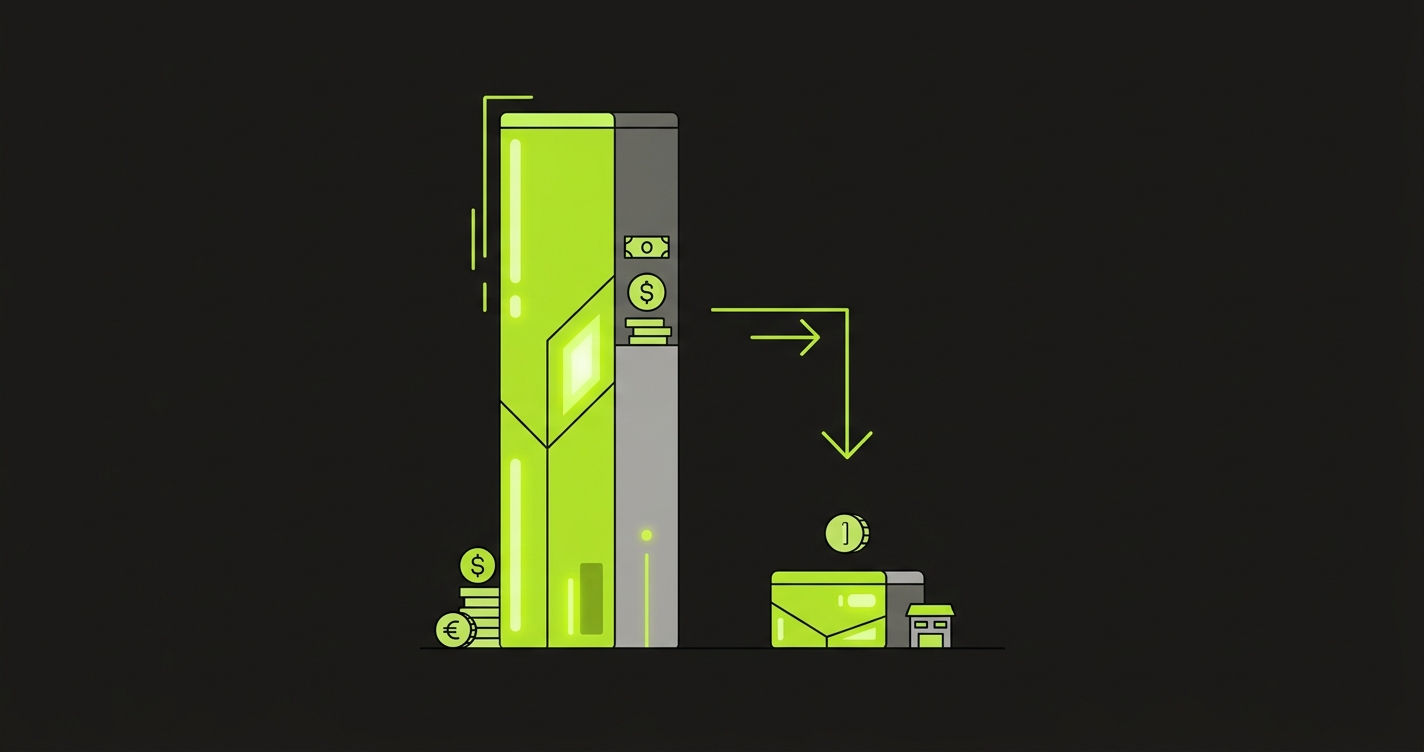
QA Wolf: $4,000-10,000+/month depending on team size and test suite complexity. For a mid-market team, expect $6,000-8,000/month. That is $72K-96K per year: roughly the salary of a senior QA engineer, except you are paying for a shared resource across QA Wolf's client base. Over three years, total spend reaches $216K-288K.
Autonoma Cloud ($499/month): AI generates and maintains all tests autonomously. No human engineers needed. $6K per year, $18K over three years. That is a 92-94% cost reduction compared to QA Wolf.
Autonoma Self-Hosted (free platform): Pay only for cloud infrastructure: typically $200-400/month depending on parallel capacity. $2.4K-4.8K per year, $7.2K-14.4K over three years. That is a 95-97% cost reduction.
But cost is only half the story. The real difference is what you get for the money.
With QA Wolf, you get a team of human engineers who write tests at human speed, fix tests at human speed, and are subject to human limitations: turnover, ramp-up time, finite capacity, time zones, sick days. When your team ships a major feature on Friday, QA Wolf's engineers write tests for it next week.
With Autonoma, AI agents generate tests within hours of code changes. Self-healing runs continuously. There is no waiting for a human to notice a broken test, diagnose the issue, and push a fix. The AI handles the entire lifecycle automatically, 24/7, with infinite scaling capacity.
The three-year total cost of ownership comparison:
| Cost Component | QA Wolf (3 years) | Autonoma Cloud (3 years) | Autonoma Self-Hosted (3 years) |
|---|---|---|---|
| Platform/Service | $144K-360K | $18K | $0 |
| Infrastructure | Included | Included | $7K-14K |
| Test Maintenance Engineering | $0 (included in service) | $0 (AI self-healing) | $0 (AI self-healing) |
| Internal QA Overhead | Low (outsourced) | Low (AI autonomous) | Low (AI autonomous) |
| Total 3-Year Cost | $144K-360K | $18K | $7K-14K |
| Savings vs QA Wolf | : | 85-95% | 95-97% |
Migrating from QA Wolf to Autonoma
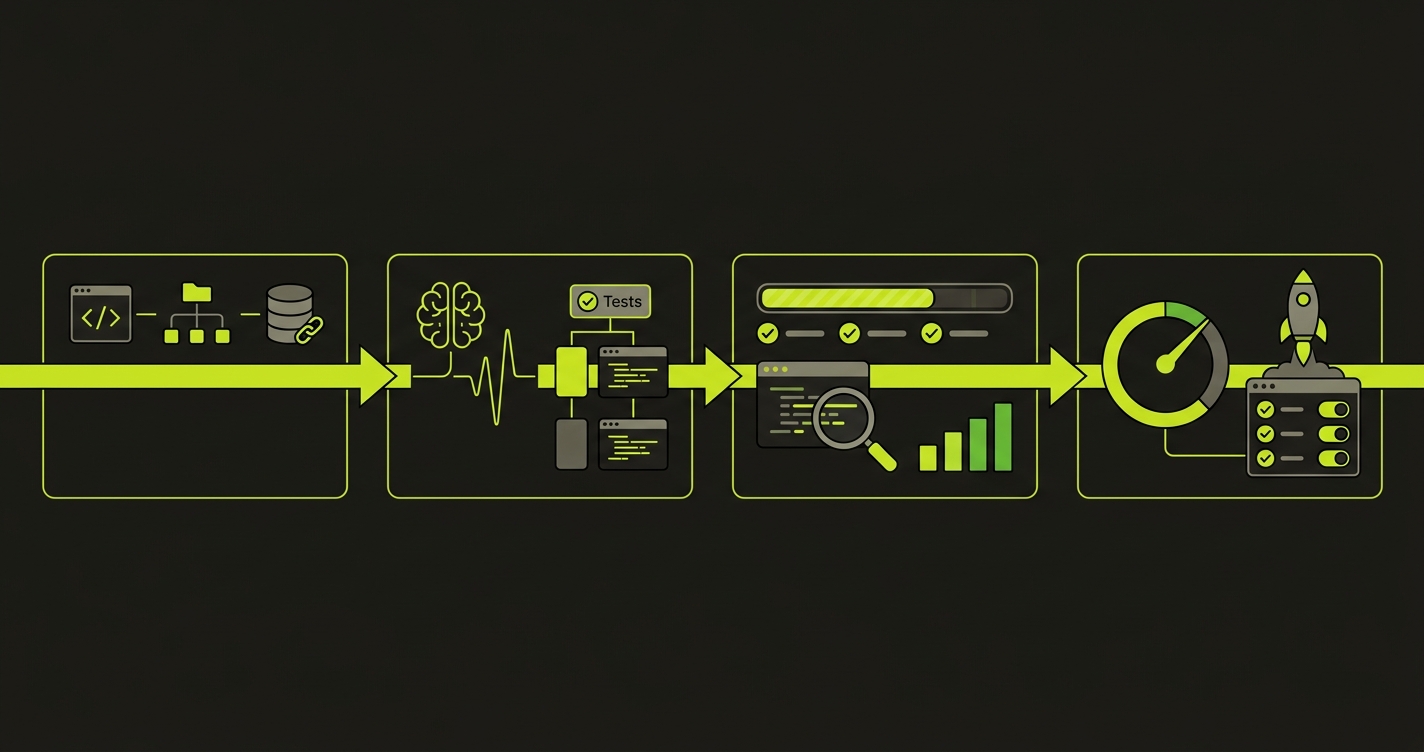
Migrating from QA Wolf is simpler than most vendor transitions because you are not rewriting tests. Autonoma generates them from your codebase.
1. Evaluate during your current QA Wolf contract. Sign up for Autonoma's free tier at getautonoma.com or self-host by cloning the GitHub repo. Connect your GitHub repository and let Autonoma's AI analyze your codebase. This takes minutes and can run alongside your existing QA Wolf coverage.
2. AI generates parallel coverage. Autonoma's test-planner-plugin builds a knowledge base of your application and generates E2E test cases. Start with your most critical flows: the ones QA Wolf currently covers: and compare results. Run both Autonoma and QA Wolf in parallel for 2-4 weeks to validate coverage parity.
3. Validate and fill gaps. Compare Autonoma's AI-generated coverage against QA Wolf's test suite. Vision-based tests are typically more resilient than QA Wolf's selector-based Playwright tests, but review for any business-logic edge cases that need attention. Autonoma's AI learns from your codebase structure, so coverage gaps are usually minimal.
4. Cut over and cancel QA Wolf. Once you have validated coverage, update your CI/CD pipelines to use Autonoma and give notice to QA Wolf. If you are self-hosting, provision your infrastructure (ECS cluster, database, orchestration) during the validation phase. The transition is low-risk because you have been running both in parallel.
The key insight: you are not migrating tests. You are replacing a human service with an AI capability. QA Wolf's Playwright tests become irrelevant because Autonoma generates its own, more resilient test suite from your codebase directly.
Most teams complete the transition in 2-4 weeks, with 1-2 weeks of parallel running for confidence.
Frequently Asked Questions
Yes. Autonoma is an open-source AI testing platform on GitHub. Unlike QA Wolf's human QA-as-a-service model ($4K-10K+/month), Autonoma's AI agents generate and maintain tests autonomously. Free tier with 100K credits, full self-hosting with no feature restrictions, and no outsourced team required.
QA Wolf assigns human engineers to write and maintain Playwright tests for you. Autonoma's AI agents do the same work autonomously: analyzing your codebase, generating E2E tests, and maintaining them with vision-based self-healing. The AI scales instantly, never has turnover, and costs 85-95% less.
QA Wolf charges $4,000-10,000+ per month for human QA engineering service. Autonoma cloud costs $499/month with unlimited parallels, or self-host for free (pay only infrastructure, typically $200-400/month). Over three years, Autonoma saves 85-97% compared to QA Wolf depending on deployment model.
Yes. Autonoma is fully self-hostable with complete source code on GitHub (BSL 1.1, converts to Apache 2.0 in 2028). Run it on AWS, GCP, Azure, or on-premise with zero feature restrictions. QA Wolf is a managed service with no self-hosting option: your testing capability lives entirely on their infrastructure.
You keep QA Wolf's Playwright test files, but the expertise to maintain and evolve them leaves with their team. You'd need to hire QA engineers or find another service. With Autonoma, the AI capability is yours permanently: open source, self-hostable, no dependency on any external team.
Autonoma's AI agents analyze your codebase (routes, components, user flows) and generate comprehensive E2E tests automatically. The AI uses vision models that understand intent rather than brittle CSS selectors, making tests more resilient to UI changes than human-written Playwright tests. AI also scales instantly: no hiring, onboarding, or turnover.
Yes. Connect your repo and Autonoma's AI generates tests from your codebase automatically. Run both in parallel for 2-4 weeks to validate coverage. Most teams achieve full parity within days. You don't rewrite QA Wolf's Playwright tests: Autonoma generates fresh, vision-based tests that are typically more resilient.
The Bottom Line
QA Wolf sells a compelling service: someone else handles your QA. But in 2026, paying $4K-10K+/month for human engineers to write Playwright tests is hard to justify when AI agents can do the same work for $499/month: or free when self-hosted.
Autonoma is the open-source alternative. AI agents generate tests from your codebase, vision-based self-healing maintains them automatically, unlimited parallels scale with your infrastructure, and the full platform is on GitHub (BSL 1.1, Apache 2.0 in 2028). You own the capability instead of renting a team. No turnover risk. No external dependency. No $100K+ annual service contracts.
Ready to replace QA-as-a-service with AI?
Start Free - 100K credits, no credit card, 5-minute setup
View on GitHub - Inspect source code, self-host documentation
Book Demo - See AI agents generate tests from your codebase
Related Reading: