

Bolt.new is faster for pure prototyping; Lovable produces more polished, database-backed apps. Bolt.new vs Lovable are the two most popular AI app builders for non-technical founders in 2026. Both let you describe your idea in plain language and get a working, deployed web app in under an hour, no coding required. Bolt.new is faster and more flexible, giving you direct code access and broad framework support. Lovable produces more polished UI out of the box and has tighter Supabase integration for apps that need a database. For pure speed-to-MVP, Bolt.new wins. For apps that need to look good from day one, Lovable wins. The more important question (what happens when your app gets real users and bugs appear) is covered in the decision framework at the end.
Most founders pick the wrong tool. Not because the tool is bad, but because they pick based on the demo instead of the destination.
You've seen the comparison videos. Someone types a prompt, a full app appears, they click around for 90 seconds and declare a winner. What those videos don't show is what happens at month two when a user reports a bug and neither you nor the AI can locate where in the generated code it lives. Or when you realize your app needs a database and you chose the tool with weaker backend support.
The bolt.new vs lovable decision is a 6-month decision dressed up as a 6-minute one. Here's how to make it correctly.
What Are Bolt.new and Lovable?
Both Bolt.new and Lovable are AI app builders that turn a text description into a deployed web app. You describe what you want, the AI generates React code, and the app is live on a URL you can share. No terminal, no git, no configuration files.
That's the promise. It mostly holds.
The difference is in the details of how they generate that code, what the output looks like, and how much control you retain after the first version is done.
Bolt.new (built by StackBlitz) runs a full development environment in your browser. It uses Claude and GPT models to write the code, and you get direct access to the file tree. You can edit files manually, install npm packages, and export the entire codebase at any time. It supports a wide range of frameworks (Next.js, Remix, Astro, SvelteKit) and deploys to Netlify by default but works with most other platforms too.
Lovable (formerly GPT Engineer) is more opinionated. It generates React apps with a Tailwind CSS frontend and pushes everything to a connected GitHub repo. Its tightest integration is with Supabase for backend and database functionality. The UI it generates tends to look more finished on the first pass. You can also connect a custom domain directly from the Lovable dashboard.
Both are genuinely useful. The question is which one fits what you're building.
Bolt.new vs Lovable Head-to-Head: Same App, Both Platforms
The most useful way to compare these tools is with a real-world task. We built the same app on both platforms: a simple SaaS tool with a landing page, email signup, a dashboard behind authentication, and a basic settings page.
Speed to First Deploy
Bolt.new had a shareable URL in about 12 minutes from first prompt. The app was functional: the pages rendered, navigation worked, the signup form accepted input. It wasn't styled especially well, but it worked.
Lovable took around 18 minutes to reach the same point. It generated more polished components but needed more back-and-forth prompting to get the authentication flow right.
Bolt.new is faster. Not dramatically, but consistently.
UI Quality Out of the Box
This is where Lovable earns its reputation. Its default component library produces more professional-looking apps on the first pass. Buttons look like buttons. Forms have proper spacing. The color palette is coherent.
Bolt.new generates functional UI but it's more utilitarian. The structure is sound, but you'll spend more time prompting for visual refinements.
If your MVP needs to look credible to investors or early users on day one, Lovable's output requires less cosmetic polishing. If you're validating a concept and UI is secondary, Bolt.new gets you there faster and the gap doesn't matter.
Code Export and Ownership
Both tools give you the code. This matters more than most comparison articles acknowledge.
Bolt.new lets you export a ZIP of the full project at any time, or connect to a GitHub repo for continuous syncing. The code is clean enough to hand to a developer later. The file structure follows standard conventions.
Lovable pushes directly to GitHub on every change. The code quality is similar: readable, React-based, Tailwind-styled. One important note: because Lovable commits every AI-generated change, your Git history can become difficult to follow if you make many rapid iterations.
Neither tool locks you into their platform in a meaningful way. You can take the code and run it anywhere.
Customization Depth
Both tools hit a wall when your requirements get specific. The difference is what happens when you reach that wall.
With Bolt.new, you can edit the code directly in the browser, install packages, and handle edge cases yourself. If you know a little HTML or CSS, you can do a lot. If you don't, you're still prompting.
With Lovable, customization beyond what the AI generates usually means going into the connected GitHub repo and editing there. That's not a dealbreaker, but it means your non-technical workflow has a harder boundary.
Deployment Options
Bolt.new deploys to Netlify by default, and the one-click setup works well. You can also export and deploy to Vercel, Railway, or anywhere else that takes a Node app.
Lovable has its own hosting layer for quick previews, and custom domain support is built into the dashboard. For production, most founders connect Supabase for the backend and deploy the frontend separately.
Both are adequate. Lovable's Supabase integration is genuinely excellent if you need a real database from day one. It handles the schema, the Row Level Security policies, and the API connection, all automatically.
Bolt.new vs Lovable Pricing
Bolt.new charges per token (effectively, per prompt interaction) above the free tier. The Pro plan is $20/month and covers typical indie hacker usage. Heavy iteration can burn through credits fast, especially in the early exploration phase when you're prompting many variations.
Lovable charges per message on a subscription model, starting at $25/month. The pricing behavior is similar in practice: rapid iteration is expensive on both platforms.
Neither is a significant cost at MVP stage. Both become meaningful once you have a developer iterating on a complex codebase, at which point the economics shift entirely.
| Dimension | Bolt.new | Lovable |
|---|---|---|
| Speed to first deploy | Faster (12-15 min) | Slightly slower (18-25 min) |
| UI quality out of the box | Functional, utilitarian | More polished, design-forward |
| Code access | In-browser editor + export | GitHub repo sync |
| Backend/database | Requires separate setup | Tight Supabase integration |
| Deployment | Netlify default, any platform | Built-in hosting + custom domain |
| Pricing | From $20/month | From $25/month |
| Framework flexibility | High (Next.js, Remix, Astro, etc.) | React + Tailwind (opinionated) |
| Best for | Speed, flexibility, dev handoff | Polished UI, database-backed apps |
Whichever platform you choose, testing the output is critical. Autonoma reads your codebase and generates E2E tests automatically — catching the bugs that both Bolt and Lovable's AI can introduce.
What Happens at Month 3 With AI-Generated Apps
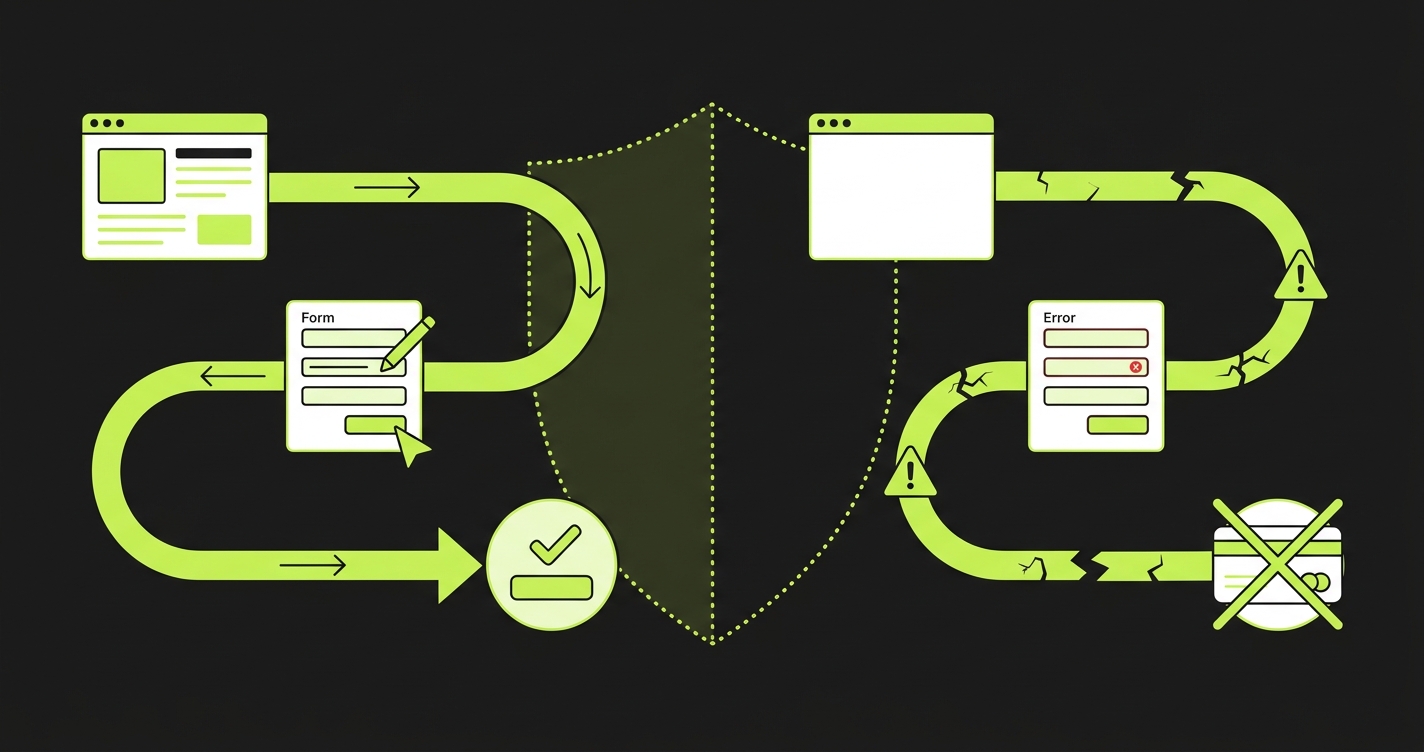
Here's what the comparison videos don't show you.
You launched. You have users. Things are breaking in ways that didn't come up during your demos.
A user signed up with an email address containing a plus sign and got a 500 error. Your payment flow works on Chrome but fails silently on Safari. Someone with a slow mobile connection gets a blank screen instead of a loading state. None of these were visible when you were prompting and previewing in a controlled environment.
This is not a bug in Bolt.new or Lovable. Whether you're evaluating lovable vs bolt or the other way around, this is the nature of AI-generated code. Both tools produce code that works for the happy path, the flow you demonstrated when building it. Edge cases, unusual inputs, and real-world device and network conditions reveal the gaps.
The problem is that neither tool has any mechanism to help you find these gaps before your users do. There's no built-in testing layer. There's no way to say "check if this still works after I added that feature." You ship and you discover.
For some founders, manual testing (clicking through every flow after every significant change) is enough at early stage. It works until it doesn't: until you're too busy to do it thoroughly, until a change breaks something you didn't think to check, until a user finds something you never would have thought to test.
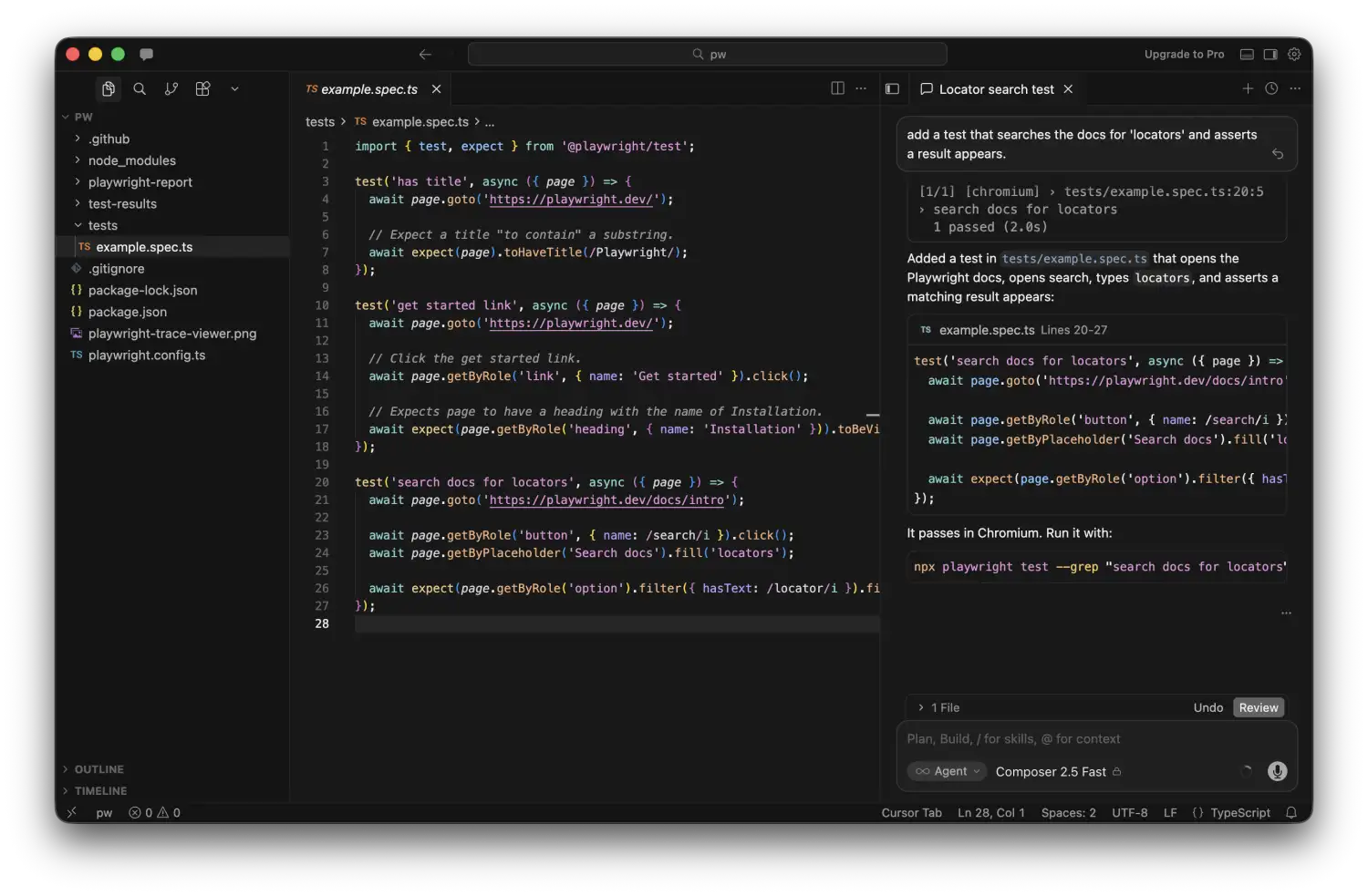
The more durable solution is to connect a testing layer that works the same way you built the app: without writing code. We built Autonoma as an open-source agentic testing tool to solve exactly this: AI agents read your codebase, plan tests based on what the app is supposed to do, and run them automatically. When something breaks (because your AI-generated code changed how a form submits, or a Supabase edge function returned a new error structure), the tests catch it before the user does. Our guide on how to test a vibe-coded app without writing code covers exactly how this workflow applies to Bolt.new and Lovable projects.
When to Use Bolt.new
Bolt.new is the better choice when speed of iteration is the primary goal and you want maximum flexibility in what you build.
It suits founders who want to try five different concepts in a week and discard the ones that don't resonate. The quick export makes it easy to hand off to a developer later without rebuilding from scratch. The broad framework support means your technical cofounder (or a freelancer) won't arrive to find an unfamiliar stack.
It also suits builders who don't need a database-backed app immediately. Marketing sites, landing pages, interactive demos, and simple tools that don't require persistent storage get built faster in Bolt.new with less friction.
The one scenario where Bolt.new struggles: apps that need complex state management or multiple interconnected backend services from the start. The AI can generate this, but the results require more prompting, more iteration, and a stronger handle on what you're asking for.
When to Use Lovable
Lovable is the better choice when your app needs to look credible from day one and requires a real database.
Consumer-facing products (apps you're showing to investors, early customers, or the public) benefit from Lovable's more polished default output. The difference in visual quality is real and significant, especially at the stage before you have a designer.
Lovable's Supabase integration is also genuinely superior for database-backed apps. User accounts with persistent data, dashboards that save state, applications where data needs to survive a page refresh. All of this is faster to set up in Lovable because the authentication and database plumbing comes pre-wired.
The tradeoff: less flexibility if your vision doesn't fit the React + Tailwind + Supabase stack, and a slightly less nimble iteration cycle for pure concept exploration.
When to Use Neither
Both tools have a natural ceiling.
If your app requires complex business logic (multi-step workflows with conditional branching, intricate permission systems, real-time features at scale, or integrations with legacy systems), neither tool will get you very far without significant developer involvement. You'll hit a point where prompting stops working and the AI starts making things worse, not better.
In those cases, a developer working in Cursor or its alternatives with your requirements as a spec will outperform either no-code builder. The best vibe coding tools guide covers the full landscape, including when to move from no-code builders to AI IDEs.
There's also a middle path worth considering: use Bolt.new or Lovable to build the prototype, validate the concept with real users, then hand the exported code to a developer to properly architect the production system. This is increasingly how funded startups use these tools, not as a permanent solution, but as the fastest way to answer "will anyone pay for this." Understanding the technical debt that vibe-coded projects accumulate helps you plan that transition. For more on how startups are navigating this, see our guide on vibe coding for startups and the risks non-technical founders should know about.
Bolt or Lovable: The Decision Framework
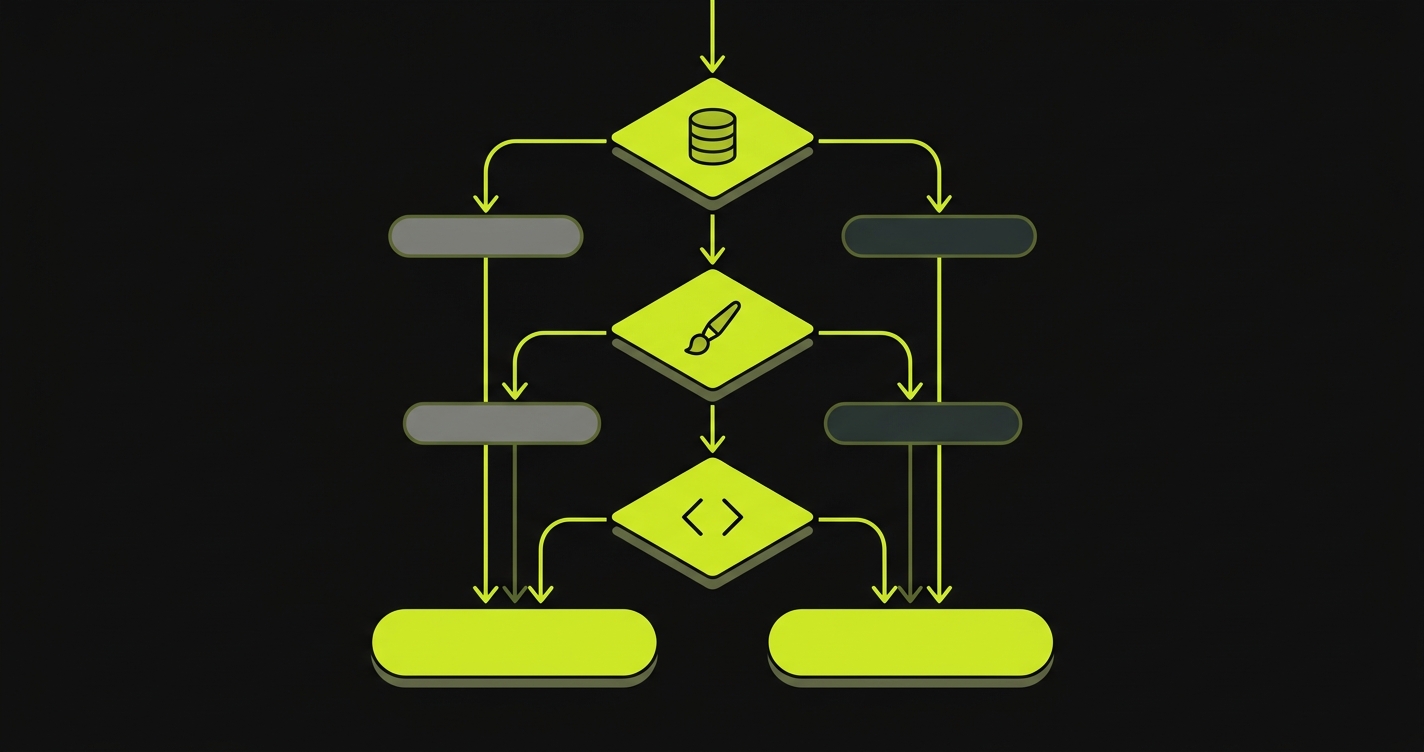
The choice between Bolt.new and Lovable comes down to three questions.
Does your app need a database from day one? If yes, Lovable's Supabase integration saves you meaningful setup time. If no, Bolt.new's speed advantage matters more.
Does the UI need to look polished immediately? If you're showing to investors or paying customers from day one, Lovable's default output is worth the slightly slower pace. If you're validating with a small group of tolerant early users, Bolt.new's speed wins.
How technical are you? Bolt.new rewards founders who can edit a bit of code or understand basic file structure. Lovable is marginally more approachable for people who want to stay entirely in the AI prompt interface.
For most non-technical founders building their first MVP, Bolt.new is the better starting point. The speed advantage lets you iterate more freely in the critical early weeks. You can always improve the UI once you've confirmed the concept is worth investing in.
For founders building something customer-facing with real data requirements, Lovable's more complete stack is worth the slightly higher starting friction.
Either way, plan for the month 3 moment. The gap between "works in demo" and "works for real users" is real on both platforms. The founders who navigate it best are the ones who connected an automated testing layer early. Autonoma is open-source and built for exactly this workflow: AI agents read your Bolt.new or Lovable codebase and generate tests without you writing a single script. It turns "ship and pray" into "ship and verify," which is the difference between a prototype and a product. Our guide on making your vibe-coded app production ready covers what that transition looks like in practice.
For pure speed to first working prototype, Bolt.new is faster. For apps that need to look polished from day one or require a database (user accounts, persistent data), Lovable's tighter Supabase integration and more refined default UI make it the stronger choice. Most non-technical founders building their first MVP benefit from Bolt.new's faster iteration cycle, then improve the UI once the concept is validated.
Yes, both tools give you full access to your code. Bolt.new lets you export a ZIP or sync to a GitHub repo from within the browser-based editor. Lovable automatically pushes every change to a connected GitHub repository. Neither platform locks you in. You can take the generated code and deploy it anywhere, or hand it to a developer for further work.
Both tools generate code that works well for the paths you tested during development. Real users expose edge cases: unusual inputs, different browsers, slow connections, and device-specific behavior. Neither platform has a built-in testing layer. The most practical solution is to connect an open-source agentic testing tool like Autonoma that reads your codebase and generates tests automatically, so breakages are caught before users find them.
Lovable connects directly to Supabase to handle authentication, database tables, and API endpoints. When you prompt Lovable to add user accounts or save data, it generates the Supabase schema, Row Level Security policies, and frontend code together in one step. This makes database-backed apps significantly faster to build compared to setting up the backend separately. The tradeoff is that you're committed to the Supabase stack.
Yes. You don't need to write tests manually. The approach covered in our guide on testing vibe-coded apps is to connect your codebase to an open-source agentic testing tool that reads your code and generates tests from it automatically. Autonoma does this: AI agents analyze the routes and components in your Bolt.new or Lovable project and run tests against your live app. No test scripts, no coding required.
Bolt.new starts at $20/month and Lovable at $25/month. Both charge based on usage (prompts/messages), so the real cost depends on how intensively you iterate. Early-stage founders who make many rapid changes in exploration mode can burn through credits on either platform. Once your app stabilizes and you're making targeted changes, monthly costs become predictable and modest for typical MVP usage.


