
Quick summary: Autonoma is the open-source alternative to HeadSpin. Unlike HeadSpin's proprietary enterprise-only platform (reportedly $50K-100K+/year, no self-hosting, no source code), Autonoma generates and executes tests automatically from your codebase using AI agents. Full source code on GitHub (BSL 1.1), self-hosting, vision-based self-healing, unlimited parallel execution, no vendor lock-in. Free tier: 100K credits. Cloud: $499/month. Self-hosted: no ongoing costs.
HeadSpin carved out a niche in real-device performance analytics. It lets teams test on real devices across global locations while measuring network conditions, app performance metrics, and device-level behavior. The AI-powered insights are genuinely useful for teams obsessed with mobile performance.
But HeadSpin has serious limitations that drive teams to look elsewhere. Enterprise-only pricing puts it out of reach for most companies. The platform focuses narrowly on performance analytics rather than full test automation. There is no self-hosting, no source code access, and the company's leadership turbulence creates real platform risk. Most critically, HeadSpin does not generate or maintain tests for you. It runs tests you write manually, then layers analytics on top.
Autonoma takes a fundamentally different approach. Instead of performance analytics on top of manual tests, Autonoma generates, executes, and maintains tests automatically from your codebase. Full source code on GitHub, self-hosting on your infrastructure, and AI that handles the entire testing lifecycle. This guide covers where HeadSpin falls short, how Autonoma solves those problems, and how to evaluate whether the switch makes sense for your team.
Where HeadSpin Falls Short
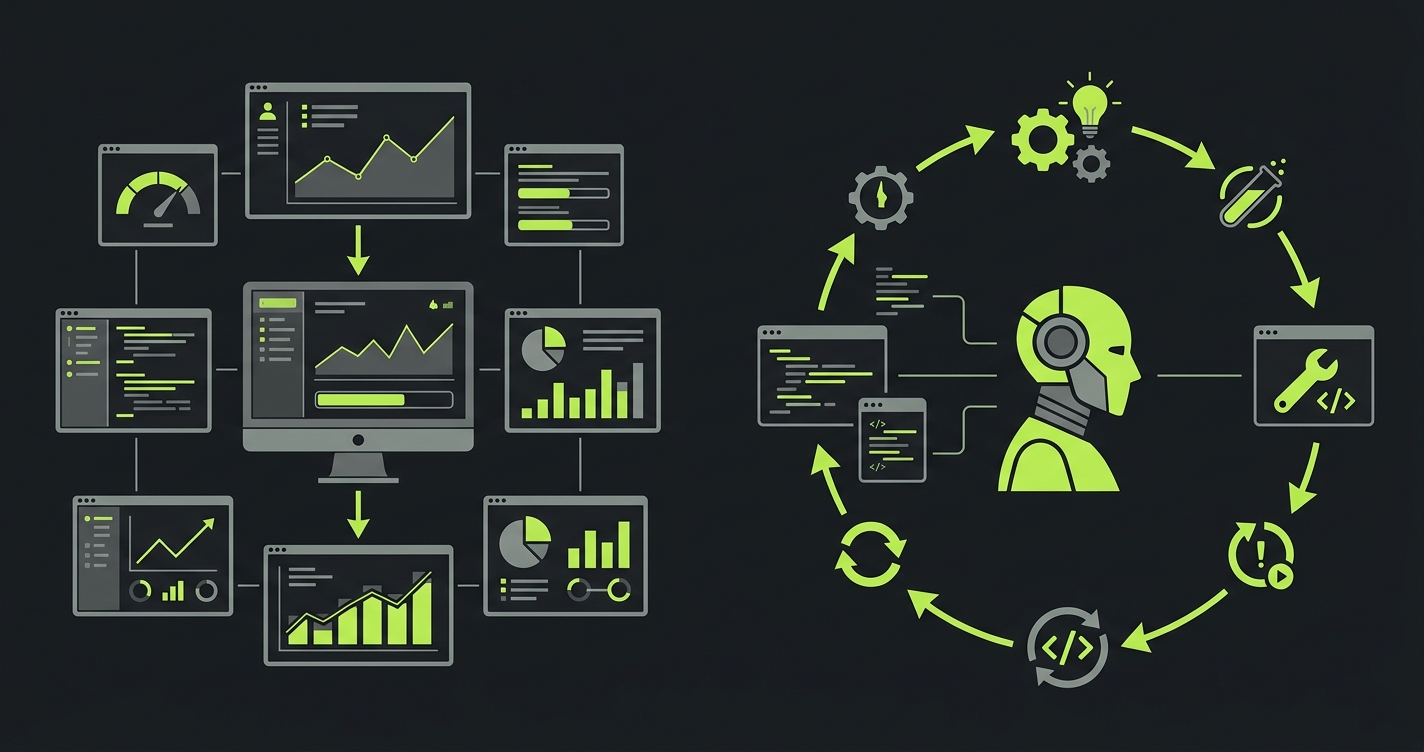
Three structural problems push teams away from HeadSpin.
Enterprise-Only Pricing With No Transparency
HeadSpin does not publish pricing. There is no self-serve tier, no free trial you can sign up for on the website, and no public pricing page. Every engagement starts with a sales conversation and ends with a custom enterprise contract.
Industry estimates and customer reports suggest HeadSpin contracts range from $50,000 to over $100,000 per year, depending on device access, geographic coverage, and analytics features. For large enterprises with dedicated mobile performance teams, this may be justifiable. For everyone else, it is prohibitive.
The lack of pricing transparency creates additional friction. Teams cannot evaluate HeadSpin's value proposition without committing to a sales cycle. Engineering leaders cannot get budget approval without knowing the cost. Startups and mid-size companies are effectively excluded from the platform entirely.
Compare this to the broader testing market: BrowserStack charges $150-375/month for teams. LambdaTest starts at $15/month. Open-source tools like Playwright and Appium are free. HeadSpin's pricing puts it in a different category entirely, one that many teams simply cannot justify for what is primarily a performance analytics layer.
Narrow Focus: Performance Analytics, Not Full Test Automation
HeadSpin's core value is performance analytics on real devices. It measures network waterfall timing, device CPU and memory usage, frame rates, and app launch performance. The AI analyzes these metrics to surface performance regressions and anomalies.
This is genuinely valuable for teams with mature testing practices that need to optimize mobile performance across diverse network conditions and device types. But it creates a fundamental gap: HeadSpin does not generate tests, and it does not maintain them.
You still need a separate test automation framework (Appium, Playwright, Espresso, XCUITest) to write and maintain the tests that HeadSpin executes. You still need engineers spending hours updating broken selectors when the UI changes. You still need a CI/CD integration for the test execution layer independent of HeadSpin's analytics.
This means teams using HeadSpin are paying $50K-100K+/year for performance analytics on top of whatever they already spend on test automation infrastructure and maintenance. The total cost of ownership, HeadSpin plus test framework plus maintenance engineering, often exceeds $150K-200K/year for a mid-sized team.
Platform Risk and No Source Code Access
HeadSpin is a closed-source platform from a relatively small company that has faced significant leadership challenges. In 2022, HeadSpin's co-founder and CEO was charged with fraud by the SEC for inflating the company's valuation. While the company has continued operating under new leadership, this kind of disruption creates genuine platform risk for teams building critical testing infrastructure on top of HeadSpin.
There is no self-hosting option. All test execution and analytics data flows through HeadSpin's infrastructure. If HeadSpin raises prices, changes terms, gets acquired, or shuts down, you have no fallback. Your performance analytics history, device configurations, and workflow integrations are all locked in their platform.
There is no source code access. You cannot audit how HeadSpin processes your application data, inspect their AI analytics algorithms, or customize behavior for your environment. For teams with compliance requirements (HIPAA, PCI DSS, SOC 2), the inability to audit the testing platform is a serious concern.
The combination of high cost, narrow focus, and platform risk makes HeadSpin a fragile dependency. Teams are increasingly looking for alternatives that provide more value across the full testing lifecycle while eliminating vendor lock-in.
Autonoma: The Open Source Alternative to HeadSpin
Autonoma is an open-source, AI-native testing platform that covers the full testing lifecycle: generation, execution, and maintenance.
Full-Lifecycle Testing, Not Just Analytics
The fundamental difference between Autonoma and HeadSpin is scope. HeadSpin is a performance analytics layer that sits on top of tests you write manually. Autonoma is an autonomous testing system that generates, executes, and maintains tests from your codebase.
How it works: You connect your GitHub repo, and Autonoma's test-planner-plugin reads your routes, components, and user flows to build a knowledge base of your application. AI agents then generate comprehensive E2E test cases based on your actual code structure. Tests execute using AI vision models that see your app like a human would, which means no CSS selectors or XPaths to break. When your UI changes, tests adapt automatically because the AI understands intent, not DOM structure.
You do not write tests. You do not maintain selectors. You do not update test scripts when features change. The AI handles the entire lifecycle. This eliminates the test maintenance burden that HeadSpin does nothing to address.
Open Source and Self-Hosting
Full source code on GitHub. Licensed under BSL 1.1 (converts to Apache 2.0 in 2028). You can use it in production, inspect every line, audit security, and self-host with no feature restrictions.
Run Autonoma on your infrastructure: AWS (ECS, EKS, or EC2), GCP (GKE or Compute Engine), Azure (AKS or VMs), or your own data center. When you self-host, your data never leaves your infrastructure. Tests run in your VPC. Credentials stay on your servers. Application URLs are never exposed to external systems.
This directly addresses HeadSpin's compliance gap. Need to audit testing infrastructure for HIPAA or SOC 2? Read the source code. Need to verify how credentials are handled during test execution? Inspect the runtime. Need to customize test execution for your environment? Fork and modify. None of this is possible with HeadSpin.
The technology stack is built on standard open-source components: TypeScript and Node.js 24 for the runtime, Playwright for web testing, Appium for mobile testing, PostgreSQL for data storage, and Kubernetes for orchestration. No proprietary runtimes, no black-box components.
Transparent, Accessible Pricing
Autonoma's pricing is public and accessible to teams of any size.
Free tier: 100K credits, no credit card required, unlimited parallels, all features included. Good for small teams, startups, and evaluation.
Cloud ($499/month): 1M credits per month, unlimited parallels, managed infrastructure, support included.
Self-hosted (free platform): No ongoing platform fees. Pay only for infrastructure (AWS/GCP/Azure). No feature restrictions.
Compare this to HeadSpin's $50K-100K+/year enterprise contracts. Autonoma cloud costs $6K/year with unlimited parallels and full AI test generation. Self-hosting eliminates the platform fee entirely. The savings are not incremental; they are transformational. A team switching from HeadSpin to Autonoma cloud saves 88-94%. Self-hosting saves 95%+.
Cross-Platform Coverage
For web testing, Autonoma uses Playwright to automate Chrome, Firefox, and Safari across desktop and mobile viewports. Mobile testing runs through Appium, supporting iOS simulators, Android emulators, and physical devices with instant spawning.
Autonoma is framework agnostic. Whether you build with React, Next.js, Vue, Angular, Flutter, or React Native, the AI understands your application structure and generates tests accordingly. It reads your routes and component hierarchy, not just the rendered DOM.
HeadSpin's real-device global infrastructure is broader for performance analytics use cases: testing across specific carriers, network conditions, and geographic locations. But for functional test automation, which is what most teams need most, Autonoma covers the essential configurations at a fraction of the cost.
HeadSpin vs Autonoma: Feature Comparison
| Feature | HeadSpin | Autonoma |
|---|---|---|
| Open Source | Proprietary closed source | BSL 1.1 on GitHub (Apache 2.0 in 2028) |
| Self-Hosting | Cloud only, no self-hosting | Self-host anywhere (AWS, GCP, Azure, on-prem) |
| Test Generation | None (you write tests manually) | AI generates tests from your codebase |
| Test Maintenance | Manual (you maintain selectors and scripts) | AI self-healing (zero maintenance) |
| Performance Analytics | Deep device/network performance insights | Functional test results and coverage analytics |
| Network Condition Simulation | Real carrier/network testing globally | Not a core focus |
| Parallel Execution | Limited by contract terms | Unlimited on all plans |
| Vendor Lock-In | High (proprietary platform, no export) | None (open source, fork anytime) |
| Mobile Device Support | Extensive global real-device lab | iOS/Android via Appium (simulators, emulators, physical) |
| Web Testing | Limited (mobile-first focus) | Full web testing via Playwright |
| Pricing Transparency | No public pricing, sales-only | Public pricing, free tier available |
| Starting Price | ~$50K/year (enterprise contracts) | Free (100K credits) |
| Cloud Price | $50K-100K+/year | $499/month ($6K/year) |
| Self-Hosted Cost | Not available | Infrastructure only (no platform fees) |
| Source Code Access | No access | Full source on GitHub |
| Data Sovereignty | Data on HeadSpin servers | Data stays on your infrastructure |
Cost: Open Source vs Enterprise Performance Analytics
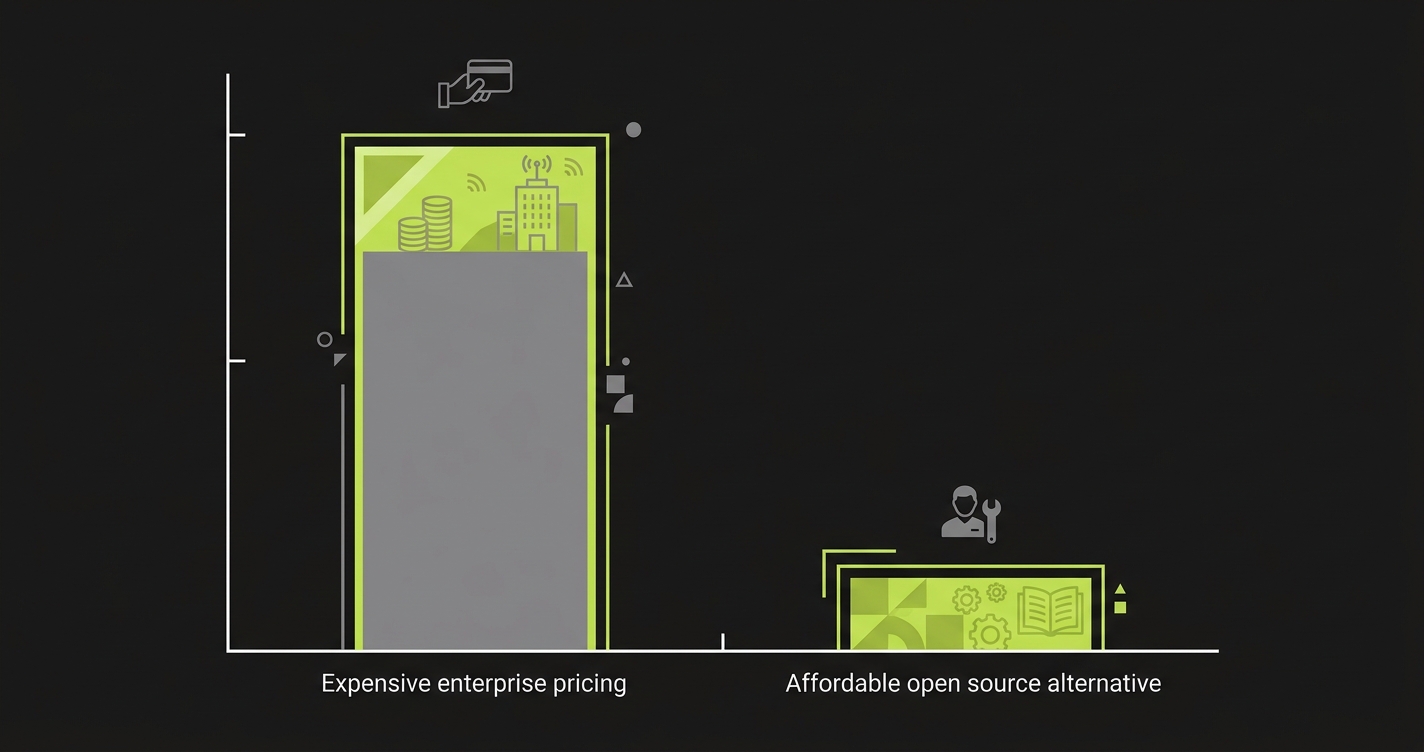
The cost difference between HeadSpin and Autonoma is not a matter of saving 20-30%. It is an order of magnitude.
HeadSpin's enterprise contracts reportedly start around $50K/year and can exceed $100K/year depending on device access and analytics features. But HeadSpin does not replace your test automation stack. You still need engineers writing and maintaining tests, plus infrastructure for the test framework itself. For a mid-sized team, the total cost of ownership with HeadSpin is typically $150K-200K/year: HeadSpin contract ($50K-100K) plus test framework infrastructure ($10K-20K) plus engineer maintenance time ($50K-80K at 8-12 hours/month).
Autonoma cloud costs $499/month ($6K/year) and eliminates the test writing and maintenance line items entirely. AI generates tests from your codebase. AI self-healing handles UI changes. Total cost of ownership: $6K/year. That is a 96-97% reduction.
Autonoma self-hosted eliminates the platform fee. You pay only for infrastructure, typically $200-400/month ($2.4K-4.8K/year). Total three-year cost with self-hosting: approximately $10K versus $450K-600K for HeadSpin plus manual test maintenance.
The cost comparison is not close. The question is whether HeadSpin's performance analytics alone justify a 25-30x price premium over a platform that handles the full testing lifecycle.
When HeadSpin Still Makes Sense
HeadSpin is not the wrong tool for every team. It excels in specific scenarios.
Carrier-level network testing. If your product depends on performance across specific mobile carriers and network conditions globally, HeadSpin's real-device infrastructure in 100+ locations is genuinely hard to replicate.
Device-specific performance optimization. If you are optimizing app launch time, frame rates, or memory usage across dozens of specific device models, HeadSpin's device-level performance analytics provide granular data that Autonoma does not.
Regulated industries requiring real-device proof. Some compliance frameworks require testing on specific physical devices with documented performance baselines. HeadSpin's audit trails for device-specific testing may satisfy requirements that emulator-based testing cannot.
For everyone else, especially teams whose primary challenge is test coverage, test maintenance, or test automation cost, Autonoma provides dramatically more value.
Migrating from HeadSpin to Autonoma
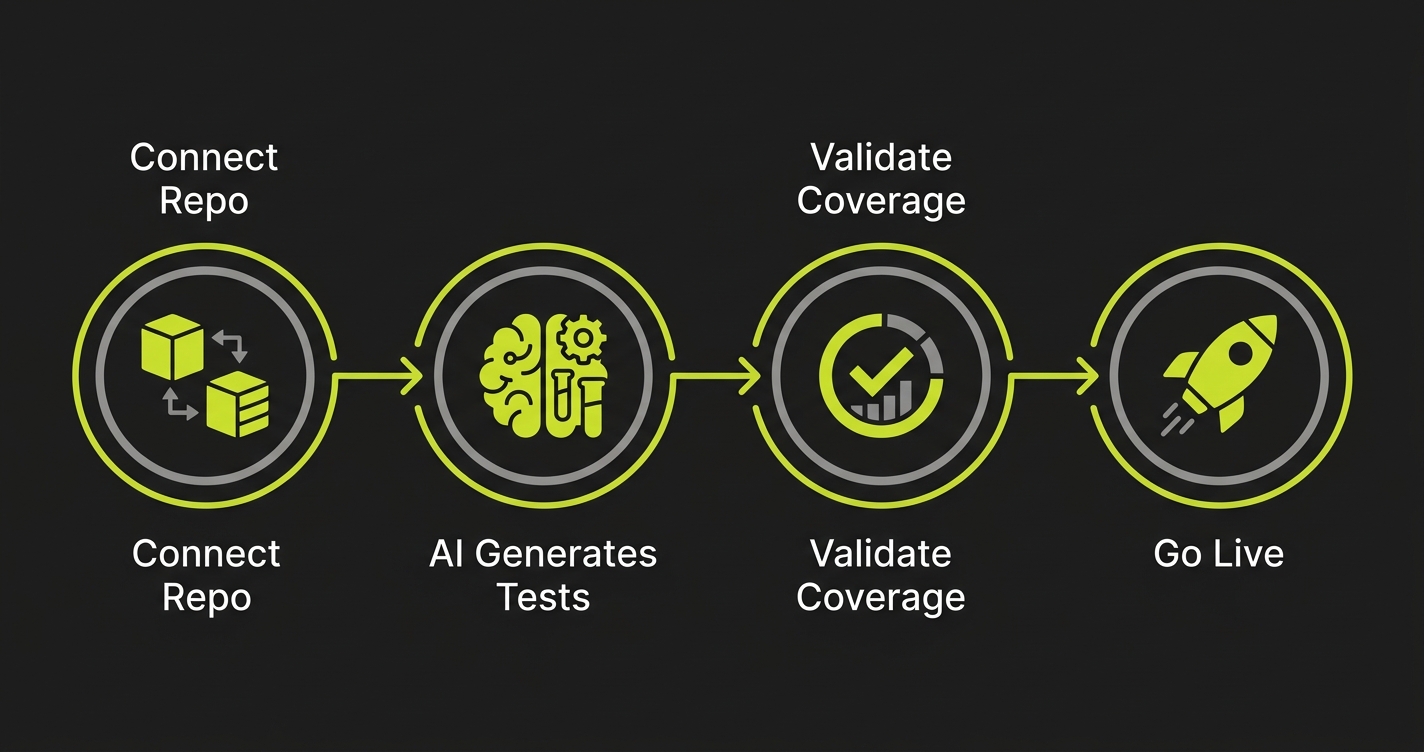
Migration from HeadSpin to Autonoma is straightforward because Autonoma does not require you to port existing tests.
1. Connect your repo. Sign up for the free tier at getautonoma.com or self-host by cloning the GitHub repo. Connect your GitHub repository and let Autonoma's AI analyze your codebase. This takes minutes.
2. AI generates tests. The test-planner-plugin builds a knowledge base of your application and generates comprehensive E2E test cases automatically. Start with your top 5-10 critical user flows and run them alongside your existing HeadSpin suite.
3. Validate coverage. Compare Autonoma's AI-generated test coverage against your existing suite. Autonoma's vision-based tests often catch issues that selector-based tests miss because they interact with your app the way users do. Review the generated test plans, iterate on coverage gaps, and verify that critical flows are covered.
4. Evaluate what you lose. Be honest about what HeadSpin provides that Autonoma does not: real-device performance analytics, network condition simulation, carrier-level testing. If those capabilities are critical for your product, consider keeping a minimal HeadSpin contract for performance monitoring while using Autonoma for test automation. This hybrid approach often costs less than HeadSpin alone.
5. Cut over. Point your CI/CD pipelines at Autonoma, train your team on reviewing AI-generated test plans, and reduce or cancel your HeadSpin contract. Most teams complete the transition in 1-2 weeks.
Frequently Asked Questions
Yes. Autonoma is an open-source testing platform on GitHub that covers test generation, execution, and maintenance. Unlike HeadSpin's proprietary enterprise-only model ($50K-100K+/year), Autonoma offers a free tier with 100K credits and full self-hosting. You get the complete testing lifecycle, not just performance analytics.
HeadSpin uses enterprise-only pricing with no public tiers, reportedly $50K-100K+ per year. Autonoma offers a free tier with 100K credits, cloud at $499/month ($6K/year), and free self-hosting where you pay only for infrastructure. Most teams save 88-95% switching from HeadSpin to Autonoma.
Autonoma replaces HeadSpin's test execution and adds AI-powered test generation that HeadSpin does not offer. For mobile testing, Autonoma supports iOS and Android through Appium with physical device support. HeadSpin's unique real-device performance analytics (network waterfall, device-level metrics) is not replicated, but most teams find full-lifecycle test automation delivers more value than performance monitoring alone.
HeadSpin specializes in real-device performance analytics: network condition simulation, device-level performance metrics, and AI-driven performance insights across global device infrastructure. Autonoma does not replicate HeadSpin's network waterfall analysis or carrier-level testing. Autonoma focuses on the full testing lifecycle: AI-powered test generation, execution, self-healing, and maintenance.
Yes. Autonoma is fully self-hostable with complete source code on GitHub (BSL 1.1, converts to Apache 2.0 in 2028). Run it on AWS, GCP, Azure, or on-premise with zero feature restrictions. HeadSpin offers no self-hosting option and no source code access.
HeadSpin has faced leadership challenges including SEC fraud charges against its former CEO. While the company continues operating, this creates platform risk for teams dependent on its proprietary ecosystem. Open-source alternatives like Autonoma eliminate this risk because you own the source code and can self-host indefinitely, regardless of what happens to the vendor.
The Bottom Line
HeadSpin is a specialized performance analytics platform with enterprise-only pricing, no self-hosting, no source code access, and no test generation. It does one thing well, real-device performance monitoring, but charges $50K-100K+/year for it while leaving the harder problems of test creation and maintenance to you.
Autonoma covers the full testing lifecycle. Full source code on GitHub (BSL 1.1, Apache 2.0 in 2028). Self-host on your infrastructure or use our cloud. AI generates and maintains tests from your codebase: zero manual writing, zero maintenance. Unlimited parallels on every plan. No vendor lock-in. Free tier starts at 100K credits, cloud at $499/month, self-hosted at infrastructure cost only. Total cost savings: 88-97% compared to HeadSpin's total cost of ownership.
If your primary need is carrier-level performance analytics on real devices across global locations, HeadSpin may still be worth the investment. If your primary need is test coverage, test automation, and test maintenance, Autonoma provides dramatically more value at a fraction of the cost.
Ready to try open source testing?
Start Free - 100K credits, no credit card, 5-minute setup
View on GitHub - Inspect source code, self-host documentation
Book Demo - See AI test generation in action
Related Reading:


