

Quick summary: Autonoma is the open-source alternative to Momentic. Both platforms use AI for test generation, but Momentic is proprietary, closed-source, and requires natural language prompts to generate tests. Autonoma generates tests directly from your codebase with zero human input. Full source code on GitHub (BSL 1.1), self-hosting, three-agent architecture (Planner, Automator, Maintainer), vision-based self-healing, no vendor lock-in. Free tier: 100K credits. Cloud: $499/month. Self-hosted: no ongoing costs.
Momentic is the closest competitor to what we are building at Autonoma. Both platforms use AI to generate tests. Both promise to reduce manual QA effort. Both aim to make end-to-end testing less painful. But underneath the surface, the approaches diverge in ways that matter for engineering teams making long-term infrastructure decisions.
Momentic generates tests from natural language descriptions you write. Autonoma generates tests directly from your codebase, with no human input required. Momentic is proprietary and closed-source. Autonoma is open source on GitHub. Momentic requires all data to flow through their servers. Autonoma can be self-hosted on your own infrastructure. These are not minor differences. They determine who controls your testing infrastructure, how much visibility you have into the AI making decisions about your product, and what happens when the vendor's business changes direction.
Where Momentic Falls Short
Three fundamental problems push engineering teams toward an open source alternative to Momentic.
Proprietary Black Box AI
Momentic's AI is entirely closed source. You cannot inspect how it generates tests, what models it uses, how it interprets your application, or how it decides what to test. When a generated test fails, you have no visibility into why the AI made the decisions it did. When it misses a critical user flow, you cannot debug the generation logic. When it produces a flaky test, you cannot trace the root cause through the AI pipeline.
For engineering teams, this opacity creates a trust problem. You are delegating a critical quality function to an AI system you cannot audit. Security teams cannot review the models. Compliance teams cannot verify how test data is handled inside the AI pipeline. DevOps teams cannot customize or extend the AI behavior for their specific needs.
One engineering lead told us: "We evaluated Momentic and liked the AI test generation concept. But when we asked to see how the AI works under the hood, the answer was 'it's proprietary.' Our security team would not approve a black-box AI system that interacts with our staging environment."
Open source is not just a license preference. When AI is making decisions about how your product is tested, transparency is a technical requirement.
Natural Language Input Still Requires Human Effort
Momentic's core workflow requires engineers to describe tests in natural language. You write something like "go to the login page, enter credentials, click submit, verify the dashboard loads" and Momentic's AI translates that into executable test steps. This is simpler than writing Selenium or Playwright code, but it still requires a human to decide what to test, write the description, and maintain that description when the application changes.
The promise of AI testing should be zero human input. Instead, Momentic shifts the work from writing code to writing prompts. Engineers still need to understand every user flow in the application, decide which flows need testing, describe them in sufficient detail for the AI to generate reliable tests, and update those descriptions when features change. For a mid-sized application with 200+ user flows, this is still dozens of hours of initial effort plus ongoing maintenance.
The deeper problem is coverage gaps. Humans writing natural language descriptions will miss edge cases, forget about error states, skip rarely-used flows, and under-test complex multi-step interactions. The AI is only as comprehensive as the descriptions it receives. If you forget to describe the checkout flow with an expired coupon code, that test does not exist. If you do not describe the account settings page for users with SSO enabled, that combination goes untested.
Manual descriptions also create a synchronization problem. When your application adds a new feature, someone needs to write new test descriptions. When an existing feature changes, someone needs to update the corresponding descriptions. This is the same maintenance burden as traditional test scripts, just in a different format.
No Self-Hosting and Vendor Risk
Momentic is a cloud-only service. Every test execution runs through their infrastructure. Your application URLs, staging environment credentials, test data, and execution results all pass through Momentic's servers. There is no self-hosting option and no way to keep sensitive data on your own infrastructure.
For teams building healthcare applications (HIPAA), financial platforms (PCI DSS, SOC 2), or government systems (FedRAMP), this is frequently a non-starter. Compliance frameworks often require that testing tools and test data remain within controlled, auditable infrastructure. A proprietary cloud service with no self-hosting and no source code access cannot satisfy these requirements.
Beyond compliance, Momentic is a venture-backed startup. This creates real business risk for teams depending on it as core infrastructure. Venture-backed companies raise prices after gaining market share, pivot product direction to chase different markets, get acquired and deprecated, or run out of funding and shut down. Your testing infrastructure should not be vulnerable to a startup's fundraising timeline.
If Momentic raises its prices, changes its AI approach, or shuts down, your entire test generation pipeline disappears. With open source, the code is on GitHub. You can self-host indefinitely regardless of what happens to the company behind it.
Autonoma: The Open Source Alternative to Momentic
Autonoma is an open-source, AI-native testing platform that solves the problems above. Both Autonoma and Momentic use AI for testing, but the architecture and approach are fundamentally different.
Open Source, Auditable AI
Full source code on GitHub. Licensed under BSL 1.1 (converts to Apache 2.0 in 2028). Every component of the AI testing pipeline is inspectable: the Planner agent that analyzes your codebase, the Automator agent that executes tests, and the Maintainer agent that handles self-healing. You can audit exactly how the AI generates tests, what decisions it makes, and how it interprets your application.
This transparency is not philosophical. It is practical. When an AI-generated test fails, you can trace the failure through the entire pipeline. When the Planner agent misses a user flow, you can see why and improve coverage. When the Automator agent interacts with your staging environment, you can verify exactly what data it accesses and how credentials are handled. Security teams can audit the AI models. Compliance teams can certify the testing infrastructure. DevOps teams can extend and customize agent behavior.
Momentic asks you to trust their proprietary AI. Autonoma lets you verify.
Codebase-First Test Generation: Zero Human Input
This is the fundamental architectural difference between Autonoma and Momentic.
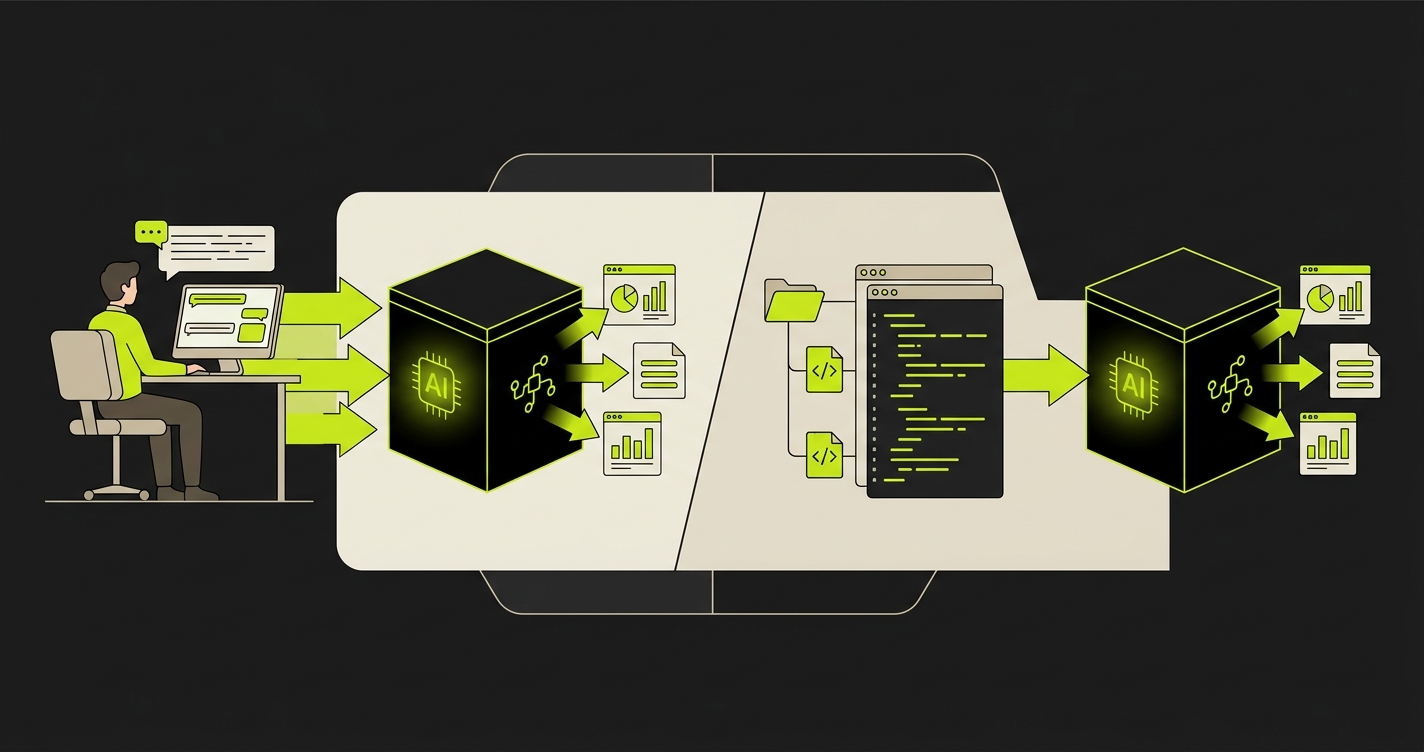
Momentic's approach: Human writes natural language description. AI translates description into test steps. Human maintains descriptions when app changes.
Autonoma's approach: AI reads your codebase. AI generates tests automatically. AI maintains tests when app changes. Zero human input required.
Here is how it works. You connect your GitHub repo, and Autonoma's test-planner-plugin reads your routes, components, API endpoints, and user flows to build a comprehensive knowledge base of your application. The Planner agent then generates E2E test cases based on your actual code structure, covering happy paths, error states, edge cases, and multi-step interactions that a human describing tests in natural language would likely miss.
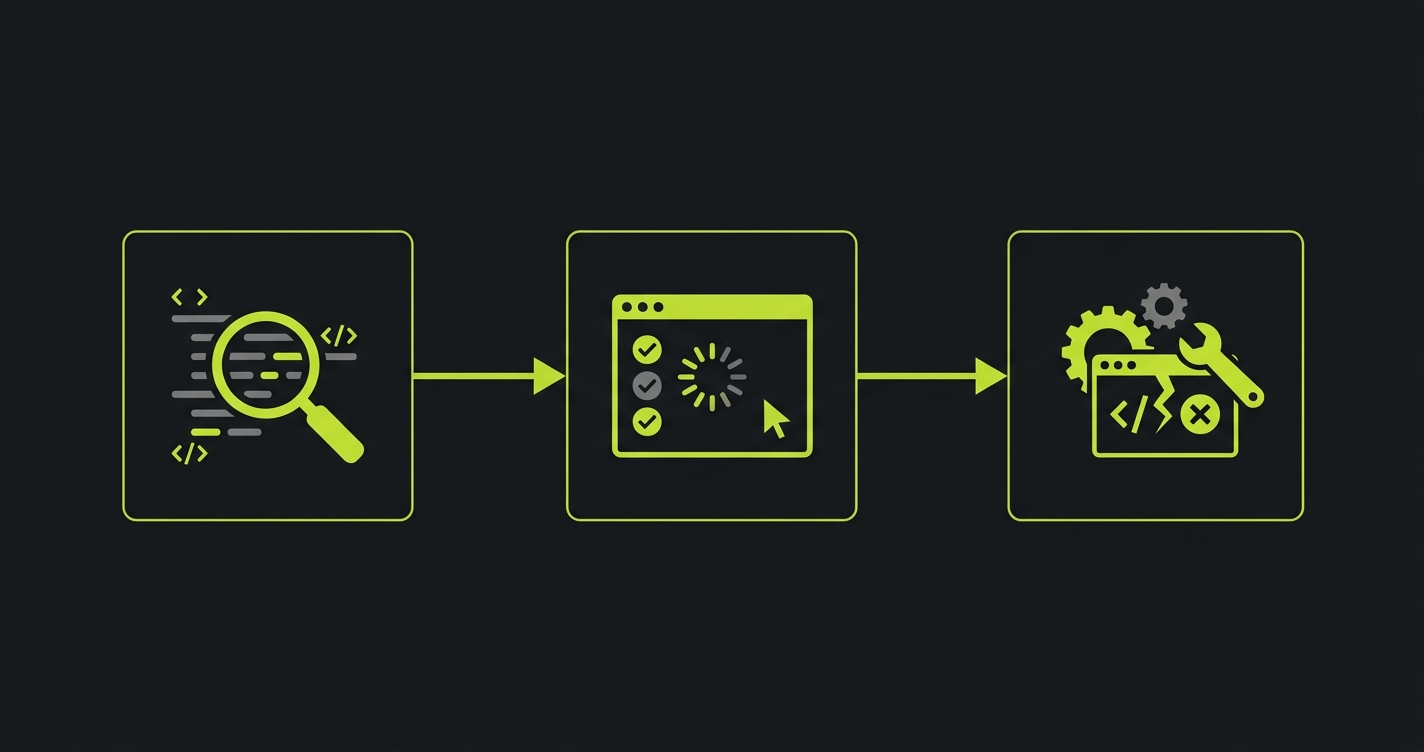
The three-agent architecture handles the complete testing lifecycle:
- Planner agent: Analyzes your codebase to understand application structure, identify testable flows, and generate comprehensive test plans. It reads your routes, components, and business logic, not natural language descriptions.
- Automator agent: Executes tests using AI vision models that see your application like a human would. No CSS selectors or XPaths. The AI understands intent ("click the submit button") rather than DOM structure (
button.btn-primary), making tests inherently resilient to UI changes. - Maintainer agent: Monitors test results and automatically adapts tests when your application changes. When a redesign moves a button, changes a form layout, or restructures navigation, the Maintainer updates affected tests without human intervention.
The result is zero-touch testing. No human writes test descriptions. No human maintains test scripts. No human updates tests when features change. The AI handles everything from understanding your codebase to generating, executing, and maintaining tests. Your QA team shifts from writing and maintaining tests to reviewing test plans and analyzing results, which is higher-leverage work that directly improves product quality.
With Momentic, coverage is limited by what humans remember to describe. With Autonoma, coverage is determined by what exists in your codebase. The AI does not forget edge cases. It does not skip the error state for a form with 15 fields. It does not miss the interaction between feature flags and user roles. It reads the code and tests what is there.
Self-Hosting and Data Sovereignty
Run Autonoma on your infrastructure. AWS (ECS, EKS, or EC2), GCP (GKE or Compute Engine), Azure (AKS or VMs), or your own data center. When you self-host, test data never leaves your network. Application credentials stay on your servers. Staging environment URLs are never exposed to external systems.
This directly solves the compliance problem that Momentic cannot address. HIPAA, PCI DSS, SOC 2, FedRAMP, and GDPR compliance requirements are satisfied when the testing infrastructure runs on your controlled, auditable environment with source code you can inspect.
Self-hosting also eliminates the vendor risk. Even if Autonoma as a company changes direction, the source code is on GitHub. The BSL 1.1 license guarantees conversion to Apache 2.0 in 2028. Your testing infrastructure survives independently of any vendor relationship.
Unlimited Parallel Execution
Every plan (free tier, cloud, and self-hosted) supports unlimited parallel execution. On the free tier, that is subject to credit limits, but on cloud and self-hosted plans your test suite scales with your infrastructure. When you self-host, parallel capacity is limited only by the compute resources you allocate.
Momentic vs Autonoma: Feature Comparison
| Feature | Momentic | Autonoma |
|---|---|---|
| Open Source | Proprietary closed source | BSL 1.1 on GitHub (Apache 2.0 in 2028) |
| Self-Hosting | Cloud only, no self-hosting | Self-host anywhere (AWS, GCP, Azure, on-prem) |
| Test Generation Input | Natural language descriptions (human writes prompts) | Codebase analysis (zero human input) |
| AI Transparency | Black box, no visibility into AI pipeline | Full source code, auditable AI agents |
| Test Maintenance | Human updates natural language descriptions | Maintainer agent auto-heals tests |
| Architecture | Single AI model translating NL to test steps | Three-agent system (Planner, Automator, Maintainer) |
| Coverage Approach | Limited to what humans describe | Comprehensive, based on actual codebase |
| Test Execution | AI-driven step execution | Vision-based AI (sees app like a human) |
| Vendor Lock-In | High (proprietary format, cloud-only) | None (open source, fork anytime) |
| Data Sovereignty | All data on Momentic servers | Self-host: data stays on your infrastructure |
| Compliance (HIPAA, SOC 2) | Limited (no self-hosting, no source audit) | Full (self-host, audit source code) |
| Vendor Risk | VC-backed startup, pricing/direction may change | Open source on GitHub, self-host indefinitely |
| Parallel Execution | Plan-dependent limits | Unlimited on all plans |
| Starting Price | ~$500/month (usage-based) | Free (100K credits) |
| Cloud Price | $500-1,000+/month (scales with usage) | $499/month (1M credits, unlimited parallels) |
| Self-Hosted Cost | Not available | Infrastructure only (no platform fees) |
Cost: Open Source vs Proprietary AI Testing
Both Momentic and Autonoma use AI, so neither requires traditional manual test writing. But the cost structures differ significantly.
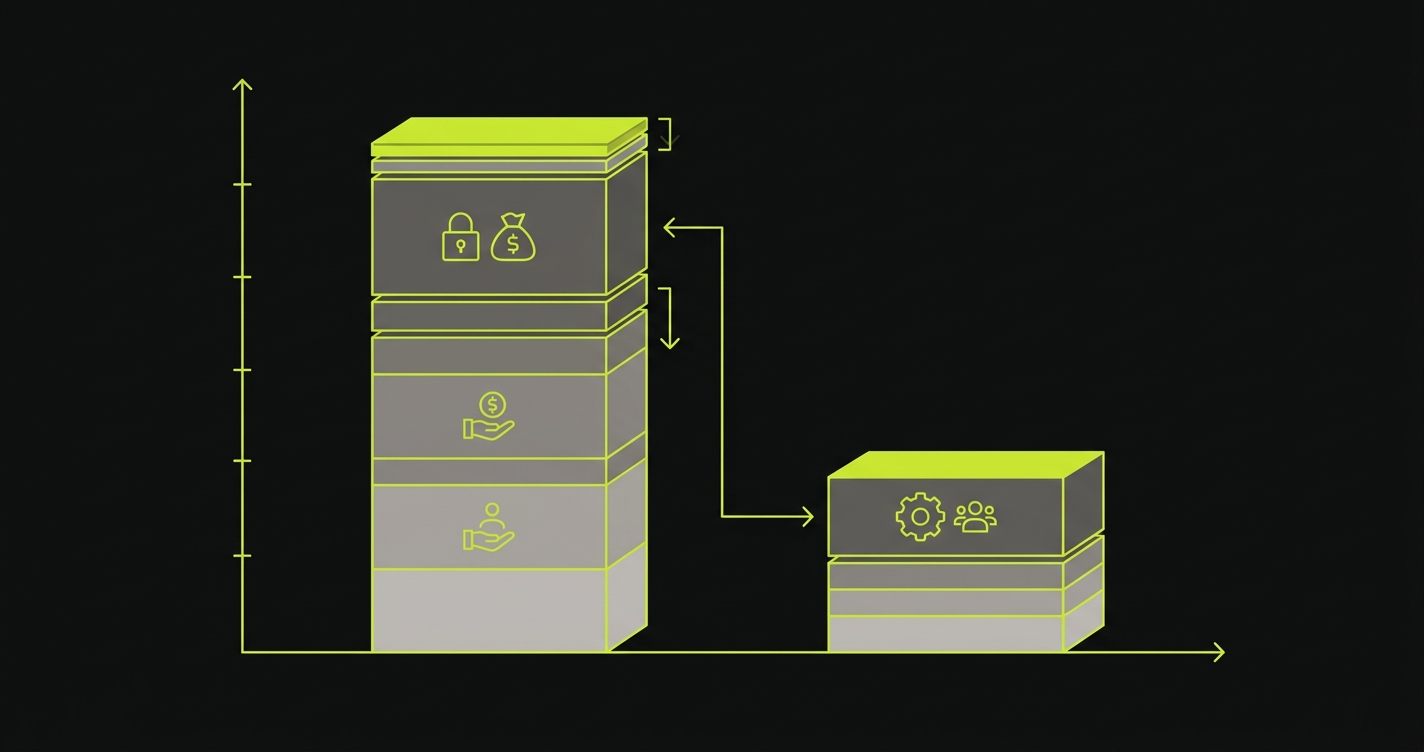
Momentic uses usage-based pricing that scales with test volume. For a mid-sized team running continuous testing across multiple environments, costs typically land between $500-1,000/month ($6,000-12,000/year). As your application grows and test volume increases, Momentic's costs scale linearly. Because it is usage-based, costs can spike unpredictably during intensive testing periods like pre-release sprints.
Momentic still requires human effort to write and maintain natural language descriptions. For a team with 200+ user flows, expect 15-25 hours/month of prompt writing and maintenance. At $100-150/hour engineering cost, that adds $18,000-45,000/year in hidden labor costs. Over three years, total cost of ownership with Momentic reaches $72K-135K (subscription plus engineering time).
Autonoma cloud is $499/month ($18K over three years) with zero prompt writing, zero description maintenance, and zero human input for test generation. The AI reads your codebase and handles everything. That represents a 75-87% cost reduction compared to Momentic.
Autonoma self-hosted eliminates the platform fee entirely. You pay only for the infrastructure you provision, typically $200-400/month. Over three years, total cost is roughly $11K, an 85-92% reduction compared to Momentic's total cost of ownership.
The cost difference is not just about subscription pricing. It is about eliminating the human effort that Momentic still requires. When Autonoma reads your codebase directly, no engineer needs to write prompts, describe flows, or update descriptions when features change. That hidden labor cost is where the real savings compound.
Migrating from Momentic to Autonoma
Migration from Momentic is straightforward because Autonoma does not depend on Momentic's proprietary test format. You are not converting natural language descriptions into a new system. Autonoma generates tests from your codebase, which makes the migration source-agnostic.
1. Connect your repo. Sign up for the free tier at getautonoma.com or self-host by cloning the GitHub repo. Connect your GitHub repository and let Autonoma's AI analyze your codebase. The test-planner-plugin builds a knowledge base of your routes, components, and user flows. This takes minutes.
2. AI generates tests automatically. Unlike Momentic, where you would write natural language descriptions for each flow, Autonoma's Planner agent generates comprehensive test cases directly from your code. Start with your critical paths (authentication, checkout, core features) and run them alongside your existing Momentic tests to compare coverage and reliability side by side.
3. Validate and compare coverage. Autonoma's codebase-first approach typically discovers user flows that were never described in Momentic. Compare the AI-generated test plans against your Momentic test suite. Pay attention to edge cases, error states, and multi-step interactions that Autonoma catches from your code but that may have been missed in natural language descriptions. Most teams find Autonoma's coverage is more comprehensive within days.
4. Update CI/CD and cut over. Point your CI/CD pipelines at Autonoma, decommission your Momentic integration, and cancel your Momentic subscription. If self-hosting, provision your infrastructure during the validation phase so it is ready for cutover. The transition is low-risk because you validated coverage in step 3.
The key advantage over a typical migration: you are not translating tests from one format to another. Autonoma generates everything fresh from your codebase. The migration effort is about validating AI-generated coverage, not rebuilding test suites.
Frequently Asked Questions
Yes. Autonoma is an open-source AI testing platform available on GitHub. Unlike Momentic's proprietary closed-source model, Autonoma offers a free tier with 100K credits and full self-hosting capabilities. You can run Autonoma on your own infrastructure with no feature limitations, or use the cloud version starting free.
Momentic generates tests from natural language descriptions you write. Autonoma generates tests directly from your codebase with zero human input. Autonoma's three-agent architecture (Planner, Automator, Maintainer) analyzes your routes, components, and user flows to create comprehensive E2E tests automatically. No prompts, no descriptions, no manual effort.
Yes. Autonoma is fully self-hostable with complete source code on GitHub. You can run it on your infrastructure (AWS, GCP, Azure, on-premise) with zero feature restrictions. Momentic offers no self-hosting option; all test data passes through their servers.
No. Momentic is entirely proprietary and closed source. You cannot inspect how their AI generates or executes tests, audit their models, or verify their security practices. Autonoma's source code is fully available on GitHub under BSL 1.1 (converting to Apache 2.0 in 2028), giving you complete transparency into the AI testing pipeline.
Momentic uses usage-based pricing starting around $500-1,000/month for teams, with costs scaling as test volume grows. Autonoma offers a free tier with 100K credits, cloud at $499/month with 1M credits and unlimited parallels, or free self-hosting where you only pay infrastructure costs. Self-hosting Autonoma eliminates ongoing platform fees entirely.
Yes. Migration is straightforward because Autonoma generates tests from your codebase, not from Momentic's proprietary format. Connect your GitHub repo, let Autonoma's AI analyze your application, and it generates comprehensive E2E tests automatically. Most teams achieve full coverage within days.
As a venture-backed startup, Momentic's pricing and product direction can shift with funding rounds. If Momentic raises prices, pivots, or shuts down, your test infrastructure disappears. With Autonoma's open source model, you can self-host indefinitely. The source code is on GitHub, and the BSL 1.1 license converts to Apache 2.0 in 2028. Your testing capability is never dependent on a vendor's business decisions.
The Bottom Line
Momentic and Autonoma both use AI for test generation, which puts them in a different category from traditional testing tools. But Momentic is proprietary, closed-source, cloud-only, and still requires human input to write natural language descriptions. Its AI is a black box you cannot audit, its data flows through servers you do not control, and its future depends on a venture-backed startup's business trajectory.
Autonoma is the open-source alternative that goes further. Full source code on GitHub (BSL 1.1, Apache 2.0 in 2028). Self-host on your infrastructure or use our cloud. AI generates and maintains tests directly from your codebase: zero prompts, zero descriptions, zero human input. Three-agent architecture (Planner, Automator, Maintainer) provides comprehensive coverage that natural language descriptions cannot match. Unlimited parallels on every plan. No vendor lock-in. Free tier starts at 100K credits, cloud at $499/month, self-hosted at infrastructure cost only. Three-year savings: 75-92% compared to Momentic's total cost of ownership.
Ready to try open source AI testing?
Start Free - 100K credits, no credit card, 5-minute setup
View on GitHub - Inspect the AI, self-host documentation
Book Demo - See codebase-first test generation in action
Related Reading:


